Are you asking yourself, “What does God want me to do with my life?” In Catholic teaching, a vocation is more than a career choice or a private feeling. It is a call to love God, grow in holiness, and give yourself to other people through a particular way of life.
Every baptized person has the same basic vocation: to follow Christ and become holy. That universal call becomes concrete through a state of life, such as marriage, priesthood, consecrated religious life, or dedicated single life. Discernment helps you recognize which path fits the gifts, responsibilities, desires, and circumstances God has placed in your life.
Core idea: A Catholic vocation is not mainly about finding the most impressive job or avoiding difficulty. It is about discovering where you can make a faithful, lasting gift of yourself.
The word vocation comes from a Latin term meaning calling. Catholics believe God calls every person into relationship with him and gives each person a purpose within the Church and the world. This call is not usually delivered as an audible message. More often, it becomes clearer through prayer, Scripture, wise counsel, personal gifts, circumstances, and a growing desire to serve.
A vocation includes both a general call and a particular call. The general call belongs to every Christian: love God, love your neighbor, reject sin, receive the sacraments, and live according to the Gospel. The particular call concerns the form that faithful love will take in your daily responsibilities.
For example, a person may be called to marriage and family life, while another is called to the priesthood or religious life. Someone else may remain single and devote substantial time to caring for relatives, serving the poor, teaching, working for the Church, or supporting a wider community. The value of a vocation comes from faithful love, not from its public visibility.
The four main forms of a Catholic vocation
Catholic tradition commonly speaks about several states of life. They are not interchangeable job descriptions. Each involves a distinct pattern of relationships, commitments, responsibilities, and ways of serving God.
Marriage: A man and woman freely enter a lifelong covenant ordered toward the good of the spouses and the raising of children. Married people witness to Christ through faithful love, family life, hospitality, sacrifice, and service.
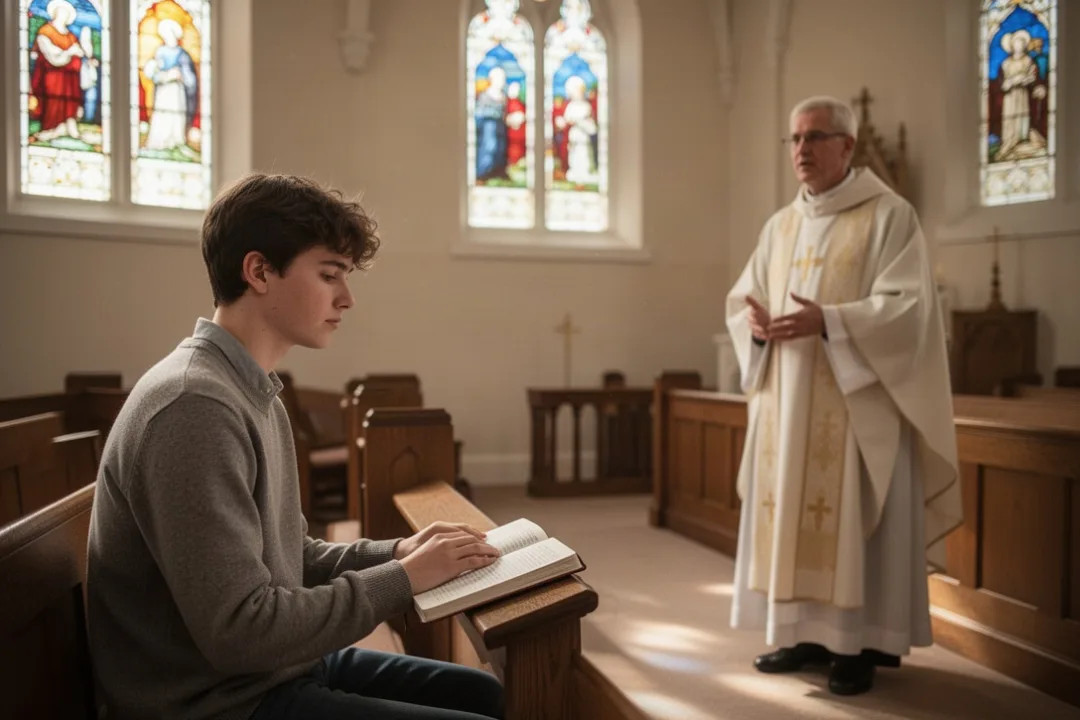
Priesthood: A priest is ordained to serve the Church through preaching, the sacraments, pastoral leadership, and spiritual care. A diocesan priest normally serves a particular diocese, while a religious priest belongs to a religious institute as well.
Consecrated religious life: Religious men and women make public vows, usually of poverty, chastity, and obedience, and live according to the rule and mission of their community. Their work may include prayer, education, health care, evangelization, contemplation, or service to those in need.
Dedicated single life: Some Catholics remain unmarried and intentionally offer their time, gifts, and relationships to God and the Church without taking religious vows. This can be a deliberate vocation, although not every period of singleness is a permanent calling.
These forms of life can overlap in practical service. A married person may teach religious education, a priest may work with the poor, and a religious sister may run a school. The distinction lies in the permanent commitments and the way a person gives his or her life, not simply in the type of work performed.
How to discern a Catholic vocation step by step
Discernment is a patient process rather than a single test. You do not need complete certainty before taking every small step. You do need honesty, prayer, sound information, and a willingness to respond to what you learn.
Begin with daily prayer. Set aside regular time to speak with God and listen in silence. You can use the Gospels, the Rosary, Eucharistic adoration, or a simple prayer such as asking Christ to show you how to serve.
Strengthen your ordinary Christian life. Attend Mass, receive the sacraments appropriately, examine your habits, and seek growth in virtue. A major life decision becomes harder to evaluate when prayer, worship, and moral responsibilities are being neglected.
Learn what each vocation actually requires. Read reliable Catholic materials, talk with married couples and clergy, visit religious communities, and ask direct questions about finances, prayer, formation, work, celibacy, family responsibilities, and community life.
Look at your gifts and limitations. Consider your character, emotional maturity, health, skills, relationships, and ability to make lasting commitments. A vocation uses your gifts, but it also asks you to grow beyond self-centered preferences.
Pay attention to recurring movements. Notice which possibilities lead to deeper freedom, charity, responsibility, and peace. Also notice patterns of fear, vanity, resentment, impulsiveness, or avoidance. Feelings matter, but they need to be tested rather than obeyed automatically.
Seek guidance. A priest, religious sister or brother, trusted married couple, or trained spiritual director can help you recognize blind spots. Choose someone who respects Church teaching and will not pressure you toward a path for personal reasons.
Take concrete, reversible steps. Attend a discernment retreat, volunteer in a parish, arrange a conversation with a vocation director, or date intentionally. Real experiences usually reveal more than imagined scenarios.
Make and test a decision. At some point, endless comparison can become another form of avoidance. Choose the next faithful step, bring it to prayer, and see whether your commitment produces greater love, stability, and readiness to serve.
Practical test: Ask, “Where am I most able to make a stable gift of myself?” This question is usually more fruitful than asking which option will make life easiest or most admired.
How prayer helps you recognize a vocation
Prayer is not a technique for forcing God to reveal a detailed plan. It is a relationship in which you become more receptive, truthful, and free. The prayer of Jesus in the Garden of Gethsemane, described in Matthew 26 and Luke 22, shows that surrender can include real anguish rather than immediate emotional certainty.
Begin with a regular pattern that you can maintain. Ten quiet minutes each day may be more helpful than an occasional burst of intense prayer. Bring specific questions to God, but also spend time praising him, expressing gratitude, and asking for the grace to love the people already entrusted to you.
Read a short Gospel passage and ask what it reveals about Christ’s way of loving.
Write down the desires, fears, and questions that arise during prayer.
Ask for freedom from the need to impress other people or control every outcome.
Pray for the courage to accept truth, including truths that challenge your preferred plan.
Return to the same question over time instead of treating one emotional moment as a final answer.
The Psalms provide language for trust, confusion, repentance, and hope. The stories of Abraham, Mary, the apostles, and the early Christian community also show that God’s call unfolds through relationships and real events. When reading the Bible, focus on the meaning of the passage and its invitation to faithful action rather than searching for a private code.
People often ask whether they will feel completely peaceful if they have found their vocation. A growing sense of peace can be helpful, but it is not the only sign. Someone may feel peaceful because he or she is avoiding a difficult responsibility, while another person may feel anxious because a genuine call requires courage and change.
Discernment considers the whole pattern. A possible vocation should be consistent with Catholic teaching, compatible with the duties you already owe, and supported by the Church’s legitimate authorities. It should also lead toward greater charity, integrity, self-control, and willingness to serve.
Healthy peace often means an underlying freedom to continue even when the path is demanding. It does not mean constant excitement or the absence of questions. Over time, a sound direction tends to make you more available to others rather than more absorbed in proving that you made the perfect choice.
How attraction, fear, and practical concerns fit together
Many people feel drawn to more than one form of life. A person might want marriage while also admiring religious prayer, or feel attracted to priesthood while worrying about loneliness and responsibility. Mixed emotions do not automatically mean that a vocation is false.
Attraction can reveal a genuine desire to serve, but it can also arise from an idealized picture. Ask what specifically attracts you. Do you want the actual daily life, including ordinary duties and sacrifices, or mainly the identity and recognition associated with it?
Fear deserves attention without being allowed to make the decision by itself. Fear of commitment, poverty, celibacy, public responsibility, or failure may point to an area requiring healing and preparation. On the other hand, persistent distress, serious mental health concerns, coercion, or an inability to live the required commitments should be discussed honestly with qualified professionals and Church leaders.
Practical questions are part of spiritual discernment. A vocation does not float above finances, health, family obligations, education, or legal responsibilities. Responsible planning can clarify a call rather than weaken faith.
What marriage as a Catholic vocation involves
Marriage is a vocation to a lifelong covenant of faithful love. Catholic spouses promise permanence, fidelity, and openness to family life. Their vocation is lived through ordinary actions: forgiving each other, sharing work, welcoming children, caring for aging relatives, practicing hospitality, and helping one another grow in holiness.
Someone discerning marriage should look beyond chemistry and shared interests. Character, emotional maturity, religious practice, communication, financial responsibility, and the ability to resolve conflict all matter. A Catholic marriage requires that both people understand and freely accept what the Church teaches about marriage.
Dating can become a form of discernment when it is honest and purposeful. You do not need to treat every relationship as a likely engagement, but you should avoid pretending that serious differences do not matter. Premarital preparation, prayer together, and conversations about children, faith, money, family boundaries, and work can reveal whether a relationship is capable of a stable commitment.
What priesthood as a Catholic vocation involves
A priestly vocation is a call to serve Christ and his people through ordained ministry. Priests preach the Gospel, celebrate the Eucharist, hear confessions, anoint the sick, accompany families, teach, counsel, and lead communities in communion with the bishop and the wider Church.
Priestly discernment is not based solely on a private conviction. The Church examines a candidate’s faith, character, human maturity, theological preparation, health, relationships, and ability to embrace celibate service. A diocese or religious institute helps determine whether a man is suitable for formation and ordination.
A man considering priesthood should speak with a diocesan vocation director or the vocation director of a religious institute. He may be invited to visit a seminary, attend retreats, meet priests, and learn about the formation process. The purpose of this process is not to pressure a decision but to test whether the call is genuine and whether the candidate can serve faithfully.
What religious life as a Catholic vocation involves
Consecrated religious life is lived within a recognized community or institute. Members normally make public vows of poverty, chastity, and obedience, though the exact expression of those vows and the community’s work vary. Some communities emphasize silent contemplation, while others focus on schools, missions, parish ministry, health care, or direct service to the poor.
A person attracted to religious life should investigate the community’s actual charism and daily schedule. Ask how members pray, work, share possessions, handle conflict, relate to family, receive formation, and participate in apostolic ministry. A community’s history and public reputation do not replace personal experience of its members and leaders.
Most institutes have stages of formation that allow both the candidate and the community to discern suitability. Initial contact may lead to visits, an application, a period of candidacy, novitiate, and temporary vows before a person makes a definitive commitment. The names and length of stages differ among communities.
What dedicated single life can look like
Not every unmarried Catholic is called to dedicated single life in a formal or publicly recognized sense. Some are single temporarily, some hope to marry, and some are waiting while discerning. Others intentionally remain unmarried so they can offer their time and energy to God, family, community, or a particular mission.
This vocation needs a positive structure. It is not simply the absence of marriage or religious vows. A person living it should cultivate stable prayer, meaningful relationships, responsible work, service, and appropriate boundaries. Without intentional commitments, singleness can gradually become isolation or a long postponement of decisions.
Dedicated single Catholics may serve in many settings, including parish ministry, education, health care, charitable work, public service, or care for relatives. Their circumstances differ widely, so they may benefit from a spiritual director and from a supportive Catholic community that recognizes the value of their vocation.
How the Church helps test a vocation
Catholic discernment is personal, but it is not entirely private. The Church helps test a vocation through the sacraments, Scripture, pastoral guidance, community life, formation, and legitimate authority. This protects people from confusing a temporary impulse with a lasting call.
Different vocations involve different forms of confirmation. A couple’s marriage requires free consent and the Church’s canonical and pastoral preparation. A priestly or religious vocation requires acceptance by the appropriate diocese or institute and successful formation. A dedicated single life may be recognized through the person’s stable commitments and service, even when there is no public ceremony.
Community feedback can be revealing. Ask mature Catholics what they observe in you. Do they see reliability, generosity, emotional steadiness, teachability, and concern for others? Do they also see patterns that need healing? Honest feedback is not a verdict, but it can identify questions you should not ignore.
Common mistakes that make discernment harder
Discernment can become confusing when it is treated as a search for perfect certainty or a way to guarantee a painless future. Several habits commonly interfere with a free response.
Waiting for a dramatic sign: God can work through extraordinary events, but most vocations become clear through ordinary faithfulness and repeated confirmation.
Choosing for status: A vocation chosen to gain admiration, please relatives, or appear especially holy is built on an unstable foundation.
Ignoring concrete facts: Romanticizing marriage, priesthood, or religious life prevents an honest assessment of daily responsibilities.
Confusing fear with wisdom: Anxiety may need care and conversation; it should not automatically be treated as a divine warning.
Making a decision alone: Isolation allows assumptions and blind spots to grow.
Changing direction after every difficult day: Every vocation includes sacrifice. A hard season is not automatically evidence that you chose wrongly.
Using vocation language to avoid responsibility: A supposed call cannot excuse dishonesty, neglect of family duties, or disregard for moral obligations.
These mistakes do not mean you have ruined your discernment. A trusted priest or spiritual director can help you begin again with greater honesty. God’s guidance is not defeated by sincere questions or by a process that takes time.
When you should seek professional and pastoral help
Spiritual direction can help you pray and reflect, but it is not a substitute for medical or mental health care. If you are experiencing severe anxiety, depression, compulsive behavior, trauma symptoms, or thoughts of self-harm, seek qualified professional help and tell a trusted person. A vocation should never be used to conceal an urgent health concern.
Pastoral help is also appropriate when family members, a romantic partner, or a religious leader is pressuring you. A genuine vocation requires freedom and informed consent. Threats, manipulation, isolation, and demands for secrecy are warning signs, not evidence of a stronger spiritual call.
Healthy Catholic guidance respects your conscience while helping you form it well. It encourages prayer, truthfulness, responsible action, and appropriate boundaries. You should be able to ask difficult questions without being shamed for having them.
Questions to ask while discerning your path
Writing answers to specific questions can move discernment from vague worry to practical reflection. Return to your answers after several weeks and discuss them with someone trustworthy.
What kind of service consistently brings out my generosity and responsibility?
Which people or situations do I feel particularly called to accompany?
Am I drawn to a way of life itself, or only to an idealized image of it?
What commitments am I already responsible for honoring?
Which weaknesses would make this vocation difficult, and am I willing to address them?
Do people who know me well see the gifts and maturity this path requires?
Does this possibility lead me toward deeper prayer, honesty, and charity?
What concrete conversation or visit should I arrange next?
You may not receive an answer to every question at once. The goal is not to eliminate every uncertainty but to become sufficiently free and informed to take the next faithful step.
How to live your vocation after choosing it
Discernment does not end when you marry, enter seminary, join a religious community, or commit to dedicated single life. Every vocation must be renewed through ordinary acts of fidelity. The promises that define your state of life become real through schedules, conversations, work, worship, sacrifice, and service.
Keep relationships that support your commitment. Continue spiritual direction or pastoral conversations when appropriate. Receive correction without assuming that every struggle means you made the wrong choice. At the same time, do not use commitment as an excuse to ignore serious problems; faithful perseverance includes asking for help and making responsible changes.
The deepest measure of a Catholic vocation is the growth of love of God and neighbor. A vocation may bring joy, but it will also ask you to forgive, wait, sacrifice, and serve when no one notices. By responding faithfully to those daily demands, you participate in the mission Christ gives to the whole Church.
Frequently asked questions
Is a Catholic vocation only about becoming a priest or nun?
No. Catholic teaching recognizes marriage, priesthood, consecrated religious life, and dedicated single life as possible vocations. Every baptized person is first called to holiness and discipleship. Priesthood and religious life receive special attention because they involve public ecclesial commitments, but marriage and faithful single life are also real ways to serve God and other people.
How can I tell whether I am called to marriage?
Look for more than romantic attraction. Consider whether you can make a free, faithful, lifelong commitment and whether the relationship supports Catholic teaching, mutual growth, and responsible love. Conversations about faith, children, finances, family, and conflict are essential. Guidance from a priest or experienced married couple can help you evaluate the relationship honestly.
Can I change my mind during vocational discernment?
Yes. Discernment involves learning, and a person may discover that a particular path is not suitable. Before making permanent promises, visits, conversations, retreats, and formation periods allow both the individual and the Church to test the decision. Once formal vows or marriage have been entered, changes involve serious moral and canonical responsibilities and should be addressed with qualified pastoral guidance.
Does feeling afraid mean I do not have a vocation?
No. Fear can accompany any serious commitment, especially when the path involves sacrifice or uncertainty. The better question is whether you can face the fear honestly and still grow in freedom, love, and responsibility. Persistent distress, coercion, serious emotional difficulties, or an inability to fulfill the vocation’s commitments should be discussed with both appropriate professionals and trusted Church leaders.












Leave a Reply