The Presentation of the Blessed Virgin Mary: meaning and history
The Presentation of the Blessed Virgin Mary: meaning and history
If you have seen The Presentation of the Blessed Virgin Mary on a church calendar and wondered what it commemorates, the short answer is that it celebrates Mary being presented to God in the Temple as a child. The feast is observed on November 21 in the Roman Catholic Church and is also celebrated in Eastern Christianity under the name Entrance of the Theotokos into the Temple.
The event is not described in the canonical books of the Bible. Instead, the feast is based on an early Christian tradition about Mary’s parents, usually identified as Joachim and Anne, bringing her to the Temple in Jerusalem. Christians observe the feast because it expresses themes of dedication, holiness, prayer, and preparation for Mary’s future role in the story of Christ.
What the Presentation of the Blessed Virgin Mary commemorates
The feast recalls the traditional presentation of the young Mary at the Temple. According to the story, her parents brought her there and entrusted her to God. In many versions, Mary was only three years old, although that age comes from tradition rather than Scripture.
The word presentation means an act of bringing someone into the presence of another person. In this context, it refers to Mary being brought before God in the Temple and dedicated to a life of worship. The feast therefore focuses less on a public ceremony that can be documented historically and more on the spiritual meaning of offering one’s life to God.
The story is often associated with Mary’s parents making a promise before her birth. They are traditionally said to have prayed for a child and then offered that child to God in gratitude. This part of the account resembles other biblical stories in which parents dedicate children to the Lord, although Mary’s particular presentation is not recorded in the Bible itself.
Important distinction: The Presentation of Mary is a longstanding Christian feast based on sacred tradition and early devotional writings, not an event narrated directly in the canonical Gospels.
In Catholic teaching, the feast does not mean that Mary was forced into religious service or that her parents treated her as property. Its central image is one of loving dedication. Mary is presented as someone whose life is oriented toward God from an early age, preparing her to respond freely to the Annunciation and to become the mother of Jesus.
The feast also points beyond Mary herself. Parents, children, religious communities, and all Christians can see in it an invitation to consider how a person is formed through prayer, family faith, worship, and faithful choices. The presentation is understood as the beginning of a life shaped by God’s presence.
Where the story of Mary’s presentation comes from
The account of Mary’s childhood comes primarily from an early Christian writing commonly called the Protoevangelium of James, also known as the Infancy Gospel of James. It was written in the second century and contains stories about Mary’s birth, her parents, and her early years.
This writing is not part of the New Testament and is not accepted as canonical Scripture by the Catholic Church. Even so, it influenced Christian art, preaching, hymnody, and popular devotion. Many details associated with Mary’s early life, including the presentation at the Temple, became familiar through this tradition.
According to the story, Joachim and Anne had longed for a child. After Mary was born, they brought her to the Temple when she was very young. The account presents her as being raised in a sacred environment, where she grew in holiness while awaiting the mission God would later give her.
Christians should read these details with care. The early writing offers a devotional narrative, not a modern biography and not a historical record that can be verified in the same way as a Gospel passage. The Church’s celebration of the feast does not require readers to treat every detail of the story as established fact.
The tradition became especially influential in the Christian East. The feast is called the Entrance of the Theotokos into the Temple in Byzantine Christianity. “Theotokos” is a Greek title meaning “God-bearer” or “Mother of God,” affirming the Christian belief that Mary gave birth to Jesus Christ, who is truly divine.
The feast was celebrated in Jerusalem by the sixth century and later spread more widely. It entered the Western liturgical calendar during the Middle Ages. Over time, the celebration developed different names and customs in different Christian communities, but the main theme remained Mary’s consecration to God.
Canonical Scripture: The Bible does not narrate Mary’s presentation at the Temple.
Early tradition: The story appears in an early Christian infancy text associated with Mary’s childhood.
Eastern Christianity: The feast is known as the Entrance of the Theotokos into the Temple.
Western Christianity: It is commonly called the Presentation of the Blessed Virgin Mary.
Shared meaning: The celebration emphasizes dedication, holiness, and readiness to serve God.
Knowing this background helps explain why the feast can be meaningful without being treated as a biblical account. Christian tradition often preserves reflections on people and events that are not described in detail in Scripture. Those traditions must be distinguished from the Bible while still being understood within the worship and teaching of the Church.
What the feast means in Catholic devotion
For Catholics, the Presentation of Mary highlights her complete orientation toward God. Mary is remembered as a person who received God’s grace and responded with trust. The feast looks toward the later moment when she accepts her calling to become the mother of the Savior, but it focuses on the spiritual preparation that precedes that response.
Mary’s presentation is sometimes described as a sign of her being a living temple. The Temple in Jerusalem was associated with God’s presence, prayer, sacrifice, and worship. By presenting Mary there, the tradition portrays her as being set apart for a sacred purpose. Later Christian reflection connects this image with Mary’s role as the mother of Jesus, whom Christians recognize as the true presence of God among humanity.
The feast also presents holiness as something that develops over time. Mary’s life is not shown as a series of dramatic public achievements. Instead, the tradition emphasizes quiet faithfulness, learning, prayer, and readiness. That message can matter to people whose own service takes place in homes, schools, workplaces, parishes, or other ordinary settings.
Another important theme is the relationship between family faith and personal vocation. Joachim and Anne are remembered as parents who received their child with gratitude and gave her back to God. Their example can encourage parents to see children not as possessions but as persons with their own dignity and calling.
At the same time, the feast is not a command for every family to imitate the traditional story literally. It does not require parents to send children into a Temple or religious institution. Its deeper lesson is that children should be raised with love, respect, moral formation, and freedom to discern how they may serve God and others.
The feast can also speak to adults who are considering a new commitment. A person may be discerning marriage, priesthood, religious life, missionary work, volunteer service, or a renewed dedication to prayer. Mary’s presentation offers an image of gradual preparation rather than instant certainty.
For personal prayer: Ask what part of your life needs to be placed more deliberately in God’s hands, and then choose one concrete act of faithfulness rather than making a vague promise.
In Catholic devotion, Mary’s holiness never replaces the worship owed to God. Catholics honor Mary as the mother of Jesus and as an example of discipleship, but adoration belongs to God alone. The feast directs attention through Mary toward Christ, whose coming she was prepared to receive and whose mission she supported.
How the Presentation relates to the Bible
The Bible does not provide a narrative of Mary’s childhood or describe her being taken to the Temple. The Gospel writers concentrate on the events most directly connected with Jesus’ public mission, death, and resurrection. As a result, many details about Mary’s early years come from later Christian reflection.
Even without a direct biblical account, the feast draws on biblical themes. The Old Testament includes stories of children being dedicated to God, including Samuel, whose mother Hannah entrusts him to the Lord’s service. The account of Hannah and Samuel in 1 Samuel 1 provides a biblical pattern for understanding gratitude, prayer, and dedication.
The Gospel of Luke describes Mary as a woman who receives God’s message with faith and accepts a difficult vocation. The Annunciation in Luke 1:26–38 shows her responding to God with humility and courage. The Presentation feast can be understood as a devotional prelude to that later response.
Luke also presents Mary as someone who reflects deeply on what God is doing. In Luke 2, she treasures and considers the events surrounding Jesus’ birth. This portrait supports the feast’s image of Mary as a person formed by prayerful attention, even though the Gospel does not describe her childhood in the Temple.
Some Christians connect the feast with biblical passages about God’s dwelling place, holiness, and the human body as a temple of the Holy Spirit. These connections are theological applications, not claims that the biblical authors were directly describing Mary’s presentation. Keeping that distinction clear makes the celebration more faithful and easier to understand.
The New Testament does affirm Mary’s important place in salvation history. Elizabeth calls her blessed in Luke 1:39–45, and Mary’s song of praise in Luke 1:46–55 shows her confidence in God’s mercy and justice. The Presentation feast celebrates the tradition that this faith was already being formed in her early life.
When reflecting on the feast, you can use the Bible alongside the tradition by reading passages that illuminate its themes:
1 Samuel 1: Hannah’s prayer and her dedication of Samuel.
Luke 1:26–38: Mary’s acceptance of her vocation at the Annunciation.
Luke 1:39–56: Mary’s visit to Elizabeth and her song of praise.
Luke 2:19: Mary’s contemplative response to the events surrounding Jesus’ birth.
Romans 12:1: Paul’s teaching about offering one’s life to God, paraphrased as an act of worship.
These passages do not prove the details of the Temple presentation. They help Christians pray with the feast’s central ideas: gratitude, vocation, surrender, and attentive faith.
How churches observe the Presentation on November 21
In the Roman Catholic calendar, the Presentation of the Blessed Virgin Mary is a memorial. The day may be marked at Mass with prayers, readings, and hymns that focus on Mary’s dedication to God. The exact form of observance can vary depending on the local parish, the country, and the broader liturgical calendar.
Eastern Catholic and Eastern Orthodox communities celebrate the same mystery as the Entrance of the Theotokos into the Temple. In Byzantine worship, the feast is one of the major celebrations connected with Mary. Its hymns and iconography often show the young Mary approaching the Temple while her parents and the priest receive her.
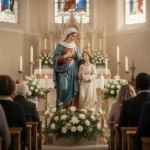
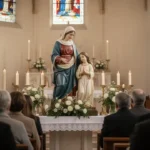
Church art commonly depicts Mary climbing steps toward the Temple or standing before the high priest. These images are symbolic and devotional. They communicate movement toward God, spiritual maturity, and the welcoming of a person into a life dedicated to holiness.
Many churches use the day as an opportunity to pray for children, parents, educators, priests, and religious communities. Families may attend Mass or Divine Liturgy, pray a Marian devotion, read the story of the feast, or discuss how faith is practiced at home.
Some religious communities have a particular connection with the feast because it reflects their own dedication to prayer and service. Communities of consecrated life may celebrate it as a reminder that a vocation is not simply a career or personal preference. It is a response to God’s call lived through promises, community, worship, and service.
A simple observance at home can include these steps:
Read a biblical passage about dedication or Mary’s faith, such as 1 Samuel 1 or Luke 1:26–38.
Learn the distinction between Scripture and the early tradition behind the feast.
Pray for families, especially parents seeking wisdom and children who need care and protection.
Identify one responsibility you can offer to God through patient, loving service.
Give thanks for Mary’s example while directing worship and praise to God.
The feast does not depend on elaborate customs. Its purpose is to help believers remember that a faithful life is often formed through small acts of trust long before a public calling becomes visible.
Why the Presentation of Mary still matters
The Presentation of the Blessed Virgin Mary speaks to a question many people carry: How should a life be prepared for a meaningful purpose? The feast answers through the image of a child entrusted to God and gradually formed in a sacred environment.
For parents, it raises questions about how children learn faith. Children usually encounter belief through relationships before they understand theological explanations. The feast encourages families to create a home shaped by prayer, compassion, honesty, and service, while respecting each child’s developing freedom.
For young people, Mary’s presentation can be a reminder that vocation is not always revealed all at once. A person may begin with ordinary responsibilities, questions, and habits of prayer. Over time, those experiences can help clarify how God is inviting that person to live.
For adults, the feast can renew a commitment that has become routine. Presenting yourself to God may mean returning to prayer after a difficult season, making peace with someone, serving a neighbor, or accepting a responsibility that benefits others. The spiritual act is made concrete through daily choices.
The feast also offers a balanced view of religious dedication. It does not glorify achievement or public recognition. Instead, it honors hidden formation: the years of learning, listening, practicing virtue, and becoming ready to say yes when a demanding responsibility arrives.
Mary’s presentation is therefore remembered not simply as an event from her childhood but as a sign of the direction of her whole life. The tradition portrays her as belonging to God, and Christian devotion sees that belonging fulfilled in her relationship to Jesus. Observing November 21 can help believers examine what they have received, what they are called to give, and how faithfully they are preparing to serve.
Frequently asked questions
Is the Presentation of Mary found in the Bible?
No. The Bible does not describe Mary being brought to the Temple as a child. The account comes from early Christian tradition, especially the Protoevangelium of James, a second-century writing that is not part of the New Testament. The feast remains significant in Christian worship because it expresses themes of Mary’s dedication and preparation for her vocation.
When is the Presentation of the Blessed Virgin Mary celebrated?
It is celebrated on November 21 each year in the Roman Catholic Church. Eastern Catholic and Eastern Orthodox Christians observe the corresponding feast as the Entrance of the Theotokos into the Temple. Local liturgical practices may differ, particularly when the date coincides with another major celebration or a Sunday.
What is the difference between the Presentation of Mary and the Presentation of Jesus?
The Presentation of Jesus is described in Luke 2 and recalls Mary and Joseph bringing the infant Jesus to the Temple. The Presentation of Mary refers to the tradition that her parents brought her to the Temple as a young child. They are separate commemorations with different dates and meanings.
How can a family observe this feast at home?
A family can read Luke’s accounts of Mary, discuss the meaning of dedicating one’s life to God, and pray for children and parents. Attending Mass or Divine Liturgy is another option. A practical observance might include choosing an act of service, giving thanks for family members, or creating a regular time for shared prayer.









Leave a Reply