When you hear a beautiful hymn, practice an instrument, or sing with other people, you may wonder why musicians often look to St. Cecilia. She is honored in the Catholic Church as the patron saint of music and musicians, and her name appears on choirs, concert groups, music schools, and churches around the world.
St. Cecilia was an early Christian martyr, traditionally believed to have lived in Rome during the second or third century. The details of her life come mainly from later accounts, so some parts of her story are difficult to verify. Even so, her enduring witness centers on faith, courage, prayer, and the sacred purpose of music.
St. Cecilia is remembered as a young Christian woman from a wealthy Roman family who chose to remain faithful to Christ during a period when Christians could face imprisonment or death. According to tradition, she was promised in marriage to a man named Valerian, even though she had dedicated herself to God.
The traditional story says that Cecilia told Valerian about her commitment to Christian purity and about an angel who protected her. Valerian respected her conviction, sought baptism, and later became a Christian. His brother, Tiburtius, also became involved in the faith. The two men are remembered with Cecilia as witnesses who cared for the poor and helped bury Christians who had been killed.
Roman authorities eventually arrested Cecilia and the men associated with her. Valerian and Tiburtius were executed, and Cecilia was also condemned. The accounts of her death differ in their details, but they agree that she refused to abandon her faith and was honored as a martyr.
A helpful distinction: The broad picture of St. Cecilia as an early Christian martyr is ancient, but many narrative details come from devotional tradition rather than independently confirmed historical records.
How St. Cecilia became the patron saint of music
The connection between Cecilia and music developed from the wording of her traditional liturgical story. In medieval interpretations, she was described as singing to God in her heart during her wedding celebrations. Over time, artists and church communities connected that image with spiritual song, even though the original tradition does not clearly describe her as a professional musician.
By the later Middle Ages and especially during the Renaissance, Cecilia was widely represented with organs, harps, violins, trumpets, or other musical instruments. Her image became familiar to composers, singers, instrument makers, and patrons of sacred music. Guilds and musical organizations adopted her as a heavenly protector and celebrated her feast with performances and worship.
Her patronage has a deeper meaning than the idea that she simply liked music. St. Cecilia represents music offered as prayer, praise, consolation, and service. Her story invites musicians to consider not only how well they perform but also how their music can point beyond the performer toward God, community, beauty, and hope.
When St. Cecilia’s feast day is celebrated
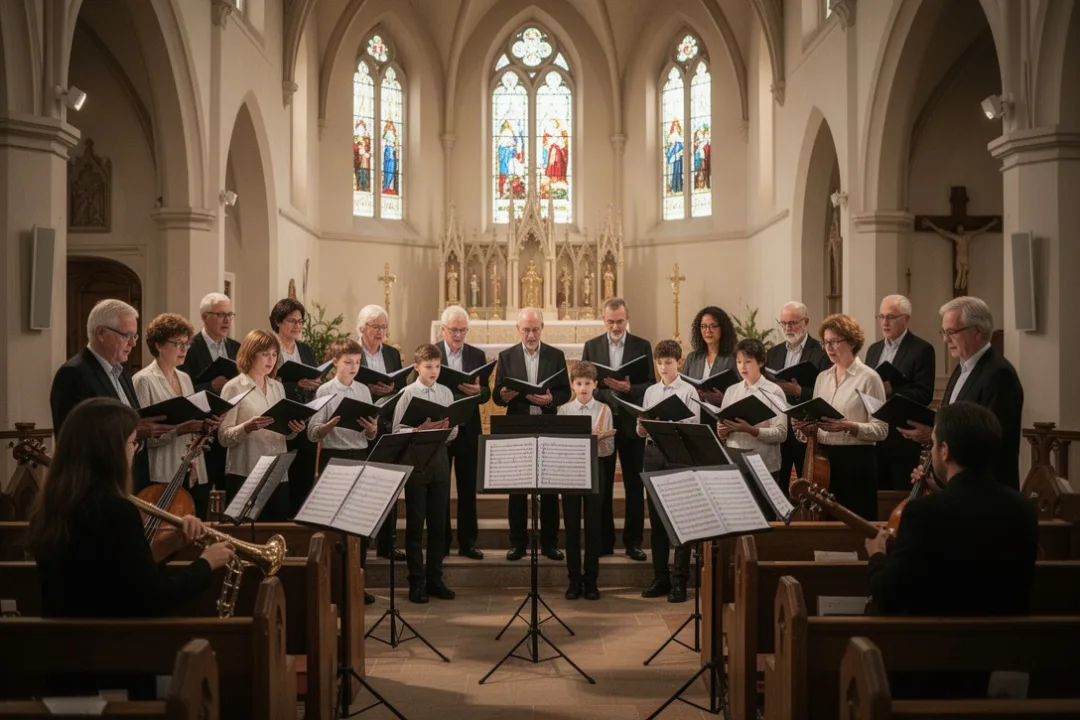
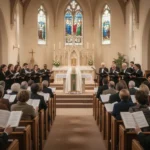
The feast of St. Cecilia is celebrated on November 22. Churches, choirs, music departments, orchestras, and musicians may mark the day with Mass, concerts, hymn sings, rehearsals, charitable projects, or special prayers. The form of the celebration varies according to local customs and church calendars.
For a parish, the feast can be a natural occasion to thank choir members, instrumentalists, cantors, composers, sound technicians, music directors, and everyone who supports worship through music. A school or community group might use the day to honor teachers, encourage young musicians, or perform music that serves a charitable cause.
Attend worship: Join a parish Mass or prayer service that includes music and give thanks for those who lead it.
Listen attentively: Set aside distractions and receive a piece of music as an opportunity for prayer or reflection.
Support a musician: Thank a teacher, choir member, accompanist, or performer whose work benefits others.
Practice an instrument: Offer your preparation and discipline as a quiet form of service.
Help someone in need: Connect music with Cecilia’s traditional concern for faith and charitable action.
What the traditional story of St. Cecilia teaches
Faith can shape difficult choices
Cecilia’s story presents a person whose religious convictions affected the most personal areas of life. She did not treat faith as a private idea separate from her relationships, promises, or moral decisions. The traditional account portrays her as someone who tried to remain faithful while responding with care and courage to the people around her.
That does not mean every modern reader must copy the social circumstances of an ancient story. It does mean that St. Cecilia can help you reflect on integrity: the connection between what you believe, how you act, and how you treat other people when circumstances become difficult.
Courage is more than dramatic bravery
St. Cecilia is often shown as a martyr, so courage is naturally central to her image. Yet courage can also appear in less dramatic forms: telling the truth, refusing cruelty, defending a vulnerable person, or continuing to serve when recognition is unlikely.
Musicians may see this in the discipline of regular practice, the humility of performing as part of an ensemble, and the patience required to make room for other voices. In that sense, Cecilia’s example applies to ordinary faithfulness as much as to heroic sacrifice.
Music can serve something larger than performance
A song can entertain, but it can also help people grieve, celebrate, remember, worship, and stand together. A hymn may give a congregation words when personal prayer feels difficult. A child learning an instrument may gain confidence and a way to express feelings that are hard to explain.
St. Cecilia’s patronage encourages a view of music as a form of human connection and spiritual service. It does not require every song to be explicitly religious. Rather, it asks you to consider the purpose, effect, and spirit behind the music you make or share.
How to pray with St. Cecilia
People often ask St. Cecilia to pray for musicians, singers, composers, music teachers, performers, and those who use music in worship or care. You do not need special words or musical ability to pray with her. A short, sincere prayer can name a person, a concern, or a desire to use your gifts well.
One simple approach is to begin with gratitude. Thank God for a particular song, voice, instrument, teacher, choir, or musical memory. Then bring a need to prayer, such as anxiety before a performance, a loss of inspiration, conflict within a group, financial pressure, or the wish to use music for the good of others.
Become quiet: Take a few moments away from noise and interruptions.
Name the gift: Think of a musical ability, person, or experience for which you are grateful.
Ask for guidance: Invite God to help you use music with humility, discipline, and care.
Remember others: Pray for listeners, students, teachers, performers, and people who need comfort.
Choose one action: Encourage someone, practice faithfully, repair a strained relationship, or share music generously.
A prayer to St. Cecilia can be addressed to God while asking Cecilia’s intercession. In Christian practice, a saint is not treated as a replacement for God. The request asks a faithful person who has gone before you to pray with you and for you.
St. Cecilia, pray for all who make, teach, lead, and receive music, that their gifts may bring truth, comfort, beauty, and praise.
Religious art often identifies St. Cecilia through objects connected with her story or patronage. The most familiar is a musical instrument, particularly a small organ or organ-like instrument. Other works show her holding a palm branch, the traditional sign of martyrdom, or a crown that represents holiness and victory through faith.
Some images portray Cecilia with a sword, reflecting the traditional account of her execution. Others emphasize her prayerful expression, elegant clothing, or relationship to the church community. Artistic details vary by period and region, so an image does not always provide a literal historical portrait.
Organ or instruments: These identify her connection with music and musicians.
Palm branch: This represents martyrdom and steadfast witness.
Crown: This can signify holiness, virginity in the traditional Christian sense, or heavenly honor.
Prayerful posture: This highlights her interior devotion and dependence on God.
Roman clothing or setting: These place the story within the ancient world as imagined by the artist.
What is historically known about St. Cecilia
Separating early evidence from later tradition helps you appreciate Cecilia without treating every detail as equally certain. Her name appears in the ancient Roman calendar of martyrs, and her commemoration became established in the early church. A church dedicated to her in Rome is associated with the Trastevere neighborhood and has long been an important place of devotion.
Later written accounts provide the familiar story of her marriage, conversion of Valerian and Tiburtius, charitable work, arrest, and martyrdom. These accounts are valuable for understanding how Christians remembered and honored her, but they were written after the events they describe and include elements that historians cannot verify with confidence.
The exact date of Cecilia’s death, the precise circumstances of her martyrdom, and several details of her biography remain uncertain. That uncertainty does not erase her significance. It simply means that responsible readers should distinguish between historical evidence, liturgical memory, and devotional storytelling.
Reading her story responsibly: You can honor St. Cecilia’s spiritual witness while recognizing that early saint biographies often communicate religious meaning through traditional narratives rather than modern historical biography.
St. Cecilia’s church and place in Rome
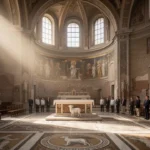
The Basilica of Santa Cecilia in Trastevere is one of the best-known places connected with her. Tradition associates the site with Cecilia’s home and martyrdom, although the building has changed over many centuries. The basilica contains works of art and devotional features that reflect the long history of her veneration.
A notable sculpture of Cecilia lies beneath the main altar. It was created by Stefano Maderno in the early seventeenth century and is traditionally understood as representing the position of her body when her tomb was opened. The sculpture has helped shape the way many visitors imagine the saint, but it should be understood as a later artistic work rather than a contemporary portrait.
The Roman setting also shows how devotion to a saint develops over time. Worshipers, artists, clergy, musicians, and visitors have each contributed to Cecilia’s continuing presence. Her connection with music grew through liturgy, art, and the life of the church rather than from one single event.
How musicians and communities can celebrate St. Cecilia
A celebration does not need to be elaborate. The most meaningful observance connects music with gratitude and service. A choir might sing at a parish liturgy and then share a meal. A music teacher might invite students to perform for residents of a nursing home. A family might listen to a favorite sacred work and discuss how music has helped them through a difficult time.
Churches can also use the feast day to recognize the work that audiences do not always see. Rehearsals, instrument maintenance, music selection, score preparation, scheduling, sound checks, and pastoral sensitivity all contribute to a good musical experience. Thanking people for this work reflects Cecilia’s association with faithful service rather than celebrity.
Invite musicians to offer a song or instrumental piece during a prayer service.
Collect donations for music lessons, instruments, or a local charitable organization.
Ask members of the community to share a song that carries personal or spiritual meaning.
Pray for people whose work involves music, including those who perform in difficult circumstances.
Teach children about the difference between talent, practice, attention, and generosity.
Choose music that allows the whole community to participate, not only trained performers.
Why St. Cecilia remains relevant to modern musicians
Musicians today work in settings that range from churches and concert halls to classrooms, studios, hospitals, theaters, and online platforms. They may perform for large audiences or create music privately. St. Cecilia’s example can speak to all of them because her patronage is connected not only with a specific instrument but with the responsible use of creative gifts.
Her story also offers a counterbalance to the pressure to measure music only through applause, rankings, income, or public attention. Skill matters, and professional standards matter, but music can have value even when it reaches a small audience. A song shared with one grieving person may matter as much as a performance heard by thousands.
For students, Cecilia can represent perseverance during slow progress. For teachers, she can represent patient encouragement. For worship leaders, she can represent the need to support congregational prayer rather than draw attention away from it. For performers, she can represent humility, preparation, and respect for the audience.
Questions to consider when honoring St. Cecilia
Prayer and reflection become more personal when you connect Cecilia’s story with your own responsibilities. You might ask what your musical gifts are for, who benefits from them, and where pride or fear affects your work. You can also consider how your listening habits shape your mood, relationships, and attention.
Does music help you become more attentive to God, other people, or your own responsibilities?
How do you respond when practice is difficult or your performance does not go as planned?
Can your musical ability encourage, teach, comfort, or include someone who feels overlooked?
Do you make room for other people’s voices when you work in a group?
What would it mean to offer your music with gratitude rather than seeking only approval?
These questions reach beyond the feast day. They make St. Cecilia’s patronage practical for anyone who sings, plays, teaches, listens, organizes, or simply receives strength from music. Her legacy is not limited to an image beside an organ; it is a reminder that beauty can become service when it is offered with love and humility.
Frequently asked questions
Is St. Cecilia mentioned in the Bible?
No. St. Cecilia is not a biblical figure, and the Bible does not identify her as a saint or musician. Her veneration comes from early Christian tradition and the church’s calendar of martyrs. Her later biography helped shape devotion to her, while her connection with music developed through liturgical tradition and medieval interpretation.
Why do musicians wear medals of St. Cecilia?
A medal of St. Cecilia is a devotional reminder of her witness and patronage. Musicians may wear one when asking for guidance, confidence, discipline, or protection in their work. The medal is not considered a guarantee of success. Its purpose is to encourage prayer and to remind the wearer that musical ability can be used generously.
Can non-Catholics honor St. Cecilia?
Yes. People from many Christian traditions, and people who simply appreciate her cultural and artistic legacy, may learn about or honor St. Cecilia. You might listen to music associated with her feast, thank a musician, visit a church connected with her, or reflect on how creative gifts can serve other people.
What is a good gift for someone who loves St. Cecilia?
Consider a tasteful medal, prayer card, icon, biography, music recording, or book about sacred music. A practical gift such as sheet music, a concert ticket, instrument supplies, or lessons may also be meaningful. Pairing the gift with a handwritten note of appreciation can make it more personal than choosing an item based only on appearance.












Leave a Reply