Church Music Background: Crafting an Inspiring Worship Sound
The church music background is a tapestry woven from centuries of sacred sound, theological reflection, and communal life. From quiet chant sung by cloistered monks to the amplified praise teams of contemporary worship spaces, the arc of sacred music reveals how a faith community understands God, gathers for prayer, and speaks to the world through sound. This article surveys the historical roots and theological aims behind church music, explores how spaces shape sound, and offers guidance for crafting an inspiring worship sound that honors tradition while inviting fresh engagement. Whether you call it liturgical music, sacred song, or the repertoire of praise, the aim remains the same: to help the congregation sing, to elevate the message, and to cultivate a posture of awe, gratitude, and exhortation.
Historical Roots and the Evolution of Sacred Sound
The background of church music is best understood as a long conversation across eras, languages, and denominational styles. Early Christian worship drew on the melodies and rhythms of the broader ancient world, while gradually coalescing into distinctive forms that could be shared across communities. The early church frequently adapted Jewish liturgical materials, reimagining psalms and canticles in ways that made them accessible for worship in Greek and Latin settings. This process gave birth to a living tradition in which music served as both prayer and proclamation.
From Chant to Canon: The Medieval and Renaissance Buildout
The medieval period solidified a sustained, communal approach to music in sacred spaces. Gregorian chant—monophonic, Latin, and vocal-only—became a unifying sound that could span vast cathedrals and diverse musical communities. As polyphony emerged in the Ars Nova and later periods, choirs grew more intricate, and composers explored harmony, counterpoint, and architecture in tandem. The result was a layered soundscape in which gravity and beauty supported liturgy rather than overshadowed it.
Reformation, Counter-Reformation, and Post-Reformation Pluralism
The Reformation catalyzed a reexamination of musical practice: hymnody took on new roles as congregational song, church choirs adapted, and worship spaces often shifted toward vernacular languages. The Counter-Reformation emphasized clarity of text and reverent decorum, informing choral traditions in Catholic areas. In subsequent centuries, many traditions diversified—psalm singing, anthems, chorales, and oratorios all found places in church life. The church music background thus encompasses a broad spectrum of styles, all connected by the shared aim of guiding worshipers toward encounter with the divine through sound.
Baroque to Romantic: Crafting Drama and Devotion
In the Baroque era, composers and church musicians experimented with musical rhetoric—thematics, contrast, and architectural sound—so that music could accentuate liturgical action. The architectural acoustics of cathedrals and churches became a partner to composition. Later, the Romantic period broadened expressive possibilities, inviting emotionally charged moments, soaring melodies, and substantial choral forces. Across these periods, the central question remained: how can music serve the liturgy and deepen the congregation’s experience of worship?
Gospel, Spirituals, and the Rise of Modern Worship
In the 19th and 20th centuries, gospel music and spiritual traditions offered a fresh idiom for personal testimony and communal celebration. These forms often emphasized rhythmic drive, call-and-response, and accessible keys, enabling broader participation. As churches around the world adopted contemporary worship models, a new soundscape emerged—one that blends traditional hymnody with modern instrumentation and production techniques. The church music background continues to expand as communities explore what it means to sing in culturally meaningful ways while honoring doctrinal commitments.
Theology, Liturgy, and the Purpose of Music
Music in church is not merely decoration; it is a theological act. The worship sound communicates beliefs about God, the church, and the human response to grace. In many traditions, music marks transitions in the service—opening call to praise, sung confession, proclamation of the Word, celebration of the Eucharist, and the sending forth of the community. The background of church music in these settings grows out of a conviction that congregational singing shapes faith and memory, forming a shared vocabulary for expressing praise, lament, gratitude, and hope.
Worship as Prayer: Music as Conversational Communion
For countless communities, music functions as a language of prayer. Text and melody collaborate to shape contemplation, confession, and proclamation. When a song is sung with conviction, it becomes a form of petition or blessing that travels from the lips of the worshiper to the heart of God. This sense of worship as conversation underpins the careful balance of aesthetics and theology in the church music background.
Congregational Participation and Leadership
A central aim in many traditions is congregational participation. The texture of the service—hymn stanzas, responsive readings, and sung doxologies—depends on how well the body of believers can join in. The leader’s role, whether as a pastor-musician, worship pastor, or choir director, is to cultivate a space where the congregation can sing with clarity, confidence, and sincerity. The background of church music in this regard includes not only the sound but the structure that invites and sustains corporate singing.
Acoustics, Space, and Design: How Architecture Shapes Sacred Sound
The acoustics of sacred spaces profoundly influence the music heard by worshipers. The geometry of a sanctuary, the materials used in construction, and the placement of speakers and instruments all contribute to the overall soundscape. A cathedral’s long reverberation, a modern sanctuary’s controlled clarity, or a multi-use chapel’s flexible acoustic can determine how a choir or a band blends with the congregation. Understanding and responding to space is a key element in crafting an inspiring worship sound.
Principles of Acoustic Design for Worship
Clarity of text comes from balanced amplification and careful diction coaching.
Blend and balance ensure no single voice or instrument dominates the tapestry.
Reverberation time should complement the repertoire, whether chant, hymn, or contemporary worship.
Spatial distribution of choirs, instrumentalists, and vocalists supports clear ensemble singing and congregational engagement.
Spaces as Teachers of Tone
The environment teaches musicians how to approach vocal production, articulation, and phrasing. In reverberant spaces, singers may choose slightly shorter phrasing or adjusted dynamics to maintain intelligibility. In more intimate rooms, the emphasis might be on crisp diction and nuanced balance. The church music background acknowledges space as a partner in shaping the worship sound, not as an afterthought.
Instruments, Voices, and Ensemble Styles
The choice of instrumentation and vocal approach a church adopts is intimately tied to its theology, culture, and space. From organ lofts to praise teams, the spectrum of possibilities allows communities to craft a sound that feels both rooted and livelier in mission.
The Organ and Keyboard Foundations
The pipe organ has historically underpinned Western church music with its breadth of color, dynamic range, and sustaining power. Even in spaces that rely primarily on modern amplification, a well-tuned organ or digital organ model anchors the sound of worship in a traditional register. Registration decisions—choosing stops, what to couple, and how to balance inner and outer voices—offer a concrete way to shape the worship texture.
Vocal Forces: Choirs, Cantors, and Congregational Singing
Vocal forces come in many configurations. A trained choir can carry complex polyphony and lead congregational hymns with assured blend. Cantors or soloists may highlight particular texts or liturgical moments, offering a musical bridge between the spoken word and the assembly’s response. Meanwhile, congregational singing remains the lifeblood of many traditions, with preferred keys, tempo ranges, and familiar repertoire that invite broad participation.
Contemporary Ensembles and Contemporary Worship
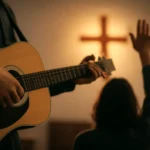
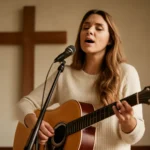
In the modern worship context, bands often provide rhythmic drive and improvisational energy. Guitars, keyboards, bass, and drums, plus occasional violin, flute, or brass, create a flexible palette for varied services. The challenge is to maintain a sense of worship reverence while enabling accessible congregational participation and clear communication of the text.
Texture and Color: Strings, Brass, and Percussion
Strings add warmth and lyrical nuance; brass can punctuate the proclamation with ceremonial grandeur; percussion helps establish pulse and momentum. The church music background often involves decisions about when to deploy these colors and how to balance them with the congregation’s voice. Thoughtful orchestration supports the liturgy rather than distracting from it.
Repertoire, Text, and Rehearsal Practices
The repertoire a church selects communicates doctrine, seasonal emphasis, and the spiritual arc of a worship service. From chants and psalms to hymns and contemporary songs, the pool of material should be deliberate, theologically sound, and accessible to the gathered believers. Rehearsals become a form of sacramental preparation, where musicians study not only notes but the meaning of the texts and the intent of the service.
Theological clarity and alignment with the church’s confession.
Congregational accessibility—range, key, tempo, and lyrical clarity for a diverse body.
Text integrity—using translations that honor original meaning when language shifts occur.
Repertoire breadth—a mix of timeless hymns, psalms, anthems, and fresh songs to reflect seasons and culture.
Sensibility to liturgical time—opening, gathering, confession, proclamation, thanksgiving, and sending.
Rehearsal Techniques for Strength and Unity
Effective rehearsals build vocal technique, pitch accuracy, and blend, while also shaping a sense of shared purpose. Some productive practices include:
Warm-ups that address breath control, resonance, and diction.
Part-singing to ensure individual lines fit within the whole texture.
Sectionals focusing on challenging passages or language articulation.
Mock worship moments that simulate service flow and congregational involvement.
Listening exercises to develop balance and musical communication.
Textual and Languguage Considerations
In a globalized church, the background of church music increasingly includes multilingual congregations. Choosing texts that reflect the congregation’s makeup, alongside accurate translations and inclusive language, helps ensure that everyone can participate meaningfully. The goal is not merely singing the words but internalizing the theology that those words convey.
Practice of Leadership: Conductors, Worship Leaders, and Teams
A thriving music ministry depends on effective leadership that serves the liturgy and the people. Leadership involves clear communication, meticulous planning, and a humble attitude that centers worship on God rather than personal performance. A well-led team fosters trust, accountability, and a shared sense of mission.
Roles Within the Music Ministry
Music director or worship pastor who oversees repertoire, liturgical alignment, and overall sound.
Choir director who shapes choral technique and blend.
A/V technician who ensures consistent sound reinforcement and faithful recording or streaming when needed.
Volunteer musicians who bring diverse gifts and support the broader soundscape.
Building a Theology of Music Leadership
Leaders must model servant leadership, emphasize congregational participation, and steward resources responsibly. They should cultivate an atmosphere where technology serves worship rather than dominates it, where tradition informs present practice, and where the musical background remains tethered to the gospel and the mission of the church.
Technology, Production, and the Digital Dimension of Sacred Music
The tools available to church musicians have expanded dramatically in recent decades. Digital pianos, software for arranging and notation, in-ear monitors, and streaming platforms broaden the reach and precision of worship. When used wisely, technology can enhance the worship experience, improve text clarity, and broaden access to congregants joining from home or distant communities.
Sound Reinforcement and Clarity
Proper sound reinforcement requires good microphones, appropriate gain structure, and a mixing approach that favors intelligible speech and blended singing. The goal is not to amplify beyond natural balance but to ensure that every voice and instrument contributes to a cohesive whole.
Streaming worship and preserving recordings offer new avenues for people to engage with the church music background beyond the service itself. Clear captioning, accessible translations, and thoughtful camera work can extend the reach of worship to homebound members and the broader community without compromising reverence or the integrity of the liturgy.
Community, Culture, and Cross-Cultural Expressions
The church music background in a globalized world often includes cross-cultural expressions and language diversity. Churches can reflect their local cultures while remaining faithful to doctrinal commitments. This intercultural approach may involve incorporating traditional melodies from different communities, commissioning new works by local composers, or adapting familiar songs in ways that honor heritage while inviting broader participation.
Inclusive Repertoire and Language Ethics
Thoughtful leadership considers language ethics in worship. When introducing songs in languages other than the dominant tongue, provide accurate translations, pronunciation guides, and contextual explanations. The aim is to cultivate a sense of shared sacred space where diverse voices are welcomed and where the music becomes a bridge rather than a barrier.
Seasonal and Liturgical Rhythm Across Cultures
Different churches observe different calendars and seasonal emphases. Whether in a traditional liturgical year or in a more flexible church calendar, music can reflect the tempo of Advent, Christmas, Lent, Easter, Pentecost, and ordinary time with intentional programming. The background of church music here is not just cataloging pieces but shaping the communal journey through musical storytelling.
Measuring Impact: The Effect of Music on Worship
How can a community know if its worship sound is achieving its aims? Several indicators can guide assessment. These include congregational engagement during singing, the perceived clarity of the sermon, a palpable sense of reverence or joy, and the ability of the music to shape memory and reflection after the service.
Qualities of an Inspiring Worship Sound
Clarity of text and musical intention, so the congregation can respond with understanding and heart.
Unity in tone and balance, where singers and instrumentalists become a single voice with the assembly.
Transparency in leadership, so the purpose of every musical gesture is evident and meaningful.
Authenticity in emotion and expression, avoiding sentimentality while seeking heartfelt praise.
Continuity between the service’s spoken word and sung response, ensuring a cohesive experience.
Appendix: Quick Reference for Church Musicians
Chant — a monophonic or short-melody sacred song that forms a foundational thread in many traditions.
Hymnody — congregational song with stanzas and refrain, often with a tuneful, singable melody.
Anthem — a musical setting for choir that may be performed with or without congregational participation.
Psalmody — the practice of singing the psalms, sometimes in paraphrase or direct text.
Doxology — a short, often triadic, concluding blessing or praise line at the end of a hymn or psalm.
Registration — the combination of stops and pedal fortes used on an organ to achieve a desired color.
Articulation — the manner in which notes are started and connected, essential for text clarity.
Tempo — the pace of the music; intentional tempo choices support congregational singing and liturgical pacing.
Arranging — adapting songs for choir, band, or congregation while preserving theology and accessibility.
Musical direction — the guiding vision for worship music that aligns with the church’s mission and doctrine.
Closing Reflections: A Living, Communal Art
The background of church music is not a static catalog but a living discipline. It calls musicians and singers to careful listening—to the text, to one another, to the room, and to God. It invites communities to sing with joy, to lament with honesty, and to proclaim the good news through sound that helps people encounter grace. A truly inspiring worship sound arises when tradition and innovation meet in service of the liturgy, when a choir breathes with the congregation, when a worship leader guides without coercion, and when every voice—whether polished or learning—finds its place in the chorus of praise.
In this enduring pursuit, the background of church music becomes a map: it points to sources of beauty, to the discipline of rehearsal, to the architecture of space, to the power of language, and to the generous invitation of worship that welcomes all who long to lift their voices in praise.















Leave a Reply