Understanding the Moment: What Is Current Worship Music?
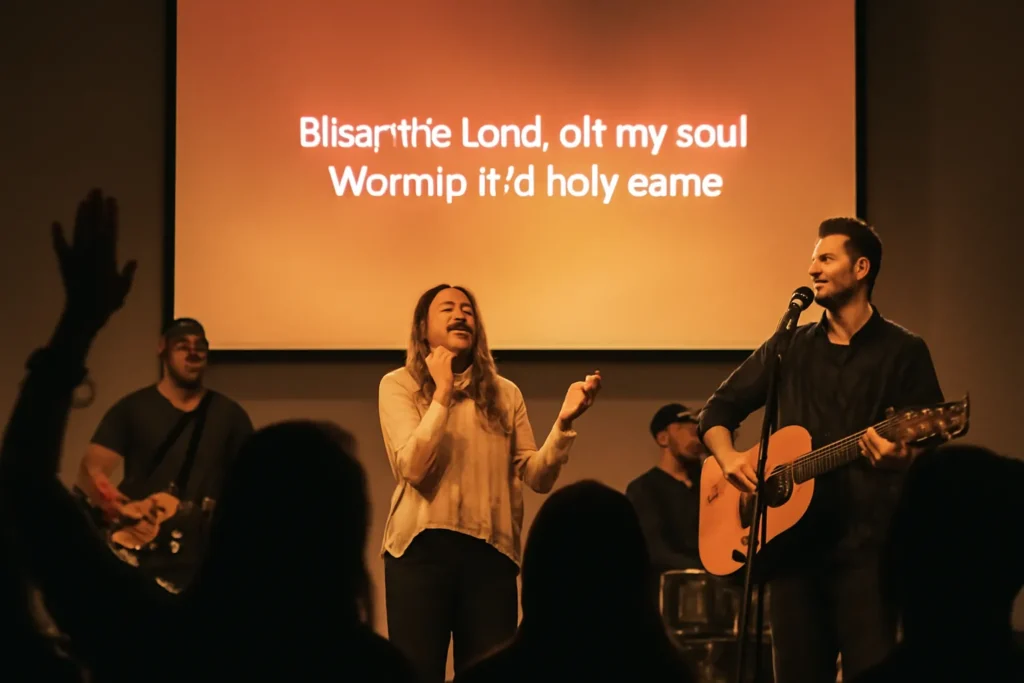
Worship music is a living ecosystem that shifts with culture, technology, and
the rhythms of church life. Today’s landscape blends mainstream pop sensibilities,
gospel-infused church bands, global musical influences, and the timeless aim of
helping a congregation encounter God through song. In this moment, congregational
singability sits at the center, while theological clarity and musical accessibility shape how songs are chosen, arranged, and sung
week after week. This article aims to illuminate the current worship music scene —
the latest songs typically heard in churches, the trends that are driving them, and
practical guidance for worship teams navigating this dynamic space.
Key Trends Shaping Today’s Worship Music
Across worship ministries around the world, certain patterns recur as organizers select
songs, arrange services, and train teams. The following trends are not isolated
phenomena but interlocking forces that define how modern worship sounds and
functions in a local church context.
1) Streaming Culture and Song Discovery
The rise of streaming platforms has changed how new worship songs originate, spread,
and gain traction. Churches often explore fresh releases through label roundups, artist
playlists, and curated church media libraries. This has several practical implications:
Rapid discovery cycles mean songs can move from release to congregational use in weeks rather than months.
Cross-church collaboration occurs as teams share charts, stems, and rehearsal tracks, enabling a wider pool of leaders to participate in the song’s life cycle.
Chart- and streaming-driven momentum can influence which songs appear in worship planning software and Sunday services.
2) Production Quality Meets Singability
Modern worship productions routinely balance high-fidelity studio polish with congregational singability. Expectations have evolved:
songs often feature catchy melodies, memorable hooks, and clear refrain points that are easy to learn in a single rehearsal.
arrangements combine live instrumentation and electronic elements to create broad sonic appeal without overwhelming the singer.
slides, chord charts, and rehearsal media are designed for quick learning and repeatable worship flow.
3) Theological Clarity and Honest Laments
A steady thread in current worship is a careful balance between praise and proclamation —
songs that declare God’s goodness while also naming present struggles. This has produced
a repertoire that includes anthemic declarations and intimate laments.
The result is a broader emotional range that mirrors real church life: celebration,
repentance, consolation, and hopeful expectation.
4) Global and Cross-Cultural Influences
Contemporary worship increasingly embraces a global sonic palette. African
rhythms, Latin percussion, gospel-charged brass, and Asian melodic sensibilities appear
alongside Western pop and folk textures. Churches that celebrate diversity as a core value
find that multilingual services and culturally infused arrangements enrich the worship
experience for a broader congregation.
5) Diversity in Teams and Repertoire
Many worship programs intentionally assemble teams that reflect the diversity of their
community. This practice contributes to a more varied repertoire, featuring songs written by
a wider range of artists and crafted by teams with different musical backgrounds. The outcome
is a more inclusive sound and a repertoire that resonates with a broader
spectrum of worshippers.
6) Technology as a Worship Enabler
Technology continues to be an enabler rather than a distraction. In today’s worship
environment, churches leverage:
Choral arrangements and lyric automation for live
projection and online streaming.
Loop-based sequencing and digital instruments to
produce consistent grooves.
Short-form media for social media engagement and seed content for
congregational participation.
Latest Songs: A Snapshot of Recent Releases and Their Practical Roles
While song titles come and go, the character of the latest songs in worship can be
understood through several representative categories. Each category reflects how
contemporary worship teams approach new material, how it feels under the gaze of a
worship leader, and how it lands in a congregation with varying musical backgrounds.
These are typically bold, singable declarations that aim to unify a room around a shared
truth. They are often designed for extended chorus moments, easy-key
transposition, and a sense of collective ascent. The best new anthems tend to be:
Concise verse-chorus structure with a memorable hook that stays with the listener.
Strong lyrical clarity about God’s character, purpose, and faithfulness.
Instrumentation that supports congregational singing without becoming a showcase for
virtuosity.
Intimate Acoustic Ballads for Personal Response
Not every song is meant to fill a stadium; many recent releases lean toward up-close worship — songs you can hear, reflect on, and respond to personally.
Characteristics include delicate vocal delivery, acoustic-driven textures, and lyric lines
that invite contemplation.
Gentle guitar or piano foundations create a reflective atmosphere.
Melodic contours favor ease of singing for individuals or small groups.
Themes center on identity in Christ, surrender, and personal gratitude.
World Music Fusion and Multicultural Arrangements
A growing cluster of contemporary worship songs blends traditional praise with rhythmic accents from various cultures. Expect:
Rhythmic layers that nod to Afrobeat, Latin pop, or Caribbean grooves.
Call-and-response phrases that feel natural in multilingual congregations.
Instrumentation that includes percussion, brass, and strings to enrich the tapestry.
Youth-Oriented and Generationally Diverse Tracks
Churches that minister to younger generations often favor songs that are rhythmic,
genre-blending, and lyrically accessible. These tracks balance edgy production
with clear doctrinal statements, making them usable in youth services,
weekend gatherings, and weekend city-campus environments.
Energetic grooves with bright synths and punchy drum lines.
Rap-inflected verses or spoken-word segments that drive attention to the message.
Lyric hooks that function as easy-to-learn corporate worship moments.
Production and Arrangement Trends in 2024–2026
The technical side of worship music continues to evolve, enabling teams to deliver
powerful moments of corporate singing while staying true to the church’s musical identity.
Here are some notable trends in arrangement and production today.
Layered Vocals and Rich Harmonic Textures
Modern songs frequently feature stacked vocal harmonies and
deliberate texture changes between sections. This creates a sense of lift during
choruses and a sense of intimacy in verses. Teams experiment with:
Two-, three-, or four-part vocal harmonies that remain singable with minimal rehearsal.
Lead vocal lines that sit clearly atop a supportive chorus with dynamic contrast.
Use of bridge sections to build emotional momentum before the final chorus.
Minimalist versus Orchestral—A Balance of Palettes
Some songs lean toward a minimalist texture—think piano, soft pads, and a restrained
rhythm section—while others achieve a cinematic feel through orchestral color and
synth pads. The choice often depends on the service context:
Small groups and house churches benefit from intimate, stripped-down textures.
Mid-sized and large churches can deliver broader color through additional
layers such as strings or brass.
Pastors and leaders look for a consistent sonic identity that fits their
room and visual presentation.
Tempo and Modulation Practices
Tempo choices influence how a song feels in a live setting. Many current songs intentionally
vary their tempo across sections to create tension, release, and momentum. Common tactics include:
Starting in a moderate tempo and expanding into a faster chorus to drive energy.
Modulating keys for the final chorus to provide a sense of elevation and celebration.
Using tempo bridges to give musicians time to rebalance during transitions.
Digital Tools and Rehearsal Accessibility
Rehearsal workflows have become more efficient due to digital tools. Helpful practices include:
Chord charts, lyric slides, and stems readily available to volunteers and guest musicians.
Offline rehearsal media for teams that travel or operate with limited connectivity.
Electronic metronomes, click tracks, and cue sheets that synchronize band and vocals.
Lyrical and Theological Focus in Current Worship
The content of worship songs matters as much as their musical quality. Contemporary writers
emphasize a range of biblical themes, aiming to foster genuine faith formation in listeners.
Here are some discernible thematic currents shaping the lyric landscape.
Identity in Christ and Belonging
A common thread is the declaration of identity in Christ and the believer’s union
with the body of Christ. Songs frequently articulate believer-authorized identity
and the security found in grace, adoption, and new life.
Trust in God Amid Uncertainty
In an era of rapid change, many songs offer a stance of trust, even when circumstances
are unsettled. Lyrics emphasize God’s faithfulness, sovereignty, and presence in trials.
This theme provides a pastoral resource for churches navigating grief, transition, and
waiting on God.
Joyful praise remains a staple — songs that lift up God’s goodness and faithfulness with
exuberant melodies. The joyful register often serves as a cultural bridge that invites
people of diverse backgrounds into a shared moment of praise.
Repentance, Mercy, and Redemption
A growing subset of current worship songs addresses lament and confession within a framework
of hope. These songs aim to model authenticity in worship, recognizing human frailty while
pointing to redemption in Christ.
Regional Variations: How Worship Music Differs Around the World
Worship music is not monolithic. Different regions bring distinct musical textures and
preferences, which in turn shape how songs are written, arranged, and used in churches.
North America and Europe
In these regions, there is a strong emphasis on produced, anthemic tracks
suitable for mid-to-large congregations. Songwriters often aim for a balance between
contemporary pop/rock aesthetics and worship-centered theology, with faithful production
values and clear lyric messaging.
Africa and the Caribbean
The worship landscape increasingly blends gospel rhythms, high-energy percussion, and
call-and-response formats. Choir-driven dynamics, brass, and traditional influences meet
modern arranging techniques, producing songs that feel both familiar and expansive.
Latin America and the Global South
Spanish- and Portuguese-language worship teams push vibrant rhythmic sensibilities, fusion
of Latin genres with contemporary worship chords, and lyrics that emphasize communal
experience. Multilingual services are common, and translations or bilingual presentations
are used to reach broader gatherings.
Churches in these regions often blend electronic textures with melodic sensibilities drawn
from local musical traditions. The result is a modern worship sound that encourages
participation while honoring cultural uniqueness.
Guidance for Worship Leaders: Selecting and Rolling Out New Songs
Successfully incorporating current worship music requires thoughtful planning, clear
communication, and ongoing training. Here are practical approaches many teams find
helpful:
Rolling out new songs is not only a musical exercise but a pastoral one. Leaders consider:
How a new song will be introduced to the congregation and explained in a brief pre-service moment.
How the repertoire supports seasonal themes (advent, lent, revival cycles) or a ministry emphasis.
How to collect feedback from volunteers and adapt the approach as needed.
Practical Resources for Keeping Current with Worship Music
Staying up to date requires intentional resource sharing among teams. Here are several practical
avenues worship leaders commonly rely on:
Label roundups and publisher catalogs that highlight fresh releases and
upcoming albums.
Worship platforms and chart-following playlists that curate new tracks by
intensity, tempo, and theme.
Church media libraries that offer a centralized place to access chord charts, stems, and lyric files.
Church media teams and regional networks that share best practices, rehearsal notes, and
song recommendations.
Looking forward, several forces are likely to influence how worship music evolves. While nothing
replaces pastoral discernment and local church context, some trajectories are broadly observable.
Continued Emphasis on Accessibility and Equity
As churches grow more diverse, accessibility becomes a core criterion for song selection.
This includes multilingual presentation, easy-to-learn melodies, and arrangements that
enable a wider range of volunteers to participate. Songs that offer meaningful theology
without requiring advanced technique will remain central to congregational worship.
Hybrid Models: Live and Digital Synergy
Hybrid worship experiences — combining in-person participation with digital outreach —
will persist. Songs chosen for live gatherings should translate well to livestreams, with
visuals and lyrics that support online worshippers who engage from home.
Continued Global Exchange
The global church continues to exchange musical ideas more rapidly than before. Expect
even more cross-cultural collabs, translations, and localized repertoires that honor local
expressions while maintaining a universal message of worship.
In the end, the aim of current worship music is not just to sound fresh but to serve the
church’s mission: to lead people into meaningful encounters with God through song.
This means prioritizing songs that are biblically faithful, pastorally sensitive, and
musically accessible. It also means cultivating teams that are diverse, prepared, and
adaptable to ongoing change.
A practical approach to today’s repertoire involves thinking in cycles:
Discovery — identify potential songs that align with your church’s theology and culture.
Assessment — evaluate singability, range, and congregation response in a controlled setting.
Implementation — integrate the song with clear teaching moments and rehearsal media.
Rotation — rotate songs in a planned manner so the congregation remains engaged without fatigue.
The current worship music moment is marked by energy, diversity, and theological depth.
It is a season where teams experiment with new sounds while safeguarding the core purposes of
worship: to declare the greatness of God, to invite heartfelt praise, and to cultivate a
thriving faith community. As you plan for your congregation, consider both the practical needs
of your musicians and the spiritual needs of your people. In doing so, you’ll be
able to shape a worship experience that is not only current in sound but enduring in impact.















Leave a Reply