Native American saint: the story of Kateri Tekakwitha
Native American saint: the story of Kateri Tekakwitha
Saint Kateri Tekakwitha is widely recognized as the first Native American Catholic saint. A Mohawk woman who lived in the 17th century, she became known for her Christian faith, courage, care for others, and willingness to follow her conscience despite serious opposition.
Kateri was canonized by Pope Benedict XVI on October 21, 2012. Her story includes Indigenous identity, colonial-era missionary activity, family loss, religious freedom, and the challenges of interpreting history with respect for Native communities.
Who was the Native American saint Kateri Tekakwitha?
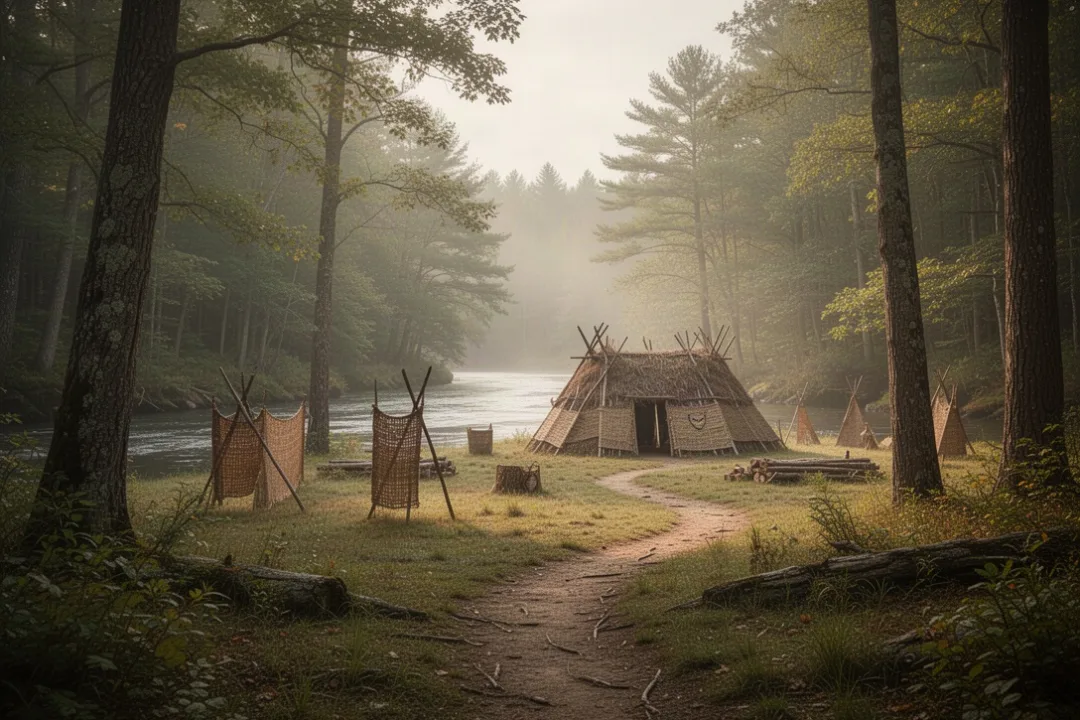
Kateri Tekakwitha was born in 1656 near present-day Auriesville, New York, in a Mohawk community. Her father was Mohawk, and her mother was Algonquin and had been baptized Catholic. Kateri grew up during a period of intense conflict among Indigenous nations and between Native communities and European colonial powers.
Her original Mohawk name was Tekakwitha, often explained as referring to someone who places things in order or moves among objects. After her baptism, she received the Christian name Catherine, commonly rendered in English as Kateri. The name “Kateri” reflects the way Catherine was pronounced in her community.
Kateri lost her parents and a younger brother during a smallpox epidemic when she was still a child. She survived the illness, but it left facial scarring and weakened eyesight. Her aunt and uncle then raised her, and, like other young women in her community, she learned skills connected with family life, agriculture, clothing, and the responsibilities of her people.
She encountered Catholic missionaries as a child but did not receive baptism until she was about 20. After becoming Catholic, Kateri faced pressure from relatives and others who disagreed with her decision. She eventually left her Mohawk village and traveled to the Catholic Indigenous settlement at Kahnawake, near present-day Montreal.
Kateri died there on April 17, 1680, at about 24 years of age. Accounts of her life describe a striking change in her appearance after death, but those reports belong to devotional tradition and should be approached with care rather than treated as independently verified medical evidence.
Essential answer: Kateri Tekakwitha is the Catholic Church’s first canonized Native American saint. Her sainthood recognizes her Christian life, while her history also needs to be understood within the complicated realities of colonization and Indigenous communities.
How Kateri Tekakwitha became a Catholic saint
The Catholic Church’s process for recognizing a saint normally examines a person’s life, reputation for holiness, writings when available, and reported miracles attributed to the person’s intercession. The process can take many years and involves diocesan and Vatican investigations.
Kateri’s path to sainthood developed gradually through the devotion of Indigenous Catholics, missionaries, religious communities, and other believers. Her reputation spread after her death, particularly among Catholics in Canada and the United States who saw her as a model of faith and perseverance.
Her formal recognition followed several major stages:
Local devotion: People who knew of Kateri preserved memories of her life and prayed through her intercession.
Veneration and investigation: Church authorities examined the historical record and the devotion surrounding her.
Beatification: Pope John Paul II beatified Kateri on June 22, 1980, recognizing her as “Blessed Kateri.”
Recognition of a miracle: The Church approved a healing attributed to her intercession, allowing the canonization process to proceed.
Canonization: Pope Benedict XVI declared her a saint in Rome on October 21, 2012.
Canonization does not mean that every detail in later biographies is equally certain. It means the Church formally recognizes the person as a saint and presents that person as worthy of public veneration. Historical research can still distinguish between contemporary evidence, later devotional accounts, and traditions that developed over time.
Important facts about Kateri Tekakwitha
A quick breakdown helps separate the central facts from details that are often simplified.
Name: Kateri Tekakwitha, also known as Catherine Tekakwitha.
Birth: 1656, in the Mohawk homeland near present-day Auriesville, New York.
Heritage: Mohawk through her father and Algonquin through her mother.
Baptism: She was baptized as a young adult after receiving instruction from Catholic missionaries.
Community: She later lived at Kahnawake, a Catholic Indigenous settlement near Montreal.
Death: April 17, 1680.
Beatification: June 22, 1980, by Pope John Paul II.
Canonization: October 21, 2012, by Pope Benedict XVI.
Feast day: July 14 in the United States and Canada.
Common patronages: Ecology, the environment, Indigenous peoples, and people facing exile or displacement.
These facts should not be used to reduce Kateri to a symbol detached from her people. She was a real Mohawk woman living in a particular political, cultural, and religious setting. Her story is best understood alongside the history of the Haudenosaunee, Catholic missions, epidemic disease, warfare, European settlement, and Indigenous resilience.
What Kateri’s childhood reveals about her historical setting
Kateri’s childhood took place during the later 17th century, when Native nations in the Northeast faced warfare, disease, displacement, and unstable relations with European powers. The Mohawk were one of the nations of the Haudenosaunee Confederacy, also called the Iroquois Confederacy in many historical sources.
European diseases caused devastating losses in Indigenous communities, sometimes before families had direct contact with European settlers. Smallpox was one of those diseases. Kateri’s illness killed members of her immediate family and left her with lasting physical effects.
Her family’s experience also reflects the importance of community care. After losing her parents, she was taken in by relatives. Her later life cannot be understood only as an individual religious biography because decisions about marriage, work, residence, and belief were connected with kinship and community responsibilities.
Missionary activity brought Catholic teaching into Indigenous communities, but it did not occur in a neutral setting. Missions were connected to French colonial expansion and often involved cultural pressure as well as religious instruction. Some Indigenous people adopted Christianity sincerely; others resisted it, adapted it to their own traditions, or practiced more than one religious system at different points.
Kateri’s decision to become Catholic was therefore personal, but it happened within larger forces that affected her entire community. A respectful account can affirm her Christian commitment without presenting conversion as a simple story in which Indigenous culture was replaced by European religion.
Why Kateri chose baptism and left her village
Kateri received religious instruction from Catholic missionaries and was baptized on Easter Sunday in 1676. Accounts of her life portray baptism as a deliberate decision rather than a casual or forced act. Her commitment became more visible as she tried to shape her daily life around Catholic prayer and moral teaching.
Her choice created conflict. Some relatives objected to her refusal to marry, while others disapproved of the amount of time she devoted to prayer. In a community where family obligations were central, her choices could be seen as a rejection of expected responsibilities, even though she understood them as part of her religious vocation.
She eventually left for Kahnawake, where she could live among other Indigenous Catholics and receive support from missionaries. The journey was difficult and involved traveling a long distance through a dangerous landscape. Her move gave her greater freedom to practice Catholicism, but it also meant separation from familiar relatives and the place where she had been raised.
Kateri’s story is sometimes described as if she simply escaped persecution and found complete peace. The historical picture was more complicated. Kahnawake offered a Catholic community, yet life there still involved hard work, communal expectations, illness, and the pressures created by colonial conditions.
Her experience can be understood through several connected choices:
She sought instruction before accepting baptism.
She continued practicing her faith despite criticism and social pressure.
She moved to a community where her religious commitments could be supported.
She maintained ties to Indigenous life rather than becoming culturally European simply because she became Catholic.
She served others through prayer, labor, and care within her community.
What Kateri’s religious life looked like
Descriptions of Kateri’s spirituality emphasize prayer, participation in Catholic worship, fasting, penitence, and service. Some later accounts portray her practices in highly idealized language. The broad picture, however, is of a young woman who took her faith seriously and tried to express it through both private devotion and communal life.
She lived at a time when Catholic spirituality often placed strong emphasis on bodily discipline and suffering. Modern readers may find some of the reported practices unfamiliar or troubling. It is more helpful to interpret them in their historical context than to copy them uncritically.
Kateri’s sainthood does not require Catholics to imitate every reported practice. Her example can instead be considered through qualities such as faithfulness, courage, self-discipline, compassion, and conscience. Different Christians may express those qualities through prayer, service, advocacy, family care, or responsible stewardship.
Her commitment also included ordinary work. Religious devotion did not remove her from the practical demands of community life. She worked, participated in shared responsibilities, and lived among other people. That detail matters because holiness in her story was not presented only as private religious intensity.
At Kahnawake, she became associated with a group of Indigenous women who practiced Catholic devotion together. Their community life included prayer and mutual support, but it should not be confused with a modern religious order in the technical sense. Their experience reflected the local culture, missionary presence, and circumstances of the settlement.
Why Kateri is connected with nature and ecology
Kateri is commonly honored as a patron of ecology and the environment. This association developed from her identity as an Indigenous woman, her life in close relationship with the natural world, and the Catholic understanding of creation as something entrusted to human care.
It would be inaccurate to claim that Kateri wrote a modern environmental program or used contemporary ecological language. No such writings are known. Her connection with environmental care is a later interpretation of her life and values, shaped by the growing Catholic focus on stewardship and ecological responsibility.
Her patronage can still be meaningful when approached carefully. It can encourage people to:
Respect land, water, plants, and animals as part of the created world.
Learn from Indigenous communities without treating Indigenous knowledge as a decorative symbol.
Recognize that environmental harm often affects vulnerable communities first.
Practice care for local places through conservation, restoration, and responsible use.
Connect personal spirituality with obligations to neighbors and future generations.
Many Native American traditions contain their own teachings about relationships with land and nonhuman life. Those traditions are diverse and should not be collapsed into a single “Indigenous worldview.” Kateri’s Catholic identity and her Mohawk heritage belong together in her story, but neither should be used to speak for every Native nation.
A respectful approach: Honor Kateri as a Mohawk Catholic woman, not as a generic symbol of all Native Americans. Learn about the specific communities connected with her life and avoid treating Indigenous culture as something belonging only to the past.
How Native communities and Catholics honor Kateri today
Devotion to Kateri appears in parishes, shrines, schools, Catholic organizations, and Indigenous Catholic communities. The National Tekakwitha Conference, founded in the United States, supports Native American and Alaska Native Catholics and promotes devotion to Saint Kateri while addressing the lived concerns of Indigenous communities.
Her feast day on July 14 is marked by Masses, prayer services, cultural gatherings, processions, educational events, and outdoor ceremonies. The exact form varies by community. Some celebrations include Indigenous music, language, food, art, and customs; others follow more conventional parish practices.
Important places associated with her story include Auriesville, New York, connected with her birthplace, and Kahnawake, where she lived during the final years of her life. A shrine or pilgrimage site can support reflection, but visiting one does not replace learning about the people who live in the surrounding region today.
People may ask Kateri’s intercession for many reasons, including:
Strength when facing isolation, illness, or rejection.
Wisdom when religious convictions create family conflict.
Care for the earth and protection of threatened places.
Support for Indigenous families and communities.
Guidance for people who feel displaced or separated from home.
Prayers connected with Kateri often mention her love of God, her perseverance, and her care for creation. Christians who pray to saints are asking the saint to pray with them and for them; they are not treating the saint as a substitute for God.
How to learn about Kateri without oversimplifying her story
Kateri’s life has been told in biographies written for children, devotional booklets, church materials, academic histories, and Indigenous Catholic resources. These sources do not all have the same purpose. A devotional biography may emphasize spiritual inspiration, while a historian may focus on evidence, colonial power, and the limits of surviving records.
Use a layered approach when studying her:
Start with the basic chronology. Learn where she was born, when she was baptized, why she moved, and where she died.
Identify the communities involved. Pay attention to Mohawk, Algonquin, Haudenosaunee, French Catholic, and Kahnawake contexts.
Separate evidence from tradition. Ask whether a detail comes from a contemporary record, a later biography, or devotional memory.
Read Indigenous voices. Seek materials from Native Catholic organizations and writers connected with the communities being discussed.
Consider colonial history. Do not describe missionary work without acknowledging the power imbalances and cultural pressures surrounding it.
Keep her individuality visible. Kateri was not merely an example of conversion, suffering, or environmentalism; she was a person with relationships and responsibilities.
Language also matters. “Native American,” “Indigenous,” “American Indian,” and specific nation names are not always interchangeable. When discussing Kateri, Mohawk is more precise than using a broad label alone. “Native American saint” is useful for identifying her importance in the United States, but it should not erase her particular nation and history.
What Kateri’s sainthood means for Catholics and non-Catholics
For Catholics, Kateri offers a model of holiness rooted in conviction, endurance, prayer, and service. Her canonization also highlights the presence of Indigenous Catholics and challenges the mistaken idea that Catholic history in North America belongs only to European missionaries.
For non-Catholics, her story can be studied as part of Indigenous history, women’s history, colonial history, and the history of religious exchange. A person does not need to share Catholic beliefs to recognize the historical significance of a Mohawk woman whose life and memory crossed cultural boundaries.
Her canonization also raises useful questions. How should religious institutions tell the stories of Indigenous converts? How can churches honor Native identity without romanticizing it? What does reconciliation require when religious missions were connected to colonial systems? How can environmental devotion lead to practical care rather than symbolic language alone?
Those questions do not diminish Kateri’s faith. They make the surrounding history more honest. Respect for her sanctity and respect for Indigenous communities should strengthen each other rather than compete.
Ways to mark Saint Kateri’s feast day
A feast-day observance can be simple and thoughtful. Prayer is one option, but learning and action can also express respect for her life and legacy.
Attend a July 14 Mass or community prayer service.
Read a reliable biography that identifies both Catholic and Indigenous perspectives.
Learn about the Mohawk people and the Indigenous history of the place where you live.
Visit a local river, park, or natural area and practice careful stewardship there.
Support Native-led environmental, educational, or cultural organizations.
Teach children about Kateri’s courage without describing Indigenous people as belonging only to the past.
Pray for Indigenous communities, especially where land, language, health, or cultural rights are under pressure.
The most fitting observance is one that joins faith, historical honesty, and respect for living communities. Kateri’s story should lead to attention and care, not merely admiration for a distant figure.
Why Kateri Tekakwitha remains significant
Kateri Tekakwitha remains significant because several dimensions of North American history meet in her life. She was Mohawk, Catholic, Indigenous, female, young, and part of a community facing disease, conflict, and colonial change. None of those identities can explain her by itself.
Her canonization in 2012 gave global visibility to a Native Catholic woman whose life had long been honored locally and regionally. It also encouraged many Indigenous Catholics to see their culture and faith represented within the Church. At the same time, her story invites careful discussion of the historical conditions in which Christian missions operated.
Remembering Kateri well means holding both devotion and context together. She can be honored as a saint, studied as a Mohawk woman of the 17th century, and approached as part of the continuing history of Indigenous peoples in North America.
Frequently asked questions
Is Kateri Tekakwitha the first Native American saint?
Yes. Kateri Tekakwitha is recognized by the Catholic Church as the first Native American person to be canonized. Pope Benedict XVI canonized her on October 21, 2012. She was the first person from an Indigenous North American nation to receive this formal recognition as a Catholic saint.
What is Saint Kateri Tekakwitha the patron saint of?
Saint Kateri is commonly associated with ecology, environmental care, Indigenous peoples, and people experiencing exile or displacement. These associations reflect interpretations of her identity, life, and devotion rather than a modern environmental program written by Kateri herself.
Where did Saint Kateri Tekakwitha live?
Kateri was born in the Mohawk homeland near present-day Auriesville, New York. After becoming Catholic, she moved to Kahnawake, near present-day Montreal, where she spent the final years of her life and died in 1680.
When is Saint Kateri Tekakwitha’s feast day?
Her feast day is July 14 in the United States and Canada. Catholic communities may observe it with Mass, prayer, cultural gatherings, educational programs, or outdoor activities focused on care for creation and respect for Indigenous communities.











Leave a Reply