Jeremiah 29:11-14 is a promise of hope spoken to people living through exile, not a guarantee of immediate prosperity. The passage assures Judah that God has not abandoned them, even though judgment has disrupted their homes, worship, and national life.
These verses are often read as a personal message about a good future, and they can offer real encouragement in seasons of uncertainty. Their meaning becomes clearer, however, when you read them alongside the letter’s larger message: the exiles were to settle in Babylon, seek the city’s welfare, wait through a long period of discipline, reject false promises of a quick return, and keep seeking God.
Jeremiah 29:11-14 belongs to a letter sent to exiles
Jeremiah 29 records a letter from the prophet Jeremiah to the people of Judah who had been taken from Jerusalem to Babylon. This deportation followed Babylon’s military victories over Judah. Families were separated from their homeland, the temple in Jerusalem had been destroyed, and the people faced the painful question of whether God had rejected them permanently.
The letter addressed a community living under foreign rule. It was not originally written to people choosing between career options, waiting for a promotion, or asking whether a particular plan would succeed. Those modern situations may raise related spiritual questions, but the passage first speaks to God’s covenant people in national exile.
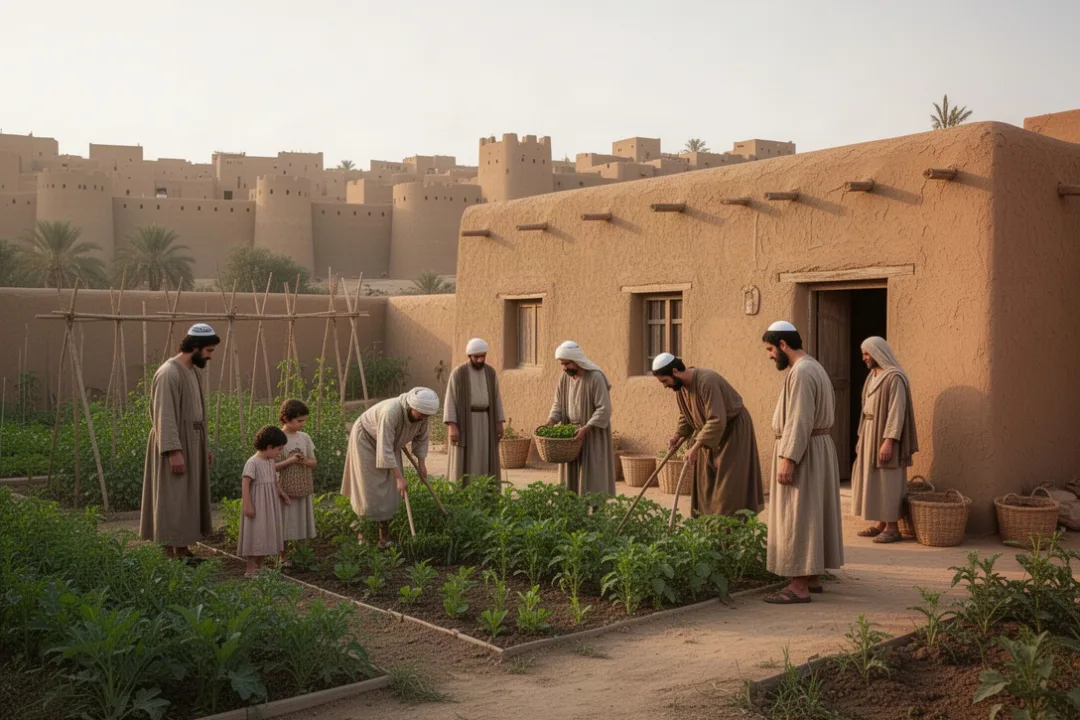
Jeremiah’s message was especially difficult because some prophets were telling the exiles that their suffering would end very soon. Jeremiah challenged that claim. Through him, God instructed the people to build houses, plant gardens, form families, and participate in the life of the Babylonian city where they lived. Their return would not happen immediately.
The letter also told them to seek the welfare of Babylon and pray for the city, because their own well-being was connected to its peace. That instruction would have sounded surprising. Babylon was the empire that had conquered Judah, yet the exiles were not told to withdraw from society or spend their lives waiting passively for rescue.
Instead, they were called to practice faithful life in an unwanted place. They could remember Jerusalem without pretending that Babylon was their final home. They could obey God without controlling the timetable of restoration. This setting gives Jeremiah 29:11-14 both its comfort and its seriousness.
Context matters: The promise of a hopeful future came after God told the exiles to accept a long season in Babylon. It was not a prediction of instant relief, effortless success, or freedom from every hardship.
The chapter’s earlier instructions also protect readers from a shallow interpretation. God’s people were not being promised that every personal desire would come true. They were being told that divine judgment would not be the final word. Even in exile, God remained committed to his people and their future.
What Jeremiah 29:11 means about God’s plans
Jeremiah 29:11 presents God as knowing the plans connected with his people’s future. The verse describes those plans as involving welfare, peace, and a hopeful outcome rather than calamity as the final destination. It then points toward a future filled with hope.
The Hebrew concept often translated as “welfare” or “peace” is shalom. It reaches beyond temporary comfort or financial success. It can include wholeness, security, restored relationships, communal well-being, and life ordered under God’s blessing. That meaning is broader and deeper than the idea of getting everything you want.
Likewise, the reference to a future and hope does not mean that every stage along the way will feel hopeful. The exiles still had to endure displacement and uncertainty. Some would die in Babylon before the return occurred. The promise concerned God’s faithful purpose across generations, not a painless experience for every individual who first heard the letter.
Several truths about God’s plans emerge from the verse:
God’s purposes are not defeated by circumstances. Exile looked like national failure, but it did not cancel God’s covenant commitment.
God’s timing may be longer than people expect. The promised future came after a substantial period of waiting.
God’s good purpose includes formation. The exiles had to learn faithfulness in a foreign land rather than merely escape difficulty.
God’s hope is communal as well as personal. The promise addressed a people whose restoration would affect families, worship, land, and national identity.
This does not mean the verse has nothing to say to an individual. A person facing grief, illness, uncertainty, or a major transition may rightly draw comfort from the truth that God is not careless about the future. The application should remain connected to the passage’s central claim: God can preserve hope when his people cannot yet see how restoration will come.
The verse also does not authorize certainty about a specific outcome. You may pray for healing, employment, reconciliation, or release from a difficult situation without claiming that Jeremiah 29:11 guarantees that particular result. The passage gives confidence in God’s character and purposes, not a detailed forecast of every personal circumstance.
Why the surrounding verses change the way you read the promise
Jeremiah 29:11 is often separated from verses 12-14, but the surrounding lines show how the promised future is connected to prayer, seeking, repentance, and restoration. God tells the exiles that they will call on him, pray to him, seek him, and find him when they seek him wholeheartedly.
This does not suggest that human effort earns God’s favor. The entire letter begins with God’s initiative and instruction. Yet the people’s response matters. They are not told merely to wait for a favorable change while remaining spiritually indifferent. Their hope is meant to draw them back into a living relationship with God.
Verse 12 describes calling and praying. The exiles were invited to bring their distress directly to God instead of treating exile as proof that prayer was useless. Their situation did not place them beyond God’s hearing. Even far from the temple and homeland, they could address God with trust.
Verse 13 describes seeking God with the whole heart. This language points to undivided devotion rather than a casual request for assistance. The people were to turn toward God himself, not merely toward the benefits they hoped he would provide. The promise is relational before it is circumstantial.
Verse 14 speaks of God allowing himself to be found and gathering his people from the places where they had been scattered. The image is one of restoration after dispersion. God would reverse the condition of exile in his appointed time, bring the people back, and renew their life as a community.
Read together, verses 11-14 present a clear movement:
God knows the future, even when his people cannot see it.
God’s purpose includes peace and hope, though hardship remains for a time.
God invites his people to pray rather than surrender to despair.
God calls them to seek him sincerely, not only to seek changed circumstances.
God promises restoration after the appointed season of exile.
The final emphasis is therefore not “my desired plan will work out exactly as I imagine.” It is “God remains trustworthy, and turning toward him is not futile.” That distinction can make the passage more honest and more sustaining. It allows hope to exist without denying pain or pretending to know every detail of the future.
What Jeremiah 29:11-14 does not promise
A careful reading should identify the conclusions the passage does not support. Jeremiah 29:11-14 does not promise immediate prosperity, constant happiness, or protection from every form of suffering. The original audience received the promise while still facing years of life in Babylon.
It also does not say that Christians or other modern readers will receive every desired outcome if they pray with enough sincerity. Prayer is not a technique for forcing a preferred result. The exiles were promised God’s presence and eventual restoration, but they were not given control over the schedule or every detail.
The passage should not be used to blame people for continuing hardship. If someone is unemployed, sick, grieving, or experiencing injustice, saying that a lack of blessing proves a lack of faith misuses the text. Jeremiah’s audience was already living under hardship while remaining the people addressed by God’s promise.
Nor should the verse be treated as a general claim that every nation, institution, or individual will inevitably enjoy material success. The promise was spoken within the specific story of Judah, Babylon, judgment, covenant, exile, and return. Applying its principles today requires care rather than erasing that history.
These cautions do not make the verse less encouraging. They make its encouragement more durable. A promise that depends on every circumstance becoming comfortable will collapse when suffering continues. A promise grounded in God’s faithfulness through a long and difficult season can sustain people even before visible change arrives.
A balanced reading: Jeremiah 29:11 supports confident hope in God’s good purposes, but it does not give you permission to predict a specific job, relationship, healing, financial result, or timetable.
The exiles also had to distinguish God’s word from attractive messages that contradicted it. False prophets offered a shorter and easier timeline. Jeremiah’s message required patience, obedience, and a willingness to live faithfully without immediate evidence that circumstances were improving.
That contrast remains useful. Hope is not the same as optimism. Optimism may depend on favorable probabilities or reassuring signs. Biblical hope rests on the character and promise of God, including seasons when visible conditions seem to argue against it.
How to apply the passage during a difficult season
Jeremiah 29:11-14 can shape daily faith without being turned into a slogan. Start by naming the actual situation honestly. The exiles were not asked to deny displacement, fear, or loss. You can acknowledge disappointment before God while still believing that your current circumstances do not define the whole story.
Prayer is one direct response to the passage. Instead of praying only for an immediate escape, you might ask for wisdom to live faithfully where you are, courage to make responsible decisions, strength to endure delay, and discernment to recognize messages that promise more certainty than Scripture gives.
You can also ask what faithful presence looks like in your present setting. The exiles were instructed to build, plant, marry, raise families, contribute to their community, and pray for the city. Those actions show that waiting does not mean doing nothing.
Care for the responsibilities already in front of you, even when your long-term future feels unclear.
Build healthy relationships instead of isolating yourself in disappointment.
Serve the community where you live, including people whose backgrounds differ from yours.
Keep praying over time, not only during moments of crisis.
Test confident predictions against the wider teaching of Scripture and wise counsel.
Leave the timetable with God while taking prudent action in the present.
The passage also offers a framework for making decisions. Ask whether a proposed choice reflects faithfulness, wisdom, love of neighbor, and patience. Jeremiah 29 does not provide a private answer to every question, but it discourages panic and passivity at the same time.
If you are waiting for a change that has not happened, the exiles’ experience may help you separate delay from abandonment. A long wait can feel like rejection, but the chapter insists that God’s purposes can continue even when the promised outcome is not yet visible.
If you are in a place you did not choose, the passage can also challenge resentment without dismissing injustice. Seeking the welfare of your community does not mean approving everything about the society around you. It means pursuing the good of neighbors, acting with integrity, and refusing to let hardship make you incapable of love.
For churches and other communities, the passage offers a shared rather than purely individual application. Leaders can help people endure uncertainty without making reckless predictions. Communities can provide practical care, honest prayer, patient companionship, and opportunities to serve while people wait for circumstances to change.
How Jeremiah 29:11-14 fits the wider biblical story
The promise of restoration in Jeremiah 29 belongs to a wider biblical pattern. Scripture repeatedly presents God as faithful during judgment, displacement, wilderness, and waiting. Restoration is not always immediate, but God’s purposes continue through periods when his people seem weak or forgotten.
Jeremiah’s message also holds together two truths that are sometimes separated. Judah’s exile was connected to serious disobedience and judgment, yet judgment did not mean God had abandoned every possibility of mercy. Discipline and hope appear together. God could confront sin while still promising a future for his people.
The return from Babylon was a real historical restoration, but the Bible’s larger story continues beyond that event. Later biblical writers speak of God’s redemption in ways that reach beyond one national return. Christian readers may therefore see Jeremiah’s hope in relation to God’s broader work of redemption, while still respecting the passage’s original meaning for Judah.
That broader connection should not erase the immediate message. Jeremiah was speaking to exiles who needed to know how to live before they returned home. The passage first teaches patience, prayer, wholehearted seeking, and confidence in God’s covenant faithfulness. Any later application should grow from those themes.
For a reader today, the central question is not simply, “What good thing will happen to me?” A more faithful question is, “How can I seek God and practice faithfulness while I wait for his purposes to become clear?” Jeremiah 29:11-14 directs attention toward both the future God promises and the life he calls you to live now.
The passage can therefore speak to personal uncertainty, communal crisis, spiritual dryness, and long-term hope. It gives no shortcut around grief or waiting. Instead, it presents a God who remains present, hears prayer, welcomes wholehearted seeking, and can restore what appears scattered beyond repair.
Frequently asked questions
Was Jeremiah 29:11 written specifically to an individual?
No. It was first addressed to the Jewish exiles living in Babylon as part of a message to the wider covenant community. Individual readers may draw personal encouragement from it, but its original promise concerns God’s purpose for Judah during and after exile rather than a private prediction about one person’s success.
Does Jeremiah 29:11 promise financial prosperity?
No. The passage speaks of peace, well-being, hope, and eventual restoration. Those ideas are broader than wealth and do not guarantee a higher income, a successful career, or freedom from financial difficulty. The exiles were promised a future with God’s people, but they still had to endure a long period of hardship.
What does it mean to seek God with all your heart?
In this setting, seeking God means turning to him sincerely through prayer, trust, obedience, and continued dependence rather than treating him as a way to obtain a desired result. It involves an undivided response to God, even when circumstances remain unresolved.
How can this passage help someone who is still waiting?
It can remind you that delay is not proof of abandonment. The exiles were told to live responsibly, serve their community, pray, and wait for God’s appointed restoration. You can bring your situation honestly to God, take wise steps today, and resist promises that offer certainty Scripture does not provide.
















Leave a Reply