Zion in the Bible first refers to a fortified hill in Jerusalem that King David captured and made the center of his kingdom. The name later came to mean Jerusalem itself, the place of God’s temple and presence, the people of God, and, in the New Testament, the heavenly city promised to believers.
Its meaning depends on the passage. Sometimes Zion is a physical location in the land of Israel. Elsewhere it represents a community, a spiritual relationship with God, or the future home of God’s redeemed people. Reading the surrounding verses helps you identify which meaning is intended.
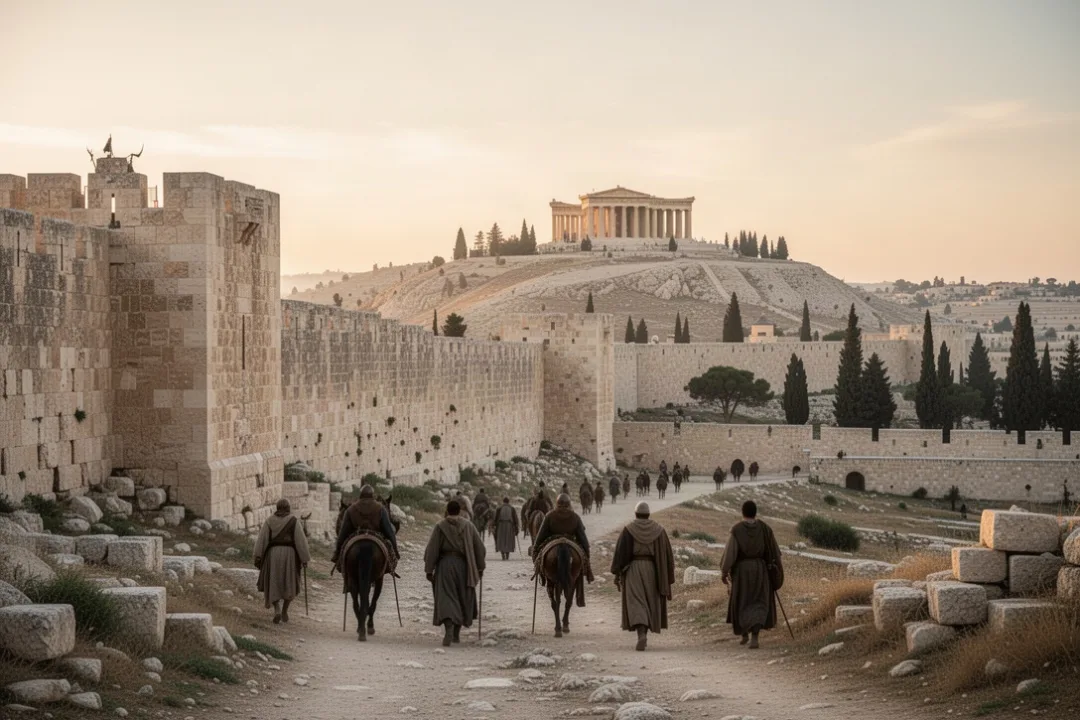
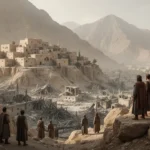
The earliest biblical references to Zion appear in the historical books describing David’s rise as king. Jerusalem was occupied by the Jebusites, and its stronghold was called the fortress of Zion. David captured the stronghold and established his royal city there, as described in 2 Samuel 5:6-10 and 1 Chronicles 11:4-9.
After David took the fortress, the city became known as the City of David. This was not originally a name for every part of Jerusalem. It identified the particular fortified area David conquered and developed as his political center.
The precise boundaries of the ancient hill called Zion are discussed by historians and archaeologists, especially because Jerusalem changed over time. In the biblical text, however, the key point is clear: Zion was connected with David’s royal rule and with Jerusalem’s central place in Israel’s national life.
Direct answer: Zion began as the name of Jerusalem’s fortified stronghold, but the Bible gradually uses it as a broader name for Jerusalem, God’s people, and the place where God establishes his saving presence.
How Zion became a name for Jerusalem
As Jerusalem developed, “Zion” expanded beyond the original fortress. The name could refer to the whole city, especially when biblical writers were speaking about Jerusalem as the capital chosen for worship and kingship. Psalm 48 describes Zion as the city of the great King, while Psalm 87 celebrates it as the city founded by God.
This broader use explains why some passages appear to place the temple and Zion in the same setting, even though the original stronghold and the later temple area were not necessarily identical in every historical reference. Biblical poetry often uses Zion as a poetic name for Jerusalem rather than as a technical description of one hill.
The connection became stronger after Solomon built the temple. The ark of the covenant was brought to Jerusalem, and the temple became the central place of Israel’s worship. Zion therefore came to represent not only a royal capital but also the city where God’s covenant relationship with Israel was publicly honored.
Several biblical descriptions bring these ideas together:
Royal Zion: the city associated with David and the line of Israel’s kings.
Worshiping Zion: the place connected with the temple, sacrifices, prayer, and the ark.
Protected Zion: the city that God promises to defend or restore.
Joyful Zion: a poetic image for God’s people rejoicing after suffering or exile.
When a psalm calls people to rejoice in Zion, it may be speaking about Jerusalem’s streets and walls, but it is also pointing to what the city represents: God’s covenant, rule, worship, and protection.
What Zion means in the Psalms
The Psalms use Zion in several connected ways. It is the place where God is said to dwell, the city of the king, and the focus of Israel’s hope. Psalm 2 presents Zion as the place where God establishes his chosen king. Psalm 132 connects Zion with David’s line, the ark, and God’s decision to make the city his dwelling place.
These descriptions should not be read as claiming that God is physically limited to one hill. The Bible also teaches that God rules heaven and earth and cannot be contained by a building. Zion is a chosen meeting place, a visible sign of God’s covenant presence among his people.
The worship language of Zion also shaped the songs Israelites used when traveling to Jerusalem for festivals. Psalms 120–134 are commonly called the Songs of Ascents, and several mention Jerusalem or Zion. The upward movement toward the city reflected both the geography of the journey and the worshiper’s approach to the place associated with God’s presence.
Psalm 121, for example, speaks about help coming from the Lord, while Psalm 125 compares those who trust in the Lord with Mount Zion, which cannot be moved. The image communicates security and stability. It does not mean that Jerusalem’s physical structures could never be damaged; the city was later attacked and exiled. Instead, the comparison expresses confidence that God can preserve his people.
Why the prophets speak of Zion’s suffering and restoration
The prophets often address Zion as if it were a woman, a city, or a community. This poetic personification allows them to describe Jerusalem’s sin, grief, judgment, hope, and restoration in vivid terms. Isaiah, Jeremiah, Lamentations, Micah, Zephaniah, and Zechariah all use Zion in this way.
Before Jerusalem’s destruction by Babylon, the prophets warned that Zion’s sacred status would not protect the city from judgment. The people were responsible for injustice, idolatry, oppression, and covenant unfaithfulness. Isaiah 1, Jeremiah 7, and Micah 3 show that religious activity could not substitute for obedience and justice.
This is a crucial part of Zion’s meaning. Zion is not a guarantee that every resident of Jerusalem will prosper or that the city may ignore God’s commands. The prophets reject the assumption that possessing the temple automatically makes the nation safe. God’s presence is not permission for moral rebellion.
After Jerusalem’s fall and the exile, the prophetic message turns toward comfort and restoration. Isaiah 40–55 repeatedly speaks to or about Zion, promising that God will gather, comfort, redeem, and renew his people. Isaiah 52 portrays Zion hearing good news about God’s reign, while Isaiah 60 describes a restored city shining with God’s glory.
These restoration passages include several themes:
Return: exiled people come back to Jerusalem.
Comfort: grief and humiliation do not have the final word.
Justice: God confronts oppression and restores what has been broken.
Holiness: the restored community is called to live faithfully.
International hope: nations are drawn toward the worship of Israel’s God.
Because of this prophetic language, Zion becomes more than an old city. It becomes a symbol of God’s promise to restore his people and establish righteous rule. The hope is both historical and theological: it concerns the rebuilding of Jerusalem, but it also points toward a future in which God’s purposes are fully realized.
What “daughter of Zion” means
The phrase “daughter of Zion” is a poetic expression for Jerusalem or its inhabitants. It does not usually refer to one individual woman. Biblical writers use feminine language for the city to describe its vulnerability, beauty, sorrow, celebration, or restoration.
In passages such as Isaiah 62 and Zechariah 9, the daughter of Zion is told to rejoice because God is acting to save and restore his people. In Lamentations, the same expression can describe Jerusalem mourning after destruction. The emotional tone changes with the context.
Zechariah 9:9 speaks of the daughter of Zion rejoicing because her king comes in humility, riding on a donkey. Matthew 21:5 applies this prophecy to Jesus’ entry into Jerusalem. The connection shows how New Testament writers understood Jesus as the king who fulfills Israel’s hope for a righteous ruler connected with Zion.
When you encounter “daughter of Zion,” read it as a symbolic way of addressing Jerusalem and the covenant community. Then examine whether the passage emphasizes warning, grief, celebration, kingship, or restoration.
How Zion relates to God’s presence
Zion’s importance comes from more than its geography. It represents the place where God chose to make his name known among Israel. Deuteronomy repeatedly directs Israel toward the place God will choose for worship, and later biblical history identifies Jerusalem as that central location.
Solomon’s prayer at the temple dedication in 1 Kings 8 recognizes both the temple’s importance and its limits. The temple is a place where God hears prayer, but even the highest heavens cannot contain God. This balance matters: Zion signifies God’s gracious presence, not a human ability to control or confine him.
The biblical language of God dwelling in Zion can therefore be understood relationally and covenantally. God chooses to meet, hear, judge, forgive, and guide his people there. The location is sacred because of God’s purpose, not because the stones possess independent power.
This distinction helps explain the prophets’ criticism of false confidence. People could not say, in effect, “The temple is here, so judgment is impossible,” while continuing to exploit the poor and worship idols. Jeremiah 7 directly challenges that attitude. Zion’s significance calls people to trust God and live faithfully, not to treat a holy place as a protective charm.
The New Testament continues to use Zion as a biblical symbol while applying its promises to Jesus and his people. The writers quote or echo passages from Isaiah, the Psalms, and the prophets. Their use of Zion connects the story of the church to Israel’s Scriptures rather than presenting a disconnected idea.
Matthew 21:5 uses Zechariah’s prophecy about the king coming to the daughter of Zion. John 12:15 makes a similar connection when describing Jesus’ entry into Jerusalem. In both cases, Zion is the setting for a royal arrival, and Jesus is presented as the promised king whose rule is marked by humility.
Paul quotes Isaiah 59:20 in Romans 11:26 while discussing God’s saving purposes for Israel. The wording and interpretation have been debated among Christian traditions, so the passage should be read within Romans 9–11 rather than isolated as a simple definition. Its use of Zion shows that the name remains connected with redemption and the fulfillment of God’s promises.
First Peter 2:6 quotes Isaiah 28:16, describing a chosen and valuable cornerstone laid in Zion. Peter applies the image to Jesus and teaches that those who trust him will not be put to shame. The passage presents Zion as the setting of God’s decisive foundation, with Christ as the cornerstone.
Hebrews 12:22 gives one of the clearest New Testament expansions of Zion’s meaning. It says that believers have come to Mount Zion, the city of the living God, the heavenly Jerusalem, and the gathered assembly of heaven. The passage contrasts this with Mount Sinai and emphasizes access to God through the new covenant.
Revelation 14:1 also mentions Mount Zion in a vision involving the Lamb and his people. The scene is symbolic and belongs to Revelation’s larger pattern of visions, judgments, worship, and final victory. Here Zion represents the place of the Lamb’s triumph and the secure identity of those who belong to him.
What “Mount Zion” means in biblical theology
“Mount Zion” may mean the literal hill or elevated area associated with Jerusalem, but it also carries a theological meaning. In the Old Testament, it is linked with the temple, the Davidic king, and God’s presence. In the New Testament, it can point to the heavenly Jerusalem and the final gathering of God’s people.
These meanings are related rather than interchangeable. A reference to Mount Zion in a psalm about Jerusalem should not automatically be treated as a direct description of heaven. Conversely, Hebrews 12:22 clearly uses Zion in a heavenly and spiritual sense. The passage determines the meaning.
Many Christian readers describe this development as a movement from earthly Zion to heavenly Zion. That phrase can be useful if it does not erase the Old Testament setting. The New Testament’s heavenly imagery grows out of the earlier biblical themes of God’s presence, covenant, worship, kingship, and restoration.
Christian interpretations differ on how Old Testament promises concerning Zion relate to the modern city of Jerusalem, the church, ethnic Israel, and the future kingdom of God. Some traditions expect a future earthly fulfillment centered on Jerusalem. Others emphasize the church as the expanded people of God and the heavenly city as the final fulfillment. These differences should be acknowledged rather than presented as though every Christian tradition reads Zion identically.
How Zion differs from Jerusalem, Israel, and the church
Zion, Jerusalem, Israel, and the church overlap in biblical symbolism, but they are not simply interchangeable words. Jerusalem is the actual city. Israel can mean Jacob’s descendants, the nation formed from them, or the covenant people addressed in Scripture. Zion is a name for the city and, by extension, for the community and promises associated with it.
The church is not normally called Zion in every New Testament passage, but Christian writers often connect the church with Zion because believers share in the new-covenant promises fulfilled through Christ. Hebrews uses heavenly Zion to describe the worshiping community gathered before God. First Peter uses temple and priestly imagery for believers, building on Old Testament language about God’s dwelling.
Care is needed here. Saying that Zion can symbolize God’s people does not mean that the biblical distinctions between Israel, Jerusalem, and the church disappear. A responsible reading considers the specific author, covenant context, literary form, and historical setting of each passage.
Common mistakes when interpreting Zion
The name is familiar, but several easy assumptions can lead to confusion. These practical checks can help you read a passage more accurately:
Do not assume Zion always means heaven. In many Psalms and historical passages, it means Jerusalem or its stronghold.
Do not assume Zion always means the modern state of Israel. Biblical uses arise from ancient history and theology, not from a one-to-one map of modern political boundaries.
Do not treat Zion as only a hill. The name can represent a city, its residents, the Davidic kingdom, worship, or God’s future restoration.
Do not ignore literary genre. Poetry and prophecy use personification and symbolism more freely than narrative passages.
Do not separate Zion from covenant faithfulness. The prophets repeatedly show that sacred status does not excuse injustice or idolatry.
Do not build a doctrine from one isolated verse. Compare related passages in the same book and across the Bible.
Reading tip: Ask three questions whenever you see “Zion”: Is the writer describing a physical place, the people connected with that place, or a future spiritual reality? The surrounding verses usually provide the answer.
Zion gathers several major biblical themes into one image. It points to God’s presence, because Jerusalem was associated with the temple and worship. It points to God’s kingship, because David’s royal line was connected with Zion. It points to judgment and mercy, because the prophets warned Zion and promised to restore it.
Zion also shows how biblical hope works. The Bible does not ignore the destruction, sin, exile, and grief associated with Jerusalem. Instead, it places those experiences within a larger promise that God can redeem his people and bring justice. Zion can therefore be both a place of tears and a symbol of future joy.
The New Testament extends that hope to the work of Jesus. He is presented as the humble king who comes to Zion, the cornerstone laid in Zion, and the one through whom believers approach heavenly Zion. The central focus is not the word itself but God’s saving action represented by the word.
For readers today, Zion can remind you that biblical faith joins worship with conduct. The prophets did not separate devotion to God from care for the vulnerable, honest judgment, and covenant loyalty. The promise of restoration was never merely about attractive scenery or national success; it was about a people living under God’s righteous rule.
How to study a passage about Zion
If you are trying to understand a particular verse, begin with the paragraph around it. Identify who is speaking, whom the passage addresses, and whether the text is a song, prophecy, historical account, letter, or apocalyptic vision.
Read the immediate context. Look at the verses before and after the reference to Zion.
Identify the setting. Ask whether the passage describes David’s Jerusalem, the temple, exile, restoration, Jesus’ ministry, or the heavenly city.
Notice the action. Is Zion being defended, judged, comforted, restored, visited, or portrayed in a vision?
Compare related passages. Use cross-references to see how the same image develops elsewhere.
Keep the original meaning in view. Apply the theological principle without erasing the ancient people, place, and promise first addressed.
For example, Psalm 48 should first be read as a celebration of Jerusalem’s strength and God’s protection. Hebrews 12:22 should first be read in its new-covenant setting, where Mount Zion represents the heavenly city and the gathered people of God. Both passages matter, but they are not making exactly the same claim.
Why Zion remains an important biblical image
Zion remains important because one name connects the Bible’s story of place, people, worship, kingship, judgment, and hope. It begins with a stronghold captured by David and becomes a symbol of the city where Israel worshiped, the community God called to faithfulness, and the future dwelling of the redeemed.
When you ask, “What is Zion in the Bible?” the most complete answer is not a single location. Zion is Jerusalem’s historic stronghold and a layered biblical symbol. It represents God’s chosen presence among his people, the royal hope associated with David, the community addressed by the prophets, and the heavenly city toward which the New Testament points.
The meaning becomes clear when you read each reference in context. Zion is concrete enough to belong to Jerusalem’s history, yet broad enough to express the Bible’s hope that God will dwell with his people, establish justice, and bring his promises to completion.
Frequently asked questions
Is Zion the same as Jerusalem?
Zion can mean Jerusalem, especially in the Psalms and prophetic writings, but the terms are not identical in every passage. Zion originally referred to a fortified stronghold associated with David. Over time, it became a poetic and theological name for the city, its inhabitants, the temple, and God’s covenant purposes centered there.
Is Zion a place in heaven or on earth?
The answer depends on the passage. In the Old Testament, Zion usually refers to a location in or associated with Jerusalem. Hebrews 12:22 uses “Mount Zion” for the heavenly Jerusalem and the gathered people of God. The Bible therefore uses Zion for both an earthly historical place and a future heavenly reality.
What does Zion mean for Christians?
For Christians, Zion can represent God’s presence, the fulfillment of his promises through Jesus, and the heavenly community of believers. New Testament passages connect Jesus with Zion’s promised king and cornerstone. Christian traditions differ on how earthly Jerusalem, Israel, the church, and future prophecy relate to these promises.
Why does the Bible call Jerusalem the daughter of Zion?
“Daughter of Zion” is poetic language for Jerusalem or its people. Biblical writers use the phrase to describe the city’s sorrow, danger, celebration, judgment, or restoration. The surrounding passage determines the emphasis. In prophetic passages about a coming king, the daughter of Zion represents Jerusalem rejoicing at God’s saving action.











Leave a Reply