Have you ever wondered whether a short Bible book can really say something substantial about injustice, betrayal, and hope? The Book of Obadiah answers that question in only 21 verses. It is the shortest book in the Old Testament, yet its message is direct: God sees violence and pride, holds nations accountable, and promises restoration for his people.
Obadiah is a prophetic book focused mainly on Edom, a nation related to Israel through Jacob and Esau. The prophet announces judgment because Edom stood by, or took advantage, when Jerusalem was attacked. The book then widens its focus to the coming day of the Lord, when wrongs will be judged and God’s kingdom will be established.
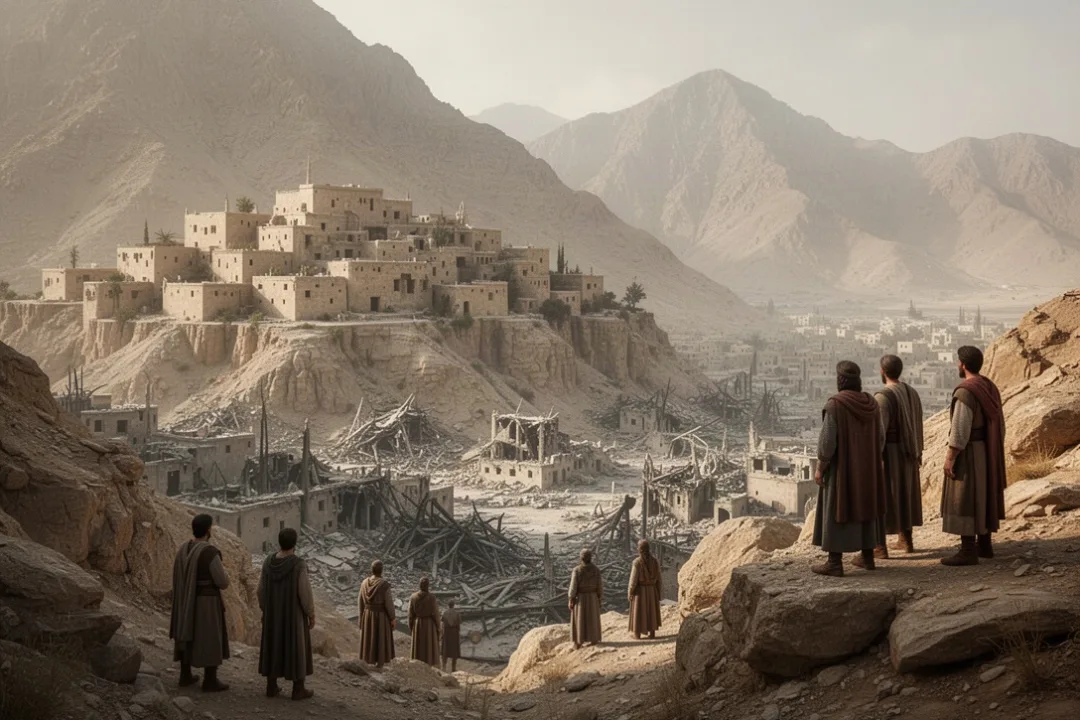
Obadiah opens with a vision concerning Edom. Its central accusation is not simply that Edom was powerful or hostile. The problem was that Edom responded to Judah’s disaster with arrogance, participation, and exploitation. When Jerusalem fell, Edom apparently treated the suffering of its neighboring people as an opportunity.
The book describes several actions associated with Edom: standing apart while foreigners entered Jerusalem, rejoicing over Judah’s ruin, boasting during its distress, looting possessions, blocking fugitives, and handing survivors over to enemies. These charges appear in Obadiah 10–14. The language presents indifference to suffering as morally serious, especially when it is combined with active harm.
Obadiah 15 gives the book a wider principle: the day of the Lord is near against all nations, and people will face consequences corresponding to what they have done. Edom is the immediate example, but the prophet is addressing a broader truth about divine justice. No nation can assume that military strength, geography, wealth, or political advantage places it beyond accountability.
Central message: Obadiah warns that pride and exploitation bring judgment, while God promises that his people will not be abandoned permanently.
The final portion turns from Edom’s downfall to the restoration of Israel. Mount Zion becomes a place of deliverance and holiness, and the book ends with the declaration that the kingdom shall be the Lord’s in Obadiah 21. This ending gives the prophecy a larger horizon than one conflict between neighboring nations.
The book therefore moves through three connected ideas:
Edom’s pride will not protect it from judgment.
Violence and betrayal will be answered by God’s justice.
God’s rule and restoration will ultimately prevail over the nations.
Who Obadiah was and when he probably prophesied
The name Obadiah means “servant of the Lord” or “worshiper of the Lord.” The Bible does not give enough information to identify this prophet confidently with any other person named Obadiah in Scripture. Several individuals have that name in the Old Testament, but the prophet’s family background, hometown, and occupation are not supplied in the book.
That limited information is normal for some prophetic books. The message matters more than the prophet’s biography. Obadiah identifies himself as the recipient of a vision, but he does not name a king or provide a precise date. As a result, scholars have proposed different historical settings based mainly on the references to Jerusalem’s capture and Edom’s behavior.
One major possibility connects the book with the Babylonian destruction of Jerusalem in the sixth century BC. Babylon destroyed the city and the temple in 586 BC, and other biblical passages describe Edom as rejoicing over Judah’s collapse or participating in the aftermath. Psalm 137:7 remembers Edom’s call for Jerusalem’s destruction, while the Book of Lamentations portrays the city’s devastation. Ezekiel 25 and 35, as well as parts of Isaiah, also condemn Edom.
Another proposal places Obadiah in an earlier period, possibly after a raid against Jerusalem during the reign of a Judean king. The books of Kings and Chronicles record several attacks on Jerusalem by surrounding enemies. Because Obadiah does not identify the invading army, the exact historical event remains uncertain.
The safest explanation is that the book belongs to a period when Jerusalem had suffered a serious attack and Edom had acted shamefully toward Judah. Its message does not depend on solving every chronological question. The historical setting clarifies the emotional force of the prophecy: the people of Judah had experienced humiliation, and Edom’s conduct made that pain worse.
Edom and Israel were not unrelated strangers. The Old Testament traces their ancestry to Esau and Jacob, the twin sons of Isaac and Rebekah. Genesis presents tension between the brothers, but it also shows that the nations descended from them had a close family connection. This background makes Edom’s behavior especially offensive in Obadiah. The charge is not merely that a foreign power attacked an enemy; it is that a neighboring relative betrayed a vulnerable brother.
The Edomites lived in the rugged territory south of Judah, associated with the hill country of Seir. Their elevated settlements and difficult terrain contributed to a sense of security. Obadiah refers to their dwelling in the clefts of the rocks and their high habitation in Obadiah 3–4. The prophet uses that setting to challenge false confidence: even a nation that seems inaccessible can be brought down.
How Obadiah is structured and what each part means
Obadiah is brief, but its arrangement is purposeful. The book begins with a divine announcement against Edom, explains why judgment is deserved, and then expands to the Lord’s judgment of all nations. It closes with the restoration of God’s people and the establishment of his rule.
Verses 1–9: Edom’s pride and coming downfall
The opening section presents Edom as a nation that considers itself secure because of its geography, strength, and alliances. Its rocky territory may have made invasion difficult, but the prophet says that God can bring it down from its seemingly unreachable position. Obadiah 1–4 emphasizes that human security is not the same as lasting safety.
The language of being brought low appears alongside descriptions of deception and betrayal. Edom’s allies will turn against it, and its supposed wisdom will fail. The prophet questions the confidence of Edom’s wise men and warriors, showing that both counsel and military power have limits when a nation’s moral foundation has collapsed.
Obadiah 5–7 uses the imagery of thieves and harvesters. Ordinary thieves might leave something behind, and grape gatherers usually do not take every grape. Edom’s devastation, however, will be complete. The passage also describes companions and allies helping to deceive Edom, suggesting that its network of trust will unravel.
Verses 10–14: The specific reasons for Edom’s judgment
The middle section makes the accusation plain: Edom committed violence against Jacob, its brother. The prophet then lists actions Edom should not have taken when Jerusalem was under attack. The repeated warnings not to stand by, rejoice, enter the gate, loot possessions, or cut off survivors create a forceful picture of escalating involvement.
These verses show that wrongdoing can take several forms. A person or nation may cause direct violence, but it may also participate through celebrating another’s misery, taking property, exploiting confusion, or preventing escape. Obadiah treats each response as significant because each reveals a posture toward suffering.
The passage also challenges the idea that neutrality is always harmless. Edom’s failure was not limited to what it actively did. Its choice to stand aside and watch Judah’s calamity, while benefiting from it, became part of the offense. The text therefore speaks to both active oppression and culpable indifference.
Verses 15–21: The day of the Lord and restoration
Beginning in verse 15, Obadiah moves from Edom to “all the nations.” The day of the Lord is described as a time when God will judge nations according to their actions. The principle of receiving what one has done does not describe human revenge; it expresses the prophet’s conviction that God’s moral order will ultimately be made visible.
Mount Zion, Jerusalem, and the house of Jacob become central in the final section. The language includes deliverance, holiness, inheritance, and possession. The people who had been dispossessed will receive what God has promised, while Edom’s apparent advantage will not last.
The final verse states that deliverers will come to Mount Zion to judge the mountain of Esau, and the kingdom will belong to the Lord. Interpretations of the “deliverers” vary, but the main point is clear: God’s reign is the final authority. The prophecy ends not with Edom as the dominant power, but with the Lord’s kingdom.
Why Edom is judged so severely
To understand Obadiah, you need to see the relationship between kinship and responsibility. Israel and Edom traced their ancestry to Jacob and Esau, so the phrase “violence against your brother Jacob” carries emotional and theological weight. Edom’s actions were treated as a betrayal of a close neighbor rather than an ordinary conflict between distant nations.
The Old Testament includes many disputes between Israel and Edom. Their relationship was not consistently peaceful, but it was also not defined only by hostility. Deuteronomy contains instructions about how Israel was to regard Edom, recognizing the family connection. This background makes Obadiah’s charge especially pointed: Edom knew the connection and still used Judah’s weakness for its own advantage.
Geography also appears in the judgment. Edom’s mountain strongholds created a sense of independence and protection. The prophet presents this confidence as pride built on circumstances. A secure location, a strong defense, or powerful allies may provide temporary protection, but none can shield a people from accountability before God.
Obadiah’s critique is not an attack on every Edomite person as an individual. It addresses Edom as a nation and political community, using the language of collective responsibility. Biblical prophets frequently speak this way when rulers, armies, and communities participate in oppression. The message applies most directly to systems and actions that harm others, not to racial stereotypes about modern populations.
The book also shows that judgment is connected to what Edom did during another nation’s crisis. It did not merely possess wealth or live in a strategic location. It rejoiced over disaster, entered the city during its distress, took what did not belong to it, and interfered with survivors. Obadiah’s concern is therefore ethical and relational, not simply political.
Reading caution: Obadiah’s references to Edom concern an ancient nation and its conduct in a specific historical setting. They should not be used to condemn modern ethnic groups or justify personal revenge.
The main themes in Obadiah Bible study
Pride can turn security into self-deception
Obadiah repeatedly confronts the belief that height, wealth, intelligence, or alliances guarantee safety. Edom’s confidence had become a distorted view of reality. The nation believed it could not be brought down, but the prophet says that God sees beyond visible defenses.
This theme reaches beyond military power. Pride can appear whenever people assume that success proves moral approval or that influence makes them untouchable. Obadiah distinguishes between temporary advantage and genuine security. A person or institution may appear stable while its treatment of others reveals deep weakness.
God sees what happens during a crisis
The prophecy focuses on what Edom did when Jerusalem was vulnerable. Crisis exposed the nation’s character. Instead of helping a related people, Edom watched, celebrated, entered, took possessions, and obstructed survivors.
That emphasis makes Obadiah relevant to situations involving displacement, violence, poverty, and institutional failure. It asks what people do when another person has lost power. Do they protect the vulnerable, remain indifferent, or use the crisis for personal gain? The book teaches that God notices conduct that powerful observers may ignore.
God’s justice includes nations and systems
Many readers first encounter biblical justice as a personal matter, but Obadiah also addresses nations. Governments, armies, alliances, and communities are not outside moral evaluation. The prophecy insists that collective power carries collective responsibility.
That does not mean every national tragedy can be explained by a simple formula. Obadiah speaks into a particular prophetic vision rather than giving a method for assigning blame to every modern disaster. Its enduring principle is that public actions have moral consequences, especially when they involve violence, exploitation, and betrayal.
God’s people can hope without taking revenge
Obadiah was spoken to people who had experienced humiliation and loss. Its promise of judgment could reassure them that Edom’s wrongdoing had not escaped God’s attention. At the same time, the book places final judgment in God’s hands rather than instructing individuals to pursue retaliation.
This distinction matters when reading a difficult prophetic text. The book validates grief and anger over injustice, but its final vision is not a command for personal vengeance. The kingdom belongs to the Lord, which means the prophet’s hope rests in God’s authority to judge and restore.
Restoration is larger than the end of an enemy
Obadiah does not end when Edom falls. The book continues toward deliverance, holiness, inheritance, and the Lord’s reign. That structure shows that biblical hope is more than seeing an opponent defeated. Restoration means that God’s people are gathered, their losses are addressed, and divine rule becomes unmistakable.
How Obadiah connects with the rest of the Bible
Obadiah belongs to the group of books commonly called the Minor Prophets, a name that refers to their shorter length rather than lesser importance. Its themes overlap with Amos, Joel, Isaiah, Jeremiah, Ezekiel, and other prophetic writings that speak about the day of the Lord, national pride, judgment, and restoration.
Jeremiah 49 contains a substantial oracle against Edom with wording and images that resemble Obadiah. The relationship between the passages is discussed by interpreters, and it is not necessary to decide which text came first in order to understand their shared concern. Both portray Edom’s confidence as temporary and announce judgment against its pride.
Ezekiel also condemns Edom for hostility toward Judah. Psalm 137 links Edom with the destruction of Jerusalem, while the Book of Lamentations records the grief of the city’s fall. These passages help readers understand why Obadiah treats Edom’s response as a serious betrayal rather than a minor political disagreement.
The New Testament does not quote Obadiah as frequently as some other prophetic books, but its themes remain compatible with the wider biblical message. Jesus teaches against retaliation and calls his followers to love enemies, while the New Testament also affirms that God will judge evil. Together, these themes support a posture of moral seriousness without personal vengeance.
Obadiah also contributes to the Bible’s broader vision of God’s kingdom. Its closing declaration that the kingdom belongs to the Lord anticipates the biblical hope that God’s rule will overcome every human power. The book is short, but its ending reaches beyond Edom and Judah toward a world ordered under divine justice.
How to read Obadiah for personal and community life
Obadiah should not be reduced to a slogan about enemies receiving punishment. A careful reading begins by examining the behaviors the prophet condemns: pride, exploitation, celebration of suffering, opportunism, and refusal to help people in danger. Those patterns can appear in personal relationships, workplaces, churches, governments, and communities.
Use the book as a set of questions for moral reflection:
Do I treat another person’s weakness as an opportunity for advantage?
Have I remained silent because someone else’s suffering benefits me?
Do success, status, or security make me less willing to listen or help?
How should I respond when I witness injustice without becoming vindictive?
What would protection and practical solidarity look like in this situation?
The book also encourages honest prayer. People who have suffered betrayal may need language for grief and anger. Obadiah shows that bringing injustice before God is not the same as approving revenge. Naming wrong clearly can be part of seeking justice while leaving ultimate judgment with God.
For group Bible study, read Obadiah alongside passages about Edom in Genesis, Psalms, Isaiah, Jeremiah, Ezekiel, and Amos. Pay attention to the difference between historical description and direct instruction. Ask how the ancient setting shapes the message, then consider how the underlying concerns about pride, indifference, and restoration apply today.
A useful reading process includes these steps:
Read the entire book aloud because its short length makes the overall movement easy to hear.
Mark the repeated ideas, such as pride, violence, the day of the Lord, Zion, and the kingdom.
Separate accusation from promise so that judgment and restoration are both included.
Study the historical context carefully without claiming certainty where the text does not provide it.
Apply the ethical message to your own conduct, especially how you respond to vulnerable people.
Obadiah’s brevity makes it easy to overlook, but its compact form gives every movement weight. The prophet begins with a nation convinced of its security and ends with the Lord’s kingdom. Between those points, the book insists that pride cannot cancel accountability, suffering is not invisible to God, and restoration remains possible after catastrophe.
Frequently asked questions
Is Obadiah a person or a book in the Bible?
Both. Obadiah is the name of the prophet associated with the book, and it is also the title of the Old Testament prophecy. The name means “servant of the Lord.” Scripture does not provide enough biographical information to identify this prophet confidently with another person named Obadiah elsewhere in the Bible.
Why is Obadiah the shortest book in the Old Testament?
Obadiah contains only 21 verses, making it the shortest Old Testament book by verse count and overall length. Its small size does not mean its subject is minor. The prophecy addresses pride, violence, national responsibility, judgment, restoration, and God’s universal rule in a highly compressed message.
What nation does Obadiah speak against?
The main target is Edom, a nation traditionally understood as descended from Esau, Jacob’s brother. Obadiah condemns Edom for its pride and for taking advantage of Jerusalem’s defeat. The prophecy then broadens its warning to all nations, showing that Edom represents a wider pattern of injustice and arrogance.
What is the main lesson of Obadiah?
Obadiah teaches that God holds people and nations accountable for pride, betrayal, violence, and exploiting others during times of weakness. It also offers hope that oppression will not have the last word. The book directs final judgment to God and ends by affirming that the kingdom ultimately belongs to the Lord.















Leave a Reply