Zachariah in the Bible: People, prophet, and meaning
Zachariah in the Bible: People, prophet, and meaning
Zachariah is a biblical name shared by several people, most notably John the Baptist’s father and the prophet who wrote the Book of Zechariah.
The name appears in several English forms, including Zachariah, Zechariah, and Zacharias. These forms come from the same Hebrew name, commonly understood to mean “Yahweh remembers” or “the Lord remembers.” The exact person depends on the passage being read, so context matters.
Two figures receive the most attention. In the New Testament, Zachariah is a priest whose son is John the Baptist. In the Old Testament, Zechariah is a prophet who encouraged the Jewish community after its return from exile and whose writings look toward the restoration of Jerusalem and God’s kingdom.
Zachariah comes from a Hebrew name built around the ideas of remembering and the Lord. In the biblical setting, “remember” does not mean that God had forgotten something and suddenly recalled it. It points to God’s decision to act faithfully on a promise or to show mercy to his people.
That meaning fits several biblical characters named Zachariah. Their stories often involve God’s faithfulness, public worship, prophetic warning, or the continuation of a covenant promise. The name carries a theological message even when the individuals themselves are not closely related.
Many readers encounter a spelling difference when moving between Bible translations. Zechariah is common for the Old Testament prophet and for several Old Testament figures, while Zachariah and Zacharias may appear in other translations or traditions. These variations generally refer to the same underlying Hebrew name rather than separate meanings.
Reading tip: When you see Zachariah or Zechariah in a biblical passage, check the person’s family connection, time period, and location. Several men shared this name.
The name also reflects a recurring biblical pattern: God’s purposes continue through ordinary people. Some Zachariahs were priests, some were prophets, and others appear only briefly in genealogies or historical accounts. The shared name does not mean they belonged to one immediate family.
Zachariah, the priest and father of John the Baptist
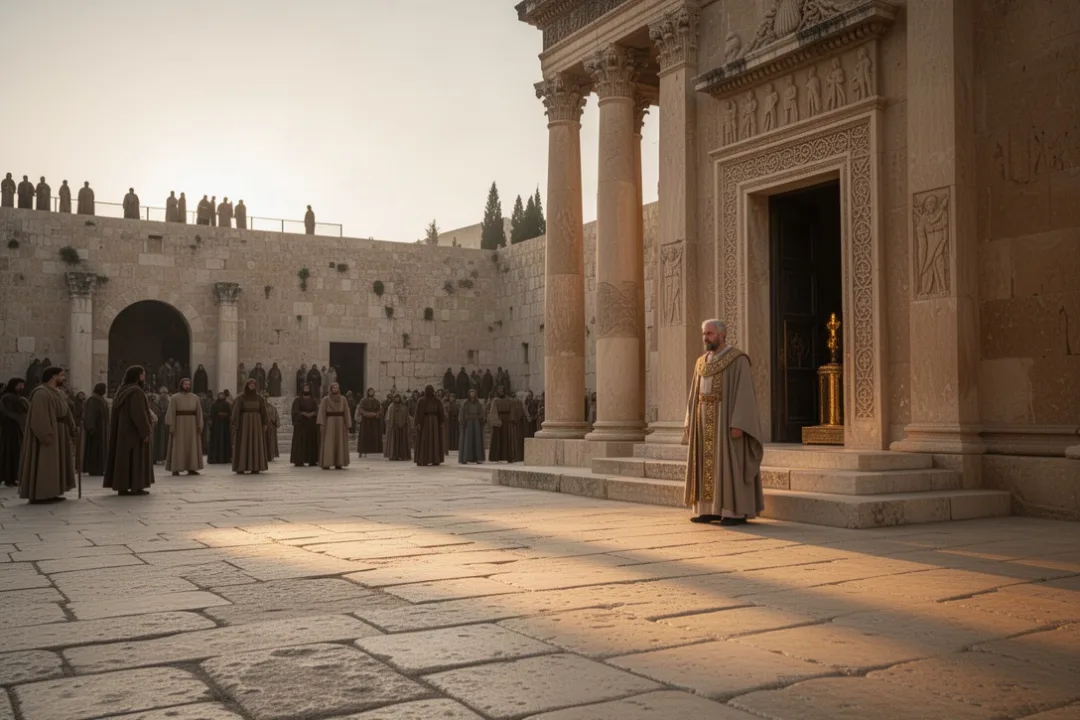
The best-known New Testament Zachariah appears in Luke 1. He was a Jewish priest, and his wife was Elizabeth, who belonged to the priestly family of Aaron. Luke describes both of them as faithful before God, while also explaining that they had no child and were advanced in age.
Zachariah’s priestly service brought him into the temple at a significant moment. While he was carrying out his duties, the angel Gabriel appeared to him and announced that Elizabeth would have a son. The child would be named John and would have a special role in preparing people for the Lord.
Gabriel’s message connected John’s birth with the promises of Israel’s Scriptures. John would call people toward repentance and would help turn them back to God. His ministry would prepare the way for Jesus, whom Christians identify as the Messiah.
Why Zachariah became unable to speak
Zachariah struggled to believe the announcement because he and Elizabeth were elderly and had remained childless. He asked for confirmation, and Gabriel responded by telling him that he would be unable to speak until the promise was fulfilled.
The temporary silence was both a sign and a consequence. Zachariah had questioned the message, and his inability to speak became visible evidence that something extraordinary had happened in the temple. When he came out, the people recognized that he had seen a vision because he could not address them normally.
Elizabeth later became pregnant and withdrew for a period of time. When the child was born, relatives assumed that the baby would receive his father’s name. Elizabeth insisted that he be called John, following the angel’s instruction.
When the family asked Zachariah to confirm the name, he wrote that the child was John. At that moment, his speech returned. Luke then presents him praising God and speaking prophetically about what God was doing through his son and through the coming Messiah.
The meaning of Zachariah’s prophecy
Zachariah’s prophecy in Luke 1 is often called the Benedictus, from the opening word of its Latin form. It is not merely a celebration of a newborn child. The prophecy places John’s life inside the larger story of God’s covenant with Israel.
The speech praises God for visiting and redeeming his people. It recalls the promise made to David and the covenant promise associated with Abraham. It also explains John’s role: he would go before the Lord, give people knowledge of salvation, and call them to repentance and forgiveness.
The final portion turns toward imagery of dawn and light. Zachariah describes God’s mercy as bringing light to those living in darkness and guiding people toward peace. The language points beyond John himself to the salvation that Christians believe arrives through Jesus.
Several themes stand out in Zachariah’s story:
God remembers his promises: The long delay before John’s birth does not mean that God’s purpose has failed.
Faithful service can occur quietly: Zachariah was carrying out ordinary priestly duties when the announcement came.
John’s mission is preparatory: His work directs attention away from himself and toward the Lord.
Salvation includes forgiveness: Zachariah links God’s saving work with mercy, repentance, and peace.
Zachariah’s story also shows a movement from uncertainty to worship. He begins unable to accept the promise and ends by proclaiming God’s faithfulness. His restored speech becomes an instrument of praise and interpretation.
Zechariah the prophet and the Book of Zechariah
The Old Testament prophet Zechariah lived during the period after the Babylonian exile. The opening of the book identifies him as the son of Berechiah and the grandson, or descendant, of Iddo. His ministry is associated with the time when the returned Jewish community was rebuilding its life in Jerusalem.
Zechariah ministered alongside Haggai. Both prophets encouraged the people to give attention to the rebuilding of the temple and to renewed faithfulness to God. The community had returned from exile, but restoration was incomplete. Political uncertainty, economic hardship, disappointment, and spiritual discouragement shaped the setting.
The Book of Zechariah contains visions, prophetic messages, symbolic actions, and promises about Jerusalem’s future. Its opening message calls the people to return to God. The book then moves through a series of visions in which Zechariah sees horses, horns, craftsmen, a measuring line, a lampstand, olive trees, a flying scroll, and other symbolic scenes.
These visions can seem difficult because they combine historical concerns with vivid imagery. Their central purpose, however, is clear: God has not abandoned his people, and the restoration of Jerusalem is part of a larger divine plan.
The main themes of Zechariah’s message
Repentance comes before renewal. Early in the book, Zechariah calls the people to return to God rather than repeat the disobedience of earlier generations. Restoration is not presented as a purely political or architectural project. It requires a changed relationship with God.
God protects and restores Jerusalem. Several visions communicate that Jerusalem has a future despite its devastation and vulnerability. The city is portrayed as a place where God will dwell and where his presence will bring security.
The high priest represents renewed worship. One vision features Joshua the high priest standing before God while accusations are brought against him. His filthy garments are removed and replaced, symbolizing cleansing and restored priestly service.
God’s work does not depend only on human strength. Zechariah 4 emphasizes that the rebuilding and renewal will occur not through military power or human force but through God’s Spirit. The passage encourages a discouraged community to trust divine provision.
Justice belongs at the center of public life. Zechariah calls for truthful judgment, compassion, and care for vulnerable people, including widows, orphans, foreigners, and the poor. Worship and social conduct cannot be separated.
The future king is associated with humility and peace. One of the book’s most recognized passages portrays a king arriving humbly and bringing a message of peace to the nations. Christians have traditionally connected this image with Jesus’ entry into Jerusalem, while the passage also speaks within Zechariah’s own hope for a restored kingdom.
The latter part of the book contains further oracles about conflict, leadership, purification, Jerusalem, and the Lord’s reign. These chapters use symbolic and sometimes challenging language. They have influenced Jewish and Christian interpretations of messianic hope, the future of Jerusalem, and God’s final victory over evil.
Central idea: Zechariah presents restoration as more than rebuilding a city or temple. It includes repentance, justice, cleansed worship, renewed leadership, and hope for God’s reign.
How to understand the visions in Zechariah
Zechariah’s visions are best read as symbolic messages addressed to a real community facing uncertainty. They are not simply a collection of predictions detached from history. The images speak to the people’s immediate need for encouragement while also opening toward a wider vision of restoration.
The first vision, involving horsemen, raises questions about the condition of the nations and Jerusalem. Other visions show God’s judgment on forces that have harmed his people and his intention to rebuild the city. The measuring line, for example, communicates the prospect of a Jerusalem that will expand beyond ordinary human boundaries and enjoy God’s protection.
The lampstand and olive trees use the imagery of continual oil and light. In its historical setting, the vision encourages the rebuilding effort and emphasizes divine empowerment. The central principle is that God’s purposes will be accomplished through his Spirit rather than through human resources alone.
The vision of Joshua the high priest addresses guilt and restoration. Joshua stands in soiled clothing, but God commands that the clothing be removed and replaced. The scene does not deny wrongdoing; instead, it shows that God can cleanse and recommission a representative of the people.
The flying scroll and the woman in the basket represent the removal of wickedness from the land. The imagery is dramatic because the prophet is showing that injustice and unfaithfulness are not minor matters. God’s restoration includes moral purification, not only physical rebuilding.
When reading these visions, several questions help:
What problem is the image addressing? Look for fear, guilt, opposition, injustice, or discouragement.
What does the image promise? Many visions point to protection, cleansing, renewed worship, or the defeat of hostile powers.
How does the vision fit the surrounding message? The call to return to God provides an interpretive frame for the symbolic scenes.
What belongs to the original setting? Start with the post-exilic community before applying later interpretations.
Christians often read Zechariah alongside the New Testament, especially passages connected with Jesus’ kingship, betrayal, suffering, and return. Those connections can be meaningful within Christian theology, but responsible interpretation should still consider the original historical and literary setting of each passage.
Other biblical people named Zechariah
Not every biblical Zechariah is the priest from Luke or the prophet associated with the Book of Zechariah. The name appears across different periods of Israel’s history, and several references are brief.
One important figure appears in 2 Chronicles 24. Zechariah, identified as the son of Jehoiada the priest, confronted the people for abandoning God’s commands. He was killed in the temple courtyard on the order of King Joash. His death became an example of the persecution of faithful witnesses.
This Zechariah is often discussed alongside the statement in Matthew 23, where Jesus refers to the killing of Zechariah between the sanctuary and the altar. Matthew identifies him as the son of Berechiah, which has led interpreters to discuss whether the Gospel refers to the same person, another Zechariah, or a traditional identification that differs from the Chronicles account.
The passages should not be casually merged. The Zechariah in 2 Chronicles is linked with Jehoiada, while the prophet who wrote the book is linked with Berechiah and Iddo. Similar names and overlapping traditions can create confusion, so family details and historical setting are especially useful.
Another Zechariah was the final king of the northern kingdom of Israel from the dynasty of Jehu. His reign was brief, and the account appears in 2 Kings 15. Other men with the name served as priests, Levites, officials, or witnesses in Israel and Judah.
A practical way to distinguish the main figures is to remember these associations:
Zachariah in Luke: A priest, husband of Elizabeth, and father of John the Baptist.
Zechariah the prophet: A post-exilic prophet and the traditional author of the Book of Zechariah.
Zechariah son of Jehoiada: A priestly figure killed after confronting religious unfaithfulness.
Zechariah king of Israel: A ruler of the northern kingdom whose short reign is recorded in 2 Kings.
Context also helps distinguish the name in translations. If the passage includes Elizabeth, John, Gabriel, or the temple service in Luke, it refers to John the Baptist’s father. If it includes visions, Joshua the high priest, Haggai, or the rebuilding of Jerusalem, it refers to the prophet.
Why Zachariah still matters to readers
Zachariah’s biblical stories speak to people living with delay, uncertainty, damaged institutions, and incomplete hope. The priest in Luke waits many years for a child, while the prophet addresses a community that has returned home but still faces the difficult work of rebuilding.
Both settings challenge the assumption that God’s silence means God’s absence. Zachariah and Elizabeth have no visible answer for years. The post-exilic community sees ruins and opposition. Yet both narratives insist that divine promises may be unfolding even when circumstances provide little reassurance.
The stories also connect personal faith with public responsibility. Zachariah’s restored voice announces mercy and salvation, while the prophet Zechariah demands honest judgment and care for the vulnerable. Biblical hope does not excuse injustice or passive waiting.
For Christian readers, the two main Zachariah traditions point toward preparation. John prepares people for Jesus, and Zechariah’s visions provide images that later Christian writers connect with Jesus’ kingship and the fulfillment of God’s promises. For Jewish readers, the Book of Zechariah remains part of the prophetic witness concerning repentance, restored worship, Jerusalem, and the future reign of God.
The shared meaning of the name offers a fitting thread through these accounts: God remembers. That does not promise an easy timetable or remove every hardship. It expresses confidence that God remains faithful to his covenant, responds to repentance, and continues his work through people whose circumstances may appear ordinary or discouraging.
Frequently asked questions
Is Zachariah the same person as Zechariah in the Bible?
The names are variant English forms of the same Hebrew name, but they do not always identify the same individual. Zachariah in Luke is the father of John the Baptist. Zechariah in the Old Testament is a prophet associated with the Book of Zechariah. Other priests, kings, and officials also carried the name, so the surrounding passage determines the person.
What was Zachariah’s role in the birth story of John the Baptist?
Zachariah was a priest and the husband of Elizabeth. An angel announced that they would have a son despite their old age and that the child would prepare people for the Lord. Zachariah initially doubted the message and became unable to speak. After confirming the baby’s name as John, he regained his speech and praised God.
What is the main message of the Book of Zechariah?
The book calls God’s people to return to him and offers hope for restored Jerusalem, renewed worship, righteous leadership, and God’s presence among his people. Its visions also emphasize that restoration depends on God’s Spirit rather than human strength. Later sections expand the vision toward judgment, peace, the coming king, and God’s reign.
Does the name Zachariah have a specific meaning?
Yes. Zachariah comes from a Hebrew name commonly understood to mean “Yahweh remembers” or “the Lord remembers.” In biblical language, remembering often describes God acting faithfully on a promise rather than recovering a forgotten fact. The meaning fits the biblical themes of covenant, mercy, restoration, and fulfilled hope associated with several people named Zachariah.














Leave a Reply