Have you ever wondered what God sees when he looks at you: your mistakes, your circumstances, your religious effort, or something deeper? Ephesians 1:1-4 begins with a greeting, but it quickly moves toward a reassuring answer. Paul presents believers as people connected to Christ, recipients of grace and peace, and included in God’s purpose before the world was made.
These verses do not answer every question about salvation, human choice, or suffering. They do establish a strong foundation: Christian identity begins with God’s action, not with a person’s performance. Paul writes to people living in a real city with real pressures, yet he directs their attention to what God has done and what their lives mean in Christ.
Ephesians opens as an ancient letter normally would. Paul identifies himself as an apostle of Christ Jesus by God’s will, addresses the believers associated with Ephesus, and gives them a blessing of grace and peace from God the Father and the Lord Jesus Christ. The opening is brief, but each phrase carries theological weight.
Paul then turns from the greeting to praise. In verse 3, he blesses God for giving believers every spiritual blessing in the heavenly places in Christ. Verse 4 explains one dimension of that blessing: God chose believers in Christ before the foundation of the world so they would be holy and blameless before him in love.
The paragraph continues beyond verse 4, but Ephesians 1:1-4 has its own clear movement:
Verse 1: Paul identifies his calling and authority.
Verse 2: He greets the recipients with grace and peace.
Verse 3: He praises God for spiritual blessings in Christ.
Verse 4: He describes God’s choice of believers and its intended result.
The passage therefore moves from the messenger, to the readers, to God’s blessing, and finally to God’s purpose. Reading the verses as one connected opening helps prevent isolated interpretations.
Who wrote Ephesians and who received it?
The letter names Paul as its writer. He describes himself as an apostle of Jesus Christ through God’s will, meaning his authority did not come from personal ambition or a self-appointed religious role. In the New Testament, an apostle was a commissioned representative, and Paul understood his ministry as a calling received from Christ.
The letter is addressed to “the saints” and faithful believers in Christ Jesus associated with Ephesus. The word saints does not mean a small class of exceptionally holy people. In this setting, it refers to people set apart for God and belonging to him. Their identity is based first on their relationship with Christ, not on a flawless record.
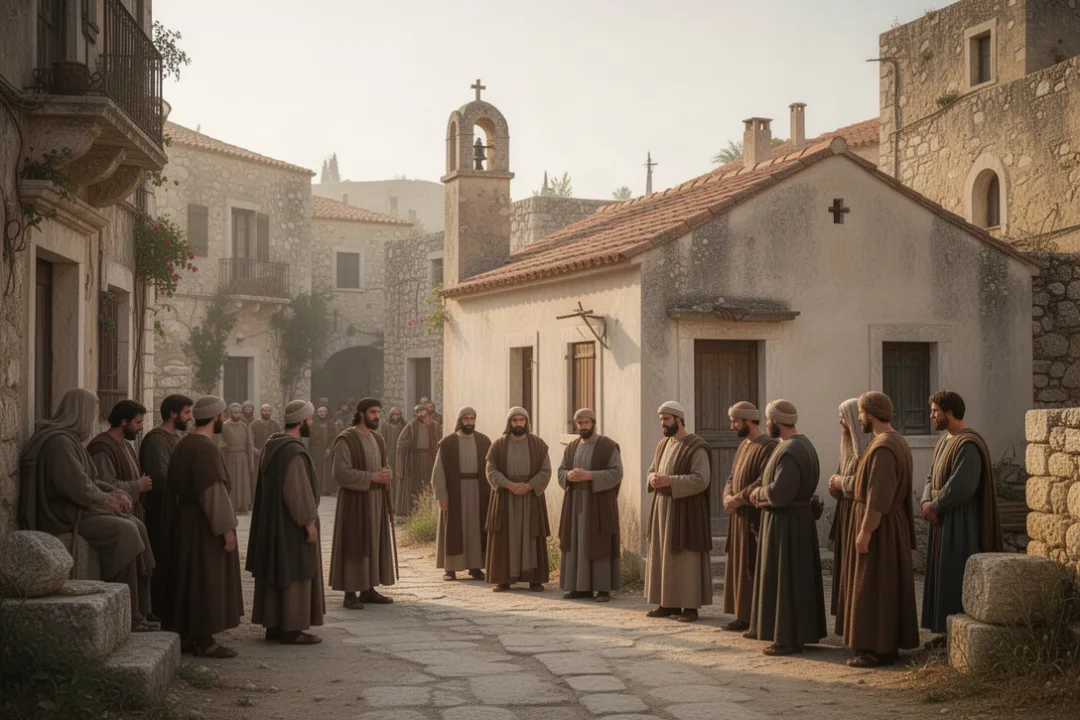
Ephesus was a significant city in the Roman province of Asia, located in what is now western Turkey. It was a major commercial and religious center, associated with the worship of Artemis and with a diverse urban population. Acts describes Paul’s extended ministry in Ephesus and the opposition that arose around the city’s religious economy in Acts 19.
That background gives the greeting more force. The Ephesian believers were not isolated from social pressure, competing loyalties, or spiritual confusion. Paul begins by reminding them that they belong to Christ Jesus, even while living in a culture shaped by other authorities and forms of worship.
How to read Ephesians 1:1-4 step by step
A careful reading can follow the passage’s own sequence instead of treating verse 4 as an independent slogan. The following points show how the ideas fit together.
Start with the speaker: Paul speaks as someone commissioned by God’s will.
Notice the audience: The recipients are called saints and faithful people in Christ.
Receive the greeting: Grace and peace describe God’s favor and the wholeness he gives.
Look at the source of blessing: God the Father is praised as the one who blesses believers.
Notice the location of blessing: The blessings are spiritual and heavenly, yet they shape earthly life.
Keep the phrase “in Christ” central: The blessings belong to those united with Christ.
Read election alongside its purpose: God’s choice is directed toward holiness and blamelessness before him.
Let the passage produce worship: Paul begins with praise, not speculation or fear.
This sequence matters because it keeps the focus where Paul places it. He is not presenting election as an abstract puzzle detached from Christian life. He is praising God for grace given in Christ and describing the kind of people God intends believers to become.
Central idea: Ephesians 1:1-4 presents believers as people whose deepest identity is found in Christ, whose blessings originate in God, and whose calling includes a holy life before him.
What “saints and faithful” means in verse 1
Paul’s description of the recipients combines two related ideas. “Saints” emphasizes that they belong to God, while “faithful” points to their allegiance to Christ. The wording does not suggest that they have reached moral perfection. It identifies them as people whose lives are oriented toward Jesus.
This distinction can correct two common mistakes. One mistake is assuming that “saint” means a person who never fails. The other is treating Christian identity as merely a private label with no effect on conduct. Ephesians holds identity and practice together: believers are set apart by God, and they are called to live faithfully because of that belonging.
The phrase “in Christ Jesus” is especially important in Ephesians. It describes more than admiration for Jesus or agreement with his teaching. It points to participation in Christ’s life, death, resurrection, and rule. Paul’s later arguments about unity, reconciliation, spiritual strength, and daily conduct all grow from this shared position in Christ.
For a reader who feels disqualified by past failure, the opening offers a needed correction. The starting point is not “prove that you deserve to belong.” The starting point is that God addresses his people as those who are in Christ. That identity then becomes the basis for growth, repentance, and faithful living.
Why Paul begins with grace and peace
Paul’s greeting joins grace and peace. Grace refers to God’s generous favor, given freely rather than earned. Peace includes reconciliation with God and the settled well-being that flows from belonging to him. Together, the words summarize the kind of relationship Paul wants believers to understand.
Grace comes first because peace is not presented as something people manufacture through perfect behavior. God’s favor creates the possibility of restored relationship, and restored relationship produces a new kind of peace. This does not mean Christians never experience anxiety, conflict, grief, or uncertainty. It means those experiences do not have the final authority over their relationship with God.
The greeting also shows that Christian faith is relational rather than merely intellectual. Paul does not begin by giving the readers a list of ideas to master. He names the Father and the Lord Jesus Christ as the source of grace and peace. The Christian life is received from God and lived in communion with him.
When you read verse 2, you can hear an answer to the question, “What kind of relationship does God offer?” The answer is not acceptance based on achievement, but grace; not alienation and hostility, but peace. These gifts form the emotional and theological atmosphere of the letter.
What “every spiritual blessing” means in verse 3
Verse 3 says that God has blessed believers with every spiritual blessing in the heavenly places in Christ. The phrase can sound like a promise of unlimited material success, but that is not Paul’s meaning. He is describing the complete richness of salvation: access to God, forgiveness, adoption, redemption, wisdom, unity, hope, and the presence of the Holy Spirit as the letter unfolds.
The word every emphasizes fullness. Paul is not saying that each believer has every possible experience or possesses every personal gift. He is saying that God has not provided a partial or second-rate salvation. In Christ, believers receive everything necessary for their relationship with God and their calling as his people.
The blessings are called spiritual because they come from God’s Spirit and concern the life God gives. They are not therefore unreal or detached from physical life. Forgiveness changes how a person lives with guilt. Reconciliation changes how divided people relate to each other. Hope changes how suffering and death are faced.
“Heavenly places” does not mean that these blessings matter only after death. In Ephesians, the heavenly realm is connected with God’s authority and purpose, while believers still live on earth. Paul is teaching that the most decisive realities of their lives come from God’s realm, even when their daily circumstances appear to say otherwise.
Why the phrase “in Christ” controls the passage
The words in Christ are the center of Ephesians 1:1-4. Paul does not describe blessings as rewards that people earn independently. He locates them in relationship with Jesus. Christ is not simply the messenger who tells people about salvation; he is the person in whom salvation is found.
This language also gives the passage a communal dimension. Paul is speaking to a group, not only to isolated individuals. People from different backgrounds share one new identity in Christ. Later in the letter, this shared identity becomes the basis for reconciliation between Jews and Gentiles and for the unity of the church.
Being in Christ does not erase a person’s history, culture, personality, or ordinary responsibilities. It changes their deepest allegiance and gives those parts of life a new setting. A Christian remains a neighbor, parent, employee, student, citizen, or friend, but each role is now lived under Christ’s lordship.
For that reason, Ephesians 1:1-4 speaks directly to identity struggles. You may define yourself by success, failure, family expectations, social status, political commitments, or painful memories. Paul does not deny that these things affect you. He insists that they are not the final definition of a person who belongs to Christ.
What “chosen before the foundation of the world” means
Verse 4 says that God chose believers in Christ before the foundation of the world. The statement places God’s saving purpose before human history, human achievement, and human failure. Salvation is not an emergency measure invented after people went wrong; it belongs to God’s eternal purpose.
The word chosen raises difficult questions about election, human freedom, and the destiny of those who do not believe. Christians have interpreted these questions differently across centuries and traditions. Some emphasize God’s sovereign choice of particular people, while others emphasize God’s foreknowledge, the corporate identity of those in Christ, or the invitation extended through the gospel.
Ephesians 1:1-4 should not be forced to answer more than it directly says. It clearly teaches that God’s initiative comes first, that the choice is connected to Christ, and that the purpose is a holy people. It does not give a complete explanation of every question about divine sovereignty and human responsibility in only four verses.
The phrase “in Christ” also matters when interpreting “chosen.” Paul does not describe people as chosen apart from Christ or as possessing spiritual status independent of him. God’s purpose is centered on Christ, and those who belong to Christ share in the blessings associated with him.
The pastoral effect is significant. Paul uses this teaching to lead believers toward worship and confidence, not toward pride or fatalism. If God’s purpose existed before creation, then Christian hope does not rest on the unstable foundation of personal achievement or changing circumstances.
What holiness and blamelessness mean in verse 4
God’s choice has a stated purpose: believers are to be holy and blameless before him. Holiness means being set apart for God and increasingly shaped by his character. Blamelessness does not mean that Christians never make mistakes. It points to a life that is sincere, undivided, and fit to stand before God through his grace.
Paul does not present holiness as a way to earn election. The order is the opposite: God’s gracious purpose produces a people who live differently. Christian conduct is therefore neither a payment for salvation nor an optional decoration. It is the intended fruit of belonging to Christ.
“Before him” adds a personal dimension. Holiness is not merely public respectability or compliance with a community’s rules. It concerns the whole life lived in God’s presence. A person may appear impressive to others while remaining dishonest in private, but Paul’s standard reaches beyond reputation to integrity before God.
The letter later gives practical instructions about speech, anger, sexuality, work, forgiveness, family life, and spiritual resistance. Those instructions are not disconnected from chapter 1. They show what it looks like for people chosen in Christ to live as holy and blameless before God.
How “in love” should be understood
Many English Bibles place the phrase “in love” at the end of verse 4, while some translations connect it with the next sentence. Either way, love is central to the passage’s meaning. God’s purpose is not cold selection or mere legal classification. It is directed toward a people marked by love and toward a relationship shaped by God’s loving character.
If the phrase belongs with “holy and blameless,” it emphasizes that holiness is meant to be expressed through love rather than harsh self-righteousness. If it begins the next thought, it still describes the loving purpose of God’s action. Both readings fit the broader message of Ephesians, where believers are called to walk in love, maintain unity, and speak truth with love.
This matters because religious language about being chosen can be misused. It can produce superiority, suspicion, or contempt for people outside one’s group. Ephesians points in the opposite direction. God’s purpose creates a community that reflects Christ’s humility, patience, forgiveness, and sacrificial love.
How Ephesians 1:1-4 speaks to fear and insecurity
Many people read these verses while carrying insecurity. They may wonder whether God accepts them, whether their past has permanently ruined their future, or whether their faith is strong enough. Ephesians directs attention away from constantly measuring personal worth and toward God’s action in Christ.
That does not mean every emotional struggle disappears immediately. The passage gives a stable reference point for those struggles. Your standing with God is not based on having a perfect week, maintaining an impressive spiritual record, or avoiding every failure. It is grounded in grace and in the relationship with Christ that Paul places at the center.
The passage also guards against a shallow form of reassurance. It does not say that choices and conduct are irrelevant. God’s purpose includes holiness and blamelessness. Comfort and transformation belong together: grace receives you, and grace reshapes you.
For personal reflection: When insecurity rises, ask two questions: “Am I treating my performance as the foundation of my identity?” and “What would it look like to live today as someone already called to holiness in Christ?”
Ephesians 1:1-4 can shape daily decisions without turning the passage into a formula. Its teaching becomes practical when you let it influence the way you view yourself, other believers, difficult circumstances, and moral choices.
Begin with received identity: Before evaluating your success or failure, remember that Paul starts with belonging to Christ.
Practice gratitude: Name God’s grace, peace, and spiritual gifts instead of treating them as automatic.
Reject spiritual comparison: Other people’s gifts, backgrounds, or progress do not determine your standing before God.
Choose integrity in private: “Before him” means that hidden decisions matter, even when no one else sees them.
Let election produce humility: Grace leaves no room for boasting or contempt toward others.
Express holiness through love: A correct belief about God’s purpose should produce patience, forgiveness, and service.
Hold hope during hardship: Present circumstances do not cancel God’s purpose established before creation.
These applications are not attempts to earn God’s choice. They are ways to respond to what Paul says God has already done. Christian obedience grows from grace rather than trying to purchase it.
What Ephesians 1:1-4 does not promise
Because the passage speaks about blessing, it can be misunderstood as a promise of constant prosperity, painless circumstances, or success in every undertaking. Ephesians does not make those promises. The same letter speaks about opposition, spiritual conflict, suffering, imprisonment, and the need for endurance.
Spiritual blessing is not measured by wealth, health, popularity, or a trouble-free life. A believer may experience loss and still possess forgiveness, reconciliation with God, a new identity, the hope of resurrection, and the presence of God’s Spirit. Those gifts remain meaningful even when earthly conditions are severe.
The passage also does not promise that Christians will instantly become morally complete. God’s purpose is holiness, but growth usually involves confession, correction, patience, and repeated dependence on grace. The call to be blameless is a direction for the whole life, not a claim that every believer has already reached perfection.
Finally, these verses do not authorize anyone to claim certainty about another person’s spiritual status. Paul addresses the church as a community in Christ and calls its members to live faithfully. The text should lead to worship, humility, and holy love rather than judgmental speculation.
How the opening prepares you for the rest of Ephesians
The first four verses introduce themes that the rest of the letter develops. Grace becomes the basis of salvation. Being in Christ explains the unity of believers. Holiness becomes a practical way of life. God’s purpose reaches beyond individual comfort toward the reconciliation and renewal of all things under Christ.
The opening also establishes the letter’s pattern of doctrine followed by practice. Paul first describes what God has done, then explains how believers should live in response. Chapters 1 through 3 emphasize God’s saving work and the church’s identity; chapters 4 through 6 apply those truths to relationships, conduct, worship, work, family life, and spiritual resistance.
That pattern protects Christian living from two opposite errors. One error is activism without grace, where people try to create spiritual life through effort alone. The other is belief without transformation, where people affirm religious ideas but resist the conduct those ideas require. Ephesians 1:1-4 joins God’s initiative with the holy life that initiative is meant to produce.
Read this way, the passage is both comforting and demanding. It comforts you by grounding hope in God’s purpose and grace. It demands that you treat your life as one set apart for God, lived honestly before him and expressed through love toward others.
Frequently asked questions
Does Ephesians 1:1-4 teach predestination?
It teaches that God chose believers in Christ before the foundation of the world. Christian traditions differ on how this relates to individual election, human freedom, and God’s foreknowledge. The passage clearly connects God’s choice with Christ and with the purpose of producing a holy, blameless people. It should be read with humility rather than used to settle every theological question from four verses.
What does “every spiritual blessing” include?
The phrase refers to the fullness of salvation God gives in Christ, not a guarantee of wealth or uninterrupted comfort. Across Ephesians, these blessings include grace, forgiveness, reconciliation, spiritual wisdom, belonging to God’s people, hope, and the Spirit’s presence. They are called spiritual because they come from God and transform a person’s relationship with him and with others.
Are Christians already holy and blameless?
In one sense, believers are set apart for God and accepted through Christ. In another sense, they are still growing in practical holiness and must reject sin, pursue integrity, and love others. Ephesians holds both truths together. God’s grace establishes a believer’s identity, while that identity becomes the foundation for a lifelong process of transformed conduct.
Why does Paul address believers as saints?
“Saints” means people set apart as belonging to God; it does not refer only to unusually impressive Christians. Paul uses the term for the community of believers in Christ. The title emphasizes God’s calling and ownership, while the accompanying call to faithfulness shows that those who belong to Christ are also expected to grow in loyal, holy living.













Leave a Reply