Catholic house blessing: prayers, preparation, and meaning
Catholic house blessing: prayers, preparation, and meaning
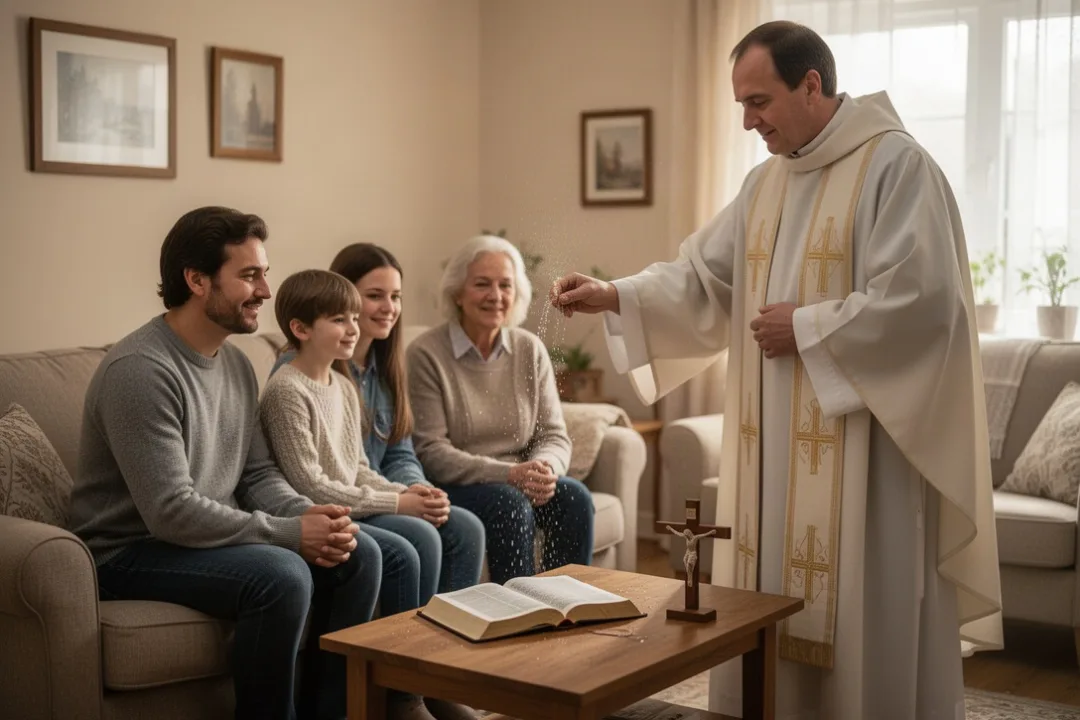
A Catholic house blessing is usually arranged through your parish and led by a priest or deacon. The minister prays with the household, may proclaim Scripture, bless the people and rooms with holy water, and ask God to make the home a place of peace, hospitality, and faithful living.
You do not need a special building, expensive objects, or a spotless home. Before the visit, contact the parish office, choose a suitable time, gather the people who live there, and clear a simple space for prayer. A house blessing is not a magical protection ritual; it is a public expression of trust in God and a commitment to live Christian love within the home.
The Catholic Church uses blessings to praise God and ask for his help in particular people, places, and circumstances. A home blessing focuses on the people who live in the house, not only on the walls, furniture, or property itself. The home becomes a setting for prayer, family life, rest, work, welcome, and service.
A blessing does not turn a house into a sacred building in the same way a church is dedicated for worship. It also does not guarantee that illness, conflict, financial trouble, or every other hardship will stay away. Instead, it asks God to guide the household and help its members respond to ordinary life with faith, patience, justice, and charity.
The ritual may include Scripture, intercessions, holy water, and a concluding prayer. These signs point beyond themselves. Holy water recalls baptism, while prayer expresses the household’s desire to place its daily life under God’s care. The blessing is received through faith and lived through choices, relationships, and habits.
Keep the purpose clear: A house blessing is a prayer of dedication and thanksgiving, not a guarantee of supernatural control over the home or a replacement for practical help, medical care, or professional advice.
How to arrange a Catholic house blessing through your parish
Start by calling or emailing your parish office. Tell the staff that you would like a priest or deacon to bless your home, provide the address, and offer several possible dates and times. Some parishes schedule house blessings during particular seasons, while others arrange them throughout the year according to clergy availability.
If you recently moved, say so when you make the request. A new home is a common reason for asking for a blessing, but you can request one at any stage of your household’s life. People also invite a minister after a marriage, adoption, birth, reconciliation within the family, a major renovation, or a period of grief.
Ask whether the parish has a preferred form of the rite and whether the minister would like particular family members present. The official wording and practical details can vary according to the parish, diocese, season, and whether a priest, deacon, or another authorized minister leads the prayer.
When you contact the parish, you may want to ask these practical questions:
Who will lead the blessing, and how long should you expect the visit to last?
Should everyone gather in one room at the beginning?
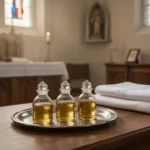
Will the minister bring holy water, or should you provide it?
May extended family, friends, or roommates participate?
Would the minister like a small table prepared with a Bible or crucifix?
Is there a customary offering, and how should it be handled?
You do not need to wait for a special church holiday. A Catholic house blessing may take place on a weekday or weekend, in daylight or evening, as long as the timing works for the household and the minister. If your circumstances are urgent or sensitive, explain them privately to the parish staff so they can guide you appropriately.
How to prepare your home before the blessing
Preparation should make prayer easier, not create stress. Tidy the main areas enough for people to walk safely and gather comfortably, but do not treat the blessing as a test of housekeeping. The minister is coming to pray with your household, not to inspect your possessions or judge your lifestyle.
Choose a central place where the opening prayers can take place. A dining table, living-room table, or another stable surface can hold a Bible, crucifix, or small religious image if you have one. These items are helpful signs of faith, but they are not required. A Catholic home does not become less worthy of blessing because it has few religious objects.
Put away anything that could interrupt the prayer, such as loud music, active appliances, or a television. Secure pets if they are likely to jump on guests or become distressed. If someone in the household has mobility, hearing, or other access needs, tell the parish in advance so the visit can be inclusive.
Invite the people who genuinely belong to the household. Children can participate according to their age by carrying a Bible, answering a response, holding a candle when appropriate, or joining the final prayer. Guests and non-Catholic family members may be present respectfully, even though they may participate in different ways.
Before the visit, take a few minutes to identify what you want to place before God. You might pray for peace between family members, wisdom in raising children, strength during illness, gratitude for a new beginning, or protection for someone who travels for work. These intentions can make the blessing personal without changing its central purpose.
What usually happens during a Catholic house blessing
The exact order depends on the approved rite and local practice, but a home blessing commonly begins with a greeting and opening prayer. The minister may ask the household to state why it requested the blessing. The family then gathers around the minister, usually in the main room.
A Scripture reading may follow. The passage can describe God’s presence, the call to love one another, the welcome of guests, the peace Christ gives, or the responsibilities of Christian life. Rather than treating Scripture as a charm, the rite uses it to direct the household toward a faithful way of living.
The minister may offer a brief reflection connecting the reading with the home. This reflection might mention the home as a place where people learn forgiveness, share burdens, welcome neighbors, care for children and older relatives, and practice gratitude. The focus is usually practical and pastoral rather than academic.
Next, the minister may lead intercessions for the household and the wider community. These prayers can include requests for health, peace, wise decisions, the needs of neighbors, people who are homeless, families experiencing conflict, and those who have died. Household members may be invited to add their own intentions.
If holy water is used, the minister may sprinkle the people and rooms. This gesture recalls baptism and the Christian identity of the people who live there. The minister may walk through several rooms, praying for the activities associated with each space: rest in bedrooms, nourishment and fellowship in the kitchen or dining area, work and study in offices, and welcome in shared living spaces.
The blessing normally ends with a prayer for the household and a dismissal. Some families remain together afterward for a meal or informal conversation. That meal is not part of the sacramental ritual, but hospitality can extend the spirit of the visit into ordinary family life.
How each room can be included in the prayer
A house blessing does not require the minister to visit every closet, garage, or storage area. The important question is how the space serves human life and relationships. If the minister walks through the home, you can quietly point out rooms with particular significance or ask that specific intentions be included.
Entryway: Pray that those who enter are welcomed with kindness and that the household recognizes its responsibility toward neighbors and guests.
Kitchen and dining area: Give thanks for food, ask for generosity toward people in need, and pray that meals become opportunities for conversation and care.
Living room: Ask for honest communication, patience during disagreements, and peaceful time shared together.
Bedrooms: Pray for rest, healing, privacy, safety, and the dignity of each person who sleeps there.
Children’s rooms: Ask for protection, wise guidance, healthy development, and adults who model compassion and responsibility.
Office or study: Pray for integrity, concentration, fair work, and decisions that serve the common good.
Outdoor areas: Give thanks for creation and ask the household to use its property responsibly and generously.
These room-by-room intentions are not required formulas. They are ways to connect the prayer with real life. A small apartment, shared rental, dorm room, or assisted-living residence can be blessed just as meaningfully as a large detached house. The size and ownership of the property do not determine the spiritual value of the blessing.
Prayers and Scripture for a Catholic house blessing
The minister generally uses a prayer from an approved Catholic source rather than inventing a private ritual. The words ask God to bless the household, strengthen its members in love, and help the home reflect Christian hospitality. A priest or deacon may adapt the intercessions to the family’s circumstances while following the appropriate liturgical guidance.
Families may also pray together before or after the visit. A simple household prayer can include four elements: praise of God, gratitude for the home, requests for help, and a commitment to serve one another. You could ask one person to lead each part, allowing children or guests to participate in a natural way.
Scripture references that fit a house blessing include passages about serving God within the household, receiving guests, practicing love, seeking peace, and caring for the vulnerable. The minister may choose a reading suitable for the occasion. Because Bible translations use different wording, it is better to read the passage from a Bible than to rely on an unofficial quotation copied from the internet.
For personal prayer, you can reflect on these questions:
How can this home become more welcoming to people who feel alone?
What habit would help our household speak more patiently?
Where do we need forgiveness or a new beginning?
How can we share our time, food, or resources with others?
What blessing have we received through living here?
A rosary, grace before meals, a short prayer at bedtime, or regular Sunday worship can help the meaning of the blessing continue. None of these practices turns the house into a protected object. They help the people in it remember the relationship with God that the blessing celebrates.
What to bring or place in the home
Most households need nothing special. A Bible and crucifix can provide a visible focus, and a small bowl or container may be useful if the minister asks for holy water. If you already have a religious image, family Bible, or baptismal candle, you may place it nearby, but do not buy objects solely to make the visit seem more official.
Some Catholic families observe customs connected with the Epiphany season, including prayers for the home and a marking above the doorway with blessed chalk. Practices vary by culture and parish, and the chalk itself is not a magical safeguard. If you want to observe this custom, ask your priest or deacon to explain the local practice and provide the appropriate prayer.
Do not place blessed objects in unsafe locations or use them in ways that conflict with their purpose. A rosary belongs to prayer, holy water is used reverently, and religious images should support devotion rather than superstition. If an object is damaged or no longer usable, ask your parish how to dispose of it respectfully.
Practical tips and common mistakes to avoid
A house blessing is usually simple, but a few choices can make the experience more prayerful. The most common problems come from treating the visit as either a formal performance or a spiritual emergency. Good preparation keeps the focus on God and the household’s real needs.
Do not wait for perfect cleanliness. Clear a safe path and a place to gather, but remember that the blessing is for people living ordinary lives.
Do not assume the minister will arrive without scheduling. Contact the parish and confirm the date, time, address, parking details, and expected participants.
Do not turn holy water into a protective object. Its use recalls baptism and supports prayer; it is not a guarantee against accidents or misfortune.
Do not pressure non-Catholic relatives or roommates. Invite respectful presence and allow each person to participate according to conscience.
Do not make the visit a house tour. Include the rooms that matter, but avoid creating an elaborate schedule that distracts from prayer.
Do not improvise a clergy-only rite. If no priest or deacon is available, ask the parish about an appropriate prayer led by a layperson.
Do not use the blessing to avoid practical action. Address safety hazards, family conflict, addiction, abuse, or mental-health concerns through suitable professional and community support.
Do not forget absent household members. Include their needs in the intercessions, especially people who are ill, deployed, traveling, or estranged.
If the request involves fear or unusual experiences: Speak first with your parish priest and describe the situation plainly. The Church’s pastoral response should be careful and grounded, with practical, medical, mental-health, or safety support considered when needed.
It is also wise to tell the minister about circumstances that may affect the visit. A family member may be grieving, a relationship may be strained, or a child may become anxious around unfamiliar guests. The minister can adapt the pace and prayers without requiring you to explain personal matters in front of everyone.
When a Catholic house blessing is especially appropriate
Many people request a blessing when moving into a new home. The prayer can mark the transition from one chapter to another and help residents think about how they want to live in the new space. It can also welcome a spouse, child, foster child, roommate, or extended family member into an established household.
A blessing may be meaningful after a difficult period. Families sometimes ask for prayer following illness, bereavement, unemployment, conflict, or a renovation that changes how the home is used. The blessing does not erase the difficulty, but it gives the household a shared language for asking for grace and beginning again.
You can also request a blessing when nothing dramatic has happened. Gratitude is a sufficient reason. A home provides shelter, privacy, work space, and a setting for relationships; recognizing those gifts can encourage a household to share them with others.
Some households arrange a blessing around Christmas, the Epiphany, Easter, or another significant feast. Others choose a family anniversary or the date they moved in. The Church does not require one universal date, so select a time that allows the household to be present and attentive.
How to continue the blessing in everyday life
The most lasting response to a house blessing is not keeping a particular object in a particular room. It is building habits that make the home more truthful, peaceful, and generous. A household might begin eating one meal together each week, praying before meals, checking in with an isolated relative, or setting aside time to repair conflict.
Christian hospitality does not require elaborate entertaining. It may mean offering a seat to a neighbor, listening without rushing, sharing food, welcoming a new family in the community, or making space for someone who needs practical help. The home’s Christian character is shown through how people are treated there.
Forgiveness also matters. A blessed home is not one without arguments; it is a home where people can acknowledge harm, seek forgiveness, establish healthy boundaries, and try to speak with respect. If conflict involves abuse or danger, safety comes first and professional assistance should be sought.
Keep the household connected to the parish through Sunday Mass, service, formation, and relationships with other Catholics. The house blessing is connected to the wider life of the Church, especially baptism and the Eucharist. It is a beginning or renewal of intention, not a substitute for worship and community.
Can a family pray for its own home?
Yes. A family can gather and ask God to bless the people, activities, and space of the home. You might read a short Scripture passage, offer intentions, pray the Our Father, and ask for peace, wisdom, and generosity. This kind of prayer can take place regularly and does not require a priest to be meaningful.
When a formal blessing by a priest or deacon is not possible, contact the parish for guidance. Depending on local rules and circumstances, a deacon, religious minister, or layperson may be able to lead an appropriate form of prayer. The distinction between a clergy-led liturgical blessing and a family’s personal prayer should be respected rather than blurred.
A simple family prayer could follow this pattern:
Gather in the main room and make a brief sign of the cross.
Thank God for the people, shelter, and opportunities connected with the home.
Read a short passage from the Bible and discuss one way to live it.
Pray for household members, neighbors, the parish, and people in need.
Ask for help in practicing patience, honesty, forgiveness, and hospitality.
Close with the Lord’s Prayer and a sign of peace.
The strength of this prayer lies in sincere attention and faithful action. A parish house blessing and a family prayer complement each other: one connects the household with the Church’s public ministry, while the other helps faith become part of the home’s ordinary rhythm.
How to explain the blessing to children
Children often understand a house blessing best when it is explained in concrete terms. Tell them that the family is asking God to help everyone in the home love, forgive, listen, and care for others. Explain that holy water reminds Catholics of baptism and that the prayer is not a spell that makes bad things impossible.
Give children a small, respectful role. They might help choose the Bible, name people who need prayer, answer a response, or draw a picture afterward about what makes a home welcoming. Avoid making them feel responsible for the blessing’s success or frightened by talk of danger and evil.
Older children can help identify ways the household serves others. They may suggest donating food, visiting relatives, welcoming a new student, or changing a habit that causes unnecessary conflict. These conversations connect the ritual with moral responsibility and make the blessing part of family formation.
Frequently asked questions
Does a priest have to bless a Catholic home?
No. A family can pray for its home at any time, and a parish may offer guidance when a priest or deacon is unavailable. A formal parish house blessing is normally led by a priest or deacon, while a household prayer is a separate but valuable practice. Ask your parish which approved options are available in your diocese.
How much does a Catholic house blessing cost?
There is generally no required fee for the prayer itself. Some families give a voluntary offering to the parish or minister, but you should not assume a payment is necessary or that the blessing depends on one. Ask the parish office about local customs, especially if the visit is connected with another pastoral service.
Can a Catholic house blessing be held in an apartment or rental?
Yes. The blessing concerns the people and their life together, not ownership or property size. Ask your landlord about any access rules, and include roommates or other residents respectfully. If not everyone is Catholic, they may be present without being pressured to make gestures or say prayers against their conscience.
Is a house blessing the same as an exorcism?
No. A house blessing is an ordinary prayer asking God to bless the household and its activities. An exorcism is a distinct matter governed by Church authority and should never be arranged casually or performed privately. If you feel frightened by events in a home, speak openly with a parish priest and also address possible safety, health, or environmental causes.










Leave a Reply