Book of Wisdom: meaning, themes, and why it matters
Book of Wisdom: meaning, themes, and why it matters
When you are facing an unfair decision, grieving someone you love, or wondering whether success has made you wiser, the Book of Wisdom offers a direct question: what kind of life is truly worth choosing? Also called the Wisdom of Solomon, this biblical book contrasts temporary pleasure and status with justice, integrity, and trust in God.
The book belongs to the collection commonly called the Deuterocanonical books in Catholic Christianity and the Apocrypha in many Protestant settings. It is included in Catholic and Eastern Orthodox Bibles, but usually not in Protestant or Jewish biblical canons. Although it presents its teaching in Solomon’s voice, most scholars understand it as a later work written by an anonymous Jewish author.
The Book of Wisdom is a relatively short work of biblical wisdom literature. It has 19 chapters and was written in Greek rather than Hebrew. Its setting is commonly associated with the Jewish community in Alexandria, Egypt, a major center of Greek-speaking Jewish life and learning.
Its traditional title, the Wisdom of Solomon, reflects the book’s literary presentation. The speaker addresses rulers and describes Solomon’s request for wisdom, but the text does not claim in a straightforward historical way that Solomon personally wrote it. Instead, using the name of a famous wise king gives the teaching authority and connects it with Israel’s wisdom tradition.
The book stands near the end of the Old Testament in Catholic Bibles. In many Orthodox Bibles, its placement can differ because Orthodox churches do not all arrange the biblical books in exactly the same order. In Protestant editions, it may appear in a separate section called the Apocrypha, or it may be omitted entirely.
Its status differs because Christian communities received and evaluated the Old Testament through different canonical traditions. Catholic and Orthodox churches generally recognize the Book of Wisdom as Scripture, while most Protestant churches regard it as useful religious literature but not part of the biblical canon. Jewish communities do not include it in the Hebrew Bible, partly because it was composed in Greek and became part of the Greek Jewish scriptural tradition.
A helpful distinction: “Apocrypha” and “Deuterocanonical” often refer to the same group of books, but the terms signal different traditions. “Deuterocanonical” is commonly used by Catholics, while “Apocrypha” is common in Protestant discussions.
The book also has a significant place in Christian theology because its language about righteousness, the soul, death, and divine judgment became important for later readers. Some passages sound familiar to Christians because they resonate with themes also found in the New Testament, although the Book of Wisdom was written before the time of Jesus.
When the Book of Wisdom was written and who wrote it
The Book of Wisdom is generally dated to the late first century BC, though the exact date cannot be established with certainty. Its Greek language, engagement with Hellenistic culture, and concern for Jewish identity in a Greek-speaking society point toward a setting in the eastern Mediterranean, most often Alexandria.
The author is unknown. The work uses the voice of Solomon, but this is best understood as a literary device rather than proof of direct authorship. Ancient Jewish and Christian writers often presented wisdom teaching under the name of a respected figure from Israel’s past. The practice allowed readers to hear new instruction as part of an established tradition.
Several features support a later date than Solomon’s reign. The book’s language reflects the world of Greek philosophy and rhetoric, and its concerns fit a Jewish community living among powerful Hellenistic institutions. Its arguments address questions that arose when Jewish people encountered Greek education, public life, religious practices, and competing ideas about human flourishing.
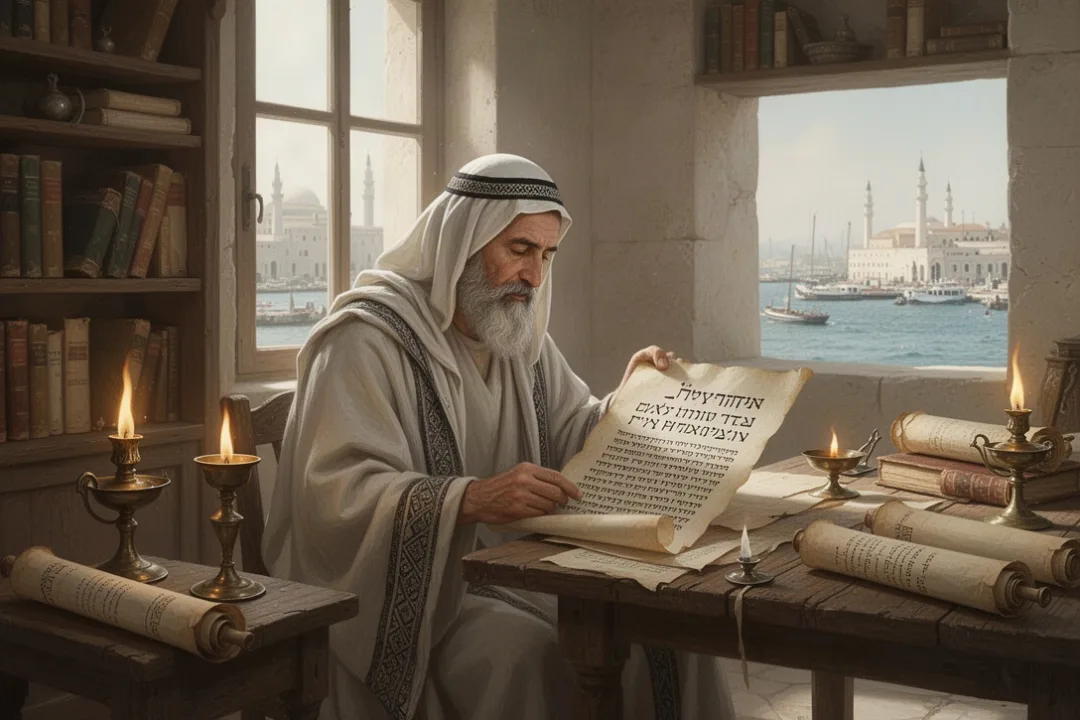
The author appears to have been a highly educated Jewish writer who knew both the Hebrew Scriptures and Greek literary culture. Rather than treating those worlds as impossible to combine, the book uses Greek expression to defend Jewish faith. It presents Israel’s God as the source of genuine wisdom and portrays pagan idolatry as intellectually and morally defective.
The book’s relationship to earlier biblical writings is also clear. It echoes themes from:
Proverbs, especially the connection between wisdom, righteousness, and disciplined living.
Genesis, through reflections on creation, human corruption, and the first generations.
Exodus, through its retelling of Israel’s deliverance from Egypt.
Psalms, through its interest in the fate of the righteous and the downfall of the wicked.
Isaiah and other prophets, through warnings about injustice, idolatry, and divine judgment.
At the same time, the book is not simply a repetition of earlier material. It develops ideas about life after death and the destiny of the righteous in ways that are more explicit than many earlier Old Testament wisdom texts. This development reflects the author’s response to suffering, persecution, and the apparent success of unjust people.
The historical setting may include pressure on faithful Jews to compromise their identity, though the text does not provide enough information to identify one specific persecution. Its warnings apply broadly to rulers, wealthy people, and anyone tempted to treat power as proof of moral rightness.
How the Book of Wisdom is organized
The book has three broad movements, even though the divisions are not marked like modern chapter headings. Each movement contributes to the central claim that true wisdom comes from God and leads to a life shaped by justice.
Chapters 1–5 focus on righteousness, death, and judgment
The opening section addresses rulers and all who hold responsibility for other people. It urges them to love justice, seek God sincerely, and avoid dishonest reasoning. Wisdom is presented as something that does not coexist comfortably with deliberate wrongdoing.
The author then contrasts the lives of the righteous and the wicked. From an ordinary human viewpoint, the righteous may seem to lose: they suffer, die, or lack the visible rewards enjoyed by corrupt people. The book rejects that viewpoint. It teaches that the righteous are secure with God and that death does not have the final authority many people assume.
The argument reaches its strongest point in the description of the final judgment. The wicked recognize too late that their earlier confidence was false. Their wealth, arrogance, and hostility toward the righteous cannot protect them. The righteous, by contrast, receive lasting life and honor from God.
This section does not deny the reality of grief or physical death. Instead, it challenges the belief that a person’s fate can be measured by health, wealth, popularity, or a painless life. Its message is especially relevant when injustice appears to win for a long time.
Chapters 6–9 describe wisdom and Solomon’s prayer
The middle section begins with another appeal to rulers. Political authority is presented as a serious responsibility because leaders are accountable for how they use power. The author warns that rulers will face a stricter evaluation because their decisions affect many people.
Wisdom is then described in elevated language. It is associated with qualities such as intelligence, purity, clarity, kindness, and readiness to do good. The passage presents wisdom as more valuable than wealth, health, beauty, or political authority because it teaches people how to use every other gift properly.
The author speaks through Solomon as he reflects on his own need for wisdom. Solomon is portrayed as mortal and dependent on God, not as someone who possesses perfect understanding by birthright. His prayer asks for wisdom so he can govern well and distinguish right from wrong.
This prayer is one of the book’s most memorable sections because it places humility before knowledge. A ruler who wants wisdom must admit that power alone cannot produce justice. The request also shows that wisdom is not merely information. It is practical judgment—the ability to recognize what matters and act faithfully.
Chapters 10–19 retell Israel’s history
The final movement traces wisdom’s activity through major events in Israel’s early history. The author often sets a righteous person or community against a wicked counterpart. The point is not to provide a complete historical account. It is to interpret familiar stories as evidence of God’s continuing care and judgment.
Wisdom is portrayed as guiding figures such as Adam, Noah, Abraham, Lot, Jacob, Joseph, Moses, and the Israelites. These episodes show wisdom rescuing, protecting, strengthening, and directing those who remain faithful. The specific details sometimes go beyond the biblical books being echoed, reflecting the author’s practice of interpreting Scripture through imaginative theological reflection.
The Egyptian plagues receive extended attention. The author contrasts the worship of created things with worship of the Creator and argues that idolatry damages human judgment. The plagues are not treated only as historical punishments; they demonstrate a larger principle that people eventually suffer through the false powers they choose to trust.
The closing chapters return to the Exodus and the wilderness experience. The Israelites receive food and protection, while Egypt experiences judgment. The final message is that God’s mercy remains active in history, even when divine action is not immediately obvious.
What the Book of Wisdom teaches about life and faith
The book’s central concern is not abstract intelligence. It is the formation of a person who can live rightly before God. Its wisdom includes thought, character, worship, leadership, and the ability to judge appearances accurately.
Wisdom begins with justice and reverence
The opening chapters connect wisdom with justice. A clever person who exploits others is not wise in the biblical sense. Knowledge becomes wisdom only when it produces honesty, self-control, compassion, and respect for God’s authority.
This is a demanding standard for leadership. The Book of Wisdom does not treat authority as a private possession. It belongs to the public good, and those who exercise it must answer for the harm or benefit their decisions create. The warning applies to kings, judges, officials, parents, employers, and anyone responsible for others.
Visible success does not prove a good life
A repeated theme is the danger of judging people by external results. The wicked may appear secure, while the righteous may suffer. The book insists that these appearances are temporary and incomplete.
That teaching does not mean every hardship is secretly beneficial or that injustice should be ignored. It means that God’s judgment reaches beyond visible circumstances. A person’s moral condition cannot be measured only by income, influence, comfort, or public reputation.
Wisdom is connected with immortality
The Book of Wisdom speaks about the destiny of the righteous in terms of life with God. It teaches that death does not erase the value of a faithful life and that the righteous remain in God’s care. The book’s language contributed to later Jewish and Christian reflection on resurrection, immortality, and judgment, although it does not present those doctrines in exactly the same form as later Christian teaching.
The book also describes death as entering the world through the devil’s envy. Readers interpret this passage in different ways, but the larger point is clear: death and corruption do not represent God’s original desire for human beings. The author places moral evil and spiritual rebellion at the center of humanity’s disorder.
Creation is good, but created things can become idols
The author does not condemn the physical world itself. Creation displays order and beauty, and human beings can recognize God through what has been made. The problem begins when people stop at created things and treat them as ultimate.
Idolatry, in the book’s argument, is more than using a statue in worship. It is the habit of giving absolute loyalty to something limited: wealth, political power, pleasure, status, nature, or human achievement. The warning remains practical because modern forms of idolatry can operate without temples or carved images.
God’s mercy is stronger than human weakness
The book combines firm judgment with confidence in divine mercy. God is portrayed as patient because God loves what has been created and gives people opportunities to turn away from wrongdoing. Mercy is not indifference toward evil; it is the reason correction and repentance remain possible.
This balance prevents two opposite mistakes. A person should not assume that injustice does not matter, but neither should anyone believe that failure places them beyond the reach of God’s patience. The book calls readers toward honest repentance and responsible living.
Read the book as moral instruction, not as a promise of easy outcomes: the Book of Wisdom does not say that faithful people will avoid every loss. It teaches that suffering and death do not cancel God’s justice or the lasting worth of a righteous life.
How to read the Book of Wisdom today
The Book of Wisdom can be read as Scripture, as ancient Jewish philosophy, or as a bridge between biblical faith and Greek-speaking culture. A careful reading benefits from holding all three perspectives together. It is a religious work, but it also addresses public leadership, cultural pressure, death, wealth, and the search for meaning.
Begin by noticing the speaker’s intended audience. The book frequently addresses rulers, but its concerns are not limited to government. Ask how its warnings apply to anyone with influence over other people. Consider whether decisions are being made for justice or for personal advantage.
It also helps to read the book in sections rather than expecting one continuous argument. The following approach keeps the major themes connected:
Read chapters 1–5 with attention to the contrast between outward success and lasting righteousness.
Read chapters 6–9 as a meditation on leadership, humility, and the need to receive wisdom from God.
Read chapters 10–19 alongside Genesis and Exodus, noticing how the author interprets Israel’s history.
Mark repeated contrasts, such as wisdom and folly, righteousness and wickedness, true worship and idolatry, life and death.
Apply the moral questions carefully: What do you trust most? How do you use authority? What does your life treat as permanent?
Different readers may want to use the book in different ways. For personal reflection, the first five chapters speak to grief, injustice, and the fear of death. For leaders, chapters 6–9 offer a sustained warning against confusing authority with wisdom. For readers studying biblical history, chapters 10–19 show how later Jewish writers reinterpreted Israel’s foundational stories.
Reading a Catholic or Orthodox Bible can help if you want to understand the book within a larger canonical setting. A study Bible can also clarify differences among translations and explain why some editions place the book between the Old and New Testaments while others place it in a separate Apocrypha section.
Some passages use broad contrasts between “the righteous” and “the wicked.” These should not be turned into simplistic labels for every individual. The book is making a moral and theological argument about patterns of life, not giving readers permission to declare themselves superior to everyone else.
The most useful question may be the one the book repeatedly raises without stating it in modern terms: what are you building your life around when temporary rewards disappear? Its answer is that wisdom is found in justice, humility, faithful worship, and trust in God’s judgment. Those qualities may not always produce immediate recognition, but the book treats them as the foundation of a life that endures.
Frequently asked questions
Is the Book of Wisdom the same as Proverbs?
No. Proverbs is an older Hebrew wisdom collection made up largely of sayings and instructions, while the Book of Wisdom is a later Greek work presented in Solomon’s voice. The two books share themes such as justice, discipline, and the value of wisdom, but they have different authorship, historical settings, structures, and canonical histories.
Why is the Book of Wisdom not in every Bible?
Christian communities use different Old Testament canons. Catholic and Eastern Orthodox churches generally include it as Scripture, while most Protestant churches place it in the Apocrypha or leave it outside the Bible. Jewish communities do not include it in the Hebrew Bible. These differences developed from distinct traditions about which ancient writings carried canonical authority.
Does the Book of Wisdom teach that Solomon wrote it?
It speaks through Solomon as a literary voice, but the author does not appear to have been Solomon himself. Scholars generally date the work many centuries after Solomon’s reign, probably to the late first century BC. Using Solomon’s identity connected the book with Israel’s famous wisdom tradition and gave its teaching a recognized setting.
What is the main message of the Book of Wisdom?
Its main message is that genuine wisdom comes from God and produces justice, humility, faithful worship, and moral courage. Visible prosperity does not prove that a person is righteous, and suffering does not mean God has abandoned the faithful. The book also teaches that divine judgment reaches beyond earthly appearances and that life with God outlasts death.












Leave a Reply