Have you ever wondered why a faithful person can still face loss, illness, loneliness, or unanswered prayer? The Book of Tobit addresses that question through the story of an Israelite family living far from Jerusalem. Tobit tries to honor God in exile, yet he becomes blind and discouraged. His son Tobias sets out on a dangerous journey, accompanied by a stranger who is actually the angel Raphael.
The book combines family drama, wisdom teaching, prayer, and adventure. Its central message is that faithfulness matters even when suffering makes God’s care difficult to see. Tobit also presents practical guidance about giving to the poor, honoring parents, choosing a spouse, burying the dead, and trusting God’s timing.
The Book of Tobit is part of the Deuterocanonical books in Catholic Bibles and is included among the books of Scripture recognized by many Eastern Orthodox churches. Most Protestant traditions place it in the Apocrypha, meaning it may appear in a separate section but is not normally included in the Old Testament canon. It is not part of the Jewish Tanakh.
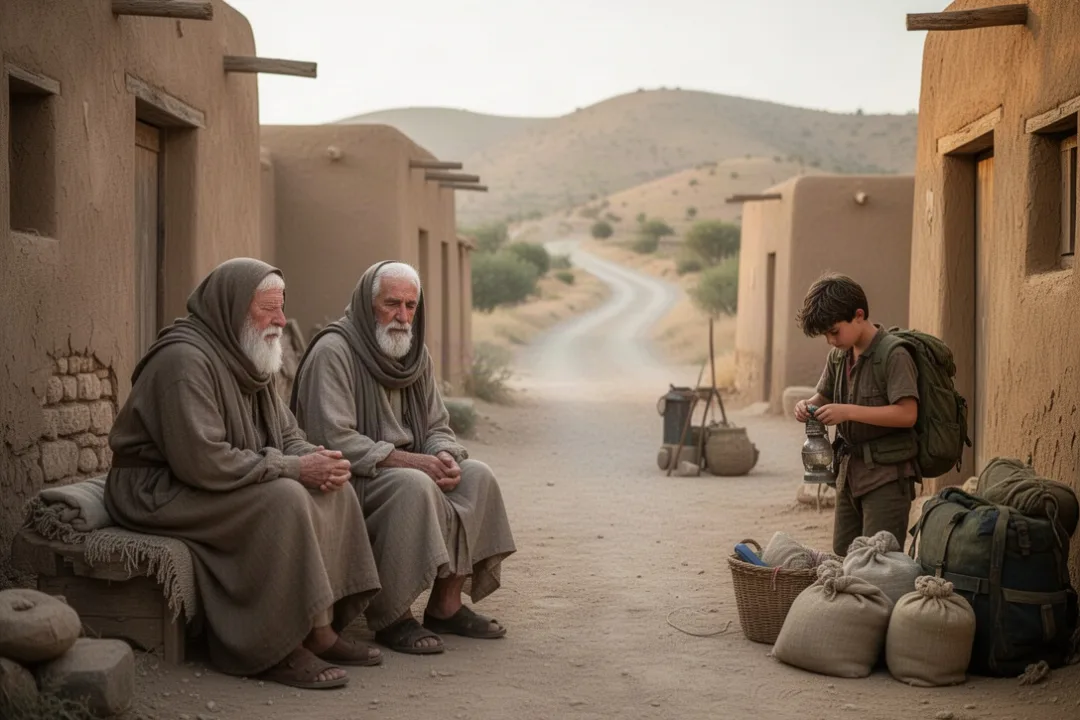
The story is set during the Assyrian exile, especially in the period after people from the northern kingdom of Israel were deported. Tobit identifies himself as a member of the tribe of Naphtali. He lives in Nineveh with his wife Anna and their son Tobias, while Sarah, another major character, lives in Media with her father Raguel.
The book was probably composed several centuries before the birth of Jesus, although the exact date and original language remain subjects of scholarly discussion. Fragments of Tobit have been found among the Dead Sea Scrolls in Aramaic and Hebrew. These discoveries show that the work circulated in more than one form before the later biblical traditions were established.
Canon note: Christian traditions do not all place Tobit in the same part of the Bible. Its role in Catholic and Orthodox Scripture differs from its status in most Protestant editions, but the story remains an important source for understanding Jewish faith and family life during the Second Temple period.
The story of Tobit in clear steps
The narrative can be followed through a sequence of connected crises and acts of faith. Each event prepares for the next, so the family’s healing is linked to choices made long before the final resolution.
Tobit remains faithful in exile. He gives alms, follows Israelite religious customs, and buries fellow Israelites who have been killed and left unburied.
Tobit becomes blind. After burying a dead man, he sleeps outdoors and receives an injury that causes blindness. His suffering creates tension in his home.
Tobit prays for death. Overwhelmed by shame and misery, he asks God to let him die. At the same time, Sarah prays from another household because a demon has caused the deaths of her seven previous husbands.
Tobit sends Tobias to recover money. He remembers a deposit held by Gabael in Media and asks Tobias to retrieve it before Tobit dies.
Raphael joins Tobias. The angel appears in human form, using the name Azariah, and guides Tobias on the journey.
A fish becomes part of the remedy. Tobias catches a large fish. Raphael tells him to preserve its heart, liver, and gall for purposes connected with protection and healing.
Tobias marries Sarah. Raphael explains that Sarah is the right wife for Tobias. Tobias uses the fish’s organs in an act of prayer, and the demon leaves Sarah.
The family receives healing and blessing. Tobias returns with Sarah and the money. The fish’s gall helps restore Tobit’s sight, and Raphael reveals his identity as an angel sent by God.
What happens to Tobit in Nineveh
Tobit begins as a man whose faith is expressed through concrete actions. Although he lives under foreign rule, he tries to preserve the practices of his ancestors. He gives food to the hungry, clothes those in need, and buries Israelites who have died violently. These actions place him at risk because the authorities do not approve of his burial work.
His generosity is not presented as a way to purchase God’s favor. Instead, almsgiving is treated as a visible expression of righteousness. Tobit understands that wealth has moral responsibilities. The book repeatedly connects compassion toward the vulnerable with a person’s relationship with God.
After Tobit buries a dead man, he sleeps outside and becomes blind when something falls into his eyes. The story describes the physical cause in everyday terms, but the emotional consequences are severe. Tobit loses independence, and Anna must work to support the household. Her earnings become a source of conflict when Tobit suspects that she has obtained a goat dishonestly.
Anna’s angry response exposes a difficult reality: even a religious person can become suspicious, bitter, and unfair when suffering has worn down the family. Tobit’s blindness does not simply create a medical problem. It changes the balance of the household and tests the strength of his marriage.
Why Tobit and Sarah pray at the same time
The book then moves from one household to another. In Media, Sarah has married seven men, but each husband has died before the marriage can be completed. The deaths are caused by Asmodeus, a destructive demon. Sarah is mocked by the people around her, who blame her for the tragedy.
Sarah’s pain becomes so intense that she considers ending her life. Instead, she turns to prayer and asks God to end her shame or let her die. Her prayer takes place at the same moment that Tobit asks for death. The parallel is deliberate: two people in different countries, suffering from different causes, bring their despair before God.
God hears both prayers, but the answer does not arrive as immediate relief. The narrative says that Raphael is sent to heal them both. This structure gives the story one of its clearest ideas: private suffering may be connected to a larger work of mercy, even when the person praying cannot yet see the connection.
“The prayer of both was heard in the presence of the glory of the great God.”
This quotation is commonly associated with Tobit 3:16 in wording that varies by translation. Its meaning is more important than any single English version: God’s attention reaches both households, and their separate crises are moving toward a shared answer.
How Tobias’s journey changes the family
Tobit remembers money deposited with Gabael, a trusted acquaintance in Media. Because he is blind and approaching death, he sends Tobias to collect it. Tobias needs a guide, and Raphael appears as a young Israelite traveler who offers to accompany him.
Raphael’s hidden identity creates dramatic irony. Tobias believes he is traveling with an experienced human companion, while readers understand that an angel is directing the journey. This allows the book to show divine guidance through ordinary decisions: choosing a route, finding lodging, responding to danger, and listening to wise advice.
On the road, a fish attacks Tobias when he goes to wash in a river. Raphael tells him to catch it and preserve specific organs. The heart and liver will be used to drive away the demon, while the gall will later help Tobit’s eyes. The fish is therefore both a danger and a source of healing.
Reading tip: The fish is not presented as a magical object that works independently. Tobias is instructed to use it within prayer and obedience. The story places the power of healing with God, while the fish becomes the practical means God uses in the narrative.
Why Sarah and Tobias’s marriage matters
Marriage is central to the second half of Tobit. Raphael tells Tobias that Sarah is his proper wife because their families share faith and ancestry. The advice reflects the book’s concern with preserving religious identity in a foreign environment. Marriage is not treated as a private romance alone; it joins households, values, responsibilities, and hopes.
Raguel, Sarah’s father, fears that Tobias will die like the other husbands. He prepares a grave in case the demon kills Tobias, which shows how realistic the danger seems to everyone involved. Tobias nevertheless marries Sarah, and the couple follows a ritual of prayer rather than treating marriage as a matter of appetite alone.
Tobias asks God for mercy and for a long life together. He recognizes that Sarah is not merely an object of desire but a partner entrusted to him. Their prayer presents marriage as a relationship grounded in faithfulness, mutual honor, and responsibility before God.
During the wedding night, Tobias uses the fish’s heart and liver as Raphael instructed. Sarah is protected, and the demon is driven away. Raphael pursues the demon and binds it in a distant place. Meanwhile, Raguel discovers that Tobias is alive and celebrates rather than mourning another son-in-law.
The scene does not offer a general formula for every case of illness, trauma, or marital difficulty. Its symbolic force lies in the way prayer, courage, wise instruction, and family support work together. Sarah is not blamed for what happened to her, and Tobias does not face the danger alone.
How Tobit receives his sight again
After the wedding, Tobias returns home with Sarah, Raphael, and the money. Anna sees the travelers approaching and runs to meet them. Tobit, still blind, receives Tobias and Sarah into the household.
Tobias then applies the fish’s gall to Tobit’s eyes. A thin film comes away, and Tobit’s sight is restored. The healing is both physical and relational. Tobit can see his son, welcome his daughter-in-law, and take part fully in family life again.
The reversal also answers Tobit’s earlier despair. He had believed death might be preferable to continued suffering, but the story reveals that his life still has a purpose. His healing does not erase the years of difficulty, yet it allows him to respond with gratitude and renewed praise.
Raphael then explains that he was sent in response to the prayers of Tobit and Sarah. He rejects the idea that he should be worshiped and directs honor to God. The angel’s departure reinforces a major biblical theme: God may work through messengers, but worship belongs to God alone.
Tobit lives away from the land and institutions associated with Israel’s worship. He cannot control the government around him, and he faces pressure to adapt completely to the dominant culture. His response is to maintain practices that express belonging to God.
His faith is not limited to private belief. He buries the dead, gives to the poor, and teaches his son. The book portrays religious identity as something practiced through repeated decisions, especially when those decisions are inconvenient or risky.
Almsgiving and care for the vulnerable
Few ideas receive more emphasis in Tobit than generosity. Tobit teaches Tobias to give alms and to treat wealth as a trust rather than an entitlement. The book connects generosity with deliverance, righteousness, and life, using the moral language of Jewish wisdom tradition.
This teaching should not be reduced to a promise that charitable acts guarantee health or prosperity. Tobit himself gives generously and still becomes blind. The broader point is that compassion shapes a person’s character and keeps faith from becoming merely ceremonial.
Give help to people in genuine need rather than ignoring their suffering.
Use material resources in ways that preserve another person’s dignity.
Remember the dead and honor people who have been abandoned or mistreated.
Teach generosity within the family so that it becomes a shared value.
Prayer that includes lament
Tobit and Sarah do not pretend that everything is fine. Their prayers include grief, shame, fear, and a desire for death. The book therefore makes room for honest lament within a faithful life.
At the same time, prayer is not portrayed as a way to control God. The answer arrives through a sequence of events involving travel, marriage, courage, and healing. The story encourages trust without denying the seriousness of suffering.
Angels and hidden guidance
Raphael is one of the most memorable angelic figures in biblical literature. He travels with Tobias under a human appearance, offers practical advice, protects him from danger, and later reveals his identity. His name is often understood as meaning “God heals.”
Raphael’s role teaches that divine help may be present before it is recognized. The angel does not remove every risk at the beginning. Instead, he guides Tobias through actions that require attention and courage. The message is not that every stranger is secretly an angel, but that God’s care can operate through unexpected people and ordinary means.
Marriage, family, and moral responsibility
Tobit presents family life as a place where faith is taught, tested, and practiced. Tobit instructs Tobias, Anna works to support the home, Raguel protects his daughter, and Sarah participates actively in the marriage prayer. The family is imperfect, but its members are connected by responsibility rather than self-interest alone.
The book also rejects the idea that Sarah’s tragedies make her morally defective. Her suffering is caused by a demon and by circumstances beyond her control. Tobias’s love for her includes respect for her history, not merely attraction to her future.
Healing as restoration to community
Tobit’s blindness isolates him from work and normal household life. Sarah’s repeated bereavements isolate her through shame and suspicion. Their healing restores more than physical function. It returns both people to relationships, celebration, and public dignity.
This wider view of healing is significant. A person may need bodily recovery, but also acceptance, financial stability, safety, and a place within the family. Tobit’s final celebration joins these dimensions together.
What Tobit teaches about suffering and divine timing
The book does not explain suffering through a simple claim that victims deserve what happens to them. Tobit is described as righteous, yet he suffers. Sarah is not condemned for the deaths of her husbands, yet she carries public shame. Their pain is real, and their prayers are not treated as evidence of weak faith.
At the same time, Tobit does not treat suffering as the final truth about either person. The narrative gives them a future they cannot imagine while they are praying. This does not mean every illness ends in miraculous recovery. It does mean that despair does not have the authority to define a person’s entire story.
The timing of the answer is also instructive. Raphael is sent before Tobit and Sarah know one another, and Tobias begins his journey before he understands its full purpose. The reader sees connections that the characters discover gradually. That pattern encourages patience, but it should not be used to dismiss someone’s immediate pain or promise a specific outcome.
How to read Tobit responsibly today
Tobit can be read devotionally, historically, literarily, or as part of a discussion about biblical canon. Each approach brings different questions. A careful reading respects the ancient setting while considering how the book’s values relate to modern life.
Read the story as a whole. Isolated details about fish organs, demons, or almsgiving can seem confusing when separated from the narrative’s prayerful framework.
Distinguish description from direct instruction. The book records what characters do; not every event is a universal command.
Notice the household relationships. Anna’s labor, Sarah’s vulnerability, and Raguel’s fear all broaden the story beyond Tobias’s adventure.
Keep historical context in view. Exile, family honor, burial customs, and religious identity shaped the characters’ choices.
Allow room for lament. Tobit’s faith does not require him to hide anger, fear, or exhaustion.
Readers from different Christian traditions may also need to consult the Bible edition used by their church. The wording, chapter numbering, and placement of Tobit can vary. Some editions include additions or differences based on Greek, Latin, or other textual traditions, so comparing a trusted translation can clarify unfamiliar passages.
Important passages to explore in Tobit
Tobit 1–2 introduces Tobit’s religious practices, generosity, burial of the dead, blindness, and conflict with Anna. These chapters establish the moral world of the book and show how quickly faithful actions can lead to danger and hardship.
Tobit 3 contains the prayers of Tobit and Sarah. It is especially useful for readers who want to understand the book’s treatment of despair. Both characters pray honestly, and both prayers become part of a larger act of divine mercy.
Tobit 4 records Tobit’s instructions to Tobias before the journey. The chapter reads like a father’s wisdom teaching, emphasizing almsgiving, honesty, humility, sexual morality, respect for parents, and careful choice of a spouse.
Tobit 6–8 covers the journey, the fish, Sarah’s marriage, and the prayer on the wedding night. These chapters connect practical guidance with spiritual trust and show Tobias learning to act with courage rather than fear.
Tobit 11–13 describes the family’s reunion, Tobit’s healing, Raphael’s revelation, and Tobit’s songs of praise. The final chapters expand the story beyond one household and look toward Jerusalem’s restoration and the hope that God’s people will be gathered and blessed.
Tobit is ultimately a story about faith practiced through ordinary responsibilities. Its people pray, work, bury the dead, give to the poor, protect their families, and travel through uncertainty. Their experience suggests that holiness is not separated from daily life. It is revealed in how people respond when life becomes frightening, unfair, or difficult to understand.
Frequently asked questions
Is the Book of Tobit part of the Old Testament?
It depends on the Christian tradition. Tobit is included in Catholic and many Eastern Orthodox Bibles as a deuterocanonical book. Most Protestant traditions classify it as Apocrypha, often printing it separately or omitting it from standard editions. It is not included in the Jewish Tanakh. These differences concern the biblical canon, not whether the text is historically important.
Who wrote the Book of Tobit?
The author is unknown. The book was composed in the Second Temple period, probably several centuries before Jesus, and may originally have circulated in Aramaic or Hebrew. Fragments found among the Dead Sea Scrolls preserve portions in both languages. The surviving versions reflect a history of transmission, so scholars compare textual traditions when studying its wording and development.
Is Raphael in the Book of Tobit an angel?
Yes. Raphael travels with Tobias while appearing to be a human guide named Azariah. Near the end, he reveals that he is one of the angels who stand before God and that he was sent in response to Tobit’s and Sarah’s prayers. The story presents him as God’s messenger, not as a figure to be worshiped.
What does the Book of Tobit say about almsgiving?
Tobit treats generosity as a central expression of faithful living. Giving to people in need is connected with righteousness, compassion, and responsibility toward others. The story does not teach that charity guarantees a trouble-free life, since Tobit himself suffers greatly. Instead, it presents wealth as something to use mercifully and encourages practical care for vulnerable people.













Leave a Reply