Saint Rocco: patron saint of plague victims and dogs
Saint Rocco: patron saint of plague victims and dogs
Have you seen an image of a saint carrying a walking staff with a dog at his side and wondered who he is? It may be Saint Rocco, also called Saint Roch or San Rocco. He is especially associated with people suffering from contagious disease, hospitals, animals, and communities asking for protection during a public health crisis.
According to longstanding Christian tradition, Rocco was a pilgrim from Montpellier who cared for victims of plague in Italy during the late Middle Ages. He became ill himself, withdrew to the forest, and survived with help from a dog that brought him bread. Although many details come from later devotional biographies rather than contemporary records, his story has made him one of the most recognizable saints connected with healing, charity, and faithful care for the sick.
Who Saint Rocco was according to Christian tradition
Saint Rocco is generally identified with Roch of Montpellier, a layman believed to have been born in Montpellier, in southern France. The exact dates of his life are uncertain. Traditional accounts usually place his birth in the fourteenth century and connect his travels with the plague epidemics that affected Europe during that period.
Stories about his life differ in detail, but they share a consistent outline. After losing his parents, Rocco is said to have given away his wealth and set out as a pilgrim to Rome. During his travels, he encountered towns suffering from plague and chose to help the sick rather than avoid them.
These accounts describe him caring for patients, making the sign of the cross over them, and praying for their recovery. Some versions attribute miraculous cures to his intercession. The central message is not that he was protected from every danger, but that he accepted personal risk in order to serve people who were isolated and afraid.
Eventually, tradition says that Rocco contracted the plague. Because he did not want to endanger others, he withdrew to a secluded place. A dog from a nearby household is said to have carried him bread each day. The dog’s owner followed it, discovered Rocco, and arranged for him to receive care.
Later stories say that Rocco returned to public life but was arrested because his identity was not recognized. He may have been mistaken for a spy or an unknown traveler. He reportedly spent his final years in prison, where he died. The historical evidence is limited, so the precise circumstances remain uncertain, but these episodes shaped the symbols used in his art.
Historical perspective: The details of Saint Rocco’s biography come mainly from medieval and later hagiographical traditions. Devotion to him is based on the spiritual meaning of his witness, while individual episodes should not be treated as equally certain historical facts.
Why Saint Rocco is the patron saint of plague victims
Saint Rocco became associated with plague because his traditional biography places him among people suffering from epidemic disease. He is remembered as someone who entered places others feared, served the abandoned, and endured illness himself. For centuries, those qualities made him a natural figure of prayer during outbreaks.
His patronage is often described as covering plague victims, contagious illness, epidemics, and diseases of the skin. In some places, people also invoke him for protection from sudden illness or for strength while caring for an infected family member. The purpose of such prayer is not a promise that disease will never occur. Instead, believers ask for healing, courage, wise care, and compassion.
Saints’ patronages develop through a combination of biography, local custom, popular devotion, and the needs of particular communities. Rocco’s connection with plague became especially strong in European towns that experienced recurring outbreaks. Communities built chapels, organized processions, and kept his feast as a way to remember those who had died and to seek help for those still living.
That history gives his devotion a continuing practical meaning. People may look to Saint Rocco when a family is dealing with serious illness, when health workers are under pressure, or when a neighborhood is facing fear and uncertainty. His example directs attention toward service rather than stigma: the sick should be cared for, not rejected.
In religious art, Saint Rocco is commonly shown with a dog carrying bread. The animal recalls the story that a dog sustained him while he was sick and isolated. The dog is often shown looking toward the saint, holding a loaf in its mouth, or standing near his leg.
The dog has several layers of meaning. At the simplest level, it represents the unexpected help that allowed Rocco to survive. It also symbolizes loyalty, providence, and humble instruments of care. The story places an animal at the center of a rescue, reminding worshipers that compassion can arrive through ordinary creatures and people who notice suffering.
Because of this image, Saint Rocco is widely regarded as a patron of dogs. Some communities bring dogs to his feast-day blessings or include animals in local celebrations. Pet owners may light a candle, say a prayer, or ask for his intercession when a dog is ill.
The tradition does not mean that every account of the dog is historically verified. It means the image has become a durable part of Christian art and devotion. When you see a saint with a dog and a loaf, those details usually identify Rocco even if the painting does not include his name.
How artists identify Saint Rocco in paintings and statues
Saint Rocco’s most familiar image combines several symbols from his traditional life. He is usually shown as a pilgrim, often wearing a cloak, broad-brimmed hat, and boots. A staff, gourd, or small travel pouch may indicate his long journey.
He may also carry a scallop shell, a widely recognized sign of pilgrimage. The shell does not necessarily identify a specific destination in every work of art; it more broadly signals the life of a traveler devoted to prayer and service.
Another frequent feature is a visible mark on his leg. In many representations, Rocco lifts part of his garment to show a plague sore or scar. This is one of the clearest ways to distinguish him from other saints shown with a staff and cloak.
The dog may stand at his feet, while an angel appears in some versions of the story. A prison, forest, or distant town can provide additional context. Artists do not always include every symbol, so identification usually depends on the combination of the dog, pilgrim clothing, exposed leg, and staff.
Pilgrim staff: represents travel, pilgrimage, and perseverance.
Dog with bread: recalls the animal that traditionally brought him food.
Raised garment: reveals the illness or wound associated with his story.
Scallop shell: suggests pilgrimage and a life directed toward God.
Simple clothing: reflects his renunciation of wealth and commitment to service.
Saint Rocco’s feast day and what it means
Saint Rocco’s feast day is commonly observed on August 16. The date is especially important in Italy, France, parts of Spain, Croatia, Malta, the Philippines, and communities shaped by European Catholic immigration. Local calendars and churches may observe the celebration differently.
A feast day is not simply a birthday celebration. In the Catholic tradition, it is a designated time to remember a saint’s witness, give thanks for God’s grace, and ask for the saint’s intercession. A parish may mark the day with Mass, a procession, a blessing of animals, charitable work, or a community meal.
Saint Rocco celebrations can be very local in character. A town may carry his statue through the streets, decorate a chapel, or maintain a historic shrine. In some communities, the feast developed after an epidemic or a vow made during a period of danger. The celebration therefore links religious memory with local history.
When dogs are included, the blessing usually recognizes animals as part of household and community life. It is also a reminder of the responsibility people have to feed, protect, and care for them. A blessing is not a substitute for veterinary treatment, vaccination, isolation guidance, or other appropriate medical care.
How people pray to Saint Rocco
There is no single required prayer to Saint Rocco. Catholics may use a parish prayer, a novena, a litany, or a simple personal request. The prayer normally asks God for mercy and healing while seeking Saint Rocco’s intercession.
A personal prayer can mention the specific need: a person with a serious diagnosis, caregivers who are exhausted, a pet that is suffering, or a community facing disease. It can also include gratitude for doctors, nurses, aides, family members, neighbors, and volunteers who provide practical help.
Prayer to a saint is understood as asking the saint to pray with and for the person, not as worshiping the saint as a deity. Worship belongs to God. Saint Rocco’s role in devotion is that of a faithful Christian whose example and intercession encourage people to trust God and act with compassion.
A simple structure can make prayer easier when you are under stress:
Name the concern: speak honestly about the illness, fear, loss, or animal needing care.
Ask for intercession: request Saint Rocco’s prayers for healing, protection, wisdom, and endurance.
Remember those who serve: include caregivers, medical professionals, family members, and vulnerable neighbors.
Commit to a practical act: offer a visit, meal, donation, phone call, or other appropriate help.
End with trust: place the outcome in God’s hands while continuing responsible care.
You can also pray with a Scripture passage about compassion, healing, or care for the vulnerable. Rather than treating a prayer as a magical formula, use it to shape your attention: prayer should help you recognize suffering, reject fear-driven cruelty, and respond wisely.
Saint Rocco, medical care, and responsible devotion
Devotion to a patron saint should support responsible action, not replace it. If someone may have a contagious disease, follow guidance from qualified health professionals and public health authorities. Seek urgent medical help for severe symptoms, and do not delay treatment while waiting for a religious sign.
The same principle applies to animals. A prayer for a sick dog can be meaningful, but the dog still needs a veterinarian, appropriate medication, clean water, and a safe environment. Saint Rocco’s story points toward attentive care, which includes using the knowledge and services available to you.
His example can also help people think about the emotional side of illness. Contagious disease may create loneliness, shame, or fear of rejection. A person who is sick may need food delivered safely, help getting to an appointment, or reassurance that the illness does not make them morally bad.
Use devotion alongside care: Pray for the sick, but also follow medical advice, protect vulnerable people, and avoid spreading unverified health claims. Compassion includes both spiritual support and practical responsibility.
Common mistakes when learning about Saint Rocco
Popular stories about saints often blend history, legend, art, and local tradition. That does not make them useless, but it does mean you should distinguish between what is firmly documented and what belongs to devotional storytelling.
Calling him only a dog saint: His association with dogs is important, but his central traditional identity is a pilgrim and caregiver connected with plague victims.
Assuming every biographical detail is proven: Medieval sources and later retellings do not provide one universally agreed biography.
Expecting automatic protection from disease: Intercession is a form of prayer, not a guarantee that illness will not occur.
Using the feast as a substitute for treatment: Religious observance and professional medical care should work alongside each other.
Ignoring local differences: Feast-day customs, processions, prayers, and patronage titles may vary from one community to another.
Forgetting the ethical lesson: Rocco’s story emphasizes serving people in need, not merely displaying a medal or statue.
It is also easy to misidentify him in artwork. A dog alone does not always mean Saint Rocco, and a pilgrim staff appears with several saints. Look for the combined clues: the dog, the loaf, the exposed leg, and the pilgrim’s clothing.
Where Saint Rocco is honored today
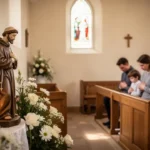
Saint Rocco is honored in churches, chapels, confraternities, shrines, and private homes. His devotion is particularly visible in towns where a historic plague, epidemic, or vow shaped the community’s religious life. Some places preserve statues that are carried through the streets each August.
Immigrant communities have also carried his feast across borders. In the United States, celebrations may be connected with Italian American parishes, neighborhood societies, or families that maintain traditions brought from a particular town. A festival may include a Mass, procession, music, food, fundraising, and a blessing of animals.
The social side of these observances can be as significant as the ceremonial side. A parish that gathers for Saint Rocco may raise money for a food pantry, support a hospital, help families facing medical bills, or collect supplies for an animal shelter. Such projects express the saint’s traditional concern for people and creatures in distress.
If you visit a Saint Rocco celebration, customs may differ from what you expect. Some observances are solemn and prayerful; others are large public festivals. The best way to participate respectfully is to follow the local parish or organizers, learn the meaning of the procession, and treat religious objects and ceremonies with care.
What Saint Rocco’s story can mean for modern readers
Rocco’s traditional story speaks to several experiences that remain familiar: fear of infection, isolation during illness, concern for vulnerable neighbors, and dependence on people willing to provide care. His image does not erase the hardship of disease. It gives communities a way to remember that the sick deserve dignity and attention.
His connection with a dog adds another dimension. The story presents help arriving through a creature that cannot explain its actions in words but responds to need. For many people, that image naturally extends into concern for pets, working animals, and all creatures that depend on human care.
His life as a pilgrim also matters. A pilgrim travels without complete control over the road ahead. That does not mean passivity. Rocco’s traditional journey involved choices: giving away wealth, approaching suffering people, accepting help, and continuing to serve despite personal danger.
For someone praying to Saint Rocco today, the most useful question may be practical: What form of care is needed here? It might be a doctor’s appointment, a safe visit, a meal, an honest conversation, a donation, or the patience to accompany someone through a long recovery.
That combination of prayer and action explains why Saint Rocco remains meaningful. He is remembered not simply because illness touched his story, but because he responded to suffering with presence, humility, and care.
Frequently asked questions
Is Saint Rocco the same person as Saint Roch?
Yes. Saint Rocco is the Italian name commonly used for Saint Roch, whose name also appears as Rochus or Roque in different languages and regions. The forms refer to the same traditionally venerated Christian figure associated with plague victims, pilgrimage, healing, and a dog carrying bread.
Why does Saint Rocco show his leg?
Religious artwork often shows Saint Rocco lifting his clothing to reveal a sore or scar. This refers to the traditional account that he contracted plague while caring for others. The gesture helps identify him and symbolizes both vulnerability to illness and endurance through suffering.
Can I ask Saint Rocco to protect my dog?
Yes. Many devotees ask Saint Rocco’s intercession for the health and safety of dogs and other animals. Prayer can accompany responsible care, including veterinary attention, proper nutrition, vaccinations, and a safe living environment. A blessing or prayer should not replace treatment when an animal is sick.
What should I do on Saint Rocco’s feast day?
You might attend Mass, say a prayer for people affected by illness, have a pet blessed if your parish offers that custom, or support a food pantry, medical charity, or animal shelter. The most fitting observance combines remembrance of the saint with practical compassion for those in need.













Leave a Reply