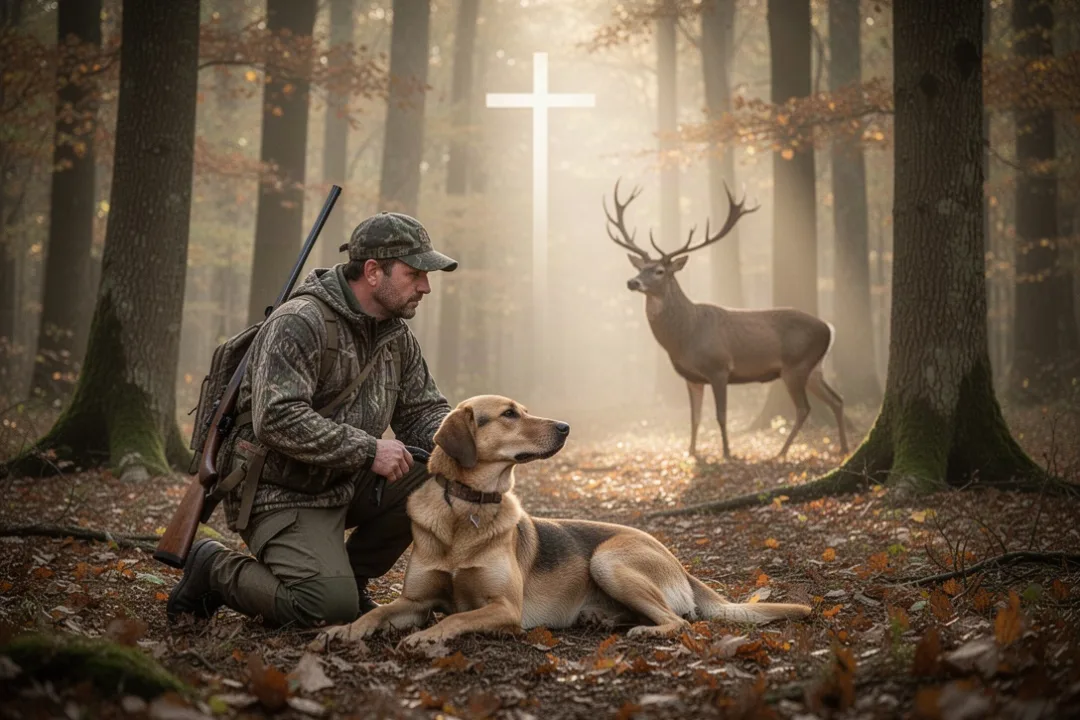
Saint Hubert is the patron saint most commonly associated with hunters. He is remembered as a bishop, missionary, and devoted hunter whose traditional conversion story centers on a stag carrying a cross between its antlers.
Saint Hubert became associated with hunting because his life story connects the sport with spiritual conversion, humility, and respect for creation. According to long-standing tradition, Hubert was hunting on a holy day when he encountered a magnificent stag. A cross appeared between the animal’s antlers, and a voice called him to turn toward God.
The story is told in different forms, and its details belong to devotional tradition rather than a fully documented historical record. Its central message is consistent: the chase should not become more important than the soul. The stag’s appearance redirected Hubert’s life and led him away from a purely worldly pursuit toward Christian service.
Hubert later became a priest and bishop. He is traditionally identified with Hubert of Tongeren-Maastricht, who served as bishop of Maastricht and later moved the center of his episcopal work to Liège. He is remembered for evangelizing communities in the Ardennes and surrounding regions, places closely connected with forests, wildlife, and hunting culture.
For hunters who ask for Saint Hubert’s intercession, the saint represents more than success in finding game. His example points toward good judgment in the field, respect for animals, care for hunting companions, and responsible use of natural resources.
The central lesson: Saint Hubert is not traditionally honored because hunting is the highest goal. He is honored because his story presents hunting as an occasion for conscience, conversion, discipline, and stewardship.
The story of Saint Hubert and the stag with a cross
The best-known image of Saint Hubert shows him kneeling before a stag with a luminous cross between its antlers. In many versions of the legend, Hubert was pursuing the animal through the forest when the vision stopped him. The encounter challenged his priorities and eventually changed the direction of his life.
Before this experience, Hubert is often described as a nobleman who enjoyed hunting. The story does not necessarily portray hunting itself as sinful. Instead, it warns against allowing status, pleasure, or personal ambition to dominate one’s life. The vision gives the hunt a moral turning point: Hubert is invited to recognize something greater than the pursuit in front of him.
The stag became a symbol of grace appearing in the wilderness. It also came to represent the idea that nature can awaken reverence and self-examination. For that reason, pictures of Saint Hubert frequently place him in a forest, with hunting equipment nearby but the supernatural sign at the center of the scene.
Some versions of the story connect Hubert’s conversion with advice from a spiritual guide, often identified as a bishop or priest who urged him to place his life in God’s hands. The exact details vary by source and region. The durable theme is that Hubert responded to the encounter by seeking instruction, entering church service, and accepting a new responsibility.
The legend also explains why the stag is so closely linked with Saint Hubert’s name. Hunters, hunting clubs, churches, and works of art have used the stag and cross emblem for centuries. In some settings, the symbol identifies Saint Hubert’s role as a protector of hunters; in others, it emphasizes the saint’s conversion and his call to live with greater purpose.
What Saint Hubert did as a bishop and missionary
Historical and ecclesiastical traditions remember Hubert as a bishop who worked among communities in the region of present-day Belgium and neighboring areas. He is associated with the spread of Christianity in forested parts of the Ardennes, where travel was difficult and rural communities were widely scattered.
His reputation developed around preaching, pastoral care, and service to ordinary people. This matters when understanding his connection with hunting. Saint Hubert is not simply a legendary figure attached to a popular outdoor activity. He is also remembered as a church leader who used his position to teach, guide, and serve communities.
His association with the Ardennes strengthened the connection between his memory and the forest. The region’s landscape helped make him a natural patron for people who worked or traveled in wooded country, including hunters, foresters, trackers, and others whose livelihoods were connected to wildlife.
Traditional accounts also attribute miracles to Saint Hubert, including healings and protection from diseases associated with rabies. These stories helped expand his role beyond hunting. In parts of Europe, Saint Hubert was invoked against rabies and was associated with the protection of dogs and other hunting animals.
As with many medieval saints, the stories told about Hubert combine historical memory, local devotion, and later legend. A careful account distinguishes between the broad record of his ministry and the symbolic stories that developed around him. Both have shaped the way Christians and hunting communities remember him.
When Saint Hubert’s feast day is celebrated
Saint Hubert’s feast day is commonly celebrated on November 3. Churches, hunting associations, and rural communities may mark the day with a Mass, a blessing of hunting dogs, a procession, a formal gathering, or a communal meal.
Local customs differ. Some celebrations take place close to November 3 rather than on the exact date, especially when organizers need to work around a weekend, hunting season, weather, or parish schedules. A celebration may also be called a St. Hubertus Mass or a Mass in honor of Saint Hubert.
Music can play a central role in these services. Hunting horns may be used to accompany the liturgy or to welcome participants. The sound is intended to connect the celebration with the forest and with the culture of hunting, while the service itself directs attention toward prayer and gratitude.
At a Saint Hubert celebration, participants may bring hunting dogs, equipment, or symbols associated with the saint. Some communities bless the animals, while others focus on prayers for safety, wisdom, and ethical conduct. A blessing is not a guarantee of a successful hunt or protection from every danger. It is a prayer that the people and animals involved will be treated with care.
Saint Hubert and Saint Eustace: two patron saints linked with hunting
Saint Hubert is the patron most often named in modern English discussions of hunting, but Saint Eustace is also traditionally connected with hunters. The two saints share a similar conversion story involving a stag and a cross, which can make their identities easy to confuse.
According to the legend of Saint Eustace, he was a Roman soldier or officer named Placidus who encountered a stag bearing a cross between its antlers while hunting. The vision led to his conversion to Christianity, and he took the name Eustace. His story later became associated with endurance, faith under persecution, and the transformation of a powerful person’s life.
Saint Eustace’s traditional feast day is September 20. In some countries and older calendars, he was honored as a patron of hunters, foresters, and people facing difficult trials. Saint Hubert’s devotion became especially prominent in parts of Western Europe, while Saint Eustace remained important in other regions and artistic traditions.
Their stories are not identical, even though they share the striking image of the cross-bearing stag. Saint Hubert is more closely linked with bishops, the Ardennes, hunting dogs, and European hunting customs. Saint Eustace is more often remembered as a convert who suffered greatly for his faith.
If you are choosing a patron for a hunting group, parish event, or personal devotion, either saint may be appropriate. Saint Hubert is the clearest choice for a direct hunting association, while Saint Eustace may appeal to someone drawn to themes of conversion, perseverance, and faith during hardship.
Saint Hubert: traditionally associated with hunters, dogs, forests, and pastoral leadership.
Saint Eustace: traditionally associated with hunters, conversion, endurance, and persecution.
The shared symbol: a stag with a cross between its antlers.
The practical distinction: local custom often determines which saint a hunting community honors.
What hunters traditionally ask Saint Hubert to protect
Prayer to Saint Hubert may focus on several kinds of protection. Hunters may ask for clear judgment, physical safety, and restraint. The risks of hunting include firearms, rough terrain, changing weather, remote locations, water crossings, and accidents involving vehicles or equipment.
Many people also pray for the safety of hunting dogs. Dogs can become lost, injured, exposed to extreme temperatures, or affected by wildlife and terrain. Asking Saint Hubert’s intercession can express a commitment to treat working animals as companions whose well-being matters throughout the hunt, not only when they are useful.
Prayer may also address the animals being pursued. A hunter might ask for a clean and humane shot, freedom from unnecessary suffering, and the wisdom to pass up an unsafe or questionable opportunity. These concerns fit the moral direction of Saint Hubert’s story: skill must be joined to responsibility.
Some hunters pray for the ability to accept an unsuccessful day without resentment. The tradition does not require a person to interpret every hunt in terms of harvest. Time outdoors can also involve observation, patience, tracking, companionship, and gratitude for the landscape.
A short personal prayer might ask Saint Hubert to guide the hunter’s decisions, protect everyone in the field, keep dogs safe, and encourage respect for wildlife. There is no single required wording for private devotion. A parish or hunting organization may use a formal prayer, while an individual may speak in plain language.
Saint Hubert’s symbolism supports an understanding of hunting that includes conservation, lawful conduct, humane treatment, and gratitude. His story does not provide a modern hunting regulation book, and it should not be used to replace state or federal laws. It can, however, encourage hunters to examine the reasons behind their choices.
Ethical hunting begins before you enter the field. You need to understand the regulations for the species, season, location, equipment, licensing, and tagging requirements. You should also know the boundaries of private and public land, the rules for transporting firearms, and any restrictions on bait, methods, or harvest limits.
Good preparation reduces risks to people and animals. A responsible hunter checks weather and terrain, tells someone where the group will be, carries appropriate communication and emergency supplies, and confirms that every firearm is handled safely. Saint Hubert’s intercession is best understood alongside practical preparation, not as a substitute for it.
Respect for wildlife continues after a successful shot. The hunter should make every reasonable effort to track a wounded animal, recover it, and prevent waste. Using the meat, handling the animal carefully, and following local requirements for transport and processing reflect the broader principle that a living creature should not be treated as a disposable object.
Conservation is also part of the responsibility. Hunters can support healthy habitats, obey harvest limits, report violations, avoid disturbing nesting or protected areas, and participate in habitat projects when possible. The goal is not to claim that every hunting decision is automatically beneficial. The goal is to recognize that outdoor recreation carries duties toward animals, landowners, fellow hunters, and future generations.
Safety reminder: A prayer to Saint Hubert should accompany, never replace, firearms training, legal compliance, communication plans, first-aid preparation, and careful decisions about weather and terrain.
Common mistakes when honoring Saint Hubert
Devotion to a patron saint can become more meaningful when it avoids a few common misunderstandings. Saint Hubert’s image is powerful, but the symbol can be reduced to decoration if the story behind it is ignored.
Treating Saint Hubert as a guarantee of success: The tradition points toward judgment and conversion, not a promise that you will find or harvest an animal.
Confusing blessing with permission: A blessing does not make an illegal method, unsafe conduct, or an unethical shot acceptable.
Ignoring the animal: Saint Hubert’s association with hunting should not erase the need to minimize suffering and use what is taken.
Assuming every stag-and-cross image is Saint Hubert: Saint Eustace has a closely related legend, so the surrounding inscription or local tradition may matter.
Leaving dogs out of the responsibility: Dogs need water, rest, veterinary attention, identification, and protection from heat, cold, injury, and traffic.
Using old custom as a substitute for current law: Hunting rules change by jurisdiction and season. Check official regulations before going into the field.
Turning a religious service into a trophy display: A Saint Hubert gathering can honor hunting culture while still emphasizing gratitude, restraint, and care for creation.
Practical ways to honor Saint Hubert as a hunter
You do not need to belong to a hunting club or attend a large ceremony to honor Saint Hubert. Personal devotion can be quiet and practical. The strongest expression of the tradition may be the way you behave when no one else is watching.
Learn the saint’s story. Read about Hubert’s conversion, ministry, and connection with the Ardennes rather than treating the stag emblem as a generic hunting logo.
Pray before the season or before a hunt. Ask for sound judgment, safety, respect for wildlife, and the discipline to stop when conditions are wrong.
Review the regulations. Confirm licensing, dates, zones, legal equipment, bag limits, and reporting requirements before you travel.
Prepare for emergencies. Carry first-aid supplies, charged communication equipment, water, navigation tools, and clothing suitable for the forecast.
Care for your dog. Use identification, check paws and body temperature, provide water, and plan for treatment if the dog is injured or lost.
Practice restraint. Pass on shots that are unsafe, beyond your ability, poorly placed, or inconsistent with the rules.
Reduce waste. Recover the animal promptly, process it responsibly, and handle remains according to local requirements.
Support habitat. Protect the places where wildlife lives and contribute to legitimate conservation work when you can.
These practices connect the spiritual meaning of Saint Hubert with the realities of modern hunting. They also create a useful standard for evaluating equipment, plans, and decisions. If an action increases danger, waste, or unnecessary suffering, it deserves reconsideration even when it is technically possible.
Saint Hubert’s symbols in art and hunting culture
The most recognizable symbol is the stag with a cross between its antlers. The stag may appear standing in a forest, facing a kneeling hunter, or positioned beside Saint Hubert in bishop’s clothing. Artists sometimes include a horse, hounds, a horn, or hunting equipment to identify the story.
Saint Hubert may also be shown wearing a bishop’s mitre and holding a crozier. These objects distinguish him from a generic hunter and recall his church office. In some images, the hunting scene is placed behind him while the cross and stag draw the viewer’s attention toward the spiritual event.
Hunting associations may use the name Hubertus, a Latinized or European form connected with Saint Hubert. The term can appear in the names of ceremonies, clubs, sporting events, and traditional blessings. Its use does not always indicate a religious organization; sometimes it reflects the long cultural connection between the saint and hunting.
Horns are another common element in Saint Hubert celebrations. Their sound can accompany a Mass or mark an outdoor ceremony. When used respectfully, these traditions bring together local history, music, faith, and the shared identity of a hunting community.
How a Saint Hubert celebration may be organized
A parish, hunting club, or rural organization may begin with a Mass or prayer service dedicated to Saint Hubert. Participants may arrive with hunting dogs, wear traditional clothing, or carry symbols of the hunt. The service can include prayers for hunters, families, animals, conservation workers, and communities affected by accidents or loss.
After the service, an organizer may offer a blessing for dogs and equipment. The blessing should be explained clearly so participants understand its purpose: asking for care and protection, expressing gratitude, and placing the activity within a moral framework. It should not be presented as magical insurance or as approval of every individual action.
A responsible celebration can also include a safety demonstration, a conservation presentation, or a collection for wildlife rehabilitation. These additions make the event relevant to modern conditions while preserving its traditional identity. The emphasis remains on faith joined with responsible conduct.
Organizers should consider the comfort and safety of animals at public events. Dogs need shade, water, adequate space, and protection from loud sounds or crowding. If horns or firearms are part of the ceremony, participants should follow appropriate safety procedures and local rules.
How to choose a patron saint for a hunting group
If a hunting group wants a patron saint, Saint Hubert is the most direct and widely recognized choice. His name immediately communicates a connection with hunters, forests, dogs, and the moral responsibilities of the outdoor life.
Saint Eustace may be a better fit for a group whose members are drawn to the themes of perseverance, conversion, or endurance through hardship. A group could also honor both saints, especially in communities where local tradition recognizes each one.
The choice can be guided by the group’s purpose. A conservation organization might emphasize Saint Hubert’s connection with forests and stewardship. A dog-handling group might focus on the traditional relationship between Saint Hubert and hunting dogs. A parish ministry might center on the saint’s work as a bishop and missionary.
Whatever name is chosen, the group should define the values it wishes to practice. A patron is not merely a mascot. The saint’s example should influence the group’s safety standards, treatment of animals, respect for law, support for conservation, and care for members of the community.
What Saint Hubert’s example means for hunters today
For modern hunters, Saint Hubert’s importance rests in the tension between skill and restraint. Hunting requires knowledge, patience, physical preparation, and attention. Those abilities become more honorable when they are governed by conscience rather than pride.
The stag in the legend interrupts the ordinary pursuit. It asks the hunter to look beyond the immediate goal and consider what kind of person the activity is shaping. That question remains relevant whether someone hunts for food, tradition, wildlife management, companionship, or a connection with the outdoors.
Saint Hubert can therefore be invoked before a hunt, after a harvest, during a difficult decision, or at a memorial for someone lost in the field. His story encourages gratitude when a hunt goes well and humility when it does not. It also reminds hunters that forests and animals deserve attention beyond their value as targets.
Honoring the patron saint of hunters means bringing care into every stage of the activity: preparation, pursuit, decision-making, recovery, use of the harvest, and care for the land. The tradition is strongest when the symbol of the stag with the cross leads to safer conduct, kinder treatment of animals, and deeper responsibility toward creation.
Frequently asked questions
Is Saint Hubert the only patron saint of hunters?
No. Saint Hubert is the best-known patron saint of hunters in many Western European and North American traditions, but Saint Eustace is also associated with hunting. Both saints are linked with a conversion story involving a stag and a cross. Local history, family tradition, and regional church customs often determine which saint a hunting community honors.
What is Saint Hubert’s feast day?
Saint Hubert’s feast day is commonly observed on November 3. Celebrations may include a church service, hunting-horn music, prayers for hunters and dogs, or a blessing of animals and equipment. Some organizations hold their event on a nearby weekend rather than on November 3 itself, depending on local schedules and conditions.
Can Saint Hubert be honored by someone who hunts for food?
Yes. Saint Hubert’s traditional symbolism can apply to subsistence and recreational hunters alike. The relevant principles are safety, legality, humane treatment, gratitude, and avoiding waste. A person who hunts for food can honor the saint by preparing carefully, taking only responsible shots, recovering game promptly, and using the harvest respectfully.
Why is Saint Hubert sometimes confused with Saint Eustace?
Their traditional legends contain a similar image: a hunter sees a stag with a cross between its antlers and experiences a life-changing conversion. Saint Hubert became especially associated with hunters in the Ardennes and Western European hunting culture, while Saint Eustace is remembered more broadly for conversion and endurance. Images and local customs can identify either saint.















Leave a Reply