Saint Matthew: his life, Gospel, and meaning today
Saint Matthew: his life, Gospel, and meaning today
When you hear the name Saint Matthew, you may picture a tax collector leaving his booth to follow Jesus. You may also wonder whether Matthew and Levi were the same person, who actually wrote the Gospel of Matthew, or why this saint is associated with accountants and bankers. The New Testament and early Christian tradition provide a clear core, while some later details remain uncertain.
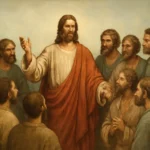
Matthew was one of the Twelve Apostles of Jesus. Before becoming a disciple, he worked as a tax collector, a profession many Jewish people viewed with suspicion because collectors served the Roman administration and could be associated with financial exploitation. Jesus called him away from that life, and Matthew became a witness to Christ’s ministry and a central figure in Christian tradition.
The Gospel of Matthew names Matthew the tax collector among the Twelve Apostles. In the Gospel accounts of the calling, however, the tax collector is called Levi. Matthew 9:9 describes Jesus seeing a man named Matthew sitting at the tax booth and inviting him to follow. Mark 2:14 and Luke 5:27-28 describe a similar event involving Levi.
Many Christians have understood Matthew and Levi to be two names for the same man. People in the ancient Jewish and Roman world could use more than one name, and the two calling stories share the same setting and response: a tax collector leaves his work and follows Jesus. Still, the Gospel texts do not explicitly say, “Matthew was also called Levi,” so careful readers recognize that the identification is an ancient Christian interpretation rather than a statement made directly in every account.
Matthew’s occupation matters because it gives the calling its force. A tax collector was not automatically a criminal, but the position carried a heavy social burden. Collectors worked within a system that gathered taxes for imperial authorities, and some used their authority to demand more than required. To many of Jesus’ contemporaries, a tax collector represented compromise, wealth, and collaboration with foreign power.
Jesus did not wait for Matthew to become respectable before calling him. The invitation came at the tax booth, in the middle of ordinary work. Matthew’s response is presented simply: he got up and followed Jesus. That brief movement—from a profitable but morally complicated occupation to discipleship—has made his story especially meaningful to people who wonder whether their past disqualifies them from serving God.
How Matthew responded to Jesus’ call
After Matthew’s call, the Gospel accounts describe a meal involving Jesus, his disciples, tax collectors, and other people regarded as sinners. Matthew 9:10-13 presents the scene as a challenge to religious expectations. Jesus explains that those who are sick need a physician, and he emphasizes mercy rather than outward claims of righteousness.
The meal is not a minor detail. Sharing food in the ancient world expressed relationship and welcome. By eating with tax collectors and other outsiders, Jesus showed that his mission reached people who were socially rejected. Matthew’s home or circle became a setting in which others could encounter Jesus, and Matthew’s conversion immediately opened space for community.
Matthew’s story therefore involves more than leaving one job. He moved from being viewed with distrust to becoming a disciple, apostle, and witness. His past remained part of his story, but it no longer defined the direction of his life. Christian tradition has often seen this as an example of grace that does not deny wrongdoing or social harm, yet still makes genuine change possible.
The calling also raises practical questions about money and responsibility. Matthew did not become holy by pretending that financial work was inherently evil. The deeper issue was how power, wealth, and public responsibility were used. His story invites reflection on honesty, fairness, restitution, and the treatment of people who depend on your decisions.
A useful distinction: Matthew’s conversion is not simply a career change. It is a change in allegiance, relationships, and priorities. The story asks how your work shapes your character and how your choices affect people with less power.
Matthew’s place among the Twelve Apostles
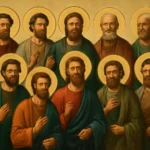
The Twelve Apostles represented the group Jesus chose for a special role in his ministry. Matthew appears in the apostolic lists in Matthew 10:2-4, Mark 3:16-19, Luke 6:13-16, and Acts 1:13. The lists vary slightly in order and in some names, but Matthew is consistently included among the Twelve in the Gospel tradition.
The title apostle means one who is sent. The apostles were not merely students attending private lessons. They accompanied Jesus, heard his teaching, observed his actions, and were sent to proclaim the message of God’s kingdom. Matthew’s inclusion shows that Jesus chose people from different backgrounds, including a tax collector whose occupation would have made him unpopular.
The New Testament does not give a long personal biography of Matthew. After his appearance in the apostolic lists and calling story, he is not described in many individual scenes. This silence can be misleading. Ancient writing often focused on a person’s role in the larger mission rather than preserving detailed information about their private life.
Tradition holds that Matthew continued proclaiming the Christian message after Jesus’ resurrection. The Book of Acts does not record a complete itinerary for every apostle, and later accounts differ about where Matthew preached. Reports connect him with regions such as Ethiopia or areas near the Red Sea, but these traditions are not equally detailed or historically certain.
What the Gospel of Matthew teaches
The Gospel of Matthew is the first book in the New Testament as arranged in most Christian Bibles. It presents Jesus as the Messiah, the fulfillment of Israel’s hopes, and a teacher who brings God’s purposes to completion. Its opening genealogy connects Jesus with Abraham and David, placing his story within the history of Israel.
Matthew frequently connects events in Jesus’ life with Israel’s Scriptures. Phrases such as “this happened so that” appear in passages where the evangelist explains how Jesus’ actions relate to earlier prophetic or biblical themes. Matthew is not merely offering a collection of miracles and sayings; he is showing readers how to understand Jesus within the long story of God’s covenant people.
One of the Gospel’s strongest themes is the kingdom of heaven. Matthew uses this expression repeatedly for God’s active rule, likely reflecting Jewish reverence for the divine name. The kingdom is both present in Jesus’ ministry and associated with a future completion. It changes how people treat one another, how they use authority, and what they consider true greatness.
The Gospel gives special attention to Jesus’ teaching. The Sermon on the Mount in Matthew 5-7 describes the character of people who belong to God’s kingdom and challenges ordinary assumptions about anger, retaliation, wealth, prayer, and love of enemies. It does not reduce faith to private belief. It presents discipleship as a way of living that reaches motives, speech, relationships, and hidden decisions.
Matthew also emphasizes the church as a community of reconciliation and teaching. Matthew 18 addresses conflict, forgiveness, care for vulnerable members, and the responsibility to correct serious harm. The Gospel’s final scene, Matthew 28:16-20, sends Jesus’ followers to make disciples among all nations, baptize them, and teach them to live according to his commands.
Why Matthew is called an evangelist
An evangelist is a person associated with proclaiming the good news of Jesus. Matthew is traditionally called an evangelist because the Gospel bearing his name has shaped Christian belief and worship for centuries. He is also called one of the four Gospel writers, together with Mark, Luke, and John.
The text itself does not identify its author by name inside the narrative. The title “According to Matthew” became associated with the Gospel through early Christian tradition. Church writers in the second century connected the book with Matthew the apostle, while later scholars have examined its language, structure, sources, and relationship to Mark and other traditions.
Christians and scholars do not all explain the book’s authorship in exactly the same way. Some accept the traditional attribution to the apostle Matthew. Others believe it was composed by a later Christian teacher or community that preserved and organized traditions connected with Matthew. Either way, the Gospel is an early and authoritative witness to Jesus for the Christian churches that received it.
The Gospel of Matthew appears to have been written for readers deeply familiar with Jewish Scripture and religious language, while also looking toward a mission that includes all nations. Its careful arrangement of teachings, stories, and controversies suggests a writer concerned with formation: helping a community understand what Jesus taught and practice it faithfully.
Matthew’s symbols in Christian art
Saint Matthew is commonly represented by a winged human figure or angel. This symbol comes from an ancient Christian interpretation of the four living creatures associated with the four evangelists. Matthew’s symbol is the human figure because his Gospel begins with Jesus’ human genealogy and emphasizes Christ’s entry into human history.
Artists may also show Matthew with a book, scroll, pen, or money table. The book points to his Gospel, while the writing tools identify him as a teacher and evangelist. The money table recalls his former work as a tax collector and the decisive moment when Jesus called him away.
In paintings and sculptures, Matthew may appear with the angel beside him or dictating the Gospel. Such images are theological symbols rather than documentary photographs. They communicate the Church’s belief that the Gospel is connected with apostolic witness and divine inspiration, while leaving room for serious questions about the exact process by which the text was composed.
His traditional colors and visual details vary by period and region. Some works depict him as an older bearded man; others present him more simply as a traveler, apostle, or writer. The consistent features are usually the Gospel book and the angelic or winged-human emblem.
What is known about Matthew’s death and later traditions
The New Testament does not describe how Matthew died. Later Christian traditions claim that he was martyred, but they disagree about the location and circumstances. Some accounts place his death in Ethiopia, while others associate him with different regions. Because the stories are not consistent, it is best to describe Matthew’s martyrdom as a respected tradition rather than a detail established with certainty.
Traditions about Matthew’s preaching also developed over time. Early Christian communities wanted to preserve memories of where the apostles carried the message, but the surviving reports were written at different times and do not always agree. Geographic names could also refer to more than one area in the ancient world, which makes some reports difficult to identify precisely.
Relics traditionally associated with Matthew are venerated in Salerno, Italy, especially at the cathedral dedicated to him. The traditional association has shaped local devotion and pilgrimage. As with many apostolic relic traditions, historical conclusions require care, and religious veneration is not the same as modern forensic proof.
These uncertainties do not erase Matthew’s importance. They clarify the difference between the firm New Testament portrait and later details that developed through oral memory, local devotion, and Christian storytelling. A responsible account can respect tradition without presenting every traditional claim as equally documented.
Why Saint Matthew is associated with money and financial work
Matthew’s former occupation explains why he became a patron saint of people connected with financial administration. Christian tradition commonly associates him with tax collectors, accountants, bookkeepers, bankers, customs officers, and other workers handling money. The connection is not an endorsement of every financial system; it comes from the Gospel story of a tax collector called to a new life.
His patronage can be understood as a reminder that ethical conduct matters in ordinary economic work. Keeping records, collecting payments, approving loans, managing public funds, or serving customers all involve trust. Matthew’s story points toward truthfulness, accountability, fair treatment, and concern for those who may be harmed by financial decisions.
People who work with money may find Matthew’s example especially relevant because financial choices are rarely purely technical. A fee, tax assessment, debt decision, or accounting entry can affect a family’s housing, food, health care, or ability to remain in business. Professional skill should therefore be joined with moral judgment and respect for human dignity.
Tell the truth in records: accurate books and transparent explanations protect both the organization and the people it serves.
Separate authority from personal gain: a position that gives you control over money should never become an invitation to exploit others.
Explain consequences clearly: people deserve to understand fees, deadlines, risks, and available choices.
Correct errors: acknowledging and repairing a mistake is more responsible than hiding it.
Remember the vulnerable: rules may be necessary, but compassion should shape how they are communicated and applied.
Practical ways to learn from Saint Matthew
Matthew’s example can become abstract if it remains only a story about a first-century tax collector. You can make it practical by applying its themes to decisions you face at work, at home, and in your relationships. The central question is not whether your occupation resembles Matthew’s. It is whether your choices show that mercy and integrity have real authority in your life.
Examine the role you play. Ask who depends on your decisions and whether you use your position mainly for convenience, profit, or service.
Identify one area that needs repair. This could involve an unpaid obligation, misleading communication, unfair treatment, or a habit that damages trust.
Take a specific corrective action. Apologize, return what is owed, correct a record, clarify an agreement, or ask for guidance from someone you trust.
Make room for people you usually avoid. Matthew’s meal with outsiders challenges the tendency to define people by reputation or social category.
Study Jesus’ teaching in Matthew. Reading one section at a time can connect Matthew’s conversion with the Gospel’s broader call to mercy, justice, prayer, and faithful action.
Use money as a responsibility. Review spending, giving, debt, and professional decisions with attention to how they affect other people.
These practices do not turn a person into a saint through self-improvement alone. In Christian understanding, Matthew’s transformation begins with a call and a response to grace. Practical action matters because it gives that response a visible form, especially in areas where old habits have harmed trust.
Common mistakes when learning about Saint Matthew
Several easy assumptions can create confusion. Separating the biblical text from later tradition helps you appreciate Matthew’s story without forcing uncertain details into the evidence.
Assuming every detail about his life is recorded in the Bible: the New Testament says little about his later travels or death.
Treating Matthew and Levi as unquestionably identical: this is a longstanding Christian interpretation, but the Gospel texts use different names and do not explicitly explain the relationship.
Claiming that Matthew definitely wrote the Gospel in its final form: early tradition supports the attribution, while modern scholarship recognizes questions about the book’s composition and sources.
Reducing his story to a career change: the heart of the narrative is repentance, discipleship, community, and a new use of responsibility.
Assuming financial work is incompatible with holiness: Matthew’s story focuses on how authority and money are handled, not on condemning every occupation connected with commerce.
Presenting one martyrdom account as proven history: later traditions vary, so they should be described with appropriate caution.
Read with two kinds of attention: ask what the New Testament actually says, then ask what later Christian tradition has preserved. Both can be meaningful, but they should not be confused.
When Saint Matthew is celebrated
Many Western Christian churches celebrate Saint Matthew’s feast day on September 21. In Eastern Christian traditions, a feast of the Apostle and Evangelist Matthew is commonly observed on November 16. Calendars can differ by denomination, local church, and liturgical tradition, so the date in your own church calendar is the best guide.
Feast days are not simply historical anniversaries. They give a community a time to hear the saint’s story, pray for people connected with his traditional patronage, and reflect on the Gospel associated with him. A parish might focus on conversion, responsible work, welcome for outsiders, or the call to share faith.
You can mark the day by reading selected passages from Matthew, attending worship, praying for honesty in public and private finances, or making a concrete effort to repair a strained relationship. Another appropriate practice is to learn about the needs of people affected by poverty, debt, taxation, or exclusion and respond with practical help.
What Saint Matthew’s story means for readers today
Matthew’s story begins with a person seen through the lens of an unpopular occupation. Jesus sees more than the label. That does not mean harmful choices are ignored; it means a person is not permanently trapped by the worst assumptions others make about them or by the patterns that once shaped their life.
The story also offers a demanding view of renewal. Matthew does not simply receive comfort while keeping every old priority unchanged. He leaves the tax booth, joins a new community, and becomes part of a mission centered on Jesus. Mercy creates responsibility: once welcomed, a person is called to live differently and help make welcome possible for others.
For people who feel ashamed of their past, Matthew represents the possibility of a real beginning. For people who feel morally secure, he offers a warning against contempt for outsiders. For people who handle money or authority, he gives a lasting question: does your work serve people, or does it make people serve your advantage?
His legacy rests on both the apostolic call and the Gospel tradition connected with his name. The historical record leaves some questions open, especially about his later life and the exact authorship of the Gospel. Yet the central message remains clear: Jesus calls people in the middle of ordinary life, welcomes those others reject, and turns changed lives toward faithful service.
Frequently asked questions
Was Saint Matthew the same person as Levi?
Most Christian traditions identify Matthew and Levi as the same tax collector called by Jesus. Matthew 9 names the man Matthew, while Mark 2 and Luke 5 call him Levi. The shared setting and sequence strongly support the traditional identification, although the Gospel texts do not explicitly explain why two names are used.
Did Saint Matthew definitely write the Gospel of Matthew?
Early Christian tradition attributed the Gospel to Matthew the apostle, and that attribution remains accepted in many churches. The text itself does not name its author within the narrative. Modern scholars differ, with some supporting the traditional connection and others describing the final Gospel as the work of a later Christian writer or community using apostolic traditions.
What is Saint Matthew the patron saint of?
Saint Matthew is traditionally associated with tax collectors, accountants, bookkeepers, bankers, customs officers, and other people who work with money or financial records. This connection comes from his former occupation as a tax collector. His patronage is often understood as a call to practice honesty, fairness, accountability, and compassion when handling financial responsibilities.
Why does Saint Matthew have an angel as his symbol?
In Christian art, Matthew’s symbol is a winged human figure or angel, one of the four traditional symbols for the Gospel writers. The human figure reflects the Gospel’s opening genealogy and its attention to Jesus’ human entry into history. Artists may also portray Matthew with a book, scroll, pen, or money table.
















Leave a Reply