If you want to say “praying” in Spanish, the most common words are rezando and orando. Both mean that someone is praying, although rezar is especially common in everyday conversation and Catholic settings, while orar often sounds more formal, biblical, or Protestant. The noun “prayer” is la oración.
For example, Estoy rezando means “I am praying,” and Estoy orando por ti means “I am praying for you.” Spanish-speaking Christians use both verbs, but local custom, denomination, and the kind of prayer can affect which word feels most natural.
The two main verbs are rezar and orar. They are regular -ar verbs, so their basic forms are straightforward. The gerunds, which express an action in progress, are rezando and orando.
To pray: rezar or orar
Praying: rezando or orando
A prayer: una oración
Prayers: oraciones
Prayer time: el momento de oración or el tiempo de oración
Rezar is often used for saying a familiar or established prayer, such as the Lord’s Prayer or the Rosary. It can also describe the general act of praying. Orar tends to emphasize communicating with God, asking for help, giving thanks, or worshiping, especially in church language.
These distinctions are tendencies rather than strict rules. A Spanish speaker may say Voy a rezar or Voy a orar for “I’m going to pray,” and both sentences are correct. In many communities, the choice reflects personal preference more than a fixed grammar rule.
Quick answer: Use estoy rezando or estoy orando for “I am praying.” Use rezo or oro for “I pray” or “I am praying,” depending on context.
The verb rezar is pronounced approximately “reh-SAR,” with the stress on the final syllable. Orar sounds approximately like “oh-RAR.” In rezando, the stress falls on the second syllable: “reh-SAN-doh.” In orando, it falls on “ran”: “oh-RAN-doh.” These English approximations are only guides, since pronunciation varies across Spanish-speaking countries.
When to use rezar, orar, and other prayer vocabulary
Rezar commonly appears when a person says a recognized prayer or follows a devotional practice. You might hear Mi abuela reza el rosario todas las noches, meaning “My grandmother prays the Rosary every night.” You can also say Los niños rezaron antes de dormir, or “The children prayed before going to sleep.”
Orar is common in expressions about praying for a person or situation. For example, Estamos orando por los enfermos means “We are praying for the sick.” In many evangelical and Protestant churches, orar is the usual word in sermons, worship services, and announcements.
Here are useful differences in emphasis:
Rezar una oración: to recite or say a prayer
Rezar el rosario: to pray the Rosary
Orar por alguien: to pray for someone
Orar a Dios: to pray to God
Orar en silencio: to pray silently
Orar juntos: to pray together
The noun oración has two common meanings: “prayer” and “sentence” in grammar. Context makes the meaning clear. La oración fue muy conmovedora can mean “The prayer was very moving,” while Esta oración tiene un verbo means “This sentence has a verb.” The pronunciation is also different from the English word “oration”: Spanish oración has the stress on the final syllable, “oh-rah-see-OWN.”
You may also encounter plegaria, which means “prayer” or “supplication.” It sounds more literary or solemn than oración. Súplica means “plea” or “supplication,” so it describes an urgent request rather than every kind of prayer. Devoción refers to devotion, and devocional describes something used for personal religious practice.
Natural Spanish phrases for talking about prayer
Short phrases are often more useful than a word-for-word translation. The structure of a Spanish sentence can differ from English, especially when you mention the person or situation included in your prayer.
Estoy rezando. — I am praying.
Estoy orando. — I am praying.
Voy a rezar. — I am going to pray.
Voy a orar por ti. — I am going to pray for you.
Rezo todos los días. — I pray every day.
Oro por mi familia. — I pray for my family.
¿Quieres orar conmigo? — Do you want to pray with me?
Vamos a rezar. — Let’s pray.
Necesito un momento para orar. — I need a moment to pray.
Gracias por tus oraciones. — Thank you for your prayers.
Notice the preposition por in orar por ti and rezar por alguien. It identifies the person or cause included in the prayer. For example, Estamos rezando por tu recuperación means “We are praying for your recovery.” In this context, por is not translated as “through” or “because of”; it introduces the person or situation being prayed for.
When you pray to someone, Spanish generally uses a: orar a Dios means “to pray to God.” You can combine both ideas in one sentence: Oramos a Dios por nuestros amigos, or “We pray to God for our friends.” The phrase pedirle a Dios means “to ask God,” and it is frequently used when describing a prayer request.
For a gentle message to someone who is dealing with difficulty, Estoy orando por ti is a natural choice. You can also write Mis oraciones están contigo, meaning “My prayers are with you,” although Estoy orando por ti is more direct. In some regions, Rezaré por ti (“I will pray for you”) sounds more traditional or Catholic, while Oraré por ti may sound more formal.
Ways to invite someone to pray
Spanish offers several ways to invite another person to pray. The best option depends on whether you are speaking to one person, a group, a child, or a congregation.
Vamos a orar. — Let’s pray.
Oremos. — Let us pray.
¿Oramos? — Shall we pray?
¿Quieres rezar conmigo? — Do you want to pray with me?
Unámonos en oración. — Let us join together in prayer.
Inclinen la cabeza para orar. — Bow your heads to pray.
Oremos is the formal or public invitation often heard at the beginning of a church prayer. It is the first-person plural command form of orar. Vamos a orar is less formal and more conversational. If you are speaking to children or friends, ¿Oramos? is brief and natural.
How to form Spanish sentences about praying
Spanish uses the present progressive estar + gerund to express an action happening now. That gives you estoy rezando and estoy orando. The verb estar changes according to the subject, while rezando or orando stays the same.
Estoy rezando. — I am praying.
Estás orando. — You are praying.
Está rezando. — He, she, or you formal are praying.
Estamos orando. — We are praying.
Están rezando. — They or you plural are praying.
Spanish often leaves out the subject pronoun because the verb form provides enough information. Estamos orando already means “we are praying,” so you do not need to add nosotros unless you want emphasis. You can say Nosotros estamos orando, but it sounds more deliberate: “We are the ones who are praying.”
For habits and regular actions, use the simple present rather than the progressive. Rezo cada mañana means “I pray every morning,” while Estoy rezando means “I am praying right now.” The same difference applies to oro and estoy orando.
The simple present forms of rezar include rezo, rezas, reza, rezamos, and rezan. The first-person singular changes from the stem vowel spelling because Spanish uses z before o as part of standard spelling: yo rezo. The forms of orar are more regular: oro, oras, ora, oramos, and oran.
To speak about the past, Spanish has several options. Estuve orando means “I was praying” or “I spent time praying,” while oré means “I prayed.” He rezado por ella means “I have prayed for her.” The best tense depends on whether you are describing an action in progress, a completed event, or an experience connected to the present.
Grammar tip: Use estar + rezando/orando for an action happening now, and use rezo/oro for a habit or general practice. Estoy orando and oro do not mean exactly the same thing.
Some expressions use the infinitive rather than a conjugated verb. After another verb, Spanish commonly uses rezar or orar: Quiero rezar means “I want to pray,” and Necesitamos orar means “We need to pray.” After a preposition, the infinitive is also used: Antes de orar means “before praying,” and después de rezar means “after praying.”
Common Spanish prayers and religious expressions
If you are looking for prayers in Spanish, you may need vocabulary used in a church service or personal devotion. The following words can help you understand what you hear or read without relying on a literal translation of every sentence.
Dios: God
Señor: Lord
Padre: Father
Jesús: Jesus
Espíritu Santo: Holy Spirit
fe: faith
esperanza: hope
amor: love
perdón: forgiveness
paz: peace
gracia: grace
bendición: blessing
amén: amen
Dar gracias means “to give thanks,” so una oración de acción de gracias is a prayer of thanksgiving. Pedir ayuda means “to ask for help,” and pedir perdón means “to ask for forgiveness.” You can say Le pido a Dios fuerza, meaning “I ask God for strength,” or Damos gracias a Dios, meaning “We give thanks to God.”
Several traditional Christian prayers have established Spanish names. El padrenuestro refers to the Lord’s Prayer, el avemaría refers to the Hail Mary, and el credo means the Creed. El rosario can refer to the Rosary as a devotional practice or to the set of beads used with it, depending on context.
Because translations of traditional prayers vary by country, denomination, and edition, it is better to learn the name and purpose of a prayer before memorizing one particular wording. A church, prayer book, or Spanish-language Bible can provide the version used by your community. Bible references can also help you identify a passage without assuming that every Spanish-speaking group uses the same translation.
Common responses in worship include amén, “amen,” and así sea, meaning “so be it.” You may hear Dios te bendiga, “God bless you,” when someone offers a religious farewell or blessing. The plural form, Dios los bendiga, is used for several people or for a group addressed with ustedes.
In some Christian communities, people say Alabado sea Dios, meaning “Praise be to God,” or Gloria a Dios, meaning “Glory to God.” These expressions are not limited to formal prayers; they may also appear in conversation, worship announcements, or messages exchanged among members of a faith community.
Praying in Spanish in everyday and church settings
The most natural phrase depends on who is speaking and where the prayer occurs. A person praying alone may say Voy a tener un momento de oración, or “I’m going to have a moment of prayer.” A church leader may say Oremos por las personas que necesitan ayuda, meaning “Let us pray for the people who need help.” A friend sending encouragement may write Estoy orando por tu familia.
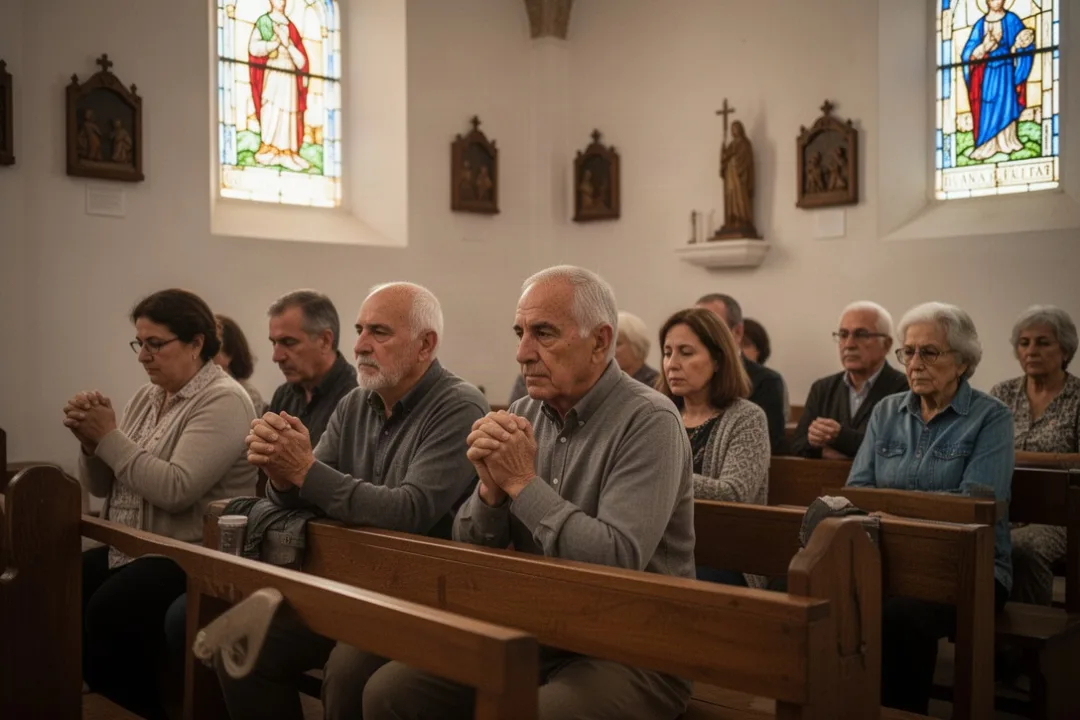
In a Catholic context, rezar is especially common for the Rosary, novenas, and familiar prayers. You could say Mi familia reza junta, “My family prays together,” or Vamos a rezar el rosario, “We are going to pray the Rosary.” Orar is also understood, but rezar may sound more immediately familiar for these practices.
In many Protestant or evangelical contexts, orar is the preferred verb. Expressions such as la iglesia está orando, “the church is praying,” and oremos por nuestros hermanos, “let us pray for our brothers and sisters,” are common. The word hermanos may refer to fellow believers of any gender when used as a general religious term, although some communities choose more inclusive wording.
When you are speaking to someone who has experienced illness, loss, or another difficult situation, keep the wording simple and sincere. These phrases are appropriate in many settings:
Estoy orando por tu recuperación. — I am praying for your recovery.
Seguimos rezando por ustedes. — We continue praying for you all.
Que Dios te dé fuerza. — May God give you strength.
Cuenta con mis oraciones. — You can count on my prayers.
Te tengo presente en mis oraciones. — I keep you in my prayers.
Be aware that religious language can feel personal. If you do not know whether someone welcomes prayer, you can ask ¿Te gustaría que orara por ti?, meaning “Would you like me to pray for you?” This gives the other person a choice and sounds more considerate than assuming that prayer is wanted.
Regional vocabulary also matters. In Spain, vosotros may be used for “you all,” while most of Latin America uses ustedes. Thus, “Are you praying?” can be ¿Estáis rezando? in an informal plural context in much of Spain, or ¿Están rezando? throughout Latin America and in formal Spanish. The religious meaning remains the same.
Finally, listen for pronunciation and phrasing from the community you are joining. A Mexican parish, a Spanish church in the United States, a congregation from the Caribbean, and a South American prayer group may use different accents and preferred expressions. Starting with orar, rezar, oración, and the phrases above will give you a clear, respectful foundation.
Frequently asked questions
Is “rezando” or “orando” more correct in Spanish?
Both are correct. “Rezando” comes from rezar and is often associated with reciting prayers or Catholic devotional practices. “Orando” comes from orar and is frequently used for personal communication with God, public worship, and Protestant or evangelical settings. Regional and denominational preferences matter, so neither word is universally better.
How do you say “I am praying for you” in Spanish?
The most natural options are “Estoy orando por ti” and “Estoy rezando por ti.” Use “por usted” for one person in a formal situation and “por ustedes” for several people. “Rezaré por ti” means “I will pray for you,” while “he orado por ti” means “I have prayed for you.”
What is the difference between “oración” and “plegaria”?
“Oración” is the standard, widely used word for “prayer.” “Plegaria” also means prayer, but it sounds more literary, solemn, or poetic. “Súplica” is narrower: it means a plea or earnest request. For everyday conversation, church announcements, and most general situations, “oración” is the safest choice.
How do you say “Let us pray” in Spanish?
The traditional formal expression is “Oremos,” which is common in worship services and church leadership. “Vamos a orar” means “Let’s pray” and sounds more conversational. “Vamos a rezar” is also correct, particularly when referring to a familiar prayer or devotional practice. “¿Oramos?” is a short, natural invitation between friends or family members.













Leave a Reply