Prayer for the dead: words for remembrance and hope
Prayer for the dead: words for remembrance and hope
A prayer for the dead can ask God to receive a loved one with mercy, comfort those who grieve, and strengthen hope in eternal life. You may pray in your own words, use a traditional prayer, or sit quietly before God while remembering the person who died.
The prayer below is suitable for private use, a funeral gathering, a memorial service, or the anniversary of someone’s death:
Merciful God, we remember [name] with love and gratitude. Receive them into your peace, forgive their faults, and hold them in the light of your presence. Comfort all who mourn, heal the pain of separation, and help us honor their life through the way we live. Keep us faithful in hope until we are reunited in your eternal care. Amen.
What praying for the dead means in Christian faith
Prayer for the dead is an act of love, remembrance, and trust in God. It does not erase grief or change the life that was lived. Instead, it gives you a way to place the person before God while acknowledging both the reality of death and the hope of mercy.
Many Christians believe that a person’s relationship with God does not become meaningless at death. Prayer can express confidence that God knows the whole person—their goodness, struggles, wounds, acts of love, and need for forgiveness. It can also help the living face sorrow without pretending that loss is easy.
Christian traditions do not all explain prayer for the dead in the same way. Some churches include prayers for the departed in regular worship and funeral services. Others focus their prayers on thanking God for the person’s life and asking for comfort, while leaving the person’s eternal condition entirely in God’s hands.
Those differences should not prevent sincere prayer. A simple request for God’s mercy and peace can be meaningful across many traditions. If you are praying with people from different church backgrounds, use language that centers on God’s compassion, the person’s memory, and comfort for those who remain.
Remember: Prayer for the dead is not a test of perfect wording. Honest grief, quiet remembrance, and a simple appeal to God can all become prayer.
The Bible contains passages that Christians connect with death, resurrection, judgment, mercy, and eternal life. Examples include John 11, which presents Jesus as responding to grief and pointing toward resurrection; 1 Corinthians 15, which discusses resurrection hope; and Revelation 21, which describes God’s future defeat of death and mourning. These passages offer themes for prayer without requiring you to copy a particular formula.
A prayer for the dead in different circumstances
The most fitting prayer depends on the moment. A prayer at a funeral may need to acknowledge shock and communal grief. A prayer months later may focus more on gratitude, continuing love, and the ways the person’s influence remains present. The words can be brief, but they should match the emotional reality of the people praying.
Prayer after a recent death
God of compassion, stay near to us in this painful time. We entrust [name] to your mercy and ask you to surround them with peace. Receive our sorrow, give courage to those facing the days ahead, and help us support one another with patience and love. May the gifts of [name] remain alive in our memories and actions. Amen.
This prayer is appropriate when grief is raw and practical responsibilities feel overwhelming. It does not force a cheerful response or suggest that mourners should quickly move on. The requests are simple: God’s care for the deceased, strength for the living, and grace to continue supporting one another.
Prayer for a parent, grandparent, or older relative
Loving God, we thank you for the life of [name] and for the care, wisdom, and memories they gave us. Welcome them into your peace. Help us carry forward the values and love we received from them, while making room for the sadness of their absence. Bless our family with patience, unity, and hope. Amen.
When an older relative dies, grief may include gratitude for a long relationship, regret about unfinished conversations, and concern about family traditions changing. Naming those feelings can make the prayer more honest. You might add one specific quality, such as generosity, steadiness, humor, faith, or devotion to family.
Prayer for a spouse or partner
God who knows every human heart, hold [name] in your loving care. I give thanks for the years, ordinary moments, and shared life we were given. Be close to me in the silence and loneliness that follow this loss. Give me strength for each day, kindness toward myself, and companions who will walk with me. Keep our love within your peace. Amen.
The death of a spouse or partner can affect identity, routines, finances, housing, friendships, and decisions that once belonged to two people. A prayer does not need to address every problem. It can simply recognize the bond, ask for daily strength, and make space for changing emotions.
Prayer for a child or young person
God of tenderness, receive [name] with compassion and hold them in perfect peace. We cannot understand this loss, and we bring you our sorrow, anger, questions, and love. Stay especially near to those who cared for them. Give us people who will listen without judgment, and carry us through each hour with mercy. Amen.
Grief after the death of a child or young person can be particularly disorienting. Avoid language that claims the death happened for a reason or that minimizes the family’s pain. A compassionate prayer can admit uncertainty while asking for presence, support, and endurance.
Prayer for someone who died after suffering
Merciful God, we remember [name] and the suffering they endured. Bring them rest, freedom from pain, and the fullness of your peace. Heal the memories that trouble us, receive our unanswered questions, and help us remember more than the final days. Give thanks with us for every moment of love, courage, and care that surrounded their life. Amen.
When illness, addiction, violence, or a difficult final period shaped the death, people may need permission to remember the whole person rather than only the ending. Prayer can hold sorrow and gratitude together. It can also acknowledge anger, confusion, or relief without treating those emotions as evidence of a lack of love.
How Catholic and other Christian traditions approach prayer for the dead
Catholic, Eastern Orthodox, Anglican, and some Lutheran traditions commonly include prayers for the departed in worship or private devotion. These prayers may ask God to grant rest, forgive sins, receive the person into eternal life, and comfort the living. In these traditions, praying for the dead is often understood as an expression of the continuing relationship between the church, the living, and those who have died.
Catholic practice may include prayers for the dead at a funeral Mass, during the Eucharistic Prayer, on All Souls’ observances, and in private devotions. Catholic teaching includes a belief in purgatory, understood as purification for those who die in God’s grace but still need healing and preparation for the fullness of heaven. A person who wants a specifically Catholic prayer may use language about eternal rest, mercy, and the light of God.
Eastern Orthodox Christians also pray for the departed in funeral services and commemorations. Their prayers emphasize God’s mercy, resurrection, and the hope that the deceased will rest among the righteous. Practices vary among Orthodox jurisdictions and families, so a priest or parish can provide wording appropriate to a particular custom.
Many Anglican and Episcopalian communities pray for the dead in public worship. The language may ask God to receive the person, grant them rest, and bring comfort to those who mourn. Local prayer books and parish traditions differ, but the overall tone often combines remembrance, mercy, and resurrection hope.
Many Protestant churches place stronger emphasis on thanking God for the person’s life and praying for the mourners. Some Protestant communities do not pray for a change in the deceased person’s condition after death, based on their understanding of Scripture and salvation. They may still use prayers that entrust the person to God and ask for peace, comfort, and hope.
If you are unsure what is appropriate in a church setting, ask the officiant or pastor before the service. A short, respectful prayer that avoids making claims about the person’s final destiny is usually suitable for an interdenominational gathering.
For a Catholic service: ask the parish about the approved funeral or memorial prayers and whether a Mass intention can be offered.
For an Orthodox service: consult the priest about memorial prayers, the timing of commemorations, and family customs.
For a Protestant service: follow the congregation’s practice regarding prayers of remembrance, thanksgiving, and comfort.
For a mixed-faith gathering: use inclusive language about mercy, peace, gratitude, and support for those who mourn.
You do not need to settle every theological question before praying. If a particular doctrine is central to your family’s faith, let it guide the wording. If the family holds different beliefs, choose language that is truthful, gentle, and respectful of everyone present.
How to write a personal prayer for someone who died
A personal prayer often feels more meaningful when it includes the person’s name and one or two details that could belong only to them. You do not need to create a polished speech. A few honest sentences can carry more emotional truth than a long prayer filled with general phrases.
Begin by addressing God in a way that fits your faith, such as merciful God, God of comfort, or loving Creator. Then name the person. Speaking their name can make the prayer concrete and give others a natural moment to remember who they were.
Next, include a request for the deceased. You might ask God to receive them in peace, forgive them, grant them rest, or hold them in eternal care. If your tradition does not pray for the dead in that way, thank God for their life and entrust their memory and legacy to divine care instead.
Add a specific expression of gratitude. Mention a quality, lesson, habit, or memory: the way they welcomed guests, repaired what was broken, encouraged younger relatives, cared for animals, served neighbors, or made a difficult season bearable. Specific details help a prayer sound like remembrance rather than a general announcement.
Then pray for the people who are grieving. Ask for patience, practical help, courage, rest, and compassionate company. Grief can make ordinary tasks difficult, so a prayer for support may be more useful than one that asks mourners to feel peaceful immediately.
End with hope that fits your beliefs. You may refer to resurrection, eternal life, reunion, God’s unending presence, or the promise that love and goodness are not forgotten. If you are uncertain what you believe, you can end by placing the person and the mourners in God’s mercy.
Name God: Choose an address that feels natural and reverent.
Name the person: Say their full name or the name used by family and friends.
Ask for care: Request peace, mercy, rest, or eternal welcome according to your tradition.
Give thanks: Include one concrete memory or quality.
Pray for the living: Mention the people most affected by the loss.
End with hope: Use language that reflects your faith without making promises you cannot honestly express.
Keep the prayer proportionate to the setting. A private prayer may be as short as one sentence. A funeral prayer can be longer if the family wants a fuller remembrance, but it should leave room for silence and should not become a biography of the deceased.
When and where to pray for the dead
You can pray for someone who died at any time. Many people pray immediately after learning of the death, during a funeral or burial, on the person’s birthday, on the anniversary of the death, or during holidays that make the absence especially noticeable.
Some families set aside a regular time each week or month. Others pray spontaneously when a song, photograph, place, meal, or familiar saying brings the person to mind. There is no required schedule for private prayer unless your church tradition recommends one.
A memorial prayer can be included in several settings:
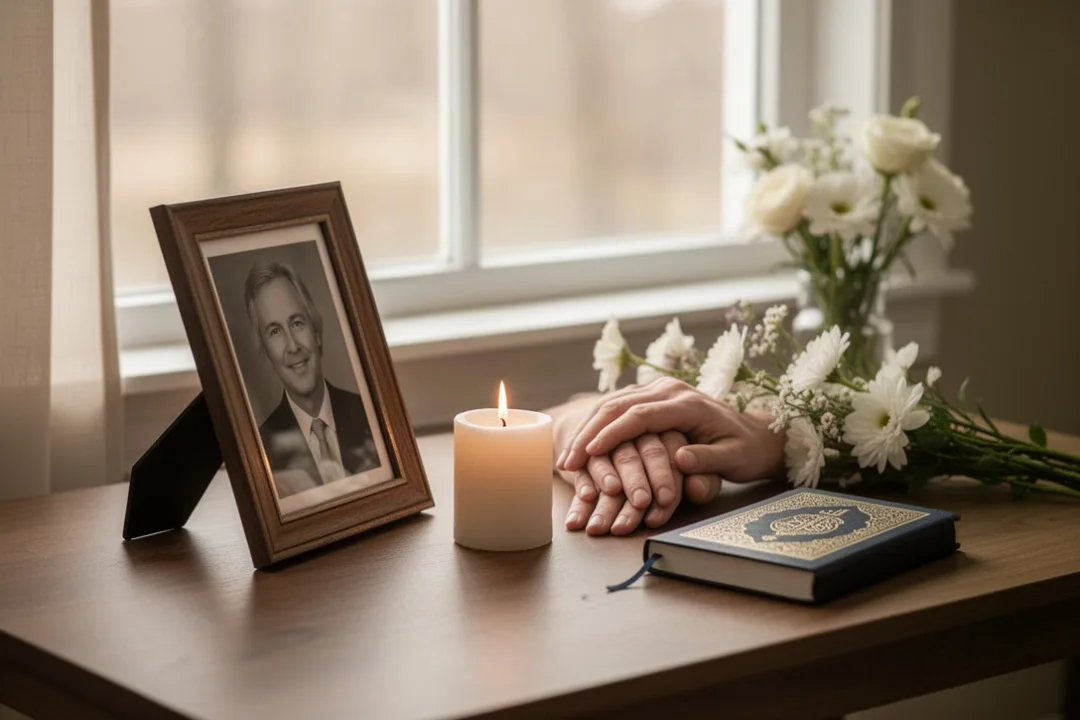
At home: Sit near a photograph, light a candle where safe, and pray in silence or aloud.
At a graveside: Keep the prayer brief and consider weather, accessibility, and the emotions of those attending.
At a funeral or memorial: Ask the officiant how personal prayers can fit into the service.
At a family meal: Mention the person with gratitude before eating.
At a place connected to the person: Pray while visiting a garden, park, church, or community they valued.
During a difficult anniversary: Combine prayer with a supportive activity, such as calling a friend or preparing a favorite recipe.
Physical objects can help create a quiet focus, but they are not required. A Bible, prayer book, rosary, cross, candle, flower, or photograph may be meaningful. If you use a candle, place it on a stable, heat-safe surface and never leave it unattended.
Silence can be part of prayer. You might say the person’s name, breathe slowly, and sit for several minutes without trying to produce more words. Silence can be especially appropriate when grief is too strong for a longer prayer or when several people hold different religious beliefs.
Prayer should not replace practical care for a grieving person. Offer a meal, help with transportation, handle an errand, listen without correcting their feelings, or check in after the funeral. Presence and concrete support often communicate compassion more clearly than advice.
A gentle practice: After praying, write down one memory of the person and one practical way to support someone who is grieving. This connects remembrance with care.
Words to avoid when praying with mourners
Even well-meant religious language can hurt if it sounds certain about why someone died or how quickly grief should end. Avoid saying that the death was definitely part of a plan, that the person is in a better place when the family does not share that belief, or that strong faith should remove sorrow.
Do not use prayer to settle family disagreements or criticize the deceased. A funeral or memorial is not the right setting to explain every regret, conflict, or unresolved issue. Keep the focus on mercy, truth, dignity, and care for those who are present.
Be cautious with language about guilt and punishment, especially when the death involved suicide, addiction, mental illness, violence, or a complicated family history. Different traditions have different teachings, but a public prayer should not make a grieving person feel condemned or responsible for the death.
Use the person’s chosen name and the family’s preferred language. If the person belonged to a particular faith, ask relatives what prayers or symbols would honor them. If no one knows, a respectful prayer for peace and comfort is safer than adding unfamiliar religious details.
When children are present, use clear and gentle language. Children may ask direct questions about death, and a prayer should not suggest that God took someone because a child behaved badly or needed a guardian angel. Give children permission to feel sad, confused, angry, or quiet.
If grief remains overwhelming, affects sleep and daily functioning for a prolonged period, or includes thoughts of self-harm, prayer should be accompanied by professional support. A doctor, licensed therapist, grief counselor, clergy member, or crisis service can offer help. Seeking care is compatible with faith and does not mean prayer has failed.
A prayer for the dead can be as formal as a church liturgy or as simple as saying, “God, please receive my loved one and help me through today.” What matters most is the honest act of remembering, entrusting, grieving, and loving in the presence of God.
Frequently asked questions
Can I pray for someone who was not religious?
Yes. You can pray for the person with language centered on mercy, peace, gratitude, and care, even if they did not share your beliefs. If others are present, avoid presenting your prayer as a statement about what the deceased believed. You might thank God for their life, ask for comfort for those who loved them, and hold the person’s memory with dignity.
Is there a specific prayer for the dead in the Bible?
The Bible does not provide one single prayer that every Christian tradition uses for the dead. Christians draw themes from passages about resurrection, mercy, comfort, judgment, and eternal life. Traditions differ on whether prayer can affect the condition of the deceased. Your church’s pastor, priest, or prayer book can help you choose wording that fits your beliefs.
Should I pray for the dead every day?
There is no universal requirement for daily private prayer. Some people pray on anniversaries or during church services, while others remember a loved one whenever grief or gratitude arises. A regular practice can provide comfort, but it should not become a source of guilt. Even a brief moment of remembrance can be meaningful.
What can I say when I do not know how to pray?
Start with the person’s name and one honest sentence, such as asking God to receive them in peace or to help you endure the loss. You can also sit silently, repeat a familiar sacred phrase, or read a short passage about comfort and hope. Grief often limits your words; a simple, sincere prayer is enough.













Leave a Reply