If you have encountered Moab in the Bible and wondered where it was, who lived there, or why it appears so often, the short answer is this: Moab was an ancient kingdom east of the Dead Sea, related to Israel but frequently in conflict with it. The Bible presents Moab through several connected themes—its controversial origin, tense relations with Israel, the faithfulness of Ruth, and prophetic warnings against national pride.
Moab was not a single person in every biblical reference. The name can mean the ancestor of a people, the Moabite nation, its territory, or the people who lived there. Understanding those different uses makes the biblical passages easier to follow and prevents modern readers from treating every reference to Moab as if it meant exactly the same thing.
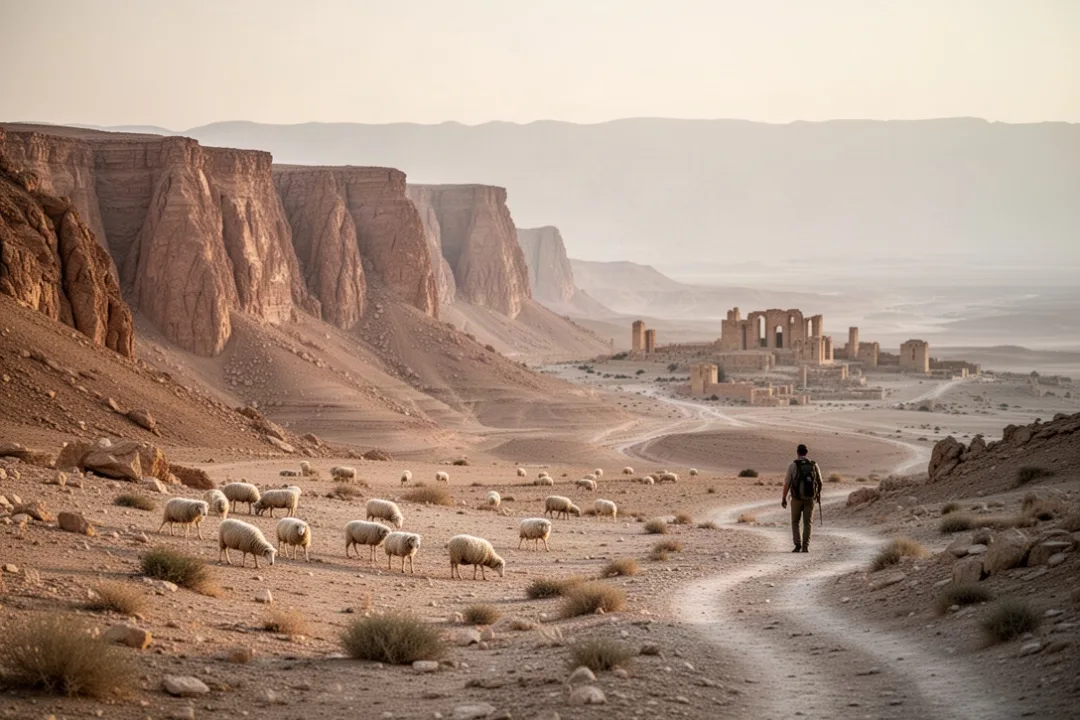
Moab occupied land on the eastern side of the Dead Sea, generally across from the territory of Judah and Benjamin. Its northern boundary was associated with the Arnon River, while the region extended southward toward the area near the Dead Sea’s southeastern shore. The precise boundaries changed at different points in history, especially as neighboring kingdoms gained or lost territory.
The land included a high plateau with access to important routes running north and south. The terrain had grazing areas, cultivated land, deep valleys, and steep approaches from the Jordan Valley. This geography mattered because Moab could be both a neighbor and a strategic rival to Israel. The two peoples were close enough for trade, migration, warfare, and intermarriage, but separated by difficult terrain and political boundaries.
Several biblical places are connected with Moab. Dibon appears in accounts of Israel’s wilderness travels and later becomes an important Moabite city. Medeba, Ar, and the plains of Moab also appear in biblical descriptions. Mount Nebo, where Moses viewed the promised land before his death, stood in the wider region associated with Moab.
Geographical note: “The plains of Moab” does not mean that every location in the biblical story was inside the central Moabite kingdom. It describes a broad area east of the Jordan near the Dead Sea, and the political control of that area changed over time.
How Moab began according to Genesis
Genesis 19 gives the Bible’s account of Moab’s ancestral origin. After the destruction of Sodom and Gomorrah, Lot and his two daughters lived in isolation. The daughters became pregnant by their father, and the older daughter named her son Moab. The text connects his name with the later Moabite people.
The story is presented as a morally troubling account, not as a model for family life or sexual conduct. It explains Israel’s traditional understanding of Moab’s ancestry while also showing that biblical genealogies can contain shameful, complicated, and painful beginnings. The narrative does not erase the actions of the people involved, nor does it make every later Moabite morally identical.
Genesis 19 also links Moab with Ammon, the nation associated with the younger daughter’s son, Ben-Ammi. The Moabites and Ammonites were therefore portrayed as related peoples living east of the Jordan. Their shared origin helps explain why the Bible sometimes discusses them together, even though their political histories were not the same.
Readers should avoid a common mistake here. The account of Moab’s origin is not a statement that every Moabite was personally responsible for Lot’s daughters’ actions. Biblical narratives often explain national origins without assigning identical guilt to every descendant. Later stories show individual Moabites making very different moral and spiritual choices.
Why Israel’s relationship with Moab was complicated
Israel and Moab were related neighboring peoples, but their relationship included both restraint and hostility. Deuteronomy 2 describes God’s instruction that Israel should not seize the land given to the descendants of Lot. That passage distinguishes Moab from the Canaanite nations whose territory Israel was commanded to occupy.
This does not mean that Israel and Moab lived peacefully at all times. Their borders, political interests, and religious loyalties created repeated conflict. The biblical record moves between commands to respect Moab’s inherited territory and stories of Moabite opposition, military attacks, tribute, and prophetic judgment.
One reason the relationship became tense was the pressure created by Israel’s movement toward Canaan. As Israel camped near Moab, the Moabite king viewed the large population nearby as a threat. Numbers 22–24 tells how Balak king of Moab tried to hire Balaam to curse Israel. Balaam was known as a diviner or religious specialist, and Balak hoped his words would weaken Israel before a confrontation.
Instead, Balaam repeatedly blessed Israel rather than cursing them. The biblical story emphasizes that a king’s plans could not overturn God’s purpose. Balak offered payment and prestige, but Balaam’s declarations ultimately recognized Israel’s future strength and protection.
The story does not end with Balaam’s failed curses. Numbers 25 describes Israelite men joining Moabite women in worship associated with Baal of Peor. The episode combines sexual relationships, participation in foreign religious practices, and a severe outbreak of judgment within Israel’s camp.
Numbers 31 later connects Balaam with counsel that contributed to this temptation, although the narrative details are presented across separate passages. The central warning is that Israel’s danger was not limited to an army attacking from outside. Religious compromise and divided loyalty could also damage the community from within.
This passage should be read carefully rather than used as a blanket condemnation of every Moabite woman or every cross-cultural relationship. The text focuses on idolatrous worship and covenant disloyalty. It is addressing a specific crisis involving Israel’s religious obligations, not offering a universal judgment about the character of all Moabites.
The story also explains why Moab occupies such a negative place in some later biblical references. The memory of the Baal of Peor incident shaped Israel’s warnings about worship, sexual exploitation, and political alliances. Yet other passages, especially Ruth, present a Moabite woman as an example of loyalty and faithful commitment.
Moab in the book of Judges
Moab becomes a major oppressor in Judges 3. Eglon king of Moab joined forces with the Ammonites and Amalekites and captured the city of Jericho, described in the passage as the City of Palms. Israel then served Eglon for eighteen years.
God raised up Ehud, a left-handed Benjaminite, as a deliverer. Ehud brought the required tribute to Eglon and then returned with a private message for the king. After killing Eglon, Ehud escaped and summoned Israel’s forces. They seized the Jordan crossings and defeated the Moabites, killing many of them.
The story reflects the violent pattern found throughout Judges: Israel turns away, experiences oppression, cries out, receives a deliverer, and later falls into the same cycle again. Moab is one of several neighboring powers used in the narrative to show the consequences of Israel’s disobedience and the temporary relief provided by a judge.
The account should not be reduced to an ethnic stereotype. Eglon represents a hostile ruler and occupying power, while Ehud represents an Israelite deliverer. The conflict is political, military, and religious rather than a simple statement that every person from one nation is evil.
Ruth the Moabite and the family of David
The book of Ruth gives Moab one of its most important and surprising roles. During a famine, an Israelite man named Elimelech leaves Bethlehem with his wife, Naomi, and their two sons. The family settles in Moab. After Elimelech and both sons die, Naomi decides to return to Bethlehem.
One daughter-in-law goes back to her own people, but Ruth the Moabite remains with Naomi. Ruth pledges loyalty to Naomi and identifies herself with Naomi’s people and God. Her decision is not a casual visit or temporary arrangement. She accepts the insecurity of widowhood in a foreign land and travels with Naomi to Bethlehem.
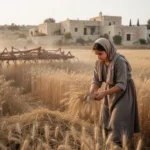
In Bethlehem, Ruth gathers leftover grain in the fields of Boaz, a relative of Elimelech. Boaz protects her, recognizes her loyalty to Naomi, and eventually marries her according to the family redemption customs described in the book. Ruth gives birth to Obed, the father of Jesse and grandfather of David.
Ruth’s story complicates any simplistic view of Moab. The Bible remembers national conflict and religious danger, but it also honors a Moabite woman for courage, loyalty, generosity, and devotion. Her place in the genealogy leading to David shows that a person’s origin does not determine the whole of that person’s story.
The book of Ruth also highlights the vulnerability of widows, immigrants, and people without land or social protection. Ruth is a foreign widow working in the fields, yet she becomes part of the family line of Israel’s greatest king. Her story does not deny the challenges surrounding foreign identity; it shows how faithful action can cross those barriers.
Important distinction: Ruth’s inclusion does not erase every biblical law or conflict involving Moab. It shows that the Bible’s treatment of Moab is not one-dimensional and that the actions and faith of an individual cannot be judged solely by national origin.
Moab continued to appear in Israel’s political and military history after the period of the judges. First Samuel 14 lists Moab among the surrounding enemies fought by Saul. These references suggest that relations between the kingdoms remained unstable as Israel developed into a monarchy.
David had a personal connection to Moab through his family. During a period when Saul was pursuing him, David brought his parents to the king of Moab and asked that they stay there for protection. The account shows that Moab was not always treated as an unreachable enemy; political circumstances could lead to negotiation and cooperation.
That relationship later changed. Second Samuel 8 reports that David defeated Moab and placed survivors under a measured arrangement of control. The exact details of the military action and its numerical wording have been discussed by interpreters, but the passage clearly presents Moab as one of the peoples brought under David’s authority.
The contrast between David seeking refuge for his parents in Moab and later subduing Moab illustrates how ancient political relationships could shift quickly. Family ties, diplomacy, protection, tribute, and war could all exist within the same broader history.
Moab’s revolt against Israel in 2 Kings 3
After the kingdom divided, Moab became subject to the northern kingdom of Israel for a time. Second Kings 3 says that Mesha king of Moab rebelled after the death of Ahab, refusing to continue sending the tribute expected by Israel. The tribute included large numbers of sheep and wool, indicating the economic importance of Moab’s pastoral resources.
King Jehoram of Israel formed an alliance with Jehoshaphat of Judah and the king of Edom to suppress the revolt. The allied armies traveled through the wilderness of Edom and eventually faced a shortage of water. The prophet Elisha announced that God would provide water and give them victory over Moab.
The campaign included attacks on Moabite cities, damaged farmland, and destroyed water sources. When the Moabite king saw that the battle was going against him, he sacrificed his firstborn son on the city wall. The passage ends with the allied armies withdrawing, but interpreters differ over how the final verse should be understood and what caused their departure.
Outside the Bible, the Mesha Stele provides an ancient Moabite account associated with King Mesha. It describes Moab’s struggle against Israel from a Moabite perspective and mentions several names and places also known from the Bible. The stele does not tell the whole biblical story, but it provides valuable evidence that Moab and Israel were real neighboring kingdoms with competing claims about their history.
What the prophets say about Moab
Several prophets pronounce judgment against Moab. Isaiah 15–16 describes the devastation of Moabite cities and the grief of displaced people. Jeremiah 48 gives an extended oracle against Moab, naming places, mourning its downfall, and criticizing its pride. Ezekiel 25 and Zephaniah 2 also include Moab among nations condemned for hostility and arrogance.
The prophetic criticism often centers on pride, self-confidence, contempt for Judah, and reliance on national strength. Moab is pictured as trusting in its fortresses, wealth, and reputation. The language is poetic and sometimes intensely emotional, moving between announcements of destruction and descriptions of mourning.
These passages should be read as prophetic judgments against a nation in a particular historical setting. They are not permission to despise modern people who happen to live in the same general region or share a cultural connection with ancient Moab. The Bible’s prophetic language belongs to its ancient covenant and political world.
Prophetic books can also contain signs of compassion amid judgment. Jeremiah 48 ends with an announcement that Moab’s fortunes will be restored in later days. The meaning of that promise is interpreted in different ways, but it demonstrates that prophetic judgment is not always presented as the final word about a nation.
Moab in the Psalms and other biblical references
Moab appears in several poetic passages. Psalm 60 and Psalm 108 use Moab in a military image that places the nation under God’s authority. The wording is symbolic and difficult to interpret with certainty, but it communicates triumph over hostile powers.
Psalm 83 includes Moab among nations portrayed as conspiring against God’s people. The psalm is a prayer for deliverance rather than a neutral history of every nation named. Its language should be understood within the setting of communal crisis, worship, and appeal for divine justice.
Daniel 11 refers to Moab in a later prophecy about political conflicts in the ancient Near East. The passage indicates that Moab remained recognizable as a regional people or territory in the prophetic imagination, even as political borders and ruling powers changed.
Nehemiah 13 recalls opposition from Moabite and Ammonite connections during the rebuilding period after the exile. The passage reflects concerns about foreign influence and covenant identity within the restored community. It needs to be read alongside Ruth rather than used to cancel Ruth’s story. Together, the passages show that biblical writers were addressing different circumstances and questions.
Common mistakes when studying Moab in the Bible
Moab’s story includes genealogy, geography, war, prophecy, and personal faith. These practical guidelines can help you read the references accurately:
Do not treat Moab as a single character. The name can refer to an ancestor, a country, a government, an army, or its people.
Do not confuse Moab with Ammon. Genesis presents them as related nations, but they had different territories and separate histories.
Do not assume every Moabite passage describes the same period. Numbers, Judges, Ruth, Kings, and the prophets address events separated by many generations.
Do not ignore geography. Moab’s location east of the Dead Sea helps explain its proximity to Israel and the strategic importance of the Jordan crossings.
Do not use Ruth as proof that all conflicts were irrelevant. Her story is a powerful example of personal loyalty, but it does not erase the political and religious disputes in other books.
Do not use hostile passages as a judgment on modern ethnic groups. The biblical references concern ancient kingdoms and particular actions in particular historical settings.
Do not assume prophetic poetry is a straightforward military report. Isaiah, Jeremiah, and the other prophets use lament, metaphor, symbolism, and vivid poetic language.
Compare parallel passages carefully. Some details appear in more than one book, while other accounts emphasize different parts of the same period.
What Moab can mean for biblical interpretation
Moab’s biblical story resists simple labels. At the national level, Moab is often remembered as a rival that threatened Israel, encouraged religious compromise, or resisted Israelite power. At the personal level, Ruth becomes one of the clearest examples of a foreigner welcomed into Israel’s central story.
This contrast teaches an important interpretive principle: national identity and personal character are not interchangeable. The Bible can condemn a nation’s actions while honoring an individual from that nation. It can remember conflict and still preserve a story of loyalty, marriage, family, and redemption.
Moab also demonstrates how Scripture remembers the same neighbor from several perspectives. Israelite narratives describe Moabite threats and defeats. Ruth presents a Moabite woman’s faithfulness. Prophets describe Moab’s pride and coming ruin. The Mesha Stele gives a competing Moabite account of conflict with Israel. Reading these perspectives together provides a fuller picture than relying on one passage alone.
For Christian readers, Ruth’s place in David’s ancestry also connects Moab with the wider biblical story leading to Jesus. The Gospel of Matthew includes Ruth among the women named in Jesus’ genealogy. That reference does not turn Moab into an idealized nation, but it reinforces the Bible’s recurring pattern of including people whose backgrounds might seem unexpected.
A simple way to study every Moab reference
When you encounter Moab in a passage, ask a few focused questions before drawing a conclusion:
What does “Moab” mean here? Identify whether the text refers to a person, territory, kingdom, army, or people group.
When does the event occur? Place it in the period of the wilderness, judges, monarchy, divided kingdom, exile, or restoration.
What is the immediate issue? Look for land, tribute, worship, family loyalty, military conflict, prophecy, or political alliance.
Is the language historical or poetic? Narrative and prophecy may describe Moab in very different styles.
Does another passage add balance? Ruth, Numbers, Kings, and the prophets each contribute different parts of the picture.
What principle does the passage actually support? Keep the application tied to the text rather than extending an ancient national judgment to unrelated modern people.
Read this way, Moab becomes more than a name on a map or an enemy in an Old Testament battle. It is part of the Bible’s sustained exploration of neighboring nations, divided loyalties, human failure, unexpected faithfulness, and God’s judgment. The most memorable Moabite story is not only about a kingdom that opposed Israel, but also about Ruth, a woman whose loyalty helped shape the family line of David.
Frequently asked questions
Was Moab a country or a person in the Bible?
Both uses appear. Genesis 19 names Moab as the son of Lot’s older daughter and presents him as the ancestor of the Moabites. In later books, Moab usually means the kingdom, its territory east of the Dead Sea, or the people who lived there. The meaning depends on the passage and its historical setting.
Why did Balak want Balaam to curse Israel?
Balak, king of Moab, feared Israel’s growing population near his territory and believed Balaam’s religious authority could weaken them. He offered payment for a curse, but Balaam repeatedly blessed Israel instead. Numbers then describes a separate crisis involving Israelite participation in Baal worship near Peor.
Was Ruth considered an Israelite?
Ruth was identified as a Moabite when she first appears in the biblical story. She married into an Israelite family, remained loyal to Naomi, moved to Bethlehem, and became part of the community through her marriage to Boaz. Her son Obed became the grandfather of David, placing her in Israel’s royal ancestry.
Where was ancient Moab located?
Ancient Moab was east of the Dead Sea, across from the southern and central regions of ancient Israel. Its territory included elevated plateau country and important settlements such as Dibon and Medeba. The exact borders varied as kingdoms expanded or lost control, so “Moab” can refer to a broader region in some passages.










Leave a Reply