Gods of the Bible: Who They Are and What They Mean
Gods of the Bible: Who They Are and What They Mean
The Bible presents the God of Israel as the one true Creator, while also mentioning idols, foreign deities, and heavenly beings called “gods” in different contexts.
The phrase “gods of the Bible” can refer to several different things. Sometimes it means the false gods worshiped by surrounding nations. Sometimes it describes members of the heavenly realm, human rulers, or judges. The same English word can translate different Hebrew or Greek terms, so context matters.
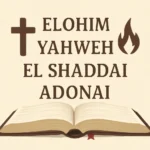
The most common Hebrew word is elohim. It is grammatically plural in form, but the Bible often uses it for the one God of Israel. In those passages, verbs and descriptions can make clear that the reference is singular. The word can also refer more broadly to spiritual beings or, in certain passages, to beings who exercise authority.
The Bible’s central claim remains consistent: Israel must worship the Lord alone. The first commandment forbids making or worshiping other gods, and the Shema in Deuteronomy 6:4 calls Israel to exclusive loyalty to the Lord. Biblical writers may acknowledge that other spiritual powers or objects of worship exist, but they do not place them on the same level as the Creator.
Key distinction: A biblical reference to “gods” does not always mean the Bible recognizes another deity as equal to God. The word may describe an idol, a spiritual being, a ruler, or a false object of worship.
How to identify a biblical reference to “gods”
When you encounter the word, follow the surrounding passage rather than assuming every reference means the same thing. A simple reading process can prevent many misunderstandings.
Check the original setting. Ask whether the passage concerns Israel’s worship, a foreign nation, a vision of heaven, a legal dispute, or a poetic description.
Identify the word’s role. Determine whether “god” refers to the Lord, an idol, a spiritual being, a human authority, or a title used by someone speaking figuratively.
Look for the passage’s judgment. Biblical writers may mock idols, condemn worship of them, describe spiritual beings, or affirm the Lord’s unmatched authority.
Compare related passages. A difficult verse is easier to understand alongside other passages about creation, worship, angels, idols, and God’s rule.
Separate description from approval. The Bible can report that people worshiped a deity without endorsing that worship.
This approach is especially useful for passages such as Psalm 82, Exodus 12:12, Deuteronomy 32:17, and 1 Corinthians 8:4-6. Each uses language about gods, but each addresses a different question.
The God of Israel stands above every other power
The Bible’s main theological framework is monotheistic: there is one supreme God, the maker of heaven and earth, who deserves worship. Genesis begins with God creating the heavens and the earth, rather than presenting creation as the result of a struggle between rival gods. Other biblical books repeatedly describe the Lord as incomparable and sovereign.
Passages such as Isaiah 44:6 and Isaiah 45:5-6 express this claim directly. They teach that no other deity rivals the Lord and that history remains under God’s control. These statements are not merely claims about Israel’s preferred religion; they are presented as claims about reality.
The Bible also uses words such as “Most High,” “Creator,” “King,” and “Lord” to emphasize God’s unique status. The Lord is not one regional deity among many competing national gods. He is portrayed as the source of life, the judge of nations, and the ruler over both the visible and invisible worlds.
Christian theology develops this teaching through the New Testament. John 1 describes the Word as present with God in the beginning and involved in creation. In 1 Corinthians 8:4-6, Paul acknowledges the language of “gods” and “lords” but directs Christian worship to the one God, the Father, and the one Lord, Jesus Christ.
Foreign gods named in the Old Testament
The Old Testament names or identifies several deities worshiped by neighboring peoples. These references usually appear in stories about idolatry, political conflict, religious compromise, or the consequences of abandoning the Lord. The Bible’s purpose is not to provide a complete catalog of ancient religions, so some names appear only briefly.
Baal: A major Canaanite storm and fertility deity. Israel’s worship of Baal is a recurring problem in Judges, Kings, and the prophetic books.
Asherah: A goddess associated with ancient Canaanite religion. The Bible refers to Asherah poles or cult objects that Israelite reformers were commanded to destroy.
Dagon: A deity associated with the Philistines. First Samuel 5 tells of the ark of the covenant being placed in Dagon’s temple and the resulting humiliation of the statue.
Milcom or Molek: A deity connected in biblical passages with the Ammonites or with condemned child sacrifice. The exact relationship between the names and practices is discussed by scholars, but the Bible clearly condemns the worship involved.
Chemosh: The national god of Moab. Second Kings 3 describes a conflict involving Moab and refers to Chemosh in the account.
Ashtoreth: A deity associated with the Sidonians and often connected with broader ancient Near Eastern goddess traditions. Solomon is criticized for worshiping her.
Rimmon: A deity named in connection with Aram or Syria. Naaman refers to entering the temple of Rimmon in Second Kings 5.
Bel and Nebo: Babylonian deities mentioned in Isaiah 46, where their images are portrayed as burdens that cannot save their worshipers.
These names do not form a single, uniform group. They belong to different cultures and periods, and the Bible refers to them for different reasons. Some are associated with national identity, some with fertility or weather, and some with royal or temple worship.
Baal and Asherah in Israel’s religious conflicts
Baal receives more attention than most foreign gods because worship of Baal became a symbol of Israel’s repeated unfaithfulness. In the account of Elijah on Mount Carmel in 1 Kings 18, prophets of Baal call on their god while Elijah calls on the Lord. The story contrasts empty ritual with the Lord’s power and presents the contest as a challenge to divided loyalty.
The Bible also criticizes Asherah worship. Archaeological evidence shows that ancient Israel and Judah existed within a broader culture where goddess traditions and sacred poles or trees were known. Biblical reformers therefore removed Asherah-related objects from places of worship as part of returning to exclusive devotion to the Lord.
These stories show that idolatry was not treated as a harmless private preference. It affected covenant loyalty, justice, family life, and national identity. Prophets connected false worship with exploitation of the poor, sexual wrongdoing, violence, and reliance on political alliances instead of God.
Idols are images, objects, and false sources of security
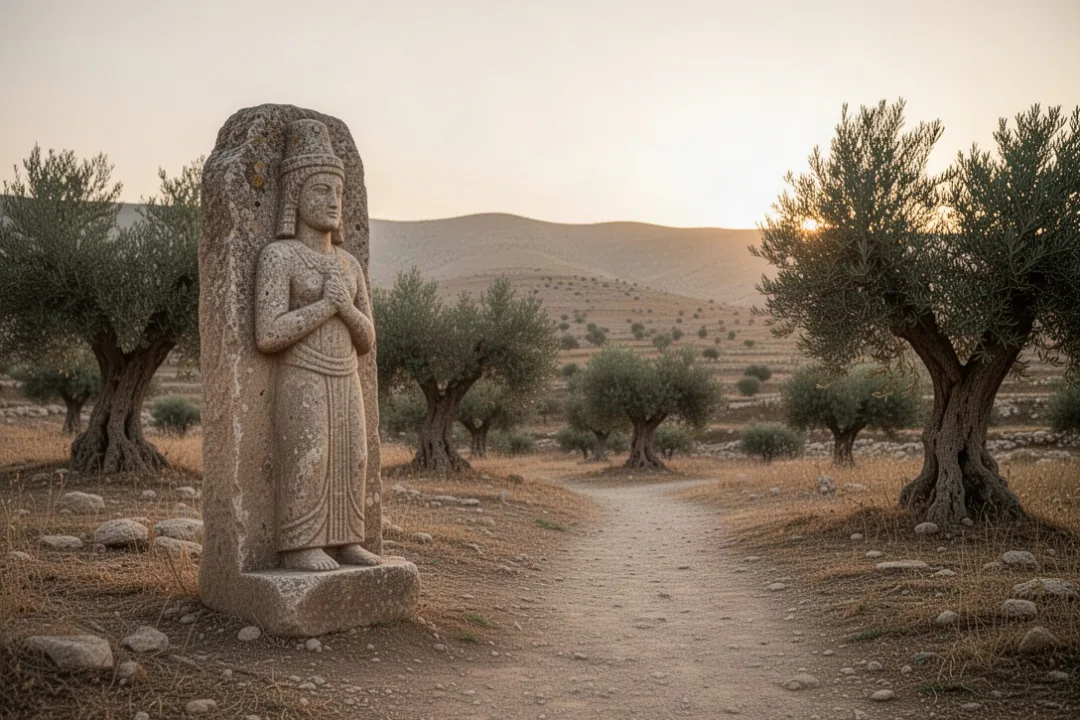
In many biblical passages, the “gods” of the nations are represented by carved or cast images. The prophets emphasize that people make, carry, decorate, and protect these objects. By contrast, the Lord is the living God who creates, speaks, judges, and acts in history.
Psalm 115 compares the lifeless features of idols with the living power of the Lord. Isaiah 40-46 uses similar reasoning, presenting artisans who shape an image and then depend on it. The point is not simply that statues are unattractive. The deeper issue is that an object made by human hands cannot become the creator or savior of the people who made it.
Idolatry in the Bible can also be understood more broadly as giving ultimate trust to something created. Money, political power, military strength, status, and personal control can function like idols when they receive the loyalty and dependence that belong to God. This broader application should not erase the historical meaning of idol worship, but it explains why biblical warnings remain relevant.
Practical reading tip: When a passage condemns an idol, ask what the idol promises: protection, prosperity, fertility, status, or control. That promise often reveals why people were drawn to it.
The divine council and the “sons of God”
Several passages describe a heavenly assembly in which God is surrounded by spiritual beings. Psalm 82 opens with God standing in a divine council and judging among “gods.” Job 1-2 depicts heavenly beings presenting themselves before the Lord, including “the satan,” who acts as an accuser in the scene. First Kings 22 describes a heavenly host surrounding God’s throne during a prophetic vision.
These passages have led many readers to use the term divine council for the heavenly court depicted in biblical poetry and visions. The idea does not mean that God needs advice or faces equal rivals. Instead, it portrays God as the supreme king who presides over subordinate spiritual beings.
The phrase “sons of God” appears in passages such as Job 1 and Psalm 29:1. It generally refers to members of the heavenly realm rather than ordinary human beings. Genesis 6:1-4 also mentions “sons of God,” but interpretations differ over whether the phrase refers to heavenly beings, powerful rulers, or another group.
Psalm 82 is especially debated. Its “gods” may be understood as heavenly beings judged by God, human rulers who have failed in justice, or a deliberately layered poetic reference. What remains clear is the passage’s moral direction: those who exercise authority must defend the vulnerable, and God’s judgment is higher than theirs.
Are angels called gods?
The Bible usually distinguishes angels from God, but some passages use language that places angels within the heavenly category represented by elohim. Psalm 8, for example, is translated in different ways: some versions refer to “angels,” while others preserve a phrase closer to “heavenly beings” or “gods.” Hebrews 2 quotes this passage in a discussion of humanity and Christ.
This translation difference illustrates why English readers should be cautious. A single English word can hide a range of meanings in the original languages. Angels are created servants, not divine rivals, and the Bible consistently presents them as subject to God.
The New Testament warns against worshiping angels. Colossians 2:18 criticizes a religious practice involving the worship of angels, and Revelation 19:10 and 22:8-9 show an angel refusing worship and directing it to God. Even impressive spiritual beings remain servants rather than objects of devotion.
What Psalm 82 says about “gods”
Psalm 82 is one of the most important passages for understanding biblical language about gods. It pictures God presiding over a council and rebuking its members because they judge unjustly and fail to protect the weak. Their authority is presented as accountable, limited, and subject to God’s judgment.
The phrase “you are gods” in Psalm 82:6 does not establish that all people are divine. The psalm immediately places these figures under judgment and contrasts their temporary authority with the enduring rule of the Most High. The passage’s emphasis is accountability before God, not human self-deification.
Jesus refers to Psalm 82 in John 10:34-36 during a dispute with religious leaders. He cites the wording of Scripture while defending his own claim and mission. Christians interpret this exchange in different ways, but the context does not turn the psalm into a general promise that human beings possess God’s nature.
Other gods in the New Testament
The New Testament continues to mention pagan deities, especially in accounts of the early Christian mission among Greek and Roman communities. In Acts 14, people in Lystra mistake Paul and Barnabas for the gods Hermes and Zeus after a healing. The apostles reject the honor and point the crowd toward the living Creator.
Acts 17 describes Paul speaking in Athens, where he observes an altar dedicated “to an unknown god.” Rather than treating the altar as proof that the Athenians already worshiped the true God, Paul uses their religious setting to proclaim the God who made the world and does not live in temples made by human hands.
Artemis appears prominently in Acts 19, where the growth of Christianity threatens the economy surrounding the temple and image of Artemis at Ephesus. The uproar shows that religion, commerce, civic identity, and public authority were closely connected. The conflict was not only about private belief.
Other New Testament references include Zeus, Hermes, and the “gods many” of 1 Corinthians 8. Paul’s teaching acknowledges the language of the surrounding culture but insists that Christian worship is centered on the one God and the one Lord Jesus Christ.
Are the gods demons according to the Bible?
Some biblical passages connect pagan worship with demons. Deuteronomy 32:17 says that Israel sacrificed to demons rather than to God, and 1 Corinthians 10:20 uses similar language when discussing pagan sacrifices. These texts warn that worship directed toward idols can involve real spiritual danger, even if the physical image itself is only wood, stone, or metal.
Not every biblical reference to a foreign god gives the same explanation. Some passages emphasize that idols are powerless and cannot speak, see, or save. Other passages emphasize the spiritual beings associated with false worship. These ideas can coexist: an idol may be materially lifeless while the worship connected with it becomes spiritually destructive.
Christian traditions explain the relationship between pagan gods and demons in somewhat different ways. Some identify the gods directly with demonic powers; others distinguish between nonexistent deities, human projections, and spiritual beings exploiting false worship. The shared warning is that religious devotion should not be given to created powers.
Why the Bible mentions gods it rejects
References to foreign gods serve several purposes. They explain the religious practices encountered by Israel and the early church, expose the weakness of idols, warn against compromise, and show that God’s authority extends beyond the boundaries of one nation.
Historical purpose: The names help readers understand the religious world of Canaan, Mesopotamia, Egypt, Greece, and Rome.
Ethical purpose: The stories show how false worship can be connected with injustice, exploitation, violence, or child sacrifice.
Theological purpose: The contrast between idols and the living God emphasizes creation, speech, judgment, and rescue.
Pastoral purpose: Warnings against idols challenge believers to examine what they trust and serve.
Mission purpose: New Testament speakers use familiar pagan beliefs as starting points for proclaiming the Creator.
The Bible is therefore not confused about its own message when it names other gods. It is describing the religious landscape in which its people lived while insisting that the Lord alone is worthy of worship.
Egyptian gods and the plagues
Exodus does not provide a complete list of Egyptian deities, but it says that God executed judgments against the gods of Egypt. Many interpreters understand the plagues as exposing the inability of Egypt’s religious and political system to control life, nature, health, fertility, or death.
The text does not require every plague to be matched with one specific Egyptian god. Attempts to assign an exact deity to each event often go beyond what the passage itself says. The broader message is that Pharaoh, Egypt’s religious order, and its gods cannot prevent the Lord from freeing Israel.
Exodus 20:2-3 places this story behind the first commandment. Israel’s exclusive worship is connected with the memory of deliverance: the God who brought them out of slavery claims their loyalty. Worship is therefore tied to relationship and redemption, not merely to abstract ideas about which deity is strongest.
How Christians should read biblical passages about gods
A careful reader holds together two truths. First, the Bible affirms one sovereign God. Second, it recognizes that people worship many things and that spiritual beings may exist beyond ordinary human experience. Neither truth requires treating every named deity as an equal god alongside the Lord.
Pay attention to genre. Poetry may use vivid images of heavenly courts. Historical narrative may report what a nation worshiped. Prophecy may ridicule an idol. A letter may warn believers about participation in pagan rituals. Reading all of these passages as if they were doing exactly the same thing creates confusion.
It also helps to distinguish three questions:
What did people believe? A passage may report the beliefs of Egyptians, Canaanites, Babylonians, Greeks, or Romans.
What exists spiritually? Some passages speak of angels, heavenly beings, or demonic powers, while others stress the emptiness of idols.
What should people worship? The Bible’s answer is consistent: worship belongs to the Lord, and in the New Testament, to God through Jesus Christ.
That distinction allows you to read the Bible on its own terms. It neither dismisses every mention of gods as meaningless nor treats those gods as competitors equal to the God who creates and judges all things.
What “no other gods” means for life today
The command against other gods addresses more than ancient statues. It calls for undivided allegiance. A person may reject formal idol worship yet still treat wealth, achievement, romance, nation, ideology, or personal autonomy as the highest authority.
Modern applications should be made carefully. Not every enjoyable activity or valued possession is an idol. The question is whether something created has become the source of ultimate identity, security, meaning, or obedience. Biblical teaching challenges you to ask what you fear losing, what you trust to save you, and what commands your deepest loyalty.
The positive side of biblical monotheism is just as significant as its warnings. The one God is not a local deity limited to one temple or territory. The Creator is presented as the source of justice and mercy for every nation, and the biblical story ultimately points toward a community drawn from all peoples.
Read this way, the gods of the Bible are part of a larger story about worship and authority. Idols reveal misplaced trust, heavenly beings show that creation includes more than what humans see, and foreign deities mark the religious cultures surrounding God’s people. Above them all stands the Lord, whom the Bible identifies as the one true God.
Frequently asked questions
Does the Bible believe other gods are real?
The Bible uses “gods” in several ways. Some references describe idols that have no life or power, while others appear to refer to spiritual beings or heavenly members of a divine council. It never presents these beings as equal rivals to the Creator. The consistent biblical position is that the Lord alone is supreme and worthy of worship.
Who are the main gods named in the Bible?
Frequently mentioned names include Baal, Asherah, Dagon, Chemosh, Molek or Milcom, Ashtoreth, Rimmon, Bel, Nebo, Zeus, Hermes, and Artemis. These deities belong to different cultures and periods. They appear in stories about foreign religion, idolatry, political conflict, or the spread of Christianity rather than in one unified pantheon.
Is “elohim” always a name for God?
No. Elohim commonly refers to the God of Israel, but its range can include spiritual beings, heavenly beings, or other authorities depending on context. English translations may render it as “God,” “gods,” “angels,” or “divine beings.” The surrounding passage, grammar, and subject matter determine the most suitable meaning.
Why does the Bible call some beings “gods” if worshiping them is forbidden?
The Bible distinguishes between describing a being or title and approving worship. A passage may acknowledge a spiritual power, report what a nation worshiped, or use “gods” for rulers or heavenly beings. The prohibition concerns giving created powers the devotion, trust, and obedience that belong to the one supreme God.













Leave a Reply