What a profession of faith means and how to write one
What a profession of faith means and how to write one
You may have been asked to give a profession of faith before baptism, church membership, confirmation, or a public ceremony and wondered what you are expected to say. The answer is simpler than it may first appear: a profession of faith is a personal and public statement of what you believe about God, Jesus Christ, salvation, and Christian life.
It does not need to sound like a sermon or contain every detail of theology. A sincere profession should show that you understand the central beliefs of Christianity and that you personally trust and intend to follow Christ. Different churches use different wording and may ask for different details, so your congregation’s pastor or leaders should have the final say about its requirements.
To profess faith means to declare or acknowledge belief openly. In Christian settings, the phrase usually refers to a person’s public confession that they believe in God and place their faith in Jesus Christ. It can also refer to a formal statement of shared beliefs made by an entire church, denomination, or congregation.
The expression is closely related to confession of faith, statement of faith, and affirmation of faith. The exact meaning depends on the setting. A person may give a personal profession during a baptism service, while a church may recite a historic creed or ask members to affirm a denominational statement.
A profession of faith is more than saying that you agree with Christian ideas. It normally includes a personal response: you recognize Jesus as Lord, rely on him for salvation, and desire to live as his disciple. That response does not claim that you are already perfect. It expresses the direction of your life and the grace you believe God is giving you.
Core idea: A profession of faith should be truthful, understandable, and personal. It is not a performance designed to impress people or a promise that you will never struggle.
Why churches ask people to make a profession of faith
Churches ask for a profession of faith for several connected reasons. First, it gives the congregation an opportunity to hear the person’s own understanding of the gospel. Parents, sponsors, ministers, and church members may have supported someone’s spiritual life, but the profession allows the individual to speak personally.
Second, a public profession shows that Christian faith is not meant to remain entirely private. Jesus’ command to make disciples includes baptism and teaching, as described in Matthew 28:19–20. Romans 10:9–10 connects inward belief with an outward confession, presenting faith as something that shapes both the heart and the spoken witness.
Third, the profession helps a church recognize a person’s commitment to join the community. Membership is not simply a social affiliation. It ordinarily involves shared beliefs, participation in worship, openness to spiritual formation, and a willingness to serve and grow with other Christians.
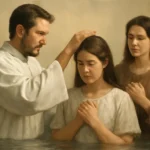
Some traditions also use a profession of faith to distinguish a person’s own faith from the faith expressed on their behalf as a child. In that setting, the profession may be part of confirmation, reception into membership, or a later baptism. Other churches baptize only those who personally profess faith, so the profession and baptism may occur together.
How a profession of faith differs from related Christian statements
Several terms sound similar, but they can describe different occasions. Knowing the distinctions can help you understand what your church is asking for.
Personal profession of faith: Your own spoken or written declaration of Christian belief and commitment.
Confession of faith: A personal statement or an established document that sets out beliefs, often with emphasis on the gospel.
Statement of faith: A more organized list of doctrines accepted by a church, ministry, school, or denomination.
Creed: A traditional, shared formula of Christian beliefs, such as the Apostles’ Creed or Nicene Creed, usually recited by a congregation.
Testimony: The story of how you came to faith, including experiences, questions, struggles, and changes in your life.
Confirmation: A church rite or ceremony that may include affirming baptismal promises and publicly embracing the faith.
These categories may overlap. A church might call a testimony a profession of faith, or it might ask a person to answer a short set of doctrinal questions rather than write a personal statement. The title matters less than the church’s instructions and the honesty of your response.
What a profession of faith usually includes
Most professions address a small group of foundational beliefs. You do not need to use technical language, but your statement should communicate the central ideas clearly.
Belief in God: State that you believe in the one God who created and sustains all things. Some traditions describe God as Father, Son, and Holy Spirit.
Belief about Jesus Christ: Explain that Jesus is the Son of God, that he lived, died, and was raised from the dead, and that he is Lord and Savior.
Understanding of sin and grace: Acknowledge humanity’s need for forgiveness and your dependence on God’s grace rather than personal goodness.
Personal trust: Say that you trust Jesus Christ and desire to follow him. This is the personal center of the profession.
Belief in the Holy Spirit: If appropriate for your tradition, describe the Spirit’s work in giving life, guiding believers, forming the church, and producing spiritual growth.
Connection to the church: Express your intention to worship, learn, serve, receive care, and grow among other Christians.
Hope for the future: You may mention resurrection, eternal life, or the hope of God’s promised renewal, according to your church’s teaching.
A short profession can cover these themes in a paragraph. A longer one can explain how you came to believe and what following Christ means in daily life. Completeness does not require length; the best statement is one that says what you genuinely believe in words you understand.
How to write a personal profession of faith step by step
1. Find out what your church requires
Before drafting anything, ask whether the church has a required format. You may need to answer specific questions, read a prepared statement, write a testimony, or meet with a pastor. Some churches focus on a few basic doctrines, while others want a fuller account of your faith and readiness for membership.
Ask about the expected length, audience, deadline, and vocabulary. Also find out whether the statement will be read during worship, reviewed privately, printed in a program, or discussed in a membership class. These details affect how much background you should include.
2. Identify what you actually believe
Set aside time to think about the beliefs you would affirm even if you had to explain them without memorized phrases. Consider what you believe about God, Jesus, sin, forgiveness, Scripture, the church, prayer, and Christian hope.
You do not have to resolve every theological question before making a profession. Christians continue learning throughout their lives. The purpose is to state your present faith honestly, not to pretend that you have complete knowledge or no remaining questions.
3. Describe your response to Jesus
A profession should include more than general approval of Christianity. Explain, in your own terms, how you respond to Jesus. You might write that you trust him for forgiveness, accept him as Lord, want to follow his teaching, or depend on his grace.
Use language that reflects your actual conviction. If “I accepted Jesus into my heart” is meaningful to you, you may use it, but you do not need to rely on a familiar phrase. Clear wording such as “I trust Jesus Christ as my Savior and want to follow him as Lord” can communicate the same belief directly.
4. Include your story without making it the whole statement
Your personal story gives the profession a human voice. You may mention family influence, a period of questioning, a conversation, a Bible passage, a church community, or a gradual awareness of faith. There is no single dramatic pattern that proves a profession is genuine.
Keep the story connected to your central beliefs. The main question is not merely what happened to you, but what you now believe and how that belief has affected your relationship with God. A concise story is often more effective than a detailed chronology.
5. Explain how faith affects your life
A profession of faith should point toward discipleship. Mention the qualities you want God to develop in you, such as humility, honesty, love, mercy, patience, or courage. You can also describe practical commitments to prayer, worship, learning Scripture, serving others, and participating in the church.
Avoid promising more than you can responsibly promise. Instead of claiming that you will never fail, say that you intend to follow Christ, seek forgiveness when you fall, and continue growing through God’s help and the support of the Christian community.
6. Revise for clarity and sincerity
Read the draft aloud. Remove phrases you would not normally use, unexplained theological terms, and details that distract from your main point. Ask whether someone who does not know you could understand what you believe and whether the statement sounds like your voice.
A pastor, mentor, or trusted Christian can check whether your statement fits the church’s teaching. Their feedback should help you clarify your meaning, not replace your own conviction. The final profession should remain your honest declaration.
A practical outline for a written profession of faith
The following outline works for many church settings, although you should adapt it to your congregation’s requirements. Each section can be one or two sentences.
Opening belief: State that you believe in God and want to live in relationship with him.
Jesus Christ: Describe who Jesus is and what his death and resurrection mean to you.
Grace and personal trust: Acknowledge your need for forgiveness and your dependence on Christ.
Christian growth: Explain your desire to pray, learn, obey, and become more like Christ.
Church community: State your intention to worship and serve with fellow believers.
Closing commitment: Express your continuing trust in God and your desire to follow Jesus throughout your life.
For example, a person might write: “I believe in God, the creator and giver of life. I believe that Jesus Christ is the Son of God, who died for sinners and was raised from the dead. I trust him for forgiveness and salvation, and I want to follow him as Lord. I ask the Holy Spirit to guide my growth, and I commit to worshiping, learning, and serving with the church.”
This sample is only a model, not a required formula. Your church may expect different wording, and your own statement should include the beliefs and experiences that matter to you.
How biblical teaching informs a profession of faith
The Bible presents faith as both trust in God and a life shaped by that trust. In Matthew 16:15–17, Jesus asks his disciples who they believe he is, and Peter identifies him as the Messiah and Son of God. The passage shows that Christian faith includes a conviction about Jesus’ identity.
Romans 10:9–10 describes belief in the heart and confession with the mouth. The point is not that a particular sentence earns salvation. Rather, genuine faith is not hidden behind a purely private opinion; it finds expression in a person’s words and life.
In Acts, people who responded to the message about Jesus were often baptized and joined the community of believers. Acts 2:38–42 connects repentance, baptism, teaching, fellowship, shared life, and prayer. This pattern helps explain why many churches connect a profession of faith with baptism or membership rather than treating it as an isolated speech.
James 2:14–18 emphasizes that faith is demonstrated through action. This does not mean good works purchase God’s acceptance. It means that living faith produces visible effects, including compassion, obedience, and care for others. A profession therefore points toward a continuing way of life, not merely one public moment.
What to expect when you give a profession of faith in church
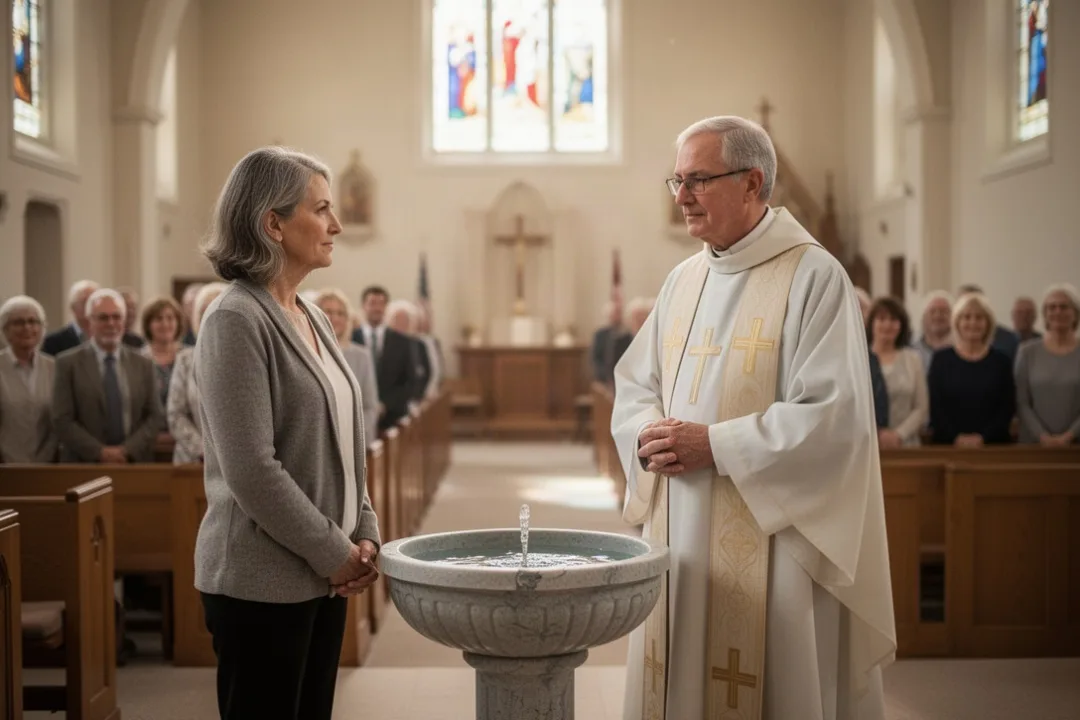
The ceremony varies considerably. You may stand before the congregation, sit with a pastor, answer questions, read a prepared statement, or share a testimony during a baptism service. Some churches invite family members and sponsors to participate; others keep the process more private.
Common questions may include:
Do you believe in God and in Jesus Christ as Savior and Lord?
Do you repent of sin and trust in God’s grace?
Do you intend to follow Christ and continue growing in faith?
Will you participate in the life and mission of this church?
Do you accept the teaching and responsibilities associated with membership here?
Listen carefully to each question rather than answering automatically. If you do not understand a term or are unsure what you are affirming, ask for clarification before the service. A sincere “I need to understand that better” is more responsible than agreeing simply because you feel pressured.
Before the ceremony: Practice reading your statement at a comfortable pace, but do not try to memorize every word if that makes you anxious. Bring a copy if the church permits it, and ask in advance how much time you will have.
What a profession of faith does not mean
A profession of faith does not mean that you understand every Christian doctrine, have overcome every sin, or can prove that you will never doubt. Faith can coexist with questions, grief, temptation, and seasons of spiritual dryness. A profession expresses trust while recognizing the need for continued growth.
It also does not mean that a public statement earns salvation. Christian traditions explain salvation in different ways, but historic Christianity generally teaches that salvation is grounded in God’s grace and received through faith, not purchased by eloquence or ceremony.
Nor is a profession a promise to agree with every opinion held by every member of a congregation. You should understand the church’s essential beliefs and membership commitments, but Christian communities may differ on secondary issues. Ask church leaders which beliefs are considered essential and which allow room for disagreement.
How to handle doubt, past mistakes, or an imperfect story
Many people worry that their story is not dramatic enough. Others fear that past mistakes disqualify them. A profession of faith is not a competition for the most emotional testimony. A quiet, gradual movement toward trust in Christ can be just as sincere as a sudden conversion experience.
You can acknowledge past sin without giving private details that do not belong in a public setting. Say what you have learned, how you understand God’s grace, and how you want to live differently. Avoid turning the statement into either a confession of every failure or a carefully edited claim that you have never struggled.
If you are experiencing serious uncertainty, speak privately with a pastor or mature Christian before making a public profession. Questions do not automatically mean that you lack faith, but you should not feel forced to make a declaration you do not honestly mean. Time for prayer, study, and conversation can lead to a more genuine response.
How different Christian traditions use the phrase
In many Baptist, evangelical, and other Protestant churches, a profession of faith commonly comes before believer’s baptism. The person publicly states faith in Christ and is then baptized as a sign of that faith. Some congregations also use the profession when receiving someone into membership.
In Catholic, Orthodox, Anglican, Lutheran, Methodist, and other traditions, the phrase may be associated with confirmation, reception into the church, renewal of baptismal promises, or an adult’s affirmation of faith. The timing and theology of these practices differ, so a person should follow the guidance of the specific parish or congregation.
Some churches use a historic creed as the profession itself. Others require a personal testimony alongside the creed. A creed expresses the shared faith of the church, while a personal statement shows how you personally affirm and live within that faith.
Ways to make your profession of faith clear and meaningful
Use plain language: Explain theological words if your audience may not know them.
Stay centered on Christ: Let your beliefs about Jesus remain more prominent than a list of personal achievements.
Be specific but discreet: Give enough personal context to sound genuine without exposing private information.
Include both belief and commitment: State what you believe and how you intend to live in response.
Keep the length appropriate: A public statement should respect the service and the attention of the congregation.
Use “I” honestly: The profession should communicate your conviction rather than merely repeat someone else’s words.
Leave room for growth: Recognize that discipleship continues after the ceremony.
Before submitting the final version, check that it answers three basic questions: What do I believe? Why do I trust Christ? How do I intend to live as his follower? If the statement answers those questions naturally, it will usually provide a solid foundation for a public profession.
How a profession of faith continues after the ceremony
The spoken declaration is a beginning, not a finish line. Christian faith is practiced through ordinary patterns: worship, prayer, Scripture, repentance, generosity, service, forgiveness, and participation in the life of the church. These practices do not make a person look faithful for appearances; they provide ways to remain attentive to God and connected to others.
Your profession may be tested by circumstances that were not present when you made it. You may face disappointment, moral failure, conflict, illness, or doubt. Continuing in faith can mean returning to the promises you affirmed, seeking wise counsel, receiving forgiveness, and taking the next faithful step rather than pretending that difficulty does not exist.
A church also has responsibilities after hearing your profession. It should teach, encourage, correct, welcome, and care for you. Membership is a shared relationship, not a one-sided demand. As you grow, your understanding may become deeper and more precise, while the central commitment to follow Christ remains the foundation.
A thoughtful profession of faith is therefore both a public confession and a continuing promise of direction. It tells the church where you stand now and points toward the life of trust, worship, learning, and service that follows.
Frequently asked questions
Is a profession of faith required for baptism?
That depends on the Christian tradition and the local church. Churches that practice believer’s baptism usually ask a person to profess faith before baptism. Churches that baptize infants may ask for a later profession during confirmation or another rite. Ask the pastor or church office what the congregation requires and whether you should prepare written answers, a testimony, or responses to set questions.
Can I make a profession of faith if I still have doubts?
Yes, many Christians continue to have questions while sincerely trusting God and seeking to follow Jesus. A profession does not claim perfect knowledge or constant emotional certainty. It should, however, be honest. Tell a pastor about doubts that affect what you would be affirming, and take time to understand the church’s questions before making a public declaration.
How long should a written profession of faith be?
Follow the requested length first. If no guidance is provided, one to three clear paragraphs is often enough for a service or membership process. Include your central beliefs, personal trust in Christ, and intention to grow within the church. A longer testimony may be appropriate when the congregation specifically asks for your spiritual story.
Is a profession of faith the same as a testimony?
They overlap but are not identical. A testimony mainly tells the story of how you came to faith and how Christianity has affected your life. A profession states what you believe and affirm. A church may request both: a personal story followed by a concise declaration of faith, or a single statement that combines the two.













Leave a Reply