Maybe you have heard a church announce catechesis classes for children, adults, or families and wondered what the word actually means. Perhaps you are preparing for baptism, confirmation, or reception into a church and want to know how catechesis differs from ordinary religious education.
Catechesis is the process of forming people in Christian faith and life. It includes learning what Christians believe, encountering Christ, participating in worship, developing a life of prayer, and practicing love of neighbor. It is not limited to memorizing doctrines or attending a class; it aims to shape the whole person and support lifelong discipleship.
The word is used especially in Catholic, Orthodox, Anglican, and other historic Christian communities, although churches organize catechesis in different ways. It can take place at home, in a congregation, through small groups, in formal courses, during worship, or through service to others.
The English word catechesis comes from a Greek term associated with teaching through spoken instruction. In Christian use, it refers to an intentional process of handing on the faith so that people can understand it, live it, and grow in relationship with God.
Catechesis is closely related to evangelization, but the two words describe different aspects of Christian ministry. Evangelization introduces people to the gospel and invites them to respond to Christ. Catechesis helps people deepen that response by giving them the knowledge, practices, habits, and community support needed for mature faith.
For example, someone may first hear the Christian message through a friend, a service project, or a worship service. Catechesis then helps that person explore questions about Jesus, Scripture, the church, prayer, morality, baptism, and the meaning of Christian commitment. The process can continue for decades because Christian understanding and discipleship continue to develop.
Core idea: Catechesis teaches Christian truth in a way that leads to a lived relationship with God. Information matters, but formation is the goal.
Good catechesis connects several dimensions of faith rather than treating them as separate subjects. A person may study the creed, pray with the Psalms, join Sunday worship, serve a neighbor, and discuss difficult moral questions. Each activity contributes to a more complete Christian life.
Knowledge: learning the story of salvation, the teachings of the church, and the meaning of Christian practices.
Prayer: developing a personal and communal relationship with God.
Worship: participating in the church’s gathered life, sacraments, songs, readings, and prayers.
Character: growing in virtues such as humility, courage, justice, patience, and compassion.
Mission: serving others and sharing the good news through words and actions.
This is why catechesis cannot be measured only by how much a student can recall on a test. Understanding should lead to practice, and practice should gradually shape a person’s choices, relationships, and response to suffering, responsibility, and hope.
How catechesis differs from religious education and Bible study
The terms catechesis, religious education, Sunday school, and Bible study often overlap, but they are not identical. Their exact meanings vary by denomination and congregation, so no single definition applies to every church.
Religious education is a broad phrase for teaching about religion. It may refer to classroom instruction in a church, school, or community setting. Catechesis is more specifically connected with forming people within Christian faith and preparing them to live as members of the church.
Bible study focuses primarily on reading and interpreting biblical texts. It can be an important part of catechesis, but catechesis also addresses worship, doctrine, prayer, ethics, church history, sacraments, and Christian service. A Bible study may examine the Gospel of Mark, while catechesis may help someone understand how the Gospels relate to the creed, the liturgy, and daily discipleship.
Preaching usually proclaims and applies the Christian message to a gathered community. Catechesis tends to offer more sustained formation, with time for explanation, questions, practice, and personal growth. The two support one another: preaching can awaken or renew faith, while catechesis helps people understand and embody what they hear.
Spiritual direction concentrates on helping an individual discern God’s presence and movement in personal life. Catechesis provides shared Christian teaching and practices, although a good catechist also pays attention to the questions and spiritual needs of each person.
A useful way to distinguish these activities is to ask what each one primarily does:
Evangelization invites a person to encounter and respond to the gospel.
Catechesis deepens faith through structured formation and practice.
Bible study explores the meaning and application of Scripture.
Preaching proclaims the gospel and addresses the gathered community.
Spiritual direction supports personal discernment and growth in prayer.
Christian education may teach religious knowledge in a broad academic or congregational sense.
These activities often occur together. A parish preparation program might include Bible reading, doctrinal instruction, prayer, a service project, and participation in worship. That combination is catechetical because it forms both the mind and the life of the participant.
What catechesis teaches and practices
Christian catechesis normally presents the central content of the faith while helping people apply it to real life. The material may be organized differently from one tradition to another, but several subjects appear repeatedly.
Scripture and the story of salvation
Scripture provides the foundation for Christian teaching. Catechesis introduces the broad story of creation, human brokenness, God’s covenant, Israel’s history, the life and ministry of Jesus, his death and resurrection, the coming of the Holy Spirit, and the mission of the church.
Participants learn that the Bible is not simply a collection of disconnected inspirational sayings. It is a library of different books and literary forms that Christians read within the larger story of God’s work. Catechesis also teaches responsible interpretation, including attention to context, genre, historical setting, and the relationship between individual passages and the whole biblical witness.
Doctrine and the Christian confession
Doctrine gives language to what the church believes about God, Jesus Christ, the Holy Spirit, creation, salvation, the church, resurrection, and eternal life. Many communities use a creed or catechism to organize this teaching.
Doctrine is not meant to replace faith or reduce God to a set of formulas. Its purpose is to help believers speak accurately about the mystery they worship and to distinguish Christian teaching from ideas that conflict with it. Catechesis also gives people a framework for asking thoughtful questions when they encounter doubt, disagreement, or cultural pressure.
In Catholic settings, the Catechism of the Catholic Church is a major reference work, though parish programs often use age-appropriate materials rather than asking beginners to read the entire volume. Orthodox, Anglican, Lutheran, Reformed, Methodist, and other traditions use their own confessions, catechisms, prayer books, or teaching resources.
Worship, sacraments, and prayer
Faith is learned not only through explanations but also through repeated participation. Catechesis helps people understand what happens in worship and why those practices matter. It may explain baptism, communion or the Eucharist, confession, anointing, marriage, ordination, the church year, fasting, and forms of personal and communal prayer.
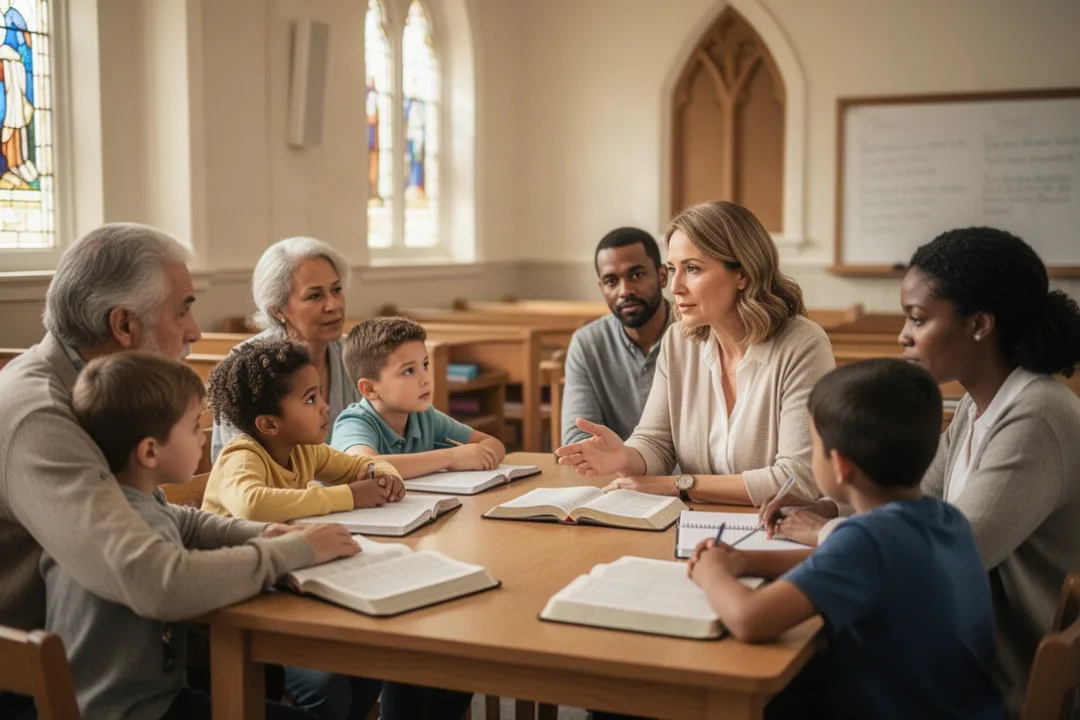
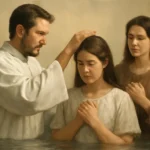
A person preparing for baptism, for instance, may learn the meaning of water, repentance, new life, belonging to the body of Christ, and the promises made by the person or community. Someone preparing for first communion may study the church’s understanding of Christ’s presence, thanksgiving, reconciliation, and the responsibilities of sharing in the community’s worship.
Prayer instruction can include the Lord’s Prayer, the Psalms, silent prayer, intercession, thanksgiving, examination of conscience, devotional reading, and prayers particular to a denomination. The aim is not to produce a perfect technique but to help people develop a dependable rhythm of turning toward God.
Christian morality and daily decisions
Moral catechesis applies Christian convictions to how people treat one another and use their freedom. It addresses virtues, conscience, human dignity, justice, forgiveness, sexuality, family life, work, money, care for creation, civic responsibility, and concern for vulnerable people.
Strong moral formation avoids two extremes. It does not treat Christianity as a list of rules detached from love, and it does not reduce morality to personal feelings without reference to truth or community wisdom. Instead, it helps people understand why Christian communities teach what they teach and how to make responsible decisions in complicated situations.
Because moral questions can involve trauma, disagreement, and different life circumstances, catechesis should combine clarity with pastoral sensitivity. It should make room for honest questions and direct people toward wise conversation with trusted clergy, teachers, counselors, or spiritual leaders when needed.
Mission, service, and witness
Catechesis prepares Christians not only to receive instruction but also to participate in the church’s mission. Service to the poor, care for the sick, hospitality toward strangers, peacemaking, and advocacy for justice can all become forms of Christian witness.
Participants should learn that service is not merely an optional activity added after the “real” teaching. The New Testament connects faith with love of neighbor and practical care. References such as Matthew 25:31–46, James 2:14–17, and Acts 2:42–47 are often used to show how belief, community, worship, and action belong together.
Who receives catechesis and when it happens
Catechesis is for every stage of Christian life, not only for children. A church may offer different programs for different ages and circumstances, but the underlying process is lifelong.
Young children learn basic prayers, Bible stories, worship practices, and ways to recognize God’s love and care.
Older children explore the creed, sacraments, moral choices, Scripture, and the responsibilities of belonging to a church.
Teenagers often need space to ask difficult questions about identity, suffering, science, sexuality, justice, doubt, and the credibility of Christian belief.
Adults who are new to Christianity may study the gospel, the Bible, prayer, worship, doctrine, and the practical meaning of baptism and church membership.
Adults returning to church may revisit beliefs and practices after years away or after a major change in life.
Experienced Christians continue learning through preaching, study, retreats, theological reading, mentoring, and service.
In Catholic communities, preparation for the sacraments often provides a visible structure for catechesis. Children may prepare for first reconciliation, first communion, or confirmation. Adults who are not baptized may participate in the Order of Christian Initiation of Adults, commonly abbreviated OCIA in the United States; terminology and local practice can differ.
Other Christian traditions may use membership classes, confirmation programs, baptismal preparation, discipleship groups, new-believer courses, or catechumenate programs. Some churches rely less on formal courses and place greater emphasis on preaching, small groups, mentoring, and family practices.
The home is also a major setting. Parents and caregivers teach through prayer before meals, conversations about forgiveness, attendance at worship, treatment of neighbors, responses to failure, and the way they handle money and responsibility. Children notice patterns more readily than they absorb isolated lessons, so everyday conduct is part of catechesis.
For families: A short, regular practice often teaches more effectively than an occasional intense discussion. Read a brief Scripture passage, pray together, and connect it with one concrete choice during the week.
What effective catechesis looks like in practice
Effective catechesis is clear, relational, participatory, and connected to life. It presents the church’s faith faithfully while recognizing that people learn in different ways and bring different experiences to the conversation.
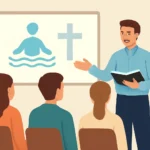
A good session might begin with a real question: Why do Christians pray if God already knows what they need? Why does baptism matter? How can someone forgive after serious harm? What does the resurrection mean when grief feels overwhelming? The teacher then connects the question with Scripture, Christian teaching, prayer, and a practical response.
Healthy catechesis does not avoid difficult subjects, but it does not treat uncertainty as disobedience. Participants need permission to say what they do not understand. A teacher can acknowledge genuine complexity while still explaining what the tradition teaches and where responsible disagreement exists.
Begin with the gospel. Connect every topic with God’s initiative, the life and work of Jesus Christ, and the hope of redemption.
Use Scripture carefully. Read passages in context and explain how they contribute to the wider biblical story.
Teach in an understandable order. Introduce foundational ideas before relying on specialized theological vocabulary.
Invite participation. Use discussion, prayer, art, music, service, reflection, and practice rather than lecture alone.
Connect belief with behavior. Ask how a teaching affects relationships, habits, responsibilities, and decisions.
Make room for questions. Treat sincere questions as opportunities for deeper understanding.
Include the wider church. Let learners encounter worship, community life, service, and the witness of Christians from different generations.
Review and revisit. Important truths become clearer as people encounter them at different ages and during different life experiences.
The teacher’s role is more than delivering information. A catechist serves as a trusted guide and witness. That requires theological preparation, humility, patience, awareness of the learners’ needs, and a commitment to represent the church’s teaching accurately.
Safeguarding also matters wherever children or vulnerable adults participate. Churches should follow appropriate policies for supervision, communication, transportation, background checks, and reporting concerns. Good formation cannot be separated from a safe environment.
Digital resources can support catechesis through recorded lessons, online discussion, Scripture tools, and accessible reading plans. Yet technology should serve relationships rather than replace them. People often need a real community that can pray with them, answer follow-up questions, notice discouragement, and model Christian life over time.
How to choose or begin a catechesis program
If you are looking for catechesis, start by identifying your purpose. You may want preparation for baptism or confirmation, a stronger grasp of Christian beliefs, help returning to church, guidance for raising children, or a structured way to grow in discipleship. Knowing your goal makes it easier to find the right setting.
Ask a local church leader what the program includes and who it is designed for. A worthwhile program should explain its tradition honestly rather than presenting vague spirituality as a substitute for Christian teaching.
What beliefs and practices does the program teach?
Is Scripture used in context and connected with the church’s wider teaching?
Does the program include prayer, worship, and opportunities for service?
Can participants ask questions and discuss disagreement respectfully?
What preparation and experience do the catechists have?
How are children and vulnerable adults protected?
What commitment is expected regarding attendance, worship, or sacramental preparation?
How does the program support people after the formal sessions end?
If no formal class is available, you can begin with a simple pattern: read one Gospel, attend worship regularly, learn a basic statement of faith from your tradition, establish a brief prayer practice, and speak with a mature Christian or pastor. Consistency matters more than intensity.
Keep a list of questions as they arise. Some may be answered through reading, while others are best discussed with a pastor, priest, deacon, catechist, or small group. Christian formation becomes stronger when learning is connected to a community rather than pursued as a private collection of facts.
Catechesis also continues when a formal course ends. The next steps might include serving with a ministry team, joining a study group, meeting with a mentor, observing a season of prayer, or learning how the church responds to a particular need in the community. Faith grows through repeated practice as knowledge becomes worship, character, service, and hope.
Frequently asked questions
Is catechesis only for Catholics?
No. Catholics use the term frequently, but catechesis also appears in Orthodox, Anglican, Lutheran, Reformed, Methodist, and other Christian traditions. Churches may use different names, such as discipleship, confirmation preparation, membership classes, or baptismal instruction. The structure and content vary, but the purpose is similar: helping people understand and live the Christian faith within a worshiping community.
What is a catechist?
A catechist is someone who helps others learn and practice Christian faith. Catechists may be clergy, religious professionals, parents, teachers, or trained volunteers. Their work can include explaining doctrine, leading discussion, teaching prayer, preparing people for sacraments, and connecting lessons with service. Effective catechists teach accurately while listening carefully and modeling the Christian life.
How long does catechesis take?
There is no universal length. A sacramental preparation course may last several weeks or months, while an adult initiation process may follow a longer rhythm shaped by the participant and local church. Since catechesis is lifelong, a formal program is only one stage. Ongoing worship, prayer, study, service, and community participation continue the formation process.
Can catechesis help someone who has doubts?
Yes. Honest questions and doubts can become part of mature faith when they are addressed in a supportive setting. Catechesis can provide biblical context, historical perspective, theological explanations, and conversation with people who have faced similar questions. It should not pressure someone to pretend certainty. A patient teacher can distinguish between unresolved questions, misinformation, and serious reasons for reconsidering a belief.












Leave a Reply