The parables of Jesus are short stories that use familiar people, places, and events to reveal truths about God, the kingdom of heaven, human choices, and faithful living. Among the best known are the Good Samaritan, the Prodigal Son, the Sower, the Lost Sheep, and the Talents.
Jesus used these stories to make spiritual realities concrete, but he did not always make them simple. A parable can encourage, challenge, expose hypocrisy, or invite a listener to make a decision. Its meaning becomes clearer when you consider the original audience, the biblical setting, and the main point rather than treating every detail as a separate symbol.
A parable is a comparison presented through a story. The word is associated with placing one thing beside another, so that an ordinary scene helps illuminate a deeper truth. Jesus drew on situations his listeners recognized: farming, fishing, household work, debt, family conflict, travel, weddings, business, and public worship.
These stories were not merely decorative illustrations. They demanded attention and often placed the listener inside a moral situation. You might have to decide whether a landowner acted fairly, whether a traveler deserves help, or whether a son should be welcomed home. By the time the story ends, the listener may realize that the real question concerns his or her own response to God.
The parables also worked differently for different audiences. A person seeking God could hear an invitation to repentance and trust, while a proud religious leader might hear a warning about self-righteousness. Jesus sometimes explained a parable to his disciples, but many stories were left open enough to provoke reflection.
Central idea: A parable usually has a controlling message. Begin by asking what response Jesus wanted from the original hearers before assigning symbolic meaning to every character or object.
Where the parables appear in the Gospels
Most of Jesus’ parables are recorded in Matthew, Mark, and Luke, commonly called the Synoptic Gospels. John contains vivid images and extended comparisons, such as the shepherd and the sheep, but it does not present parables in the same concentrated way as the other three Gospels.
Matthew frequently connects parables with the kingdom of heaven. The Parable of the Sower, the Mustard Seed, the Weeds, the Hidden Treasure, and the Pearl describe different aspects of how God’s reign is received, grows, and brings judgment. Matthew also includes several stories about readiness, accountability, and the final separation of good and evil.
Mark contains fewer parables, but it highlights Jesus’ teaching about hearing and responding. Mark 4 places the Sower beside other kingdom parables and emphasizes that attentive listeners receive greater understanding. The short story of the growing seed in Mark 4 presents growth as something God brings about beyond the farmer’s control.
Luke preserves many parables that are not found in the other Gospels. The Good Samaritan, the Lost Coin, the Prodigal Son, the Rich Fool, the Rich Man and Lazarus, and the Pharisee and the Tax Collector all appear in Luke. These stories repeatedly address mercy, wealth, prayer, humility, repentance, and concern for people who are overlooked.
Some teachings are repeated in more than one Gospel, but the surrounding details may differ because each evangelist arranged material for a particular purpose. Read the complete passage rather than combining every version into one account. The location, question, audience, and conclusion often guide the interpretation.
Parables about the kingdom of God
The kingdom of God is one of the central themes in Jesus’ teaching. It refers to God’s active rule and saving authority, not simply to a geographic territory. The parables show that this kingdom can appear quietly, demand total commitment, expose resistance, and bring a final separation between faithful and unfaithful responses.
The Sower and the different responses to God’s word
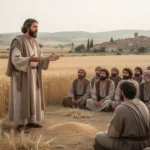
In the Parable of the Sower, a farmer scatters seed across several kinds of ground. Some seed falls on a path, some on rocky ground, some among thorns, and some on good soil. Jesus explains the story in Matthew 13, Mark 4, and Luke 8 as a picture of how people respond to the message of God’s kingdom.
The seed represents the message, while the soils represent contrasting conditions of hearing. Some people do not understand; some receive the message quickly but collapse under pressure; some are crowded by anxiety, wealth, and desire; and some respond with perseverance and produce a fruitful life. The story directs attention less toward agricultural technique than toward the condition of the listener.
Its practical question is direct: What kind of hearer am I becoming? Hearing in the biblical sense involves more than exposure to teaching. It includes understanding, endurance, and a response that becomes visible in conduct.
The Mustard Seed and the quiet growth of the kingdom
The Mustard Seed appears in Matthew 13, Mark 4, and Luke 13. Jesus compares the kingdom to a very small seed that develops into a large plant. The point is not a scientific measurement of the smallest possible seed; it is the contrast between an unimpressive beginning and a surprisingly substantial result.
This parable encourages people who see little evidence of change. God’s work may begin through a small act of faithfulness, a modest community, or a message that appears insignificant. The kingdom’s growth may not follow human expectations, yet it is not thereby absent.
Matthew 13 includes two brief stories about a man who finds treasure in a field and a merchant who discovers a pearl of exceptional value. Each responds by selling what he has to obtain the greater prize. The stories emphasize the kingdom’s surpassing worth and the decisive response it deserves.
These parables do not teach that God’s grace can be purchased. They present wholehearted commitment through the images of recognition, joy, and sacrifice. Once the treasure’s value is understood, giving up lesser possessions no longer appears irrational. The kingdom reorders a person’s priorities.
The Wheat and the Weeds and the need for patient judgment
In Matthew 13, an enemy sows weeds among a farmer’s wheat. The workers want to remove the weeds immediately, but the owner tells them to wait until harvest so that the wheat is not damaged. Jesus connects the harvest with the future judgment and the final distinction between those who belong to God and those who reject his rule.
The story warns against assuming that human beings can perform final judgment with perfect knowledge. It does not deny the need to recognize evil or practice discipline. Instead, it places ultimate judgment in God’s hands and calls for patience, humility, and faithfulness while the present age continues.
Parables about mercy, forgiveness, and neighborly love
The Good Samaritan challenges narrow definitions of neighbor
Luke 10 presents the Good Samaritan after a legal expert asks Jesus how to inherit eternal life and then seeks to define the limits of his responsibility. Jesus tells of a wounded traveler ignored by a priest and a Levite but helped by a Samaritan, a person many Jewish listeners would have viewed through the lens of religious and social hostility.
The Samaritan provides practical care, transports the injured man, pays for lodging, and promises further support. Jesus shifts the question from “Who qualifies as my neighbor?” to “How can I act as a neighbor?” The story makes compassion concrete: notice suffering, move toward it, accept a cost, and provide useful help.
Its challenge extends beyond private kindness. The parable confronts prejudice and warns against using religious status as a substitute for mercy. A correct belief about love must become deliberate action toward a vulnerable person.
The Lost Sheep shows God’s concern for the individual
Matthew 18 and Luke 15 contain versions of the Lost Sheep. In Luke, a shepherd leaves ninety-nine sheep to search for one that is lost, then celebrates when it is found. The setting emphasizes joy over restoration and God’s concern for people who have wandered or been pushed to the margins.
Matthew places the story in a teaching about humility and care within the community. The lost individual must not be treated as disposable. Together, the passages show that spiritual communities should not measure people only by their usefulness, maturity, or current reliability.
The Lost Coin and the joy of recovery
In Luke 15, a woman searches carefully for one lost coin. After finding it, she calls neighbors to celebrate. The monetary value is modest, but the search is persistent and the recovery matters.
The story prepares for the Prodigal Son and reinforces the theme that heaven rejoices when a sinner turns back to God. Its domestic setting also gives a woman the central role in portraying divine joy. The parable shows that repentance is not received with indifference; restoration is cause for celebration.
The Prodigal Son reveals mercy and resistance to grace
The Prodigal Son, or the Parable of the Two Sons, appears in Luke 15. The younger son demands his inheritance, leaves home, wastes his resources, and returns expecting to be treated as a hired worker. His father sees him, runs to meet him, restores him publicly, and holds a celebration.
The older son refuses to enter the celebration. He has remained at home but resents the father’s generosity toward his brother. The story therefore addresses both obvious rebellion and hidden self-righteousness. The younger son must receive mercy, while the older son must learn to share the father’s joy.
The father’s welcome does not make the younger son’s actions harmless. It shows that genuine repentance can be met with generous restoration. The unresolved conversation with the older son invites religious insiders to examine whether obedience has made them compassionate or merely resentful.
Parables about prayer, humility, and dependence on God
The Persistent Widow encourages determined prayer
Luke 18 tells of a widow who repeatedly appeals to an unjust judge for protection. The judge eventually grants her request, not because he loves justice, but because he wants the persistent appeals to stop. Jesus uses the contrast to encourage continued prayer and trust in God’s willingness to hear his people.
The parable is not saying that God resembles the unjust judge. Its force comes from the difference between them. If even an unjust official eventually responds, God’s people can pray with confidence. The story also reflects the vulnerability of a widow in the ancient world and presents her persistence as a model of courage rather than helplessness.
The Pharisee and the Tax Collector contrasts pride with repentance
In Luke 18, two men pray in the temple. The Pharisee lists his religious achievements and compares himself favorably with others. The tax collector stands at a distance, acknowledges his sin, and asks for mercy. Jesus says that the humble man, rather than the self-congratulating man, goes home justified.
The parable does not condemn disciplined religious practice by itself. Fasting, giving, and prayer can be good. The problem is using them to construct superiority. The tax collector’s prayer reflects honest dependence on God rather than a claim to spiritual status.
Humility here is not self-hatred. It is truthful self-understanding: recognizing both moral failure and the need for mercy. The story warns that comparison can make religious behavior serve pride instead of love.
Parables about wealth, stewardship, and responsibility
The Rich Fool warns against storing wealth without being rich toward God
In Luke 12, a wealthy man has an abundant harvest and decides to build larger barns. He plans to relax and enjoy his possessions, but God tells him that his life will end that very night. Jesus concludes by contrasting this man with someone who is rich toward God.
The issue is not simply owning property or planning for the future. The man’s inner speech reveals isolation, self-sufficiency, and the assumption that material abundance can secure his life. He makes no mention of generosity, gratitude, community, or accountability.
The parable asks what your possessions are doing to your imagination. Wealth can provide legitimate security and enable generous service, but it cannot guarantee tomorrow. Wise stewardship treats resources as entrusted gifts rather than as the foundation of identity.
The Rich Man and Lazarus exposes indifference to suffering
Luke 16 describes a rich man who lives in luxury while a poor, sick man named Lazarus lies outside his gate. After death, their situations are reversed. The rich man asks for relief and warning for his family, but the story states that they already have Moses and the prophets to guide them.
The parable does not present poverty as a magical guarantee of virtue, nor does it claim that every wealthy person is condemned merely for having wealth. It focuses on the rich man’s failure to respond to suffering that was directly in front of him. His gate symbolizes proximity without compassion.
The closing appeal to Scripture emphasizes that people who refuse to listen to God’s existing revelation will not necessarily be persuaded by extraordinary signs. The story presses for action now, while a neighbor’s need remains visible.
The Talents calls for faithful use of entrusted gifts
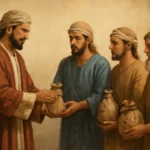
Matthew 25 tells of a master who entrusts different amounts of money to three servants before leaving on a journey. Two servants put the resources to work, while the third hides his portion because he fears the master. On the master’s return, each servant is evaluated.
The parable is commonly applied to abilities, opportunities, money, time, and responsibility. Its central concern is not equal results. The servants receive different amounts, but the first two are commended for faithful action. The third allows fear to produce passivity and then blames his inaction on his view of the master.
Luke 19 contains a related but distinct story, often called the Minas, in which servants receive equal amounts and are assessed according to their use of them. The differences between the passages matter. Both encourage accountable faithfulness, but they should not be treated as identical accounts.
Parables about readiness, accountability, and judgment
The Ten Virgins emphasizes readiness that cannot be borrowed
Matthew 25 compares the kingdom of heaven to ten bridesmaids waiting for a bridegroom. Five bring extra oil and remain ready when the bridegroom is delayed; five do not. When the arrival is announced, the unprepared bridesmaids discover that others cannot supply what they lack, and they miss the celebration.
The central warning is about delayed expectation. Readiness is not a last-minute performance or a quality that can be transferred from one person to another. The story calls for sustained faithfulness when the promised fulfillment seems slow.
The Sheep and the Goats connects judgment with treatment of the vulnerable
Matthew 25 describes a future separation between sheep and goats. The king identifies himself with hungry, thirsty, displaced, poorly clothed, sick, and imprisoned people. Those who served such people are commended, while those who ignored them are judged.
The passage does not reduce Christian faith to charitable activity disconnected from God. It shows that allegiance to the king becomes visible in how people treat those who seem powerless or unimportant. Compassion is not an optional ornament added to discipleship; it reveals whether a person has understood the king’s character.
How to interpret a parable responsibly
Parables can be misread when readers treat them like codebooks in which every detail has a hidden meaning. Some parables include explanations that identify several elements, but others make one principal comparison and leave supporting details in service of the story.
Use the surrounding passage as your first guide. Ask who is present, what question or conflict prompted the story, and what Jesus says before or after it. Luke often places a parable within a conversation about money, religious status, or table fellowship, while Matthew frequently connects one with kingdom teaching and future judgment.
Notice the surprise in the story. The unexpected helper in the Good Samaritan, the forgiving father in Luke 15, the last-minute workers in Matthew 20, and the praised tax collector all disrupt normal assumptions. That disruption often carries the main theological force.
Read the whole passage. Include the question, setting, explanation, and response of the hearers.
Identify the central contrast. Look for differences such as mercy and pride, hearing and resisting, readiness and carelessness, or generosity and hoarding.
Consider the original audience. Ask what the story would have sounded like to farmers, debtors, religious leaders, laborers, or people living under Roman rule.
State the main point in one sentence. If your interpretation requires a long list of symbols, it may be moving beyond the passage.
Connect the story with Jesus’ wider teaching. Compare its themes with his teaching about love, repentance, faith, prayer, money, and the kingdom.
Apply the principle carefully. Ask what response the parable calls for today without claiming that every ancient custom should be copied literally.
Common mistakes when reading the parables of Jesus
Good interpretation requires both attention and restraint. Several mistakes can make a familiar story say something Jesus did not intend.
Making every detail symbolic: A road, number, garment, or coin may support the scene without representing a separate doctrine.
Ignoring the audience: The same story can sound different when spoken to disciples, critics, crowds, or people concerned about wealth.
Separating the story from Jesus: A parable is not a free-floating moral tale. It belongs to Jesus’ proclamation of God’s kingdom and call to discipleship.
Reducing the message to kindness: Mercy matters, but many parables also address repentance, judgment, faith, worship, and the character of God.
Using one parable to cancel another passage: Interpret difficult sayings alongside the broader witness of Scripture rather than forcing an artificial contradiction.
Turning application into self-improvement alone: The stories do call for action, but they also reveal divine grace, human sin, and the need for God’s mercy.
Assuming familiarity equals understanding: A story you have heard many times may still challenge you when read in its complete setting.
Reading tip: After finding the main point, write one concrete response that fits the parable. For example, the Good Samaritan may lead you to offer practical help, while the Rich Fool may lead you to reconsider how your financial plans serve other people.
What the parables reveal about God and human beings
Taken together, the parables present God as patient, generous, searching, forgiving, just, and attentive to the overlooked. The shepherd searches, the woman looks carefully, and the father runs toward the returning son. These images communicate a God who takes initiative in seeking the lost.
They also show that divine generosity may offend human ideas of fairness. Workers who arrive late receive the same daily wage in Matthew 20. A repentant son receives a celebration. A Samaritan becomes the example of neighborly love. Such stories do not deny justice; they expose the resentment that can arise when grace reaches someone we believe deserves less than we do.
At the same time, the parables contain serious warnings. Seeds can be choked, invitations can be refused, lamps can be unprepared, wealth can harden the heart, and religious confidence can conceal pride. Jesus’ mercy is not sentimental approval of every choice. He calls people to repentance, endurance, generosity, vigilance, and trust.
The stories also dignify ordinary faithfulness. A servant can use a modest responsibility well. A neighbor can help one injured stranger. A listener can receive the word and bear fruit patiently. The kingdom may begin quietly, but small acts of obedience are not insignificant in God’s sight.
Ways to study the parables in daily life
A useful study does not end with identifying the characters. Let the story question your habits, relationships, and assumptions. Consider which person you instinctively admire, which person irritates you, and which part of the story you would prefer to avoid.
You can study one parable by reading it in several translations, comparing parallel Gospel accounts where they exist, and writing down repeated words or contrasts. A Bible dictionary or commentary can help explain farming, weddings, wages, debt, and social customs, but background information should serve the passage rather than overpower it.
For personal reflection, ask questions such as these:
What does this parable show about God’s character?
What kind of response does Jesus commend or criticize?
Where does the story expose fear, pride, greed, resentment, or indifference?
Who is vulnerable, excluded, or ignored?
What would faithful action look like in my family, church, workplace, or community?
What change would demonstrate that I have truly heard the message?
Group study can be especially helpful when participants explain their first impressions before consulting a formal interpretation. Ask the group to distinguish between what the text clearly says and what each person is imagining. That practice encourages humility and keeps application connected to Scripture.
The parables of Jesus remain powerful because they join simple scenes with lasting questions. They ask whether you will hear and respond, whether you will receive mercy and extend it, whether your possessions control you, whether you are ready for God’s judgment, and whether your faith produces practical love. Their stories are brief, but their call to faithful living reaches into every part of life.
Frequently asked questions
How many parables did Jesus tell?
The exact number depends on how a parable is defined. Some lists count roughly 30 to 40 major parables, while broader lists include shorter comparisons and repeated accounts. The Gospels do not provide an official total. Differences arise because some teachings are extended stories, while others are brief images or analogies.
Why did Jesus teach with parables?
Jesus used parables to make spiritual truth memorable through everyday situations. They revealed the nature of God’s kingdom to receptive listeners while confronting people who resisted his message. Their indirect form also encouraged listeners to examine themselves rather than merely receiving an abstract statement.
Which Gospel contains the most parables?
Luke contains the largest collection of distinctive parables, including the Good Samaritan, the Prodigal Son, the Rich Fool, and the Pharisee and the Tax Collector. Matthew also includes many kingdom and judgment parables. Mark has fewer, while John uses vivid images but does not present parables in the same concentrated form.
Are the parables literal historical events?
The Gospels generally present parables as teaching stories rather than reports that every event happened exactly as narrated. Their purpose is to communicate spiritual and moral truth through a constructed situation. That does not make them less truthful; the meaning lies in the point Jesus makes through the story.














Leave a Reply