Matthew commentary: themes, meaning, and practical guidance
Matthew commentary: themes, meaning, and practical guidance
A helpful Matthew commentary should do more than explain individual verses. It should show how the Gospel presents Jesus as the promised Messiah, teaches what life in God’s kingdom looks like, and connects Jesus’ ministry with Israel’s Scriptures. Matthew brings these themes together through genealogy, teaching, miracles, parables, controversy, the cross, and the resurrection.
The Gospel is best read as a carefully arranged account of Jesus’ identity and mission. Its five major teaching sections, repeated references to the kingdom of heaven, and frequent use of Scripture help you see how each episode contributes to the larger message. Matthew calls readers to trust Jesus, practice his teaching, remain faithful under pressure, and make disciples among all nations.
How Matthew’s Gospel is organized and why the structure matters
Matthew is the first Gospel in the New Testament, but its placement does not mean it was necessarily the first Gospel written. It serves as a natural bridge between the Old and New Testaments because it begins with Jesus’ family line and repeatedly explains his life through Israel’s Scriptures. The opening chapters establish that Jesus belongs to the story of Abraham, David, Israel, exile, and restoration.
The Gospel moves from Jesus’ birth to his baptism, temptation, public ministry, teaching, opposition, death, and resurrection. Along the way, Matthew alternates between narrative and substantial blocks of teaching. This arrangement allows readers to see both what Jesus did and how his actions reveal the meaning of his words.
Many readers recognize five major teaching sections, often ending with a similar statement about Jesus finishing his words. These sections include the Sermon on the Mount, instructions to the twelve apostles, parables of the kingdom, teaching about life among disciples, and teaching about the future and final judgment. The pattern may remind readers of the five books of Moses, though Matthew does not explicitly state that the arrangement is meant as a direct parallel.
Matthew 1–4: Jesus’ origins, baptism, temptation, and the beginning of his ministry.
Matthew 5–7: the Sermon on the Mount and the character of kingdom life.
Matthew 8–10: miracles, authority, mission, and the cost of following Jesus.
Matthew 11–13: growing opposition and parables explaining the kingdom.
Matthew 14–20: discipleship, humility, forgiveness, and the journey toward Jerusalem.
Matthew 21–28: conflict in Jerusalem, crucifixion, resurrection, and the commission to make disciples.
This structure prevents a common mistake: treating Matthew as a collection of unrelated sayings. A warning about hypocrisy, a healing, a parable, and an argument with religious leaders each has a place in the Gospel’s developing presentation of Jesus and his kingdom.
Jesus as Israel’s Messiah and the fulfillment of Scripture
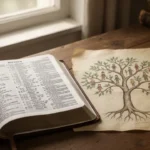
Matthew identifies Jesus as the Messiah, the descendant promised through David. The genealogy in Matthew 1 traces Jesus’ line through Abraham and David and then through the royal history of Judah. It also includes women and people associated with complicated family stories, showing that God’s purposes move through unexpected circumstances and people from outside Israel as well as within it.
The genealogy is not merely a record of ancestry. It prepares readers to understand Jesus as the one who belongs to Israel’s royal and covenant story. The title Son of David appears repeatedly in Matthew, especially when people ask Jesus for mercy or healing. Their use of the title recognizes that his authority is connected with God’s promises to David’s line.
Matthew frequently says that an event happened so that Scripture might be fulfilled. Fulfillment does not always mean that an earlier passage predicted the event in a simple, one-to-one way. Often Matthew sees Jesus as recapitulating Israel’s story: he passes through experiences that echo the nation’s history while remaining faithful where Israel failed.
For example, Jesus goes down to Egypt and later comes out, echoing Israel’s exodus story. He passes through the waters at his baptism and enters the wilderness, where he is tested. The difference is central: Jesus answers temptation with faithful obedience and refuses to use power for self-serving purposes.
Matthew’s quotations and allusions to Scripture also show that Jesus does not discard Israel’s Scriptures. He brings their purpose to completion. In the Sermon on the Mount, he teaches that he came not to abolish the Law and the Prophets but to fulfill them, meaning that his life and teaching reveal their intended depth and direction.
Reading tip: When Matthew cites the Old Testament, read the cited passage in its wider setting. The Gospel often draws attention not only to one prediction but also to a larger pattern of suffering, faithfulness, judgment, and restoration.
The kingdom of heaven and Jesus’ authority
The phrase kingdom of heaven is one of Matthew’s defining expressions. It refers to God’s active rule, not simply a place people enter after death. Matthew often uses “heaven” in reverence for God’s name, while the related expression “kingdom of God” appears elsewhere in the New Testament.
Jesus announces that the kingdom has drawn near. His healings, exorcisms, forgiveness, teaching, and welcome of outsiders demonstrate what God’s reign is doing in the world. The kingdom is present in Jesus’ ministry, yet its full public manifestation remains future. This tension explains why Matthew speaks both about present obedience and a coming judgment.
Jesus exercises authority in several connected ways. He teaches with unusual authority, forgives sins, commands diseases and demons, interprets the Sabbath, and determines how God’s Law reaches its intended goal. Matthew presents these acts as evidence that Jesus is not merely another prophet or teacher.
The kingdom reverses ordinary assumptions about status. The poor in spirit, the merciful, the peacemakers, the persecuted, children, and servants receive special attention. Greatness is measured by humility and service, not public recognition or control over others.
Jesus’ kingdom also creates a community. Those who follow him learn to pray for God’s reign, forgive others, practice generosity, resist hypocrisy, and seek reconciliation. The church is not presented as a club for morally superior people. It is a community that depends on mercy while being called to live according to the King’s teaching.
What the Sermon on the Mount teaches about faithful living
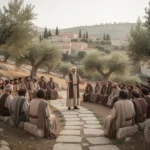
Matthew 5–7 is the Gospel’s longest continuous section of Jesus’ teaching. The Sermon on the Mount begins with blessings and then describes a righteousness that exceeds external rule-keeping. Jesus addresses anger, lust, divorce, oaths, retaliation, love for enemies, generosity, prayer, fasting, possessions, judgment, and obedience.
The opening blessings describe people who appear vulnerable or unsuccessful by ordinary standards. Jesus calls the poor in spirit, mourners, the meek, those longing for righteousness, the merciful, the pure in heart, peacemakers, and persecuted people blessed because God’s kingdom belongs to them and because God will act on their behalf.
Jesus then calls his disciples salt and light. These images describe a visible, useful presence in the world. Disciples are not meant to hide their allegiance, but neither are they to turn good works into a performance designed to attract admiration. Matthew repeatedly holds together public faithfulness and private sincerity.
Jesus’ teaching on the Law reaches beneath outward behavior to the heart. Anger receives attention alongside murder; lust is addressed alongside adultery; hidden motives matter alongside visible actions. This does not make every inner thought identical to every outward act. It does show that kingdom righteousness concerns the desires and decisions from which actions grow.
The command to love enemies is especially demanding. Jesus directs his followers to pray for those who persecute them and to refuse the limited definition of love that applies only to friends. This teaching reflects the character of God, who gives ordinary blessings broadly rather than reserving them only for the deserving.
The Lord’s Prayer in Matthew 6 centers on God’s name, kingdom, and will before turning to daily needs, forgiveness, and protection from temptation. It gives a pattern for prayer rather than a formula to repeat thoughtlessly. The prayer assumes dependence, moral responsibility, and confidence in God’s care.
Matthew 7 warns against hypocritical judgment while still requiring moral discernment. The image of removing the plank from your own eye before helping with another’s speck does not forbid all correction. It requires self-examination and humility before correction. The Sermon ends by stressing that hearing Jesus’ words is not enough; wisdom is shown through putting them into practice.
Jesus’ miracles and what they reveal about compassion
Matthew’s miracle stories are not included merely to display supernatural power. They reveal Jesus’ authority, compassion, and kingdom mission. He heals bodily illness, restores social belonging, frees people from spiritual oppression, stills danger, and even raises the dead. These acts point beyond individual relief to the restoration God promises.
Jesus often responds to suffering with compassion. His concern is not abstract. He touches people considered unclean, receives those who approach him in faith, and notices crowds who are distressed and helpless. Matthew’s use of healing stories shows that kingdom authority is directed toward life and restoration rather than personal prestige.
Several miracle accounts also challenge assumptions about who can receive mercy. A Roman centurion displays remarkable trust; a Gentile woman persists in seeking help; tax collectors and other socially disfavored people are welcomed. Matthew does not erase Israel’s place in the story, but he shows that faith and mercy cannot be reduced to ethnic identity or religious reputation.
The calming of the storm and the walking-on-water account highlight the disciples’ partial understanding. They recognize Jesus’ authority but remain fearful and slow to grasp its full meaning. Their confusion makes the Gospel realistic about discipleship: genuine followers may trust Jesus and still need correction, courage, and deeper understanding.
Parables that explain the hidden growth of the kingdom
Matthew 13 gathers several kingdom parables. The parable of the sower describes different responses to the message about the kingdom. The seed is the same, but the soil varies. The point is not to classify other people from a safe distance; it is to ask whether the word is being received deeply enough to produce endurance and fruit.
The weeds among the wheat address the presence of evil within the world while warning against premature attempts to carry out final judgment. The harvest belongs to God’s appointed judgment. This parable does not excuse wrongdoing, but it cautions disciples against assuming that they can perfectly separate the righteous and wicked before the proper time.
The mustard seed and the leaven emphasize growth that begins in an apparently small or hidden way. The kingdom may not look impressive by ordinary standards, yet its final reach exceeds its beginning. These parables encourage faithful patience when God’s work seems less visible than expected.
The hidden treasure and the pearl portray the kingdom as worth more than everything else. They communicate joy and decisive action, not reluctant religious duty. The person who finds something of supreme value reorganizes life around it.
The net cast into the sea returns to the theme of final separation. Matthew joins the promise of kingdom growth with a sober warning about judgment. Grace is generous, but Jesus’ teaching does not treat human choices as insignificant.
Discipleship, community, and the cost of following Jesus
Matthew presents discipleship as a whole-life response. To follow Jesus means learning his teaching, trusting his authority, accepting costly obedience, and participating in his mission. The disciples are often confused and fearful, but Jesus continues to shape them rather than abandoning them after every failure.
When Jesus sends the twelve, he gives them authority and warns them that mission will involve rejection. They are to proclaim the kingdom, care for the needy, and depend on God rather than building security through possessions or status. The mission instructions in Matthew 10 first concern Israel, while the risen Jesus later extends the commission to all nations.
Matthew 16 marks a major turning point. Peter identifies Jesus as the Messiah, but he resists Jesus’ announcement of suffering. The Gospel therefore distinguishes between confessing the correct title and understanding the kind of Messiah Jesus is. Jesus’ path leads through rejection, death, and resurrection, not political domination or public acclaim.
Taking up the cross means accepting the cost of loyalty to Jesus. It does not mean seeking pain for its own sake or treating every harmful situation as a spiritual obligation to remain in danger. It means refusing to make self-preservation, reputation, or power the highest good when faithfulness requires sacrifice.
Matthew 18 focuses on relationships within the disciple community. Jesus places a child among the disciples to challenge their desire for rank. He teaches responsible care for vulnerable people, direct efforts toward reconciliation, and repeated forgiveness. The parable of the unforgiving servant shows that receiving mercy while refusing to extend it contradicts the kingdom’s moral logic.
Church discipline in Matthew 18 should be read alongside the chapter’s concern for restoration and humility. The process aims to address serious wrongdoing and protect the community, not to create a culture of public humiliation. Any use of this teaching should reject coercion, abuse, and retaliation.
Conflict, hypocrisy, and Jesus’ warnings to religious leaders
As Jesus enters Jerusalem, opposition intensifies. Matthew describes disputes over authority, taxes, resurrection, the greatest commandment, the identity of the Messiah, and the meaning of the temple. These arguments are not random debates. They reveal competing understandings of faithfulness, power, purity, and God’s purposes.
Jesus strongly criticizes hypocrisy, especially when leaders impose burdens on others while avoiding the demands themselves. His warnings in Matthew 23 concern performative religion, status-seeking, exploitation, and neglect of justice, mercy, and faithfulness. The target is not sincere religious practice but religious authority separated from obedience and compassion.
These passages should never be used to attack Jewish people as a whole. Jesus, his disciples, the Scriptures he cites, and the earliest Christian movement are rooted in Judaism. Matthew’s conflict language belongs to an internal Jewish dispute in the first-century setting, and careless application has contributed to anti-Jewish interpretations that the Gospel itself does not require.
Jesus’ cleansing of the temple expresses judgment on a religious system that has failed to embody prayer, justice, and welcome. His authority over the temple, together with the parables of rejection, points toward a decisive transition. Matthew portrays Jerusalem’s leadership as accountable to God, not as possessing unquestionable authority simply because it occupies a sacred role.
The cross and resurrection in Matthew’s theology
Matthew explains Jesus’ death through several themes. Jesus suffers as the righteous servant, gives his life for others, establishes covenant significance through his blood, and fulfills Scripture. The Gospel does not reduce the cross to one image. It presents suffering, sacrifice, forgiveness, judgment, and victory together.
The Last Supper connects Jesus’ death with a new covenant and the forgiveness of sins. At Gethsemane, Jesus faces anguish yet submits himself to the Father’s will. His prayer shows that obedience is not emotional numbness. Faithfulness can include honest distress while still refusing to abandon God’s purpose.
At the crucifixion, Jesus is mocked as a king, but Matthew’s irony is deliberate: the title used to ridicule him points toward the truth of his identity. The darkness, the torn temple curtain, the earthquake, and the response of the Roman centurion all signal that Jesus’ death has cosmic and spiritual significance.
Matthew’s resurrection account emphasizes both fear and joy. The women discover the empty tomb and receive the announcement that Jesus has been raised. The risen Jesus meets the disciples in Galilee and gives them a universal mission. His authority extends over heaven and earth, and his presence accompanies the community as it teaches people to obey everything he commanded.
Central message: Matthew does not present the resurrection as a private consolation detached from discipleship. The risen Jesus sends his followers to form a worshiping, teaching, obedient community among all nations.
Practical tips and common mistakes when reading Matthew
A careful reading benefits from attention to context, genre, audience, and the Gospel’s repeated themes. These practices help you avoid isolating a difficult statement from the larger portrait of Jesus.
Read passages in their narrative setting. Ask what happened before and after the verse. A saying about judgment, prayer, wealth, or mission may answer a question raised by the surrounding story.
Distinguish description from command. Some actions are reported because they reveal Jesus or the disciples; they are not automatically instructions for every Christian community.
Look for repeated words and ideas. Kingdom, righteousness, fulfillment, faith, mercy, authority, hypocrisy, and discipleship appear across the Gospel and interpret one another.
Do not turn parables into coded dictionaries. Start with the main point Jesus or the narrator emphasizes before assigning meaning to every small detail.
Read hard sayings with nearby teaching. Severe warnings about judgment stand alongside instructions about mercy, forgiveness, humility, and restoration.
Do not separate belief from practice. Matthew repeatedly shows that recognizing Jesus’ identity must lead to obedience, compassion, endurance, and service.
Avoid anti-Jewish readings. Matthew’s debates arise from a Jewish setting and should not be converted into hatred of Jewish people or Judaism.
Keep present and future dimensions together. The kingdom is active now, but judgment and the full renewal of creation remain future in Matthew’s teaching.
It also helps to compare related passages without assuming that every difference is an error. Matthew may arrange material thematically, emphasize a particular audience, or provide details that another Gospel leaves out. Read each Gospel on its own terms before attempting to harmonize every wording or sequence.
Matthew 1–2 establishes Jesus’ Davidic identity, extraordinary birth, and connection to Israel’s story. The visit of the magi, Herod’s hostility, the escape to Egypt, and the family’s move to Nazareth present Jesus as both the promised king and the vulnerable child threatened by political power.
Matthew 3–4 introduces John the Baptist, Jesus’ baptism, temptation, and the beginning of Galilean ministry. The Father’s declaration at baptism identifies Jesus, while the wilderness testing shows the kind of Son he will be: obedient, dependent on God, and unwilling to seize power through compromise.
Matthew 5–7 presents the Sermon on the Mount. Its central concern is life under God’s reign, including inner righteousness, enemy love, sincere devotion, trust in God, wise judgment, and obedient action.
Matthew 8–9 gathers healings and other acts of authority. Jesus restores outsiders, forgives sins, commands nature, and calls a tax collector. The section repeatedly joins compassion with power and raises the question of who can recognize Jesus’ authority.
Matthew 10–12 develops mission and opposition. Jesus sends the twelve, defines the cost of witness, responds to John’s questions, and confronts accusations that his power is evil. The section asks readers to decide how they will respond to Jesus’ works.
Matthew 13–16 explains the kingdom through parables and moves toward Peter’s confession. The disciples begin to see Jesus’ identity, but they still misunderstand the path of suffering that defines his messianic mission.
Matthew 17–20 emphasizes transformation, humility, forgiveness, wealth, service, and the cost of discipleship. Jesus repeatedly corrects the disciples’ desire for rank and directs them toward servant leadership.
Matthew 21–25 centers on Jerusalem, temple conflict, judgment, and readiness. The triumphal entry is followed by confrontations and parables of accountability. The discourse on the Mount of Olives calls disciples to watchfulness and faithful service rather than speculation about dates.
Matthew 26–28 narrates the meal, betrayal, trial, crucifixion, resurrection, and commission. The Gospel ends not with private spiritual experience but with worship, mission, teaching, baptism, obedience, and the continuing presence of Jesus.
Questions Matthew asks every reader
Matthew repeatedly asks whether you recognize Jesus accurately. Is he merely a healer, moral teacher, political hope, or religious symbol? The Gospel’s answer is that he is the Messiah, Son of God, authoritative teacher, suffering servant, risen Lord, and judge.
It also asks what kind of community follows him. A kingdom community is not defined by status, wealth, impressive language, or public religious display. It is marked by mercy, truth, humility, reconciliation, endurance, and practical obedience.
Finally, Matthew asks how you respond when faithfulness is costly or God’s work appears hidden. The disciples’ failures show that understanding develops over time, but the Gospel does not treat confusion as a permanent excuse. The risen Jesus sends imperfect followers to teach, baptize, and live out his commands under his promised authority and presence.
Frequently asked questions
Who wrote the Gospel of Matthew?
The Gospel has traditionally been associated with Matthew, the tax collector who became one of Jesus’ disciples. The text itself does not name its author directly. Many scholars discuss its sources, composition, and community setting, while Christian tradition has continued to identify it with Matthew. The Gospel’s authority for readers rests chiefly in its presentation of Jesus and its witness to his teaching, death, and resurrection.
What is the main theme of Matthew?
Matthew’s central theme is that Jesus is the promised Messiah who brings God’s kingdom and fulfills Israel’s Scriptures. The Gospel joins that claim to a practical call: disciples must trust Jesus, obey his teaching, practice mercy and humility, endure opposition, and make disciples among all nations. Jesus’ identity and the character of his followers are inseparable throughout the narrative.
Why does Matthew say “kingdom of heaven” instead of “kingdom of God”?
“Kingdom of heaven” is Matthew’s characteristic expression for God’s reign. It does not mean that the kingdom is limited to a place called heaven or that it only begins after death. The phrase refers to God’s active rule, already revealed through Jesus and awaiting its complete fulfillment. Matthew’s wording likely reflects reverence for God’s name and his Jewish audience.
How should Christians understand Matthew 24 and its warnings about the end?
Matthew 24 calls for alertness, endurance, and faithfulness amid deception, suffering, and uncertainty. Jesus warns against false confidence and does not authorize readers to set dates for the end. The following parables emphasize readiness expressed through responsible service, not speculation. The passage should be read with humility, remembering that its purpose is to form faithful disciples rather than satisfy curiosity about a timetable.














Leave a Reply