Second Chronicles: meaning, themes, and reading guide
Second Chronicles: meaning, themes, and reading guide
When you open the Bible to Second Chronicles, you may wonder why it repeats so much material from Samuel and Kings. The answer is that Chronicles tells Israel’s history from a different angle. It focuses on Judah, the temple, worship, and the consequences of seeking or rejecting God. Its purpose is not merely to retell events but to help a later generation understand its identity and hope.
Second Chronicles begins with Solomon’s reign and ends with the Babylonian exile and the Persian king Cyrus allowing the Jewish people to return. Between those points, it follows the kings of Judah, giving special attention to their relationship with the temple and their response to God’s instruction. The book shows that national failure does not cancel God’s larger purposes.
Second Chronicles is the second part of the biblical book called Chronicles. In Jewish tradition, Chronicles was treated as one work, while many Christian Bibles divide it into First Chronicles and Second Chronicles. The two books move from genealogies and David’s preparations for the temple into Solomon’s reign and the history of the kingdom of Judah.
The book has three broad movements:
Solomon’s reign: Chapters 1–9 describe his wisdom, wealth, temple building, dedication of the temple, and later decline.
The kings of Judah: Chapters 10–36 follow Judah after the kingdom divides, with particular attention to worship, reforms, warfare, and prophetic warnings.
Exile and return: The final verses describe Jerusalem’s fall and Cyrus’s decree permitting the exiles to return and rebuild the temple.
Unlike Samuel and Kings, Second Chronicles does not give equal space to the northern kingdom of Israel. Its narrative centers on the Davidic line in Jerusalem, the temple, and the people connected with Judah. The northern kingdom appears mainly when its actions affect Judah or when people from the north return to worship in Jerusalem.
Central idea: Second Chronicles repeatedly connects a king’s response to God with the spiritual and practical condition of the nation. Seeking God brings restoration and strength; persistent rebellion brings warning, defeat, and judgment.
How to read Second Chronicles step by step
A first reading can feel difficult because the book includes long speeches, military accounts, lists of officials, and stories that overlap with other biblical books. A simple reading plan helps you see how each passage contributes to the larger message.
Start with the setting. Remember that the story takes place after David’s reign, after the kingdom divides, and before and during Judah’s exile. The audience is looking back on national loss while considering how to rebuild faithful worship.
Mark the temple passages. Notice when the temple is built, dedicated, neglected, repaired, defiled, or restored. These scenes often reveal the spiritual direction of a king.
Watch for the phrase “seek God.” The book frequently describes a king or people who seek the Lord, abandon him, humble themselves, or refuse correction. These responses explain what happens next.
Compare the king’s actions with his ending. Some kings begin well and later become proud or unfaithful. Others begin badly but humble themselves and receive mercy. Second Chronicles does not treat reputation as a substitute for perseverance.
Pay attention to prophets. Prophets explain why a crisis is happening and what response is required. Their words often turn a political story into a spiritual examination.
End with the exile and Cyrus’s decree. The book closes without describing the full return. That open ending directs attention toward restoration still to come.
As you read, ask three questions: What does this passage reveal about worship? What does it show about leadership? How does it explain judgment or restoration? These questions keep the historical details connected to the book’s main concerns.
Why Solomon receives so much attention
Second Chronicles opens with Solomon asking God for wisdom. God grants him wisdom and also gives him wealth, honor, and security. The emphasis is not simply on Solomon’s intelligence but on his responsibility to govern the people and build the house of worship that David had prepared for.
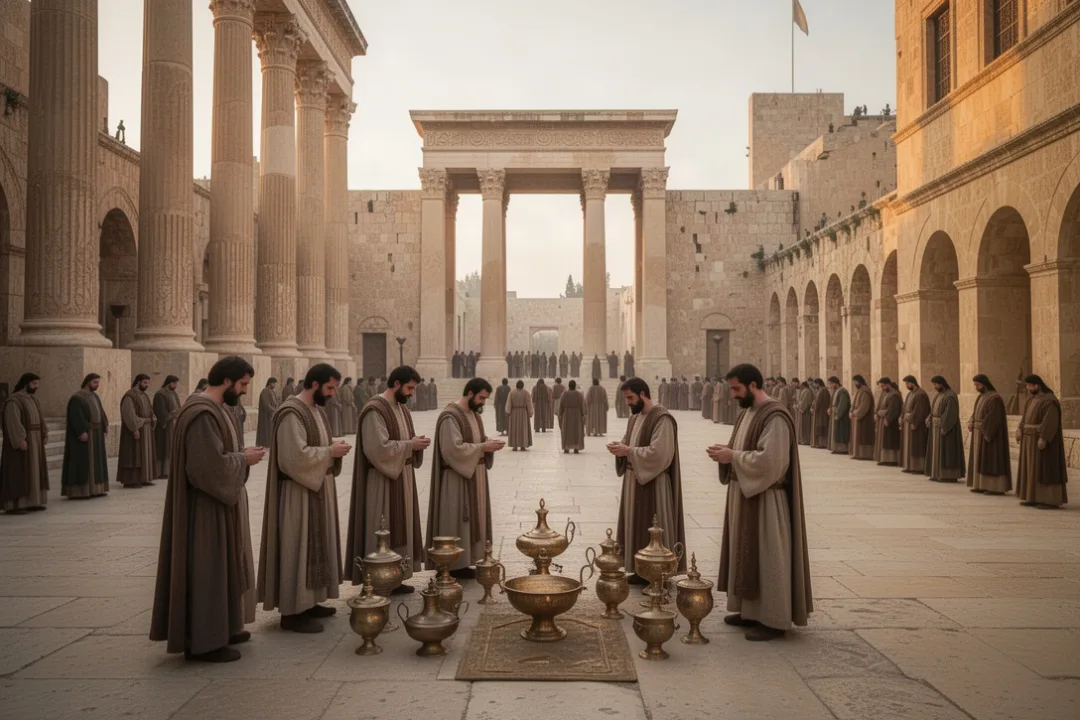
Chapters 2–7 describe the temple project in detail. Solomon organizes workers and materials, constructs the temple, brings in the ark of the covenant, and leads a public dedication. The temple represents God’s presence among his people, but the dedication also makes clear that no building can contain God. Solomon’s prayer recognizes both the temple’s importance and God’s greatness beyond it.
The dedication includes requests for forgiveness, healing, justice, and restoration. Solomon asks God to hear prayers offered toward the temple when people face war, drought, sin, captivity, or other troubles. This makes the temple more than a national monument: it becomes a place associated with confession, mercy, and renewed relationship with God.
God’s response to Solomon emphasizes humility, prayer, seeking God, and turning away from wrongdoing. The familiar reference in Second Chronicles 7:14 is often quoted as a promise to modern nations, but in its original setting it addresses God’s covenant people and the temple’s role in Judah’s life. Its broader principle is that genuine restoration begins with humble repentance, not public confidence alone.
Solomon’s reign ends with descriptions of wealth, international influence, and royal splendor. The narrative gives less attention to the moral failures recorded in Kings, but it still shows a warning: great achievement does not guarantee lasting faithfulness. The temple may be magnificent, yet the people and their leaders must continue to honor God.
What happens when the kingdom divides
After Solomon dies, his son Rehoboam inherits the throne. Rehoboam rejects the advice of older counselors and follows the harsher recommendation of younger advisers. The northern tribes then separate from the house of David, leaving Judah and Benjamin under Rehoboam’s rule.
This division is presented as both a political crisis and a consequence of earlier disobedience. Rehoboam initially prepares to fight the northern tribes, but the prophet Shemaiah tells Judah not to make war against their fellow Israelites. Rehoboam and the people listen, and the immediate conflict is avoided.
Second Chronicles then follows Judah’s kings rather than developing a parallel history of Israel. The narrative asks how the southern kingdom will handle the temple, the priesthood, the law, foreign threats, and the recurring temptation to adopt other forms of worship.
Rehoboam’s early years include a period of faithfulness, followed by abandonment of God’s law and an invasion by Egypt. His response to prophetic correction is significant: he and the leaders humble themselves. The invasion is not erased, but judgment is moderated. This pattern appears repeatedly in Chronicles: humility may not remove every consequence, but it changes the person’s relationship to God in the crisis.
How the major kings illustrate faithfulness and failure
Second Chronicles does not present Judah’s kings as a simple list of good heroes and bad villains. Several rulers show mixed character. A king may remove idols but fail to remove every high place; trust God in one war but rely on a foreign alliance in another; or begin with reform and end in pride. These complexities make the book useful for examining the direction of a life rather than one isolated decision.
Asa: reform followed by misplaced trust
Asa begins his reign by removing foreign altars and encouraging Judah to seek the Lord. When a larger army threatens him, he relies on God and wins a major victory. The prophet Azariah then urges Asa and the people to remain strong and not abandon their relationship with God.
Later, when Israel threatens Judah, Asa makes an alliance with the king of Aram instead of relying on God. The prophet Hanani rebukes him, reminding him that earlier deliverance had demonstrated God’s ability to help. Asa responds angrily and later suffers illness, yet he still does not seek God. His story warns against allowing an earlier season of faith to become a substitute for present trust.
Jehoshaphat: strong reforms with an important weakness
Jehoshaphat strengthens Judah’s defenses and sends officials, Levites, and priests throughout the towns to teach the law. He also appoints judges and instructs them to judge with integrity because they serve under God’s authority. His reign shows that spiritual reform includes education, justice, administration, and public responsibility.
When a coalition threatens Judah, Jehoshaphat calls the nation to seek God. The people gather, pray, and worship before the battle, and the invading armies turn against one another. Yet Jehoshaphat also forms an unhealthy partnership with Ahab of Israel. His reign therefore combines genuine faith with a failure to distinguish wise cooperation from compromising alliance.
Hezekiah: restoring worship after national neglect
Hezekiah becomes king after a period in which the temple has been closed and sacred worship has been neglected. He opens the temple, orders it to be cleansed, and gathers the priests and Levites for renewed service. The Passover celebration that follows invites people from both Judah and the northern tribes.
Not everyone responds perfectly, but Hezekiah prays for those who come with an incomplete understanding of ritual requirements. The account highlights God’s willingness to receive sincere seekers and the value of restoring worship after a long period of disorder.
Hezekiah also faces the Assyrian invasion. The Assyrian commander mocks Judah’s trust in God and tries to frighten Jerusalem into surrender. Hezekiah and the prophet Isaiah seek God, and the threat is removed. The story does not suggest that every crisis ends through a miraculous rescue, but it presents dependence on God as the proper response to intimidation.
Manasseh: severe rebellion followed by humility
Manasseh is remembered as one of Judah’s worst kings. He rebuilds pagan altars, practices forbidden forms of worship, and leads the nation into deeper wrongdoing. The account in Second Chronicles also records a turning point not emphasized in the same way elsewhere: after being taken captive, Manasseh humbles himself and prays to God.
He is restored to Jerusalem and then removes foreign gods and repairs the altar of the Lord. His later actions cannot undo all the damage caused by his earlier reign, but they demonstrate that repentance remains possible even after profound failure. The narrative does not minimize his sin; it shows both its seriousness and the reach of divine mercy.
Josiah: covenant renewal and grief over coming judgment
Josiah begins reforms while still young. He purifies Judah and Jerusalem from idolatrous practices, repairs the temple, and responds with humility when the Book of the Law is found. The prophet Huldah confirms that judgment is coming because the nation has abandoned God, but Josiah’s humble response means he will not see that disaster during his lifetime.
Josiah leads the people in renewing their covenant and celebrates a major Passover. Yet his reign ends when he goes to battle against Egypt without listening to the warning delivered through Pharaoh Neco. His death is a sober reminder that past faithfulness does not make every later choice wise.
What the temple means in Second Chronicles
The temple is the book’s central physical setting, but it carries several connected meanings. It is the place where Israel worships, where priests serve, where sacrifices are offered, and where the people remember God’s covenant. When the temple is neglected, the nation’s spiritual disorder becomes visible.
Temple repair often accompanies broader reform. Hezekiah cleanses and reopens it; Josiah repairs it and discovers the Book of the Law; other kings damage it through idolatry or neglect. These accounts show that outward restoration and inward obedience belong together. A repaired building alone cannot produce faithfulness.
The temple also provides a framework for prayer. People may face disease, drought, war, sin, or exile, but Solomon’s dedication prayer places these situations before God. The temple points beyond architecture to the conviction that God hears repentant people and remains faithful to his promises.
Reading tip: Do not treat temple references as background decoration. Each mention helps answer a question about the community’s spiritual health: Are people worshiping faithfully, ignoring God, or returning after repentance?
How Second Chronicles explains judgment and restoration
The book repeatedly links national events with spiritual choices, but it does not reduce every hardship to a simple formula. Judah experiences war, disease, political pressure, and exile. Prophets interpret these events as warnings or judgments when the people persist in rebellion, while victories often follow humble dependence on God.
One important pattern is the role of response. A warning may be followed by humility, prayer, or reform, and the outcome may change. Rehoboam, Manasseh, and other leaders show that judgment is not presented as an automatic machine. God’s people are called to respond, and repentance can interrupt a path of destruction.
At the same time, the book does not claim that one act of repentance erases every consequence. Josiah’s reforms are sincere, but the nation’s accumulated rebellion still leads toward exile. The tension is deliberate: God forgives and restores individuals, while communities may continue to experience the results of long-established injustice and disobedience.
The final chapter describes Jerusalem’s destruction, the burning of the temple, and the people’s removal to Babylon. The land enjoys its neglected Sabbath rests during the exile. Then Cyrus, king of Persia, announces that the God of heaven has given him authority to rebuild the temple in Jerusalem and invites the exiles to return.
That ending is brief but hopeful. Second Chronicles closes with permission to rebuild rather than a completed restoration. The unfinished ending encourages readers to see the return as the beginning of renewed obedience, not the end of the story.
How Second Chronicles differs from Samuel and Kings
Second Chronicles overlaps with Samuel and Kings, but its selection and arrangement of material serve a distinct purpose. Samuel and Kings cover the histories of both Israel and Judah and place substantial emphasis on the prophetic evaluation of the monarchy. Chronicles concentrates on Judah and the temple-centered community.
Several differences stand out:
Different focus: Chronicles emphasizes Jerusalem, the Davidic line, priests, Levites, temple worship, and the southern kingdom.
Different selection: It includes stories such as Jehoshaphat’s teaching mission, Hezekiah’s Passover, and Manasseh’s humility, while omitting or shortening other episodes found elsewhere.
Different presentation: The narrative often explains how a king’s spiritual choices relate to victory, defeat, reform, or judgment.
Different audience need: Its postexilic readers needed to understand how to rebuild a faithful community around worship and covenant identity.
Reading the parallel accounts together can be helpful, but they should not be treated as competing versions. Each writer emphasizes different details to communicate a different theological message. Second Chronicles invites you to consider how history can teach a community to worship faithfully after loss.
The recurring language of seeking God describes more than private emotion. In Second Chronicles, seeking God includes prayer, obedience, humility, listening to prophets, removing idols, repairing worship, and making decisions in dependence on God. It is an active orientation that shapes both personal behavior and public leadership.
The opposite pattern is also clear. People abandon God when they trust military strength, political alliances, wealth, foreign religious practices, or their own status more than they trust divine instruction. Pride is especially dangerous because it can appear after success. A king who has received blessing may begin to assume that blessing makes him invulnerable.
For a reader today, this theme encourages honest questions:
Do your public values match the beliefs you say you hold?
How do you respond when someone corrects you?
Are you relying on past faithfulness while ignoring a present problem?
What would genuine repentance change in your habits or relationships?
Does your leadership help other people seek what is good and true?
Practical lessons for reading and applying Second Chronicles
Second Chronicles should not be used as a guarantee that faithful people will avoid every hardship or that every national crisis has one easily identifiable cause. Its lessons are more careful. The book calls readers to take worship seriously, examine leadership, receive correction, and trust that God’s purposes continue even after severe failure.
Use these principles when reflecting on a passage:
Separate description from instruction. The book records what kings did, but not every royal action is meant to be copied. Ask whether the narrative approves, criticizes, or simply reports the behavior.
Read reforms in context. Removing idols, teaching the law, and repairing the temple are meaningful because they express renewed loyalty to God, not because external projects automatically produce holiness.
Look for the response to correction. A person’s reaction to a prophet often reveals more than the original mistake. Humility opens the way to restoration; defensiveness deepens the damage.
Consider community effects. Kings’ choices affect priests, families, soldiers, worshipers, and future generations. Faithfulness and failure are never presented as purely private matters.
Let the ending shape your hope. Exile is real and deserved, yet the final decree makes room for return. Judgment is not the last word in the book.
For a short study, read Solomon’s temple dedication in chapters 5–7, Jehoshaphat’s crisis in chapter 20, Hezekiah’s reforms in chapters 29–32, Manasseh’s repentance in chapter 33, and Josiah’s reforms in chapters 34–35. Together, these passages show the book’s central movement from worship, to failure, to correction, to renewed hope.
Where Second Chronicles fits in the Bible
Second Chronicles belongs to the historical books of the Old Testament and continues the story begun in First Chronicles. It follows the establishment of the Davidic monarchy and the temple, then traces Judah’s history until exile. Its final note connects naturally with Ezra, which begins with Cyrus’s decree and the return from captivity.
The book therefore serves as both a historical account and a theological interpretation. It asks why Jerusalem fell, what faithful worship should look like, and whether God’s promises still matter after national catastrophe. Its answer is expressed through the stories of kings, prophets, priests, and ordinary worshipers: faithfulness remains possible, repentance matters, and restoration begins with turning back to God.
Frequently asked questions
Who wrote Second Chronicles?
The book does not name its author. Jewish and Christian tradition has often associated Chronicles with Ezra, but the text itself does not confirm that identification. Modern readers commonly describe the writer as the Chronicler, a postexilic author or compiler who used earlier records and traditions to explain Judah’s history, temple worship, exile, and hope of restoration.
Why is Second Chronicles different from First and Second Kings?
Both works cover many of the same rulers and events, but they serve different emphases. Kings presents the history of both Israel and Judah, while Second Chronicles concentrates on Judah, Jerusalem, the temple, priests, and the Davidic dynasty. Chronicles also includes selected stories that highlight repentance, worship, prophetic correction, and rebuilding after exile.
What is the main message of Second Chronicles?
Its central message is that seeking God, accepting correction, and restoring faithful worship matter deeply. The book also shows that pride and persistent rebellion bring destructive consequences. Even after judgment and exile, however, God’s purposes continue. The final decree allowing the temple to be rebuilt leaves readers with a clear expectation of return and renewal.
Is Second Chronicles the same as 2 Chronicles?
Yes. “Second Chronicles” is the full name, while “2 Chronicles” is the common abbreviated form used in many Bible references. It is the second half of Chronicles and contains 36 chapters. Some translations and traditions use slightly different naming conventions, but they refer to the same biblical book.















Leave a Reply