Saint Oscar Romero: his life, faith, and lasting legacy
Saint Oscar Romero: his life, faith, and lasting legacy
You may know Saint Oscar Romero as the archbishop who spoke for El Salvador’s poor, but you may still wonder what made his witness so powerful. Romero was a Catholic archbishop, pastor, and defender of human dignity who was assassinated while celebrating Mass in 1980. The Catholic Church canonized him in 2018, recognizing him as a martyr who gave his life in fidelity to the Gospel and to people suffering from violence.
His story is not only about a dramatic final moment. It is also about a quiet priest’s formation, a sudden change in public responsibility, and the moral decisions that followed when soldiers, security forces, and armed groups terrorized civilians. Romero’s legacy continues because he connected Christian faith with practical solidarity: listening to victims, challenging injustice, rejecting revenge, and insisting that every human life deserved protection.
Who Saint Oscar Romero was before becoming archbishop
Óscar Arnulfo Romero was born on August 15, 1917, in Ciudad Barrios, El Salvador. He grew up in a modest family and entered the seminary as a young man. His early path reflected a strong attraction to prayer, study, and the priesthood rather than a desire for public prominence.
Romero studied in El Salvador and later in Rome, where he was ordained a priest in 1942. His training included theology and spiritual formation, and he returned to El Salvador during a period when the country was changing socially and politically. For many years, he served as a parish priest, editor, seminary rector, and diocesan administrator.
In 1970, Romero became an auxiliary bishop of San Salvador. He was appointed bishop of Santiago de María in 1974 and then archbishop of San Salvador in 1977. These appointments placed him in increasingly visible positions, but he was not initially known as a confrontational public figure. Many people regarded him as a conventional and deeply spiritual churchman who preferred order, private pastoral work, and careful judgment.
That background matters because Romero’s public ministry did not begin with a lifelong political campaign. His approach developed through direct contact with people affected by poverty, repression, and the growing conflict in El Salvador. He saw that violence was not an abstract issue discussed only by officials. It was entering homes, parishes, workplaces, and rural communities.
A useful distinction: Romero did not become a political party leader. He became a bishop who believed that the Church had a duty to defend people whose lives and rights were being threatened, regardless of their political affiliation.
His family background and pastoral experience also helped shape the way he communicated. Romero could speak to educated churchgoers, rural families, workers, government officials, and military personnel. He used a direct style, but his central concern remained the moral responsibility to protect the vulnerable.
Why El Salvador’s violence changed Romero’s ministry
During the 1970s, El Salvador faced severe inequality, political instability, and repression. Land ownership and economic power were concentrated in the hands of a small portion of the population, while many rural workers lived with limited security and few opportunities. Political opposition was often met with intimidation, fraud, or violence.
At the same time, organized resistance was growing. Leftist groups eventually formed the Farabundo Martí National Liberation Front, or FMLN, while government forces, security agencies, and right-wing death squads carried out or supported violent campaigns. The civil war formally began in 1980, but widespread killings and disappearances had already become a reality before then.
Romero’s appointment as archbishop came in February 1977, shortly before the murder of his friend and fellow priest, Rutilio Grande. Grande had worked with poor rural communities and had supported laypeople who were organizing for better conditions. He was killed in March 1977 along with two people traveling with him.
Grande’s death profoundly affected Romero. He demanded an investigation and temporarily suspended public Masses in the archdiocese, seeking a single large liturgy to express grief and protest. This response marked a significant change in Romero’s public role. He became more willing to confront authorities when the Church’s own priests and the people they served were attacked.
Romero increasingly received reports from families whose relatives had been killed, detained, tortured, or disappeared. Priests and lay workers brought him testimony from villages where official accounts did not match what residents had seen. He did not treat these accounts as mere political claims; he understood them as pastoral evidence of human suffering.
His weekly homilies became an important source of information. Broadcast over radio, they combined Scripture, pastoral teaching, reports of violence, appeals for peace, and criticism of abuses. For many Salvadorans, the broadcasts were one of the few ways to hear names and events that state-controlled media ignored or distorted.
Romero criticized violence by revolutionary groups as well as violence by state forces and paramilitary organizations. However, he gave special attention to abuses committed by those who held official power because government institutions had a particular duty to protect citizens. He repeatedly asked soldiers and security personnel to remember that their first loyalty should not be to an unjust order but to the human person and moral law.
His position brought threats, hostility, and pressure. Some powerful Salvadorans accused him of supporting communism or encouraging disorder. Others on the far left considered him insufficiently radical. Romero’s own words and actions show a different purpose: he sought a nonviolent path rooted in justice, dialogue, and the dignity of ordinary people.
What Saint Oscar Romero taught about faith and human dignity
Romero’s preaching cannot be reduced to political commentary. He understood the Christian message as a call to conversion, mercy, justice, and solidarity. For him, prayer was not an escape from suffering. It should make believers more attentive to people who are hungry, frightened, imprisoned, or bereaved.
He often connected the suffering of Salvadorans with the life and mission of Jesus. Romero did not claim that every political movement was automatically Christian, nor did he identify the Church with a government or ideology. Instead, he asked whether social decisions respected the image of God in every person.
His teaching included several recurring principles:
Human life must be defended: killing, torture, and forced disappearance cannot be justified by political goals.
The poor deserve more than charity: they have rights, a voice, and a place in decisions that affect their communities.
Truth matters in public life: families deserve honest information about what happened to their loved ones.
Peace requires justice: stopping visible conflict without addressing underlying abuse leaves the causes of violence intact.
Christian discipleship has public consequences: faith should shape how people respond to suffering and power.
Romero also warned against revenge. His defense of victims did not become a license for retaliation. He wanted perpetrators held accountable, but he rejected the idea that another cycle of killing could heal a wounded society. This combination of moral firmness and nonviolence remains one of the clearest features of his witness.
He was especially concerned about the relationship between wealth, power, and conscience. Romero challenged wealthy Christians to examine whether their economic choices contributed to exploitation. He also criticized the use of religion to protect privilege while ignoring people who lacked land, wages, safety, or political representation.
Romero’s public witness insisted that love of God could not be separated from responsibility toward suffering neighbors.
That principle explains why people from different Christian traditions, human rights movements, and peace organizations have honored him. Some admire his courage, while others value his defense of nonviolence. Catholic devotion to Romero includes both prayer and practical service because his example points beyond admiration toward responsibility.
His approach to Scripture was pastoral rather than merely academic. He proclaimed biblical themes such as liberation from oppression, care for the poor, the call to repentance, and the dignity of the persecuted. Because Bible translations vary and many passages are copyrighted, it is better to consult the cited biblical references directly rather than rely on a single English wording. Romero’s homilies often drew from passages including the Beatitudes, the prophets, the story of the Good Samaritan, and the teachings of Jesus about serving others.
By 1979 and early 1980, Romero’s public criticism had become increasingly dangerous. He continued to denounce killings and urged members of the armed forces not to participate in crimes against civilians. He also appealed to armed opposition groups to stop attacks and recognize the cost of violence to ordinary families.
Romero traveled to Rome to meet Pope John Paul II in 1979. He presented documentation about repression in El Salvador and asked for support. The meeting was not a simple political endorsement, but Romero wanted the Vatican to understand the seriousness of the situation and the threats faced by the Church.
Back home, he continued his ministry through homilies, pastoral visits, meetings with victims’ families, and correspondence. He did not have the protection or authority to stop the country’s violence by force. What he could do was make hidden suffering visible, offer pastoral support, and insist publicly that obedience to government could not excuse grave wrongdoing.
On March 23, 1980, Romero delivered a homily that included a direct appeal to soldiers and members of the security forces. He urged them not to carry out orders that violated God’s law and the moral dignity of human beings. The following day, he was killed.
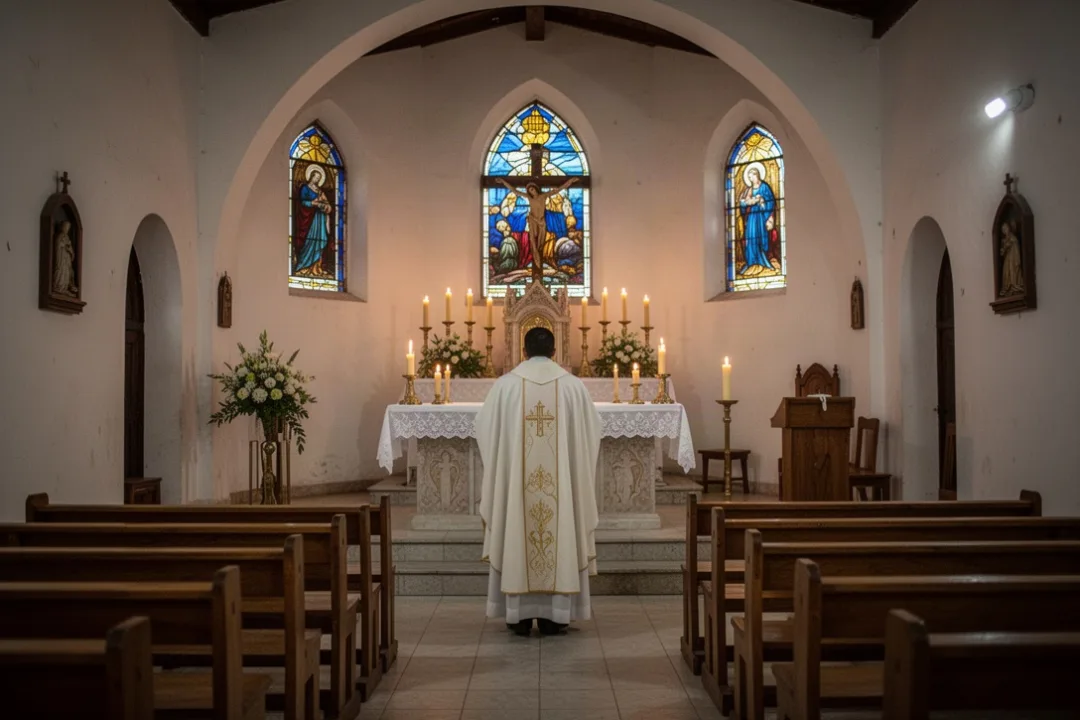
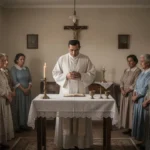
Romero was celebrating evening Mass in the chapel of the Hospital of Divine Providence in San Salvador, where he often stayed near a cancer hospice for women. A gunman shot him as he stood near the altar. He died shortly afterward. His funeral several days later drew enormous crowds, but violence erupted during the gathering, causing further deaths and injuries.
Why the date matters: Saint Oscar Romero’s feast day is March 24, the anniversary of his assassination. Catholics and other admirers remember that day through prayer, memorial services, education, and work for peace and human rights.
The investigation into his murder was obstructed for years, and accountability remained a major concern. The United Nations-backed Truth Commission later attributed responsibility for ordering the assassination to Roberto D’Aubuisson, a former military officer and right-wing political figure, based on available evidence. Romero’s killing became one of the most recognizable examples of the impunity surrounding political violence in El Salvador.
How the Catholic Church recognized Saint Oscar Romero
After his death, devotion to Romero spread in El Salvador and internationally. Many Catholics regarded him as a martyr long before the formal canonization process was complete. His tomb in the crypt of the Metropolitan Cathedral of San Salvador became a place of prayer and remembrance.
The Church’s formal process examined Romero’s life, preaching, death, and relationship to the faith. A central question was whether he had been killed because of hatred for the Christian faith, known in Catholic terminology as odium fidei. The issue was not simply whether he was a political critic or whether his death had a political context. The Church examined whether his commitment to the Gospel and its demands for justice was the reason he became a target.
Pope Francis authorized recognition of Romero’s martyrdom, and Romero was beatified in San Salvador on May 23, 2015. He was canonized on October 14, 2018, in St. Peter’s Square in Rome, together with several other new saints. Canonization confirmed his place in the universal calendar of Catholic saints and made his feast day a formal celebration for the Church.
Romero is often described as the first Salvadoran saint. His canonization had special meaning for a country still carrying the memory of civil war, displacement, massacres, and unresolved grief. It also recognized that holiness can appear in public responsibility, not only in secluded religious life.
For Catholics, a saint is not worshiped as God. Saints are honored as people whose lives show faithful response to God and who may be asked to pray for the Church. Devotion to Romero may include attending Mass on March 24, reading his homilies, visiting sites connected with his life, or asking for his intercession.
What Saint Oscar Romero’s legacy means today
Romero’s legacy reaches beyond the circumstances of El Salvador’s civil war. His example raises enduring questions about what religious leaders should do when public institutions harm the people they are meant to serve. It also asks individuals to consider whether compassion remains private or becomes action when neighbors are threatened.
Human rights organizations often remember Romero as a defender of victims of state violence. Churches emphasize his pastoral courage and martyrdom. Communities working for peace cite his rejection of revenge. These perspectives overlap, but none should erase the others. Romero was a bishop whose public advocacy grew directly from his sacramental, pastoral, and spiritual commitments.
His legacy can be practiced in ordinary settings, including workplaces, parishes, schools, and neighborhoods. You do not need to hold public office to apply the values he lived by. Practical responses might include:
Listening carefully to people affected by violence, poverty, displacement, or discrimination.
Checking claims about abuse rather than repeating rumors or dismissing testimony.
Supporting organizations that provide legal aid, shelter, food, trauma care, or human rights monitoring.
Speaking against dehumanizing language, even when it is directed at a political opponent.
Seeking accountability through lawful and peaceful means rather than endorsing retaliation.
Praying for victims, perpetrators, public officials, and communities seeking reconciliation.
Romero’s example also carries a warning. Religious language can be used to avoid difficult realities, while political language can reduce human beings to categories or enemies. His ministry resisted both temptations. He brought moral and spiritual convictions into public life without treating political power as sacred.
People sometimes portray Romero as if he moved overnight from a quiet bishop to a revolutionary icon. That version misses the gradual nature of his development. His transformation came through prayer, pastoral encounters, the murder of Rutilio Grande, the testimony of victims, and the growing conflict around him. Courage did not remove his fear; it determined what he did despite it.
Saint Oscar Romero remains significant because he made a clear claim: the suffering of the poor is not peripheral to Christian life. When people are killed, silenced, or disappeared, faith cannot remain indifferent. His life asks believers and citizens alike to join conscience with compassion, truth with accountability, and hope with concrete care for others.
Frequently asked questions
Why is Saint Oscar Romero famous?
Saint Oscar Romero is famous for defending El Salvador’s poor and speaking publicly against killings, disappearances, torture, and repression. As archbishop of San Salvador, he used his homilies to report violence and urge soldiers to reject unjust orders. He was assassinated while celebrating Mass in 1980 and was canonized by the Catholic Church in 2018.
When is Saint Oscar Romero’s feast day?
Saint Oscar Romero’s feast day is March 24, the date of his assassination in 1980. Catholics may commemorate the day by attending Mass, praying for peace, reading his homilies, or supporting work that protects human dignity. Churches and communities outside the Catholic tradition also hold memorial events focused on justice and nonviolence.
Where was Saint Oscar Romero killed?
Romero was killed in the chapel of the Hospital of Divine Providence in San Salvador, El Salvador. He was celebrating evening Mass when a gunman shot him near the altar. The hospital served women with cancer, and Romero frequently stayed there. His remains are buried in the crypt of San Salvador’s Metropolitan Cathedral.
Was Saint Oscar Romero involved with a political party?
No. Romero was an archbishop rather than a political party leader. He criticized abuses committed by government forces and also condemned violence by armed opposition groups. His public position came from pastoral and Christian convictions about human dignity, truth, justice, and nonviolence. He supported the rights of the poor without identifying the Church with one political faction.











Leave a Reply