Revelation Bible study guide: symbols, themes, and hope
Revelation Bible study guide: symbols, themes, and hope
Revelation is a book about Jesus Christ’s victory, not a puzzle designed to satisfy date predictions.
Its visions can feel strange because Revelation uses symbolic images, Old Testament language, worship scenes, letters, warnings, and promises together. A helpful study begins by asking what the first Christians were meant to hear, then considers how the message speaks to faithful living now.
The book’s title comes from the Greek word apokalypsis, meaning an unveiling or disclosure. Revelation does not simply hide information about the future. It reveals God’s perspective on suffering, political power, evil, worship, judgment, and the destiny of creation.
Central idea: Revelation calls believers to remain loyal to Jesus amid pressure and fear because God will judge evil, vindicate his people, and renew creation.
How Revelation is organized and how to begin reading it
Revelation has a recognizable movement, even though its scenes do not always function like a straightforward modern timeline. It begins with a greeting and a vision of the risen Christ, addresses seven churches, and then moves into heavenly visions, judgments, conflict, final judgment, and the new creation.
A broad reading plan can help you see the whole book before focusing on individual symbols:
Read chapters 1–3 as a pastoral message to real churches facing spiritual compromise, hardship, and pressure.
Read chapters 4–5 as the book’s worship-centered interpretation of history: God reigns, and the Lamb is worthy to open the scroll.
Read chapters 6–16 as a series of visions portraying judgment, opposition, endurance, and the consequences of rebellion.
Read chapters 17–20 as the downfall of corrupt human power, the defeat of evil, and the judgment of the dead.
Read chapters 21–22 as the promise of God’s renewed creation, where his presence is fully shared with his people.
The book identifies itself as a prophecy, a revelation, and a letter sent to churches. Those descriptions matter. Revelation is not only a collection of predictions; it is also a public announcement, a summons to worship, and a pastoral word to communities trying to follow Christ.
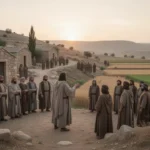
The seven churches named in chapters 2–3 were located in the Roman province of Asia, in what is now western Turkey. Whether every vision refers exclusively to a specific first-century event is debated, but the original audience clearly matters. The readers knew the social, economic, religious, and political pressures of their surroundings.
John writes from Patmos, an island associated with his witness to Jesus. Christian tradition connects the book with John, while interpreters have discussed how its language and style relate to other writings associated with that name. The text itself identifies the author as John and places him among believers suffering because of his testimony.
The date is commonly placed in the late first century, during a period when Christians could face hostility, exclusion, or punishment. Readers should avoid treating every modern headline as a direct fulfillment. Revelation first addressed churches in a particular world, and its symbols must be understood through that setting before they are applied elsewhere.
What the seven churches teach about faithful discipleship
The messages in chapters 2–3 are more than historical notes about seven congregations. Each message follows a pattern that often includes a description of Christ, an assessment of the church, a call to respond, and a promise to those who remain faithful. The repeated phrase “to the one who conquers,” paraphrased from the text, points to endurance through faith, not domination over other people.
Ephesus is commended for discernment and perseverance but corrected for abandoning its first love. The warning shows that correct teaching and energetic service cannot replace a living devotion to Christ. A church may be active and morally serious while still needing spiritual renewal.
Smyrna receives encouragement rather than rebuke. It is poor and afflicted in the eyes of society, yet Christ calls it rich in a deeper sense. The promise does not guarantee immediate relief; it calls the church to remain faithful even when faithfulness carries a real cost.
Pergamum lives where opposition is intense, yet some members tolerate teaching that leads to idolatry and sexual immorality. The message illustrates a recurring concern in Revelation: believers must not blend allegiance to Jesus with practices that treat wealth, power, status, or religious compromise as ultimate.
Thyatira is praised for love, faith, service, and perseverance, but it tolerates a corrupting influence represented by the symbolic name Jezebel. The church’s strengths do not make its moral compromise harmless. Love for a congregation includes the courage to confront teaching and conduct that damage its witness.
Sardis has a reputation for being alive but is described as spiritually dead. This is a warning about appearance without reality. Public reputation, institutional success, and past achievements cannot substitute for watchfulness and repentance.
Philadelphia is portrayed as having little strength but keeping Christ’s word. Its encouragement is especially important for readers who feel unimpressive or overlooked. Faithfulness is not measured by influence alone. A small community can bear a meaningful witness when it refuses to deny Jesus.
Laodicea is criticized for being lukewarm, self-satisfied, and unaware of its poverty. Its famous imagery is often reduced to a simple warning against weak commitment, but the fuller message also challenges material self-reliance. Christ offers true riches, clothing, and sight in language that exposes the gap between worldly confidence and spiritual health.
These messages provide useful questions for a church, small group, or personal study:
Where are we persevering well, and where are we becoming careless?
Are our beliefs producing love, holiness, courage, and service?
Have comfort, reputation, money, or political influence become substitutes for trust in Christ?
What would repentance look like in specific habits rather than vague intentions?
How can the church encourage people who are suffering or feel overlooked?
Study tip: Before interpreting the beasts and cosmic judgments, spend time with the church letters. They establish the kind of people Revelation calls its readers to be: discerning, repentant, courageous, patient, and loyal to Jesus.
How to understand Revelation’s symbols and repeated patterns
Revelation communicates through apocalyptic symbolism. Apocalyptic writing uses visions, heavenly messengers, dramatic contrasts, numbers, animals, cosmic disturbances, and courtroom imagery to disclose spiritual realities. Symbols should not be dismissed as meaningless, but neither should every image be treated as a literal description of physical events.
The Old Testament is the most important background for reading Revelation. John repeatedly echoes Daniel, Ezekiel, Isaiah, Exodus, Psalms, and Zechariah. For example, the throne room in chapters 4–5 recalls prophetic visions of God’s heavenly rule, while plagues and judgments echo the Exodus story. Revelation often combines earlier images and gives them a Christ-centered meaning.
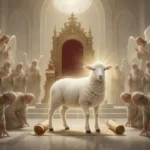
The Lamb is one of the book’s central symbols. The Lamb represents Jesus as the one who was slain and yet stands victorious. His victory is not portrayed as ordinary military conquest. Revelation connects authority with sacrifice, showing that the crucified Christ is worthy to rule because he has redeemed people for God.
The dragon represents Satan, identified in Revelation 12 as the ancient serpent and adversary. The dragon works through earthly powers and deception, but it is not God’s equal. Its rage is dangerous, yet its defeat is certain within the book’s vision.
The beasts symbolize oppressive power that demands allegiance. Revelation 13 portrays authority, violence, deception, and economic control working together against faithful worship. The image can speak to different political systems and institutions without allowing readers to label every disliked government as the final beast.
The mark of the beast is closely connected with worship, identity, and allegiance. It contrasts with the name of God and the Lamb associated with God’s servants. Interpretations differ on how the mark relates to future events, first-century imperial culture, economic participation, or broader patterns of idolatrous loyalty. A responsible reading should not turn the symbol into a casual accusation against individuals or ordinary technologies.
The number seven commonly suggests completeness: seven churches, spirits, seals, trumpets, and bowls appear throughout the book. The number twelve recalls the tribes of Israel and the apostles, while multiples of twelve appear in the measurements and population imagery of the holy city. These patterns communicate theological meaning even when readers disagree about whether a particular number also carries a more specific reference.
The number 666 appears in Revelation 13:18, where readers are told to calculate the number of the beast. Many scholars connect it with a name or title through ancient letter-number systems, and Nero Caesar is often discussed as a possible historical reference when the name is represented in Hebrew letters. The text also gives the number symbolic significance. Because the identification remains debated, confident claims that it definitively names a modern person go beyond what can be established.
Revelation also uses recapitulation, or repeated retelling from different angles, according to many interpreters. The seals, trumpets, and bowls may not be three simple blocks occurring one after another. They can portray overlapping judgments, escalating intensity, or different perspectives on the same conflict. Other interpreters read more of the visions sequentially. The safest approach is to observe the text’s repeated themes before forcing a complete timeline.
Questions that keep symbolic interpretation grounded
Ask what each image does in its immediate scene. Does it warn, comfort, expose deception, celebrate worship, announce judgment, or promise restoration? Then ask how the symbol relates to earlier Scripture and how the original churches would have heard it.
Context: What happens immediately before and after the image?
Scripture: Which Old Testament passages seem to shape the language?
Contrast: Is the symbol set against the Lamb, God’s seal, Babylon, or the holy city?
Ethics: What behavior does the vision condemn or encourage?
Humility: What remains uncertain, and which interpretation depends on speculation?
Do not build a doctrine from one dramatic image while ignoring the book’s repeated statements about worship, endurance, justice, and hope. Revelation’s symbols are meant to form faithful people, not merely to reward confident guesswork.
What Revelation says about judgment, evil, and human power
Revelation presents evil as both spiritual and systemic. The dragon represents the spiritual enemy, while the beasts and Babylon show how deception, violence, luxury, exploitation, and false worship can operate through societies and institutions. This prevents a shallow reading in which evil is reduced to one villain or one private temptation.
Babylon is the most extensive image of corrupt civilization in chapters 17–18. It is depicted as wealthy, seductive, violent, and intoxicated by power. Many readers see a direct relationship between Babylon and Rome in the first-century setting, while also recognizing that the symbol reaches beyond one city to describe recurring patterns of imperial arrogance and economic injustice.
Babylon’s downfall is followed by a call for God’s people to separate themselves from her sins. This does not necessarily mean withdrawing from every society or refusing all contact with public life. It means refusing to share in idolatry, exploitation, cruelty, and moral corruption, even when participation appears profitable or respectable.
The judgments of the seals, trumpets, and bowls include war, famine, death, cosmic disturbance, plague, and disaster. These visions are difficult, and sincere Christians interpret their timing and literalness differently. Whatever one’s end-times framework, the scenes insist that God sees injustice, evil is accountable, and human power cannot escape judgment.
Revelation also emphasizes that judgment does not automatically produce repentance. Several passages describe people who recognize divine judgment yet continue resisting God. This detail challenges the assumption that stronger evidence or more frightening circumstances will necessarily transform a rebellious heart.
The scene of final judgment in Revelation 20 is connected with the defeat of death and the throwing of death and Hades into the lake of fire. Christians differ about the millennium and the sequence of these events, including premillennial, amillennial, and postmillennial readings. Those positions should be discussed carefully, but they share the conviction that Christ’s rule will prevail and evil will not have the final word.
The book’s warning about judgment should not be used to celebrate the suffering of enemies. Revelation includes songs of praise because God is just, not because cruelty is entertaining. Its purpose is to strengthen oppressed believers, expose corrupt powers, and call sinners to repentance before judgment arrives.
How Jesus, worship, and hope shape the entire book
The clearest way to read Revelation is to keep Jesus at the center. The opening vision presents him as the risen Lord who walks among the lampstands, knows the churches, and holds authority over death. He is not a minor figure appearing only at the end; every major movement of the book depends on his identity and work.
Worship scenes interrupt the terrifying visions with a different interpretation of reality. In chapters 4–5, the heavenly throne shows that political rulers are not ultimate. The Lamb’s worthiness explains why history can move toward judgment and redemption without falling outside God’s purpose.
Revelation repeatedly joins worship and ethics. People worship the dragon or the beast and participate in deception; God’s servants worship the Creator and the Lamb and remain truthful. What you worship shapes what you fear, whom you obey, how you use wealth, and whether you can resist pressure.
The book’s most important promise is not escape from creation but renewal of creation. Revelation 21–22 describes a new heaven and new earth, the holy city coming down, God dwelling with humanity, the removal of death and mourning, and the healing of the nations. The final vision is communal, embodied, and earthly in its imagery.
The river of life and the tree of life recall Eden while showing restoration beyond the original garden. The curse is removed, God’s servants see his face, and the city needs no temple building because God and the Lamb are its sanctuary. Light comes from God’s glory rather than from sun or moon.
The mention of the healing of the nations is significant. Revelation does not end with human cultures erased into sameness. It imagines nations brought into peace and ordered worship, with the wealth and glory of the nations no longer serving oppression.
Hope in Revelation is active rather than passive. The promise of Christ’s victory supports endurance, truthful speech, generosity, resistance to idolatry, and care for suffering people. A church that studies Revelation well should become less fascinated with speculation and more prepared to live faithfully under pressure.
A practical plan for studying Revelation with wisdom
Read the book aloud or listen to it in manageable sections. Revelation was sent as a message to be heard in worship, and its repetitions, contrasts, and dramatic changes become clearer when you experience the whole movement rather than isolated quotations.
Keep a notebook with four columns: scene, symbols, Old Testament echoes, and response. Record what you can observe before writing what you think it means. This simple discipline separates interpretation from assumption.
Use the following study process for each passage:
Observe the scene. Identify the speakers, hearers, setting, actions, and repeated words.
Mark the contrasts. Notice Lamb versus dragon, faithful witness versus false worship, Babylon versus the holy city, and seal of God versus mark of the beast.
Check the biblical background. Compare the passage with likely Old Testament echoes without assuming that every detail has only one meaning.
Consider the first audience. Ask what encouragement, warning, or correction a pressured first-century church might have received.
Compare interpretations. Distinguish what the text states clearly from positions built on a particular end-times system.
Apply the message. Choose a concrete response involving worship, repentance, courage, generosity, justice, or hope.
Several habits can prevent common mistakes. Do not calculate dates from symbolic passages when Jesus warns his followers against presumptuous certainty about the timing of the end. Do not identify every new invention, political leader, disease, or international event as the beast without strong textual reasons.
Do not use Revelation to justify hostility toward ethnic, religious, or political groups. The book’s critique is directed at idolatrous allegiance and corrupt power, while its invitation is extended to people from every nation. Its final city is filled with redeemed people from diverse peoples and languages.
Finally, let the last chapters shape your emotional response to the rest. Fear, grief, and anger are present, but they are not the destination. Revelation’s final horizon is God’s presence, the defeat of death, the healing of the nations, and the faithful reign of the Lamb.
Frequently asked questions
What is the main message of the Book of Revelation?
Revelation announces that Jesus Christ is Lord, evil will be judged, and God will renew creation. It encourages Christians to resist false worship and remain faithful during suffering. The book contains warnings about judgment, but its central purpose is to strengthen hope and loyalty to Christ rather than provide a schedule for predicting the end of the world.
Is Revelation meant to be read literally?
Revelation should be read according to its literary form. It contains real promises and warnings, but it communicates many of them through visions and symbols. Some readers understand certain events more literally than others. Careful interpretation considers the immediate context, Old Testament imagery, first-century audience, and the book’s repeated theological themes before making specific predictions.
Who is Babylon in Revelation?
Babylon is a symbolic picture of corrupt, wealthy, and oppressive power that seduces people into idolatry and injustice. It likely spoke directly to the Roman world experienced by the first readers, but its meaning is broader than one ancient city. Any society or institution that combines luxury, exploitation, violence, and false worship can display Babylon’s pattern.
What does Revelation say about heaven and the afterlife?
Its final vision emphasizes a renewed heaven and earth, not merely disembodied existence in a distant spiritual place. God lives with his people, death and mourning are removed, the nations are healed, and the tree and river of life represent restored abundance. Christians differ about the sequence of end-times events, but the promised destination is God’s lasting presence and restored creation.













Leave a Reply