Have you ever opened Revelation, reached the beasts, bowls, and mysterious numbers, and wondered how anyone is supposed to understand it? The most helpful answer is to read the book of Revelation as a carefully structured Christian prophecy, not as a codebook in which every image must match a modern headline. Its visions use symbols, echoes of the Old Testament, worship scenes, warnings to real churches, and promises about God’s final victory.
You do not need to solve every image before you can understand the book. Begin by asking what each vision meant to its first readers, how it reveals Jesus, and what response it calls for. That approach makes Revelation more coherent and helps you avoid confident predictions that the text itself does not clearly support.
Revelation combines several forms of writing. It is a letter to seven churches, a work of prophecy, and an apocalyptic vision filled with vivid symbols. Readers often struggle because they expect a straightforward narrative, while the book moves between heaven and earth, worship and judgment, present troubles and future hope.
The book also assumes familiarity with the Hebrew Scriptures. Revelation does not usually quote the Old Testament in the same way a modern study Bible might. Instead, it reuses images such as the exodus, the plagues of Egypt, the temple, the throne, the wilderness, Babylon, and the promised city. Recognizing those connections gives the symbols a biblical setting rather than leaving them as isolated puzzles.
The original audience faced pressure to compromise their allegiance to God. Some believers experienced hostility, while others lived in societies shaped by Roman power, emperor worship, wealth, and public religious practices. Revelation speaks into that setting with both warning and encouragement: evil may appear dominant, but the risen Jesus remains Lord and faithful endurance matters.
Reading principle: Start with the book’s central message before trying to identify every symbol. Revelation repeatedly directs attention to Jesus, faithful worship, judgment on evil, and the hope of God dwelling with his people.
What kind of book Revelation is
The word “revelation” means an unveiling or disclosure. The opening of the book presents it as a revelation given by God and communicated through Jesus to his servants. That purpose matters: Revelation is meant to reveal reality from God’s perspective, not merely to conceal information behind difficult imagery.
Its apocalyptic style uses symbolic visions to show spiritual and historical realities. Apocalyptic writing often presents heavenly beings, cosmic conflict, angels, beasts, dramatic disasters, and a final separation between good and evil. These images are not automatically unreal or meaningless. They communicate truths through a form that is broader and more symbolic than ordinary reporting.
Revelation is also prophetic. In the biblical sense, prophecy includes announcing God’s will, exposing injustice, calling people to repentance, and strengthening faithful communities. It is not limited to predicting distant events. The messages to the seven churches show that Revelation addresses real moral and spiritual conditions in the present.
Finally, Revelation is a letter. It names seven congregations in the Roman province of Asia and begins with messages directed to them. That means the visions should not be separated from the book’s pastoral purpose. The readers were not simply collecting predictions; they were being told how to live when loyalty to Jesus brought social, economic, or political pressure.
A step-by-step way to read the book of Revelation
A reliable reading process keeps the main message in view while allowing room for legitimate disagreement about details. Read the book more than once, preferably in a translation you understand easily, and follow these steps.
Read the whole book before interpreting individual symbols. Notice repeated images, changes in setting, and the movement from the churches to the final renewal of creation.
Identify the speaker, audience, and setting. Ask who is speaking, who is receiving the message, and what situation the first readers may have faced.
Mark the scenes of worship. Throne rooms, songs, prayers, and declarations about God and the Lamb often explain how the visions should be understood.
Look for Old Testament backgrounds. Use cross-references carefully and compare themes rather than forcing a one-to-one prediction chart.
Separate clear statements from symbolic details. The book clearly teaches God’s judgment, Christ’s victory, and the call to faithful witness even when the meaning of a particular number or beast remains debated.
Compare each vision with the rest of Revelation. A symbol’s meaning becomes clearer when you see how the book uses related images elsewhere.
Ask what response the passage demands. Revelation repeatedly calls for worship, endurance, repentance, refusal of idolatry, and hope.
Hold uncertain conclusions with humility. Do not treat a speculative identification as the central teaching of the book.
These steps work best when you take notes under a few simple headings: what the text says, what it may symbolize, what it echoes from Scripture, and what it asks of its readers. That method keeps observation separate from interpretation. It also makes it easier to revisit your conclusions when a later chapter adds more information.
How the opening chapters frame the entire book
Revelation begins with a vision of Jesus among seven lampstands, which represent the seven churches. The image immediately establishes that Jesus is not distant from struggling congregations. He knows their works, their suffering, their compromises, and their strengths. The opening vision presents him as living, authoritative, and able to judge and protect his people.
The seven messages in chapters 2 and 3 should be read as both specific letters and representative instruction for churches. Jesus commends some congregations for perseverance, discernment, or loyalty. He confronts others for abandoned love, false teaching, moral compromise, spiritual complacency, or dependence on material wealth.
Each message contains a practical challenge. The churches are told to listen, repent where necessary, remain faithful, and overcome. The repeated call to hear what the Spirit says shows that Revelation is not aimed only at predicting events. It is also a pastoral examination of the church.
The transition to the heavenly throne room in chapter 4 changes the reader’s viewpoint. Earth may look unstable, but heaven is not disordered. God is portrayed as the rightful ruler, surrounded by worship. This scene prepares for the scroll and its seals, because the events that follow are presented within the authority of God rather than as a contest between equal powers.
How to understand Jesus as the center of Revelation
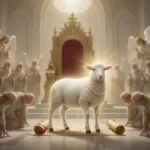
Jesus appears in Revelation as the Lamb, the faithful witness, the risen ruler, the judge, and the one who shares God’s authority. The image of the Lamb is especially important because it joins sacrifice with victory. Christ conquers not by imitating the violence and domination of the beasts, but through faithful obedience, death, and resurrection.
The book’s title, “the revelation of Jesus Christ,” can point both to a revelation that comes from Jesus and to a revelation about Jesus. Both meanings fit the book. Revelation discloses what God is doing, but it does so by showing who Jesus is and why his people can trust him when visible circumstances appear to contradict his reign.
When you encounter frightening imagery, return to this central question: what does this scene show about the Lamb? In many passages, the answer concerns his authority over history, his knowledge of his people, his judgment of evil, or his role in bringing creation to restoration. This keeps the reading from becoming a hunt for political personalities or calendar calculations.
“The testimony of Jesus is the spirit of prophecy.”
This line in Revelation 19:10 is often understood as a statement that prophecy points toward Jesus or bears witness to him. It offers a useful interpretive guardrail. If an interpretation makes the book mainly about speculation while pushing Jesus to the edges, it has probably missed the book’s center.
How Revelation uses symbols, numbers, and repeated images
Symbols in Revelation usually gather meaning from the Bible, the immediate context, and the way the image functions in the vision. A lampstand, for example, is explained within the book as representing a church. Other images are not explained so directly, but surrounding scenes often provide clues.
Numbers can carry symbolic force without becoming mathematical passwords. Seven frequently suggests fullness or completeness, as seen in the seven churches, spirits, seals, trumpets, and bowls. Twelve recalls the tribes of Israel and the apostles, while combinations of twelve can signify the complete people of God. These patterns should be observed rather than turned into rigid formulas.
The number 666 has generated many theories. Revelation 13 connects it with the number of a beast and calls for wisdom in understanding it. Scholars and Christian interpreters have proposed different historical and symbolic explanations, including attempts to calculate a name using ancient letter-number systems. Because the interpretation remains disputed, it is better to explain the passage’s clear warning about deceptive power and allegiance than to claim certainty about a modern individual.
Repeated images often develop across the book. The dragon represents the adversary, the beastly powers oppose God, Babylon represents a corrupt system of wealth and domination, and the bride points to God’s redeemed people. The precise application of these images may be debated, but their moral direction is clear: do not worship corrupt power, and do not measure reality by its temporary appearance of success.
Thrones: authority, rule, and the question of who deserves allegiance.
Lampstands: the churches as visible witnesses in the world.
White clothing: purity, victory, or vindication among God’s people.
Trumpets: announcements and judgments that call attention to God’s action.
Bowls: concentrated expressions of judgment in the final sequences.
Water and the tree of life: restored creation, healing, and life with God.
These meanings are not a complete dictionary. A symbol’s function can shift according to the scene. Treat lists of symbolic meanings as starting points, not as substitutes for reading the passage itself.
How the visions of seals, trumpets, and bowls fit together
Chapters 6 through 16 contain sequences involving seals, trumpets, and bowls. Readers often assume these are a simple chronological timeline, but the book’s structure may be more complex. Some scenes appear to revisit related judgments from different angles, while others move toward a final climax.
The seals begin with the opening of a scroll and include conquest, conflict, famine, death, the suffering of witnesses, and cosmic disturbance. The trumpet visions intensify the warning and judgment imagery. The bowl visions present another series of plagues that lead toward the defeat of evil powers and the final conflict.
Rather than immediately assigning each event to a date, compare what the sequences have in common. They show that human rebellion carries consequences, that creation itself is affected by sin and judgment, and that people may remain hardened even after severe warnings. They also show that God limits, directs, and ultimately completes the judgment.
Use caution with timelines: Revelation’s visions may be sequential, overlapping, recapitulating, or presented from different viewpoints. A confident chart should not be treated as more certain than the text allows.
The beasts in Revelation symbolize powers that oppose God and demand allegiance. They are portrayed as political, religious, and economic forces rather than merely as frightening creatures. Their danger lies in imitation: they can appear authoritative, persuasive, and worthy of worship while directing people away from God.
The first beast in chapter 13 is associated with authority over nations and blasphemous opposition to God. The second beast supports the first and deceives people into honoring it. The imagery reflects the danger of a society in which political power, religious propaganda, and economic participation become bound together.
Babylon appears later as a wealthy and corrupt city portrayed through the language of prostitution, luxury, trade, and oppression. Many readers understand Babylon as an image connected to Rome in the first-century setting, while also seeing a wider pattern of organized arrogance and exploitation. The symbol can therefore speak to the original imperial context and to later systems that normalize injustice and idolatry.
Revelation does not condemn every form of commerce, government, or cultural participation. Its warning is more precise: do not gain security by joining a system that requires worship of power, exploitation of people, or rejection of God’s authority. The call to come out of Babylon is a call to moral and spiritual separation from corruption, not permission to ignore neighbors or abandon responsibility.
What the millennium means in Revelation 20
Revelation 20 describes Satan’s restraint, a thousand-year reign, a later release, final defeat, judgment, and the lake of fire. Christians have interpreted this passage in several major ways. Premillennial readings place Christ’s return before the millennium. Amillennial readings understand the thousand years symbolically as the present reign of Christ or the church age. Postmillennial readings expect a period of widespread gospel influence before Christ’s return.
These labels summarize broad positions, but Christians within each tradition may differ about details. The number one thousand may be read as a symbolic period of completeness, while others understand it as a defined future reign. Revelation 20 should be studied alongside the whole book rather than treated as an isolated timeline that settles every question about the end times.
The passage’s shared emphasis is easier to identify. Evil does not have unlimited freedom, Satan’s opposition ends, God judges the dead, and death itself does not have the final word. Those teachings support faithfulness without requiring every reader to adopt the same chronology.
How to read Revelation 21 and 22 as the book’s promised destination
The final chapters portray a new heaven and new earth, the holy city, the presence of God, the end of death and mourning, and the restoration of what sin has damaged. The destination is not presented merely as disembodied escape. Revelation describes renewed creation and direct fellowship with God.
The city is called the bride, linking the people of God with the city they inhabit. Its immense dimensions, precious materials, gates, foundations, river, and tree of life communicate abundance, security, holiness, and healing. The imagery recalls Eden, the tabernacle, the temple, and prophetic hopes for restoration.
The closing vision also reverses earlier threats. Instead of Babylon’s corrupt luxury, there is a holy city. Instead of darkness and deception, God’s light fills the city. Instead of exclusion from the garden and access to death, God’s servants receive life and see his face. These contrasts help you read the ending as the completion of themes introduced throughout the book.
The promise of healing for the nations shows that the final hope is not narrow or tribal. Revelation retains the biblical vision of God gathering people from every nation, language, and people. Its ending invites faithful living now because the future it announces is characterized by worship, justice, peace, and the presence of God.
How Christians interpret Revelation differently
Four broad approaches often appear in discussions of Revelation. The preterist approach emphasizes the book’s meaning for its first-century audience and sees many prophecies as referring to events near that time. The futurist approach expects many major visions to find fulfillment shortly before the end of history.
The historicist approach reads the visions as a broad outline of church history. The idealist approach, sometimes called the symbolic or spiritual approach, sees recurring patterns of conflict between God’s kingdom and evil across the church age. Many readers use a combination, believing the book addressed its original setting while also portraying patterns that continue and a final future fulfillment.
These approaches can produce serious disagreement, but disagreement does not make careful reading impossible. Test interpretations by asking whether they respect the first-century audience, account for the book’s symbolism, fit the whole canon of Scripture, and produce the kind of faithful endurance Revelation commends.
Does the interpretation explain the passage in its immediate context?
Does it take the Old Testament background seriously?
Does it keep Jesus and faithful witness at the center?
Does it distinguish what the text states from what the interpreter infers?
Does it avoid identifying current events with certainty when the evidence is ambiguous?
Does it lead toward obedience, hope, and worship rather than panic?
Common mistakes to avoid when reading Revelation
One common mistake is treating every symbol as a literal object. If a beast has multiple heads and horns, the image is communicating something about power, authority, and opposition; it is not necessarily predicting a zoological creature. Literalism can be as careless as dismissing the whole book as meaningless metaphor.
Another mistake is allowing current events to control the interpretation. News may resemble patterns described in Revelation, but resemblance is not proof of fulfillment. Every generation has been tempted to identify its enemies with the beasts and its crises with the final judgments. The book’s warnings should shape moral discernment without becoming a tool for sensational certainty.
A third mistake is ignoring the letters to the churches. Readers can spend hours debating the identity of the beast while overlooking Jesus’ direct demands for repentance, courage, love, integrity, and resistance to compromise. The first application of Revelation is not a prediction chart; it is a call to faithful discipleship.
Do not read isolated verses without their scenes. A terrifying judgment image may be followed by worship, an explanation, or a promise to the faithful. Read several chapters at a time, mark transitions, and pay attention to who is speaking. The book’s emotional movement includes fear, grief, warning, praise, confidence, and hope.
Practical tools for a careful reading plan
A manageable reading plan can cover Revelation in two or three weeks, with time to reread difficult sections. Read chapters 1 through 3 together first, then chapters 4 through 5, and continue in short sections. The opening letters and throne-room visions provide interpretive anchors for the more complicated material that follows.
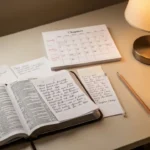
Keep a notebook with four columns: scene, symbol, Scripture connection, and response. Under “scene,” describe what happens without explaining it. Under “symbol,” record possible meanings. Under “Scripture connection,” note references without copying long quotations. Under “response,” write what the passage says about worship, endurance, repentance, justice, or hope.
Helpful resources include a Bible with cross-references, a reputable commentary from a perspective you understand, and historical background on Roman Asia and first-century Christian communities. Read more than one interpretation when a passage is disputed. A study aid should clarify the text, not replace your own careful attention to it.
When a passage remains unclear, let it remain partly unclear. Revelation itself contains mysteries, and humility is a better response than forced precision. You can affirm the book’s central claims—Christ’s lordship, God’s judgment, the need for faithful witness, and the promise of renewal—while continuing to study secondary questions.
What Revelation asks of readers today
Revelation asks whether your loyalty is shaped by the Lamb or by the powers that promise safety, success, and belonging at the cost of conscience. It warns that idolatry can appear respectable, prosperous, and politically useful. It also reminds suffering believers that their faithfulness is seen and that evil’s apparent triumph is temporary.
The book calls churches to examine their love, teaching, worship, courage, and treatment of compromise. It calls individuals to resist false worship, remain truthful, care about justice, and hold on to hope. These applications do not require you to predict a date or identify every end-times event.
Read Revelation slowly enough to notice its repeated invitations to worship God and the Lamb. Let its warnings expose corruption, let its visions enlarge your understanding of God’s holiness, and let its final promise strengthen your confidence that death, injustice, and evil will not define the future. That is how to read the book of Revelation with both care and hope.
Frequently asked questions
Should I read Revelation literally or symbolically?
Read it according to its genre. Revelation contains real prophetic claims, but it communicates many of them through symbolic visions. Some scenes may describe future events, while others portray spiritual and historical realities through beasts, numbers, cosmic signs, and heavenly images. A balanced reading takes the symbols seriously without assuming that every detail must be interpreted as a literal object or event.
What is the best order for reading Revelation?
Read the entire book once without stopping to solve every question. Then reread chapters 1–3, since the messages to the churches establish the book’s pastoral purpose. Next study the throne-room scenes in chapters 4–5, followed by the judgment visions and the final chapters. Cross-references to Daniel, Ezekiel, Exodus, Isaiah, and other biblical books can clarify recurring imagery.
Does Revelation predict specific modern countries or political leaders?
The text does not give a universally accepted method for identifying modern nations or leaders. Its first audience lived under Roman power, and its imagery addresses recurring patterns of idolatrous authority, deception, economic pressure, and persecution. Current events may resemble those patterns, but resemblance does not prove a specific prediction. Avoid interpretations that depend on changing headlines or exact date calculations.
Why are there so many different interpretations of Revelation?
Revelation combines symbolism, prophecy, poetry, visions, and first-century historical concerns, so readers differ about how those elements relate to the future. Some emphasize the original setting, some expect more fulfillment at the end of history, and others stress recurring spiritual patterns. Differences are most responsible when they remain humble and keep the book’s central themes—Christ’s victory, faithful witness, judgment, and renewal—in view.














Leave a Reply