Reconciliation confession: what to expect and how to prepare
Reconciliation confession: what to expect and how to prepare
A reconciliation confession is a Catholic sacrament in which you honestly name your sins, receive forgiveness through the priest, and begin repairing your relationship with God and others.
Many people feel nervous before confession, especially if they have not gone in years, cannot remember the usual wording, or are unsure whether a particular action should be confessed. You do not need perfect preparation or polished language. You need honesty, contrition, and a sincere desire to turn back to God.
What reconciliation confession means in Catholic practice
The Catholic Church uses several names for the same sacrament: Reconciliation, Penance, and Confession. Each name highlights something different. Reconciliation points to restored friendship with God; Penance points to conversion and the spiritual work that follows; Confession points to openly acknowledging sin.
The sacrament includes more than privately feeling sorry. In the presence of a priest, you confess your sins, listen to spiritual guidance, accept a penance, express an act of contrition, and receive absolution. Through absolution, the priest acts in the ministry of Christ and the Church. The forgiveness comes from God, not from the priest as a private individual.
Jesus gives the Church a ministry of forgiving and retaining sins in John 20:21–23. The Catholic understanding of confession also reflects the call to repent, seek mercy, and restore relationships found throughout the New Testament. A reconciliation confession therefore joins God’s mercy with a concrete act of accountability.
Remember: You are not expected to tell the story perfectly. State the kind and approximate number of serious sins as clearly as you can, answer the priest’s questions honestly, and ask for help if you are unsure what to say.
When Catholics seek the sacrament of reconciliation
Catholics are encouraged to receive reconciliation regularly, even when they are not conscious of serious sin. The sacrament can help you recognize patterns, receive grace for change, and keep your conscience attentive to God. Many parishes offer scheduled confession times before weekend Masses, while others make appointments available.
Anyone conscious of mortal sin should ordinarily seek sacramental confession before receiving Holy Communion. Catholic teaching generally describes mortal sin as involving grave matter, full knowledge that the act is seriously wrong, and deliberate consent. If one of those conditions is substantially absent, the sin may not be mortal, although it can still be harmful and worth bringing to confession.
Venial sins are also appropriate to confess. You are not required to remember every minor fault or list every small imperfection. A brief, truthful confession of recurring impatience, dishonesty, resentment, selfishness, or neglect can help you grow in virtue.
How to prepare for a reconciliation confession
Preparation is not meant to make you afraid. It helps you look honestly at how you have loved God, other people, and yourself. Set aside a quiet period before confession, even if it is only a few minutes, and ask God for clarity and humility.
Examine your conscience by relationships and responsibilities
Rather than searching vaguely for everything you have done wrong, consider the responsibilities and relationships that shape your life. An examination of conscience can include the Ten Commandments, the Beatitudes, the works of mercy, or questions related to your state in life.
Relationship with God: Have you neglected prayer, treated sacred matters carelessly, rejected Church teaching knowingly, or allowed something else to become more important than God?
Relationship with other people: Have you lied, gossiped, manipulated, bullied, cheated, held onto hatred, or refused reasonable efforts toward forgiveness?
Family and work: Have you neglected duties, used anger destructively, broken promises, treated someone unjustly, or taken what does not belong to you?
Use of sexuality and relationships: Have you acted against chastity, used another person, or encouraged behavior that harmed your dignity or someone else’s?
Use of possessions and influence: Have you stolen, deceived, exploited, wasted resources irresponsibly, or ignored someone in serious need when you could have helped?
Inner attitudes: Have envy, pride, resentment, prejudice, or contempt shaped your choices and treatment of others?
Focus on your own actions and choices, not on compiling a list of everyone else’s faults. A conscience examination is not an invitation to relive every painful memory. It is a prayerful effort to identify real sin and the habits that need healing.
Separate temptation, feeling, and chosen action
An unwanted thought, temptation, emotion, or dream is not automatically a sin. Moral responsibility concerns what you knowingly and freely choose. Anger may arise without your permission; choosing to cultivate it, insult someone, or seek revenge is a different matter.
This distinction can be especially helpful for people dealing with anxiety or scrupulosity. If you repeatedly doubt whether you committed a sin, mention that struggle to the priest and follow his guidance rather than repeatedly reexamining the same memory.
You may write a few discreet notes before confession, particularly if you are returning after a long absence. Keep the notes brief and destroy them afterward if they contain sensitive information. The goal is to remember significant matters, not to create a detailed record of every mistake.
For serious sins, state the kind of sin and, when reasonably possible, the approximate number of times. If you do not know the exact number, say so. Do not add unnecessary details about other people or explicit circumstances unless the priest needs them to understand the moral nature of the act.
What happens during a reconciliation confession
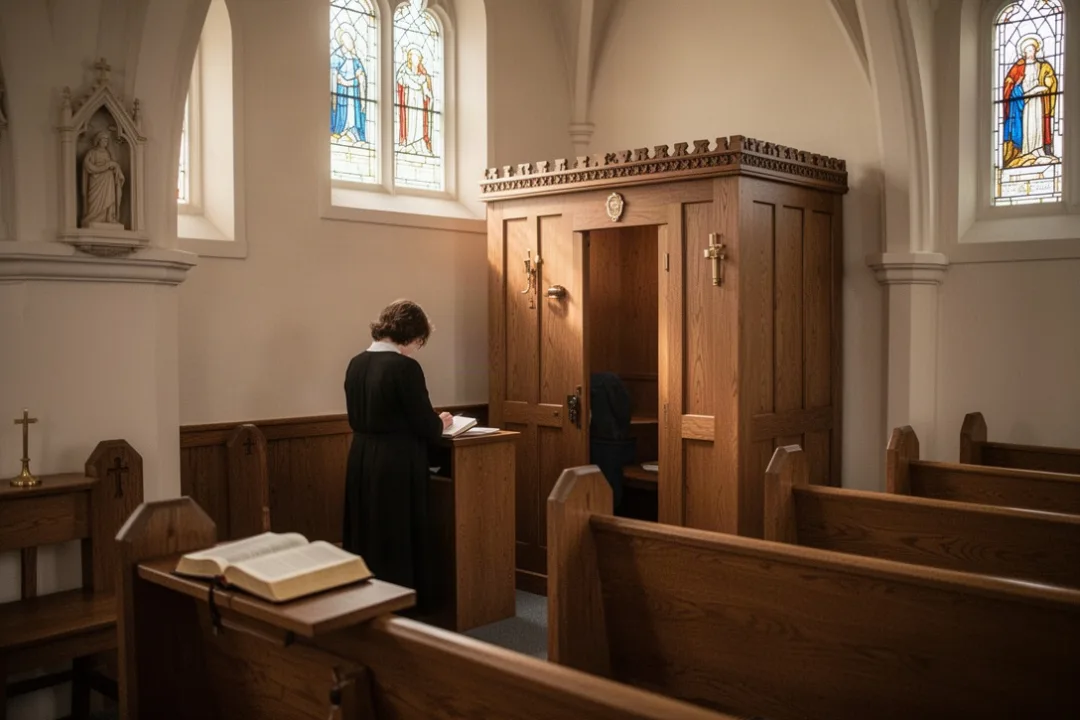
The exact setting varies. You may confess face-to-face or behind a screen, depending on the parish and your preference. The priest may begin with a greeting, a blessing, or an invitation to trust in God’s mercy.
A typical confession follows these steps:
Begin the confession. You can make the Sign of the Cross and say, “Bless me, Father, for I have sinned.” Then tell the priest roughly how long it has been since your last confession.
Confess your sins. Name the serious sins you remember and include their approximate number when possible. You may also confess venial sins and describe a recurring pattern you want to overcome.
Listen to guidance. The priest may ask a clarifying question, offer encouragement, or suggest a practical way to repair harm and avoid the sin.
Accept a penance. This may be a prayer, an act of service, restitution, or another practice that supports conversion.
Express contrition. You may use a familiar Act of Contrition or speak in your own words about your sorrow and your intention to avoid sin.
Receive absolution. Remain attentive while the priest gives the prayer of absolution. Respond “Amen” when appropriate.
Complete the penance. Do it as soon as reasonably possible, preferably before leaving the church if it is a short prayer.
If you forget the opening words, simply say, “I am here for confession, and I am not sure how to begin.” The priest can guide you. If you forget a sin unintentionally, mention it at your next confession when you remember it. An honest confession is not invalid merely because your memory is incomplete.
What to say when you do not know how to begin
A direct opening is usually best. You might say, “Father, it has been about five years since my last confession. I am sorry for my sins, and I would like to make a good confession.” Then name the sins in plain language.
For example, you could say that you have repeatedly lied to avoid responsibility, lost your temper with your family, missed Mass without a serious reason, taken something that was not yours, or held onto resentment. Avoid turning the confession into a long explanation of why other people caused your behavior. Context can matter, but the central question is what you freely chose.
If you are uncertain about a specific matter, say, “I am not sure whether this is something I should confess.” A priest can help you distinguish sin from temptation, serious wrongdoing from a lesser fault, and personal responsibility from circumstances beyond your control.
If it has been many years: Tell the priest at the beginning. He will not be surprised, and he can slow down, explain the process, and help you make a complete confession without expecting you to remember a formula.
Contrition, penance, and absolution explained
Contrition requires genuine sorrow and a desire to change
Contrition means sorrow for sin together with a decision to turn away from it. Perfect contrition is sorrow arising from love of God. Imperfect contrition, sometimes called attrition, can include fear of sin’s consequences or recognition that sin damages your relationship with God. The Church teaches that either can be part of a valid confession when joined to the sacrament and a sincere willingness to change.
You do not need to feel emotionally devastated to be sorry. Feelings can be numb, confused, or delayed. A sincere choice to reject the sin and seek God’s help can be real contrition even when strong emotion is absent.
Penance supports repair rather than purchasing forgiveness
The penance assigned by the priest does not buy forgiveness. God’s mercy is a gift. Penance is a response that helps you cooperate with grace and begin repairing the damage caused by sin.
If your sin harmed another person, prayer alone may not be enough. When it is safe and prudent, you may need to apologize, return property, correct a lie, repay a debt, or change a harmful pattern. Restitution should not expose someone to further danger or pressure; ask the priest for guidance in complicated situations.
Absolution is the sacramental prayer through which the priest forgives sins in the name of the Father, Son, and Holy Spirit. Listen attentively rather than worrying about whether you said every phrase correctly. Afterward, you can offer a brief prayer of thanks and begin your penance.
The priest is bound by the sacramental seal. He may not disclose what he hears in confession or use that information against you. This confidentiality is a fundamental part of the sacrament, not a courtesy that depends on how serious or embarrassing the sin may be.
What reconciliation confession does not require
Confession does not require you to provide graphic details, make yourself sound worse than you are, or confess other people’s sins. It does not require a dramatic emotional experience. You also do not need to wait until you have solved every problem before approaching God.
You do not need to memorize the Act of Contrition.
You do not need to know the priest personally.
You do not need to explain every circumstance from your entire life.
You do not need to confess a sin you genuinely did not know was sinful at the time, although you should mention it if you later understand it as serious.
You should not deliberately hide a serious sin or knowingly mislead the priest.
If you deliberately conceal a serious sin, tell the priest at your next confession and explain what happened. Do not panic or give up. The priest can help you make an honest confession and understand what to do next.
How to handle difficult or sensitive circumstances
When another person harmed you
Being hurt by someone else is not itself your sin. You can bring fear, anger, grief, and difficulty forgiving to prayer and confession without pretending the harm was acceptable. Forgiveness does not always mean immediate trust, renewed contact, or removing necessary boundaries.
If abuse, coercion, or violence is involved, prioritize safety and seek qualified help. A priest can offer pastoral support, but confession is not a substitute for emergency assistance, professional counseling, or appropriate reporting and safeguarding procedures.
When the sin involves a continuing situation
Sometimes a person confesses an action while still facing a difficult circumstance, addiction, relationship conflict, or repeated temptation. Sincere repentance does not mean you can guarantee that you will never fall again. It means you are willing to resist sin, use reasonable help, and take concrete steps toward change.
Tell the priest if a pattern is deeply entrenched. Useful steps might include avoiding a setting, ending access to a harmful app or substance, arranging accountability, seeking therapy, repairing a relationship, or contacting a support program. Grace and practical action belong together.
When scrupulosity makes confession frightening
Scrupulosity can make a person doubt valid confessions, fear accidental sacrilege, or feel compelled to repeat sins until they sound exactly right. Repeated checking usually strengthens the anxiety rather than producing peace.
Choose one trusted confessor, explain the pattern clearly, and follow his direction about what to confess and how often. A licensed mental health professional familiar with obsessive-compulsive symptoms may also be helpful. You are not required to confess every possibility your anxiety suggests.
Confession for children and people returning to church
Children preparing for first reconciliation generally receive instruction through their parish or Catholic school. Parents can help by presenting confession as a meeting with God’s mercy rather than a test. Children need age-appropriate explanations, privacy, and reassurance that the priest is there to guide them.
Adults returning after years away may carry shame, uncertainty, or painful memories of a previous experience. Begin by telling the priest that you have been away for a long time. He can help you make a general confession, identify serious matters, and decide whether a longer appointment would be better than a brief scheduled confession time.
You may also contact a parish office and request a time when the priest will not be rushed. Bringing a short list of major concerns can make the conversation clearer, but do not postpone confession indefinitely while trying to reconstruct every detail of the past.
How often to go and how to continue after confession
The Church requires Catholics to confess serious sins at least once a year, while also encouraging regular confession. Many people find a monthly or seasonal rhythm useful, but the best schedule depends on your circumstances, spiritual needs, and guidance from a confessor.
After confession, pay attention to the specific pattern you named. The sacrament gives grace, but growth often happens through repeated small choices. You might use these practices:
Pray briefly each evening about where you saw God’s help and where you need mercy.
Identify one situation that commonly leads you into sin and plan a different response.
Make prompt amends when you hurt someone.
Read a short Gospel passage and ask how it challenges your choices.
Return to confession at a reasonable interval rather than waiting for shame to accumulate.
Reconciliation does not erase the need for responsibility, counseling, medical treatment, or restitution. It places those efforts within a relationship with God who offers forgiveness and strength. The practical sign of a good confession is not that you never struggle again; it is that you become more truthful, more willing to repair harm, and more ready to choose what is good.
When general absolution or a communal service is different
A parish may hold a communal penance service in which people pray together, hear Scripture, examine their consciences, and then make individual confessions to priests. This can be a helpful way to prepare, but it is not the same as everyone receiving absolution together.
General absolution without individual confession is reserved for circumstances recognized by Church law, such as serious necessity, and is not ordinarily used simply because a parish gathering is large or individual confession is inconvenient. If you receive general absolution under such circumstances while conscious of serious sin, you are expected to confess those sins individually when possible.
If you are unsure what form a parish service will take, ask the parish office. The ordinary form of the sacrament remains individual confession and absolution.
Reasons to return even after a difficult confession
A poor experience with a priest, embarrassment about a past confession, or fear of judgment can keep someone away for years. One difficult encounter does not define the sacrament. Priests have different personalities and styles, so it is reasonable to seek another confessor or request an appointment with someone who is patient and experienced.
Confession is also not reserved for people who feel spiritually successful. It is for people who recognize their need for mercy and are willing to bring that need into the light. You can approach the sacrament with fear, uncertainty, or weakness and still make a sincere beginning.
When you leave, you may not feel dramatically different. The grace of reconciliation is not measured by an immediate emotional high. Trust the sacrament, complete your penance, take the next honest step, and let forgiveness shape the way you treat God, yourself, and the people around you.
Frequently asked questions
Is reconciliation the same sacrament as confession?
Yes. Reconciliation, confession, and penance are different names for the Catholic sacrament in which a person confesses sins, receives counsel and a penance, and receives absolution. “Confession” emphasizes naming sins, “reconciliation” emphasizes restored communion, and “penance” emphasizes conversion and the actions that follow forgiveness.
What if I cannot remember the Act of Contrition?
Tell the priest that you do not remember the prayer. He may provide a printed version or invite you to express sorrow in your own words. A simple statement that you are sorry for your sins, want to turn away from them, and ask God for help can express genuine contrition.
Can I go to confession if I have been away from church for years?
Yes. Tell the priest at the beginning that it has been a long time and that you need guidance. He can help you proceed without expecting you to remember every detail or every part of the ritual. If your history is complicated, ask for an appointment rather than using a short scheduled confession period.
Does confession forgive sins if I keep struggling with the same fault?
Yes, provided your sorrow is sincere and you genuinely intend to resist the sin and take reasonable steps to change. You do not have to guarantee that you will never fall again. Repeated struggles may require practical support, accountability, counseling, or a change in habits alongside regular confession.















Leave a Reply