Popular saints of the Catholic Church and why they matter
Popular saints of the Catholic Church and why they matter
You may be looking for a patron saint for a child, a confirmation name, a difficult season, or a particular need. The Catholic Church’s most popular saints are remembered because their lives make the faith concrete: they served the poor, defended the vulnerable, taught clearly, endured suffering, or showed extraordinary trust in God.
Popular devotion does not mean that one saint is more loved by God than another. It usually means that a saint’s story has traveled widely across countries and generations. Catholics ask saints to pray with them and for them, while worship belongs to God alone.
A saint is a person recognized by the Catholic Church as being with God in heaven. The word can also be used more broadly in the New Testament sense of people dedicated to God, but Catholic discussions about “the saints” usually refer to holy men and women whose lives have been officially examined or widely honored.
Saints are not presented as flawless superheroes. Many struggled with fear, anger, illness, doubt, family conflict, or serious mistakes before turning more fully toward God. Their significance lies in the way they responded to grace, repentance, love, and responsibility.
When Catholics honor a saint, they do not replace God with a human figure. They remember what God accomplished in that person’s life and ask the saint to intercede. This is similar to asking a trusted Christian friend to pray for a need, with the difference that the Church believes the saints already share in heavenly life.
Central distinction: Catholics worship God alone. Saints are honored as faithful witnesses and asked to pray, not treated as independent sources of divine power.
Why some saints become especially popular
Several factors help explain why certain saints appear in churches, homes, schools, hospitals, and prayer cards around the world. A saint may have a story that speaks to a common human concern, such as illness, work, family life, poverty, grief, or the search for guidance.
Geography also matters. A saint may become central to the religious identity of a country or ethnic community. A missionary may be especially honored in the region where that person served, while a mystic, teacher, or martyr may become beloved far beyond the place where they lived.
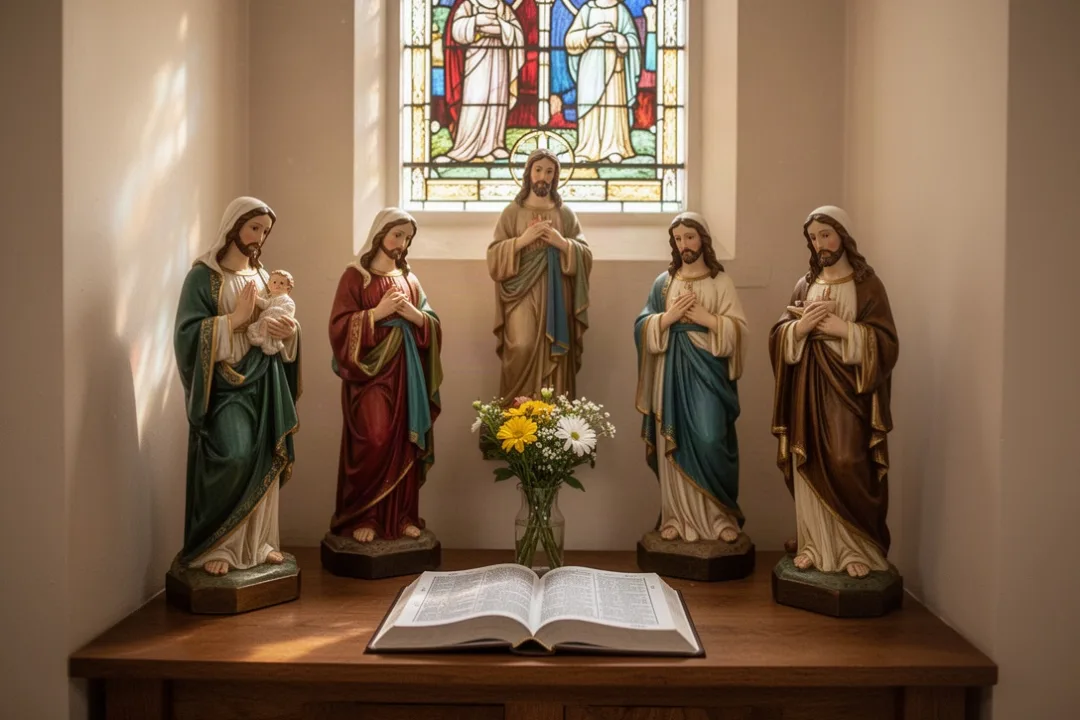
Popular saints often have recognizable symbols and accessible stories. A person holding a child, wearing a habit, carrying a book, or standing beside an animal can help worshippers remember a particular vocation or virtue. Art, feast days, schools, hospitals, religious orders, and family traditions all help pass devotion from one generation to the next.
Mary, the most honored figure among the saints
Mary, the mother of Jesus, holds a unique place in Catholic devotion. Catholics honor her above all other saints because she is the mother of Christ and is associated with her willing participation in God’s plan. She is not considered divine, and the worship given to God is not given to her.
Many Catholics ask Mary to pray for them, particularly through prayers such as the Hail Mary and the Rosary. Marian devotions often emphasize her compassion, humility, courage, and closeness to Jesus. Titles such as Our Lady of Guadalupe, Our Lady of Lourdes, and Our Lady of Fatima refer to particular devotions, appearances, or traditions connected with Mary.
Mary is often especially meaningful to people who need comfort, maternal care, or help bringing a concern to Christ. Catholic teaching consistently directs Marian devotion back toward Jesus, the Gospel, and a life of faithful love.
Saint Joseph, patron of workers and families
Saint Joseph is known in the Gospels as the husband of Mary and the foster father of Jesus. The biblical accounts say little about his words, but they portray him as a man who listens to God, protects his family, and acts responsibly in difficult circumstances.
Because Joseph worked as a craftsman, he is associated with workers, fathers, families, and people seeking employment. Catholics also turn to him when they need practical help, steadiness, or courage to carry out responsibilities that receive little public recognition.
Joseph’s quiet example has broad appeal. He represents faithful service without seeking attention, and his life reminds Catholics that holiness can be expressed through ordinary work, patient care, and dependable love at home.
Saint Francis of Assisi and care for creation
Saint Francis of Assisi began life as the son of a prosperous merchant and later embraced radical simplicity. He served people affected by poverty and illness, founded a religious movement, and emphasized humility, peace, and trust in God’s providence.
Francis is widely recognized as the patron saint of animals and the environment. His appreciation for creation was not merely sentimental. He saw the natural world as a gift that points beyond itself to the Creator and called people to live with gratitude and restraint.
Many parishes hold blessings of animals near his feast day. Francis is also a compelling figure for anyone trying to simplify possessions, respond to poverty, repair relationships, or care for the earth without treating environmental concern as separate from spiritual responsibility.
Saint Anthony of Padua and the search for what is lost
Saint Anthony of Padua was a preacher and teacher associated with the Franciscan tradition. He was known for explaining Christian belief clearly and speaking with concern for people who were poor or overlooked.
Popular devotion often invokes Anthony when something has been lost, including an object, a sense of direction, or a connection with another person. The custom developed from traditions about his help in recovering important items. Catholics who pray to him are not using a magical formula; they are asking a saint to intercede while also taking reasonable steps to solve the problem.
Anthony is also a patron for people who want help with communication, study, preaching, and recovering spiritual focus. His example suggests that knowledge becomes most useful when it serves truth and the needs of others.
Saint Thérèse of Lisieux and the “little way”
Saint Thérèse of Lisieux entered a Carmelite convent while still young and died at the age of 24. Her autobiography and letters describe a spirituality built around small acts of love, confidence in God, and acceptance of ordinary limitations.
Her approach, often called the Little Way, does not mean that difficult work is unnecessary. It means that a person can offer routine tasks, inconveniences, and hidden acts of kindness with sincere love. Thérèse became a doctor of the Church, a title recognizing the lasting importance of her teaching for Catholic life.
People often turn to her when they feel insignificant, spiritually discouraged, or unable to perform extraordinary deeds. Her message makes holiness approachable: patience with a difficult person, careful work, a gentle response, or a quiet prayer can have spiritual value.
Saint Jude and difficult or seemingly hopeless causes
Saint Jude was one of the Twelve Apostles and is associated with the Letter of Jude in the New Testament. He is widely honored as the patron of desperate or difficult causes, especially when a situation appears beyond human control.
His popularity has grown through prayer groups, novenas, churches, and devotional organizations. People may pray to Jude during serious illness, family crisis, financial hardship, or any situation in which they need perseverance and hope.
Praying to Saint Jude does not guarantee a particular outcome. Catholic prayer asks for help while remaining open to God’s will. It can also strengthen a person to seek practical assistance, tell the truth, reconcile with someone, or endure a painful situation without surrendering compassion.
Saint Patrick and the faith of Ireland
Saint Patrick is closely associated with Ireland, although accounts of his life describe a complicated early history that included captivity and forced servitude. After becoming a Christian, he returned to serve as a missionary among the Irish people.
Patrick’s story is remembered for missionary courage, forgiveness, and perseverance. His feast day has become a major cultural observance, but the religious meaning centers on his Christian witness rather than on cultural symbols alone.
He can be a meaningful patron for missionaries, immigrants, people rebuilding their lives after trauma, and anyone trying to forgive those who have caused harm. His life also shows that a person’s early circumstances do not have to determine the direction of a later vocation.
Saint Peter and Saint Paul: apostles with very different stories
Saint Peter and Saint Paul are among the most important figures in the early Church. Peter was one of Jesus’ closest disciples and is traditionally understood as the first bishop of Rome. Paul began as a persecutor of Christians before a profound conversion led him to become a major missionary and teacher.
Peter’s story includes both strong faith and serious failure. He denied knowing Jesus during the Passion, yet later became a leader in the Christian community. Paul’s life demonstrates how a person’s convictions can be redirected toward service after a dramatic change of heart.
Together, they represent leadership, conversion, courage, and the mission to share the Gospel. Their contrasting personalities also remind Catholics that the Church includes people with different gifts, backgrounds, temperaments, and paths to faithfulness.
Saint Teresa of Calcutta and service to the poor
Saint Teresa of Calcutta, widely known as Mother Teresa, founded the Missionaries of Charity and served people who were sick, dying, homeless, or abandoned. Her community’s work made her one of the most recognizable Catholic figures of the modern era.
She is often associated with mercy, direct service, and respect for human dignity. Her example encourages Catholics to see people in need as neighbors rather than as problems to be managed from a distance.
Her life also included a long period of spiritual darkness described in her private writings. That detail matters because it shows that visible service and inward consolation do not always arrive together. Catholics who admire her may be inspired both by her practical charity and by her persistence when prayer felt difficult.
Saint Joan of Arc and courage under pressure
Saint Joan of Arc was a young French woman who believed she had a divine mission to support the French cause during the Hundred Years’ War. She became a military figure, was captured, condemned in a politically charged trial, and eventually recognized by the Church as a saint.
Joan is remembered for courage, conviction, and fidelity under pressure. Her story is often simplified, but it includes questions about authority, politics, war, conscience, and the treatment of a young woman who challenged powerful institutions.
She may be a meaningful patron for soldiers, victims of injustice, people facing hostile criticism, and those who must act according to conscience. Her example should be approached thoughtfully rather than used to justify every personal conviction as automatically approved by God.
Saint Augustine and the long road to conversion
Saint Augustine of Hippo was a major Christian thinker and bishop whose writings have shaped Catholic theology for centuries. Before his conversion, he pursued different philosophies and lifestyles and struggled with the direction of his desires.
Augustine is especially meaningful to people who feel they have wasted time, made serious mistakes, or are searching for intellectual and spiritual clarity. His story emphasizes that conversion may be gradual, disruptive, and supported by the prayers of others.
His mother, Saint Monica, is also widely honored. She spent years praying for Augustine and is often invoked by parents concerned about their children. Their stories together express the patience required when change does not happen according to a family’s preferred timetable.
Saint Monica and persistent prayer for family members
Saint Monica was the mother of Augustine and is remembered for her steadfast prayer during years of family difficulty. Tradition portrays her as a woman who remained faithful while waiting for her son and husband to change.
Many people pray to Monica for children, spouses, relatives, and families in conflict. Her popularity does not suggest that prayer controls another person’s choices. Rather, she represents patient love, honest concern, and trust that a person’s life can take an unexpected turn toward God.
Her example also requires balance. Persistent prayer should be joined to appropriate boundaries, safety, professional help, and respect for another person’s freedom. A saint’s intercession is never a reason to remain in an abusive or dangerous situation.
Saint Clare of Assisi and a life of simplicity
Saint Clare of Assisi followed the example of Francis and founded the Poor Clares. She chose a life of poverty, prayer, community, and service rather than accepting the comfortable social position expected of her.
Clare is associated with contemplation, courage, poverty, and women’s religious life. She defended the right of her community to live according to its chosen form of simplicity, showing that humility does not mean passivity.
She is also the patron saint of television and media because of a tradition describing a vision in which she was able to witness Mass from a distance while ill. People may turn to her when considering how technology should serve attention, prayer, truth, and human connection rather than control them.
Saint Benedict and the discipline of daily life
Saint Benedict of Nursia established a pattern of monastic life that influenced Western Christianity. His Rule gives practical guidance about prayer, work, hospitality, community order, obedience, and the treatment of guests.
Benedict is often invoked for peace, protection, spiritual discipline, and a balanced life. The medal associated with him includes Christian words and symbols used by Catholics as a reminder of faith and resistance to evil. It is not a charm or a guarantee against misfortune.
His spirituality can help people who need a more stable rhythm. Regular prayer, meaningful work, rest, limits on distractions, and generous hospitality are not glamorous practices, but they can create conditions in which a person becomes more attentive to God and neighbor.
How the Catholic Church recognizes saints
Canonization is the formal process by which the Catholic Church declares that a person is a saint and may be publicly honored throughout the Church. The process is careful because it examines a person’s life, writings, reputation for holiness, and reported answers to prayer.
A local bishop normally begins by gathering information about a candidate’s life and virtue. If the cause moves forward, the person may receive the title Servant of God. Further stages can include recognition as Venerable and Blessed, depending on the evidence of heroic virtue or martyrdom.
For many non-martyrs, the Church requires evidence of miracles attributed to the person’s intercession before beatification or canonization. Medical and theological review are part of the investigation. Martyrs may follow a different path because their death for the faith is central to the cause.
Canonization does not mean every detail of a saint’s biography is approved as perfect or that every popular story is historically certain. It means the Church proposes the person as a reliable example of Christian holiness and permits or requires a wider public devotion according to the relevant status.
What patron saints are and how people choose one
A patron saint is a heavenly intercessor associated with a person, occupation, place, condition, or concern. Some patronages come from the saint’s life, work, martyrdom, or a longstanding tradition. Others developed through particular events or local devotion.
You may choose a patron saint because the person shares your profession, cultural background, struggles, or hopes. A confirmation candidate may select a saint whose virtues offer a model for adulthood. Parents sometimes choose a patron connected with a child’s name, vocation, health concern, or family heritage.
Which saint’s life speaks honestly to the situation I am facing?
What virtue did this person practice that I need to develop?
Can I learn about the saint from reliable Catholic sources rather than a single popular story?
What concrete action could reflect this saint’s example?
Would this devotion draw me closer to God and service to other people?
How to pray with the saints without misunderstanding devotion
Prayer to a saint is a request for intercession. You can speak simply, read a prayer associated with the saint, celebrate a feast day, or include the saint in a Rosary or other Catholic devotion. A prayer might ask the saint to bring a concern before God and help you imitate a particular virtue.
The saint is not a substitute for medical treatment, counseling, financial planning, legal assistance, or honest conversation. Prayer can accompany responsible action, but it should not be used to avoid help or to blame someone when a desired result does not occur.
Healthy devotion usually produces greater love, humility, courage, patience, and concern for others. If a practice becomes superstition, fear, competition among saints, or an attempt to force God’s hand, it has moved away from the purpose of Catholic prayer.
Practical tips and common mistakes when exploring saints
Learning about a saint can be a thoughtful spiritual practice rather than a search for the perfect patron. Start with a reliable biography, the saint’s own writings when available, and the Church’s liturgical calendar. Then connect the person’s example with a concrete area of your life.
Do read the whole story. Popular summaries may leave out historical context, weaknesses, controversy, or the gradual development of the saint’s vocation.
Do distinguish history from legend. A beloved story may express a saint’s reputation without being established as a literal event.
Do ask for intercession, not magic. Medals, statues, novenas, and prayer cards are reminders of faith, not objects with automatic power.
Do look for a virtue to practice. Choose one small action inspired by the saint, such as serving quietly, forgiving, studying, or praying regularly.
Do respect the saint’s actual tradition. Avoid reducing a complex person to one occupation, symbol, miracle, or slogan.
Do seek help for serious problems. Prayer and devotion should support appropriate medical, mental health, pastoral, legal, or safety resources.
Do remember the goal. Catholic devotion to saints should lead toward God, the sacraments, charity, and a more faithful life.
A practical approach: Choose one saint, read one trustworthy biography, pray for that saint’s intercession, and identify one virtue to practice for the next week.
Saints connected with particular needs
Catholic tradition includes many saints associated with specific needs, but these associations are not rigid assignments. You can ask any saint to pray for any concern. Still, traditional patronages can provide a helpful starting point when you do not know where to begin.
Illness and healing: Saint Peregrine is associated with people facing cancer, while Saint Raphael the Archangel is linked with healing and travelers.
Students and teachers: Saint Thomas Aquinas is associated with education and theology, and Saint Catherine of Alexandria is traditionally connected with scholars and students.
Travel and protection: Saint Christopher is widely associated with travelers, although popular traditions about his life vary.
Families and mothers: Saint Monica, Saint Anne, and Saint Joseph are often invoked in family-related prayers.
Work and daily responsibilities: Saint Joseph the Worker is a natural patron for labor, employment, and the dignity of work.
Hope during hardship: Saint Jude, Saint Rita of Cascia, and Saint Dymphna are often approached in especially difficult circumstances.
These traditions can add meaning to prayer, but they should not turn devotion into a catalog of guaranteed outcomes. The most useful question is often not “Which saint can make this happen?” but “Which saint can help me remain faithful, wise, compassionate, and courageous while I face this?”
How saints can shape ordinary Catholic life
Saints matter to Catholics because they make Christian virtues visible in particular lives. Francis can prompt a simpler relationship with possessions. Joseph can encourage patient responsibility. Thérèse can make small acts of love seem spiritually significant. Monica can support people who continue praying through family pain.
The saints also widen the idea of holiness. Some were scholars, some were laborers, rulers, parents, religious sisters, missionaries, artists, soldiers, converts, or children. Their differences show that Catholic discipleship is not limited to one personality type or social role.
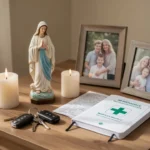
A saint’s feast day, image, medal, or name can become a regular reminder to pause and ask how faith is shaping daily choices. The lasting value of devotion appears not in how many prayers or objects a person collects, but in whether the practice leads to deeper trust in God and more generous love of neighbor.
Finding a saint whose story speaks to you
Begin with your actual circumstances rather than choosing a saint only because the name sounds familiar. If you are caring for a family member, look at saints known for service and endurance. If you are beginning a new career, consider Joseph or another saint connected with work. If you are returning to faith after mistakes, Augustine or Peter may offer an honest point of connection.
Read slowly and allow the saint’s difficult features to remain visible. A meaningful patron is not necessarily someone whose life looks like yours. Sometimes the most helpful saint is the person who shows you a virtue you have not yet learned: restraint, courage, forgiveness, intellectual honesty, or compassion for people outside your usual circle.
Finally, let devotion become practical. Pray for the saint’s intercession, learn about the person’s service, and choose one action that reflects the saint’s example. That is how a familiar name becomes a living guide for faith, character, and love in everyday life.
Frequently asked questions
Are Catholics required to pray to saints?
No. Catholics are required to worship God, but asking saints for intercession is a devotional practice rather than a requirement for every prayer. A Catholic may pray directly to God and may also ask Mary or another saint to pray. The Church presents saintly intercession as helpful, not as a replacement for a direct relationship with God.
Can a person have more than one patron saint?
Yes. A person may have a baptismal patron, a confirmation saint, a patron connected with a profession, and others connected with particular needs or devotions. There is no official limit. Many Catholics also develop a personal connection with a saint after reading that person’s life or discovering a shared cultural or spiritual background.
What is the difference between a blessed person and a canonized saint?
A blessed person may generally be honored in a particular diocese, country, religious community, or other limited setting, depending on the Church’s decree. A canonized saint may be publicly honored throughout the Catholic Church. Both titles follow an investigation, but canonization represents a wider authorization for universal devotion.
Why do saints have feast days?
A feast day remembers a saint’s witness and gives the Church an opportunity to celebrate that person’s place in heavenly life. Many feast days occur near the date of the saint’s death, understood as the person’s entrance into eternal life. Parishes and families may mark the day with Mass, prayer, service, or learning about the saint.












Leave a Reply