Matthew 13:24-30: What the parable of the weeds means
Matthew 13:24-30: What the parable of the weeds means
Have you ever wondered why harmful behavior can exist alongside genuine goodness, sometimes for a long time? Matthew 13:24-30 addresses that question through Jesus’ parable of the weeds. A farmer sows good seed in his field, an enemy secretly plants weeds, and both grow together until harvest. When the servants ask whether they should remove the weeds immediately, the owner tells them to wait.
The central message is that God’s kingdom is present even while evil remains. Jesus does not deny the reality of wrongdoing or suggest that injustice does not matter. Instead, he teaches that final judgment belongs to God, whose timing is wiser than human attempts to separate people too quickly.
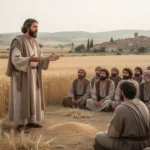
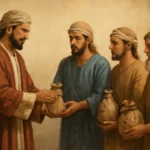
Jesus begins by comparing the kingdom of heaven to a man who plants good seed in his field. While everyone is asleep, an enemy comes and sows weeds among the wheat. The enemy leaves without being discovered, and the plants begin growing side by side.
At first, the workers do not recognize the problem. Once the plants develop, they see that weeds have appeared among the wheat. They ask the landowner where the weeds came from and whether they should pull them out. The owner identifies an enemy as the source but refuses to authorize immediate removal.
His concern is practical: pulling the weeds could also uproot the wheat. He instructs the workers to allow both plants to grow until harvest. At that time, the harvesters will gather the weeds for burning and bring the wheat into the barn.
The parable is brief, but it raises several difficult questions:
Why does God allow evil to remain for a time?
Why should people avoid trying to carry out final judgment themselves?
How can believers remain faithful in a mixed and imperfect world?
What hope does the promised harvest offer?
Matthew 13:24-30 in its Gospel context
Matthew 13 contains several parables about the kingdom of heaven. Jesus uses familiar scenes from farming, fishing, baking, and planting to explain how God’s reign works. The kingdom appears in the world, but its full results are not immediately visible.
The parable of the weeds follows the parable of the sower in Matthew 13:1-23. In that earlier teaching, different kinds of soil represent different responses to the message about God’s kingdom. The weeds add another dimension: even where good seed has been planted, opposition and corruption may appear.
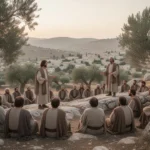
Jesus later explains the parable privately to his disciples in Matthew 13:36-43. That explanation identifies the sower as the Son of Man, the field as the world, the good seed as the people belonging to the kingdom, and the weeds as those associated with evil. The enemy is identified with the devil, the harvest with the end of the age, and the harvesters with angels.
That explanation helps readers understand the basic symbolism, but the parable should not be reduced to a label for particular people. Jesus’ point includes the reality of final accountability, the presence of evil, and the need to trust God’s judgment rather than claim authority that belongs to him.
How to understand the parable step by step
1. The good seed represents God’s work
The landowner begins by sowing good seed. The field is not created as a place of confusion or corruption. Its intended purpose is fruitfulness, and the original planting is sound.
In Jesus’ explanation, the good seed represents people of the kingdom. This does not mean they are flawless or that they earn their place through perfect behavior. It means they belong to the sphere of God’s saving work and are meant to reflect his purposes in the world.
The image also reminds believers that goodness has an origin in God. Christian faith does not begin with the idea that evil and good are equal powers competing forever. God is the owner of the field, and the good seed is planted according to his purpose.
2. The weeds appear through deliberate opposition
The enemy does not accidentally scatter unwanted plants. He acts secretly and with harmful intent. Jesus therefore presents evil as more than a minor inconvenience or an unavoidable feature of ordinary life. It is opposition to God’s work.
The specific plant described in the parable is often associated with zizania, commonly understood as a type of darnel that can resemble wheat during its early growth. The resemblance explains why removing the weeds too soon could damage the crop. The workers cannot safely make a final distinction at the beginning.
This detail gives the parable its tension. Evil may be difficult to identify perfectly while it is developing. Appearances can mislead, motives can be hidden, and human knowledge is limited.
3. The field contains both plants at the same time
The wheat and weeds grow together in one field. Jesus does not describe a world divided into a visibly pure group and a visibly corrupt group. The kingdom exists in a setting where faithfulness and rebellion, justice and injustice, truth and deception can be found side by side.
In Matthew 13:38, Jesus says the field is the world. That wording matters. The parable is not only about problems within a congregation or religious community. It describes the broader human setting in which God’s purposes are unfolding.
At the same time, the teaching applies to churches and families because every human community contains mixed motives and imperfect people. A congregation may include sincere disciples, immature believers, seekers, hypocrites, and people whose spiritual condition is known fully only to God.
4. The servants want immediate action
When the workers discover the weeds, they ask whether the owner wants them to pull everything unwanted from the field. Their question sounds reasonable. If the weeds are harmful, why not remove them immediately?
Their urgency reflects a common human desire for a clean separation between good and evil. People want clear categories, quick explanations, and visible results. We may believe that identifying a wrongdoer gives us permission to decide that person’s final spiritual condition.
Jesus does not praise indifference toward evil, but he does challenge human confidence in making ultimate judgments. The servants know there is a problem; they do not know enough to solve it without harming the crop.
5. The owner postpones separation until harvest
The owner’s instruction is not “do nothing forever.” It is “wait until the proper time.” The weeds will be dealt with, but not through a rushed process that risks destroying the wheat.
This delay can be difficult to accept. It may seem to imply that God is passive or unconcerned. Within the parable, however, the delay is purposeful. It protects what is good and reserves the final separation for a time when the distinction can be made safely and completely.
Key idea: The delay of judgment is not the cancellation of judgment. Matthew 13:24-30 holds together God’s patience in the present and his promise of justice at the harvest.
6. The harvest represents final judgment
Harvest gives the owner a proper time to separate the plants. Jesus later connects the harvest with the end of the age. The image points to a final act of judgment in which God exposes what people and powers truly are.
The parable does not present judgment as random or careless. The owner knows what has happened, waits for the right time, and gives the work of separation to harvesters. The final outcome rests with God’s authority, not with the servants’ anger or impatience.
For those who practice evil, this is a warning. Hidden wrongdoing is not permanently hidden. For those who suffer because of evil, it is a promise that injustice will not have the last word. For those who belong to the kingdom, it is a call to endure faithfully until God completes his work.
Why does God allow good and evil to coexist?
Matthew 13:24-30 does not answer every question about suffering, but it gives a clear framework. God permits a period in which good and evil remain together, even though he opposes evil and will judge it. The reason given in the story is that premature removal could damage the wheat.
This suggests that God’s patience protects people who are still being formed. Human beings can change, repent, grow, and respond to God’s grace. A person who appears spiritually unproductive at one moment may not remain that way forever.
The parable also warns against assuming that we can see the whole situation. We often know fragments: a public action, a difficult season, a repeated mistake, or a troubling belief. God sees the complete person, the hidden motives, the history, and the possibilities that human observers cannot see.
God’s patience does not make evil harmless. Weeds can compete with the crop, and wrongdoing causes real damage. The point is not that believers should tolerate abuse or ignore injustice. Rather, the parable distinguishes responsible protection and correction from claiming the right to deliver final condemnation.
What the parable teaches about judging other people
Jesus’ teaching is often applied to the temptation to classify people too confidently. A person may use religious language, moral outrage, or doctrinal certainty to declare that someone else belongs entirely to the wrong side. Matthew 13:24-30 should make that kind of certainty more cautious.
The servants are not told that the weeds are imaginary. They are told that they should not pull them up because they may also harm the wheat. The lesson is not “all behavior is equally good.” Scripture continues to call for discernment, accountability, correction, and protection of vulnerable people.
The distinction is between evaluating actions and pronouncing a person’s final destiny. Christians can say that exploitation is wrong, deception is destructive, or violence must be stopped. They should not assume that their limited assessment gives them God’s authority over another person’s ultimate standing.
Practical wisdom from the parable includes these habits:
Judge conduct honestly without pretending to know every motive.
Protect people who are being harmed rather than using patience as an excuse for inaction.
Leave final spiritual judgment to God.
Remain open to repentance, growth, and change.
Examine your own life before treating yourself as the standard for everyone else.
Does Matthew 13:24-30 mean Christians should never confront evil?
No. The parable does not command passivity. Jesus’ wider teaching includes warnings about false prophets, instructions for addressing serious wrongdoing among disciples, and a strong concern for the vulnerable. The Bible also calls rulers and communities to pursue justice.
Matthew 13:24-30 addresses the danger of confusing immediate human separation with God’s final judgment. A church may need to set boundaries. A parent may need to intervene. A workplace may need to investigate misconduct. A victim may need safety, legal support, and distance from an abuser.
Those actions can be necessary without claiming that you know the complete spiritual identity or eternal destiny of everyone involved. Accountability can be urgent while final judgment remains God’s work.
The teaching also cautions leaders against purges driven by fear, rumor, or personal ambition. When people are removed from a community simply because they are inconvenient, different, or imperfect, sincere believers may be wounded along with those who are causing harm.
How the parable speaks to church life
Religious communities often want to appear pure. That desire can lead to secrecy, image management, or harsh treatment of anyone who does not fit a preferred standard. Jesus’ parable offers a more realistic view: communities in the present age will contain both genuine faith and serious failure.
This does not excuse hypocrisy. It does mean that a church should measure itself by humility, truthfulness, repentance, and care rather than by the claim that every member is spiritually mature. A healthy community can acknowledge sin without pretending that it has achieved perfect purity.
Leaders can apply the parable by developing processes that are patient but not evasive. Allegations should be taken seriously, facts should be examined, vulnerable people should be protected, and decisions should not be made solely from rumor or pressure.
Members can apply it by resisting gossip and spiritual scorekeeping. The question is not whether discernment matters. The question is whether discernment leads to wise protection and restoration, or whether it becomes a way to dominate, shame, and exclude.
What the harvest means for hope and accountability
The harvest is both sobering and hopeful. It is sobering because Jesus teaches that evil will face a real end. No hidden act, unjust system, or persistent betrayal escapes God’s knowledge forever.
It is hopeful because the present mixture of good and evil is not permanent. Those who feel surrounded by wrongdoing may wonder whether faithfulness matters. The parable answers that God sees the difference between the wheat and the weeds, even when the distinction is difficult for human beings to perceive.
In Matthew 13:41-43, Jesus describes the end of the age as a time when evil is removed and the righteous shine in the Father’s kingdom. He uses strong images to express the seriousness of judgment and the brightness of restored righteousness. These statements should produce reverence rather than speculation about timelines or attempts to identify specific people.
The promise is not that believers will control the harvest. It is that God will complete the work of justice. Faithfulness in the present therefore includes endurance, honest action, and confidence that God’s final verdict will be more accurate and more righteous than any human verdict.
How to apply Matthew 13:24-30 personally
The parable can change the way you respond when you see failure, conflict, or injustice. It asks you to hold two truths together: evil must be taken seriously, and your knowledge is limited.
When another person disappoints you, resist the urge to define that person entirely by one action. Address what happened clearly, set appropriate boundaries, and allow room for evidence of repentance. When you discover wrongdoing in yourself, do not use the existence of other people’s failures to avoid your own need for change.
The teaching can also help when you are discouraged by slow progress. A field does not look like a harvest immediately after planting. Spiritual growth may be gradual, and the presence of setbacks does not prove that God’s work has failed.
Name the problem accurately. Do not call serious harm harmless merely because you want to appear gracious.
Ask what protection is needed now. Patience should never leave someone exposed to ongoing danger.
Separate present responsibility from final judgment. Take appropriate action without claiming God’s place.
Check your own motives. Ask whether your response seeks justice, restoration, safety, or personal victory.
Trust the timing of the harvest. God’s delay is not forgetfulness, and his patience is not approval of evil.
Common misunderstandings about the weeds
“The weeds” are not permission to label people casually
Jesus gives the interpretation of the weeds, but he does not provide a method for identifying particular individuals with certainty. The image describes the reality of opposition to God’s kingdom and the final judgment of evil. It should not become a shortcut for condemning neighbors, political opponents, family members, or members of another church.
Waiting does not mean ignoring harm
The owner waits for the harvest because removing the weeds prematurely could damage the wheat. That specific reason cannot be turned into a universal command to remain silent in every situation. Wisdom may require immediate intervention when someone is being abused, threatened, deceived, or exploited.
God’s patience is not moral indifference
The owner knows the enemy has acted and already has a plan for the harvest. The delay shows restraint and purpose, not approval. Jesus’ teaching allows believers to reject both despair and revenge: despair says evil will never be answered, while revenge tries to seize God’s authority.
For difficult situations: Use Matthew 13:24-30 to practice humility about final judgment, not to excuse abuse, conceal misconduct, or avoid responsible action. Seek wise counsel and protect those at risk.
Why this short parable still matters
Matthew 13:24-30 speaks to a recurring human problem: we want immediate certainty about who is good, who is bad, and what should happen next. Jesus gives a more demanding answer. He acknowledges evil, promises judgment, and asks his followers to live faithfully without pretending to possess God’s complete knowledge.
The field remains mixed for a time, but the owner has not lost control. The wheat is not forgotten, the weeds are not overlooked, and the harvest will come at the proper time. That combination of patience, discernment, accountability, and hope forms the heart of Jesus’ teaching.
For readers facing a morally confusing situation, the passage offers a balanced path. Take wrongdoing seriously, protect those who need help, resist arrogant condemnation, and trust God with the final separation. The future described by Jesus is not endless ambiguity but a just harvest in which God makes the truth fully visible.
Frequently asked questions
What is the main message of Matthew 13:24-30?
The main message is that good and evil may exist together for a time, but God will ultimately judge evil and preserve those who belong to his kingdom. Jesus also warns people not to take final judgment into their own hands. Present patience does not mean approval of wrongdoing; it reflects God’s wisdom and the danger of making premature judgments.
Who are the wheat and weeds in Matthew 13?
In Matthew 13:36-43, Jesus explains that the good seed represents people of the kingdom, while the weeds represent those associated with evil. The explanation should not be used to identify particular individuals with certainty. It emphasizes God’s final assessment rather than giving believers permission to condemn others casually.
Does this parable say Christians should tolerate sin?
No. Christians are still called to confront serious wrongdoing, protect vulnerable people, and practice accountability. The parable warns against claiming God’s authority to make final judgments or carrying out harsh separation without wisdom. Patience should allow room for repentance, but it should never be an excuse for ignoring abuse, danger, or ongoing harm.
Why does the landowner wait until harvest?
The landowner waits because removing the weeds too early could also damage the wheat. In the parable, the delay protects what is good and allows the plants to reach a stage when separation can be done properly. Jesus uses this image to show that God’s patience has a purpose, even though evil will eventually face judgment.












Leave a Reply