History of the Bible: How It Was Written and Preserved
History of the Bible: How It Was Written and Preserved
If you have ever wondered how a collection of ancient religious writings became the Bible on your bookshelf or phone, the short answer is that it developed over many centuries. The Bible was not written as one book by one author at one time. It is a library of texts created, copied, collected, translated, and recognized by different communities across a long span of history.
The history of the Bible includes oral storytelling, the composition of Hebrew and Christian writings, the work of scribes, debates about which books belonged in the canon, and the spread of printed translations. Understanding that process helps explain why Bibles can differ in their contents, wording, order, and notes while still sharing a common core.
The word Bible comes from an ancient Greek term meaning “books.” That name fits the Bible’s structure: it is a collection of writings in different genres, including law, history, poetry, prophecy, wisdom literature, biographies of Jesus, letters, and apocalyptic visions.
Most of the Old Testament, or Hebrew Bible, was written in Hebrew, with some passages in Aramaic. The New Testament was written in Koine Greek, the widely used form of Greek in the eastern Mediterranean during the Roman period. These writings were produced in different places and circumstances, then copied and circulated among religious communities.
The Bible’s earliest material was preserved through oral tradition before being written down or gathered into written forms. Stories about ancestors, laws, worship, royal history, prophetic messages, and community identity could be remembered and repeated for generations. Oral transmission did not mean that people had no written records; ancient Israel used writing as well, but spoken teaching was a major way traditions were preserved.
A helpful distinction: the Bible’s original compositions, the surviving manuscript copies, and modern translations are three different stages. The original documents have not survived, but thousands of later manuscripts and fragments allow scholars to compare readings and study how the text was transmitted.
A timeline of the Bible’s development
The Bible took shape through overlapping stages rather than a single, clearly dated production process. The dates below are approximate because many books contain material gathered over time, and scholars sometimes disagree about when particular sections reached their final form.
Second millennium BCE and earlier traditions: Stories, laws, songs, and genealogies associated with Israel’s ancestors circulated orally and in written forms.
First millennium BCE: Israelite and Judean scribes composed, edited, and preserved many writings that became part of the Hebrew Bible.
Third to first centuries BCE: Jewish Scriptures were copied and translated, including the Greek translation known as the Septuagint.
First century CE: Jesus’ life and teachings were proclaimed orally, while the earliest Christian letters and Gospel traditions began to circulate.
Second to fourth centuries CE: Christian communities copied texts, exchanged collections, and debated which writings should be read as authoritative Scripture.
Fourth to fifth centuries CE: Major Greek and Latin biblical manuscripts appeared, and church leaders increasingly recognized a common New Testament collection.
Fifteenth to sixteenth centuries: Printing and the Protestant Reformation made vernacular Bibles more widely available and intensified debates about translation and canon.
Seventeenth century to the present: English translations multiplied, manuscript discoveries expanded scholarly knowledge, and modern editions added extensive textual notes and study tools.
How the Hebrew Bible was written and preserved
The Hebrew Bible, called the Tanakh in Jewish tradition, contains three broad divisions: Torah, or instruction; Nevi’im, or prophets; and Ketuvim, or writings. Christian Old Testaments contain many of the same books, but their order and grouping differ. The arrangement reflects different religious traditions rather than two entirely separate bodies of literature.
The Torah consists of Genesis, Exodus, Leviticus, Numbers, and Deuteronomy. Jewish and Christian traditions associate these books with Moses, but the books themselves contain different kinds of material, including laws, narratives, speeches, genealogies, and ritual instructions. Many scholars understand the Torah as the result of a long process in which older traditions were collected, shaped, and edited.
Other biblical books developed in similarly complex ways. The books of Kings and Chronicles preserve accounts of Israelite and Judean history from different perspectives. The prophetic books include messages attributed to figures such as Isaiah, Jeremiah, Ezekiel, and the Twelve Minor Prophets, along with material connected to their followers and later communities.
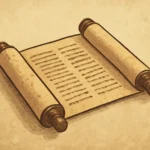
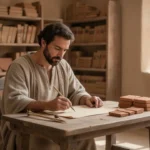
Scribes played a central role in preserving these writings. They copied texts by hand onto materials such as papyrus, leather, and parchment. Copying was a skilled but human process, so manuscripts sometimes contain differences involving spelling, word order, omissions, additions, or alternate readings. Most variations are minor, but some affect the interpretation of particular passages.
What the Dead Sea Scrolls reveal about the Hebrew Scriptures
The Dead Sea Scrolls, discovered in the Judean Desert beginning in the 1940s, include some of the oldest surviving biblical manuscripts. They date from roughly the third century BCE to the first century CE. The scrolls contain copies or fragments of nearly every book of the Hebrew Bible, with the notable exception of Esther, as well as many nonbiblical Jewish writings.
These manuscripts show that biblical texts were transmitted with substantial continuity, but they also reveal that more than one textual form existed in the period before the standard medieval Hebrew text emerged. Some scrolls resemble the later Masoretic Text, while others reflect readings known from the ancient Greek translation or other textual traditions.
The scrolls therefore provide two important lessons. First, the Hebrew Scriptures were preserved with remarkable care across centuries. Second, preservation was not a perfectly uniform process in which every community possessed identical wording. Textual criticism compares available manuscripts, ancient translations, and quotations by early writers to evaluate the earliest recoverable readings.
How the Septuagint shaped biblical history
The Septuagint is the ancient Greek translation of Jewish Scriptures. It was produced over time, beginning with the Torah and later including other writings. Jewish communities in the Greek-speaking eastern Mediterranean used Greek translations because many no longer spoke Hebrew fluently.
The Septuagint is significant for several reasons. It sometimes preserves a Hebrew wording that differs from the later Masoretic Text, and it includes books or additions that are not part of the Jewish Hebrew canon. Early Christians frequently quoted Scripture in Greek, often using wording that resembles the Septuagint.
Christian traditions do not all treat the Septuagint’s additional books in the same way. Roman Catholic Bibles generally include the books known as the deuterocanonical books. Eastern Orthodox traditions include a somewhat different collection, while most Protestant Bibles place these writings in a separate section called the Apocrypha or omit them from the main canon.
How the New Testament writings were created
The New Testament emerged from the first-century Christian movement. Jesus and his earliest followers taught in a primarily oral culture, where public speech, memorization, repeated storytelling, and communal reading were normal ways to preserve important teachings.
Paul’s letters are generally considered among the earliest surviving Christian writings. They addressed specific communities and situations, including disagreements, ethical questions, worship practices, and concerns about Jesus’ resurrection. Other letters were written in the names or traditions associated with apostles and early Christian leaders.
The four canonical Gospels—Matthew, Mark, Luke, and John—present accounts of Jesus’ ministry, death, and resurrection. They share central events but differ in arrangement, emphasis, vocabulary, and the selection of details. The book of Acts continues the story of the early Christian movement, especially the expansion of its mission beyond Judea.
Many scholars date Mark earlier than Matthew and Luke, while John is often understood as having a distinct style and development. The exact dates and relationships among the Gospels remain subjects of scholarly discussion. The Gospel writers drew on oral traditions, earlier written sources, eyewitness testimony as understood by their communities, and theological interpretation.
Early Christian communities read individual writings in worship and exchanged letters with other congregations. A church might possess one or more Gospel accounts, several letters, and Jewish Scriptures, but not necessarily the complete collection now called the New Testament.
How the biblical canon took shape
The term canon refers to the collection of writings a religious community recognizes as authoritative Scripture. The canon did not appear all at once. Different Jewish and Christian communities used overlapping collections, and the boundaries of those collections developed over time.
By the time of Jesus, Jewish communities treated the Torah as authoritative, while the status and use of other writings varied. The Jewish canon as recognized in later rabbinic tradition contains twenty-four books, though these correspond largely to the thirty-nine books counted separately in most Protestant Old Testaments.
For Christians, the four Gospels and Paul’s letters gained wide authority relatively early. Other New Testament writings, including Hebrews, James, 2 Peter, 2 and 3 John, Jude, and Revelation, took longer to receive uniform acceptance in some regions. Early Christian writers quoted many texts, but quotation alone does not always mean that a writer considered a book equal to Scripture.
Church leaders used several factors when evaluating Christian writings:
Connection to the apostles: A text’s association with an apostle or the apostolic generation mattered.
Consistency with received teaching: Communities compared writings with the faith and worship practices they believed they had inherited.
Widespread use: Books read across many churches generally carried more authority than texts used only in one region.
Antiquity: A writing believed to come from the earliest Christian period received greater consideration.
Lists resembling the modern twenty-seven-book New Testament appear by the fourth century. Influential church leaders, regional councils, and long-standing patterns of worship helped stabilize the collection. The process was not simply a single council voting a complete Bible into existence; it was a gradual recognition shaped by centuries of use, debate, and tradition.
Why Catholic, Orthodox, and Protestant Bibles differ
Most Christian Bibles share the same twenty-seven New Testament books, but their Old Testament collections differ. The main reason is that Christian communities inherited and valued different Jewish and Greek textual traditions, especially the Hebrew Scriptures and the Septuagint.
Roman Catholic Bibles include the deuterocanonical books, such as Tobit, Judith, Wisdom, Sirach, Baruch, and 1 and 2 Maccabees, along with additions to Esther and Daniel. Eastern Orthodox Bibles include these and may recognize additional books or passages depending on the particular church tradition.
Most Protestant traditions follow the Hebrew Bible’s book count for the Old Testament, though Protestant Bibles often divide and arrange those books differently from Jewish editions. During the Reformation, questions about authority, translation, and the role of church tradition prompted renewed debate about these writings.
Why the page count changes: a Bible can contain more or fewer pages because of its canon, type size, paper, notes, cross-references, maps, and translation format. Page count alone does not show which tradition or textual history an edition represents.
How biblical manuscripts were copied
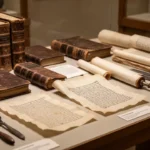
Before printing, every biblical copy had to be produced by hand. Jewish scribes developed detailed practices for copying sacred texts, while Christian communities used both professional and nonprofessional scribes. Manuscripts could be written as scrolls or, increasingly among Christians, as codices with pages bound along one edge.
Christian use of the codex made it easier to gather several writings into one physical volume. A codex could hold multiple Gospels, Paul’s letters, or a wider collection of biblical books. The format also supported navigation through headings, columns, page divisions, and later chapter and verse numbers.
Manuscript copying introduced occasional errors and intentional adjustments. A scribe might repeat a line, skip text between similar endings, harmonize one Gospel with another, correct grammar, or add a familiar explanatory phrase. Scholars compare manuscripts to identify patterns and distinguish likely original readings from later changes.
Several ancient manuscripts are especially important. The Codex Sinaiticus and Codex Vaticanus, both dating to the fourth century, preserve substantial portions of the Greek Bible. The Codex Alexandrinus, from a later period, also contains much of the Old and New Testaments. These codices are valuable witnesses, but no single manuscript answers every textual question.
What chapter and verse numbers changed for Bible readers
The original biblical manuscripts did not contain the chapter and verse divisions used in modern editions. Ancient texts often had limited punctuation, few spaces between words, and different systems of paragraphing or section headings.
Chapter divisions gradually became common in medieval Latin Bibles, while the verse system used in many modern Bibles developed later. These divisions made it easier to locate passages, compare translations, and cite Scripture, but they can sometimes interrupt an argument or separate a sentence from its surrounding context.
When studying a passage, read beyond the verse number. Consider the complete paragraph, the wider section, the book’s purpose, and the historical setting. Verse numbers are useful references, not evidence that each verse was designed to stand alone.
How Jerome and the Latin Vulgate influenced Western Christianity
As Christianity spread through the Roman world, Latin became increasingly important in Western churches. Several earlier Latin translations circulated before the late fourth century, and their wording was not always consistent.
Jerome, a Christian scholar and translator, was commissioned to revise the Latin Gospels and later worked on other biblical books. He consulted Greek manuscripts for the New Testament and Hebrew sources for much of the Old Testament. His work eventually became associated with the Latin Vulgate, though the Vulgate itself reflects a history of revision and transmission rather than one uniform edition created at one moment.
For many centuries, the Vulgate was the main Bible of Western European Christianity. It influenced theology, preaching, liturgy, art, education, and literature. Medieval manuscripts of the Vulgate often included commentary, decorative initials, and visual features that shaped how readers encountered Scripture.
How printing transformed access to the Bible
Before movable-type printing, Bibles had to be copied by hand and were expensive, time-consuming projects. The spread of printing in Europe changed the economics and reach of biblical books. The Gutenberg Bible, produced in the fifteenth century, is widely recognized as the first major printed Bible in the West using movable metal type.
Printing did not immediately make every Bible cheap or accessible, but it allowed identical or near-identical copies to be produced in larger numbers. It also made it easier for scholars, clergy, and readers to compare editions. Printers could include language aids, indexes, cross-references, maps, and explanatory notes.
The technology also exposed disagreements. Once a translation or interpretation circulated widely, readers could compare it with other editions and challenge traditional readings. Printing therefore supported both greater access and more visible debate about the Bible’s wording and authority.
Why the Protestant Reformation changed Bible translation
During the sixteenth-century Protestant Reformation, reformers emphasized the importance of Scripture and promoted translations into languages ordinary church members could understand. Martin Luther’s German Bible became highly influential, and English translators produced editions that shaped later Protestant Christianity.
William Tyndale’s English New Testament and portions of the Old Testament had a lasting influence on English biblical style. The English Bible associated with King James I, published in 1611, drew on earlier English translations and scholarly work. Its literary phrasing became deeply familiar, but it was not the first English Bible and was not translated from a single manuscript tradition.
The Roman Catholic Church also supported vernacular translation and produced influential English editions, including the Douay-Rheims Bible. The Reformation era involved disputes not only over language but also over which books belonged in the Old Testament, how authority should be understood, and whether biblical interpretation required church oversight.
How modern textual criticism evaluates Bible manuscripts
Modern biblical scholarship uses textual criticism to compare manuscripts and reconstruct the earliest attainable wording of a text. Researchers examine Greek and Hebrew manuscripts, ancient translations into languages such as Latin, Syriac, and Coptic, and quotations from early Jewish and Christian writers.
Textual criticism does not mean that every word is uncertain. The overwhelming majority of the biblical text is transmitted with substantial agreement. The discipline focuses on places where manuscripts differ and asks which reading best explains the origin of the others.
Editors may consider several kinds of evidence:
Manuscript age: Earlier witnesses can be valuable, although a later manuscript may preserve an older reading.
Geographic distribution: Readings found across different regions may carry more weight than a reading from one isolated copy.
Textual relationships: Scholars study whether manuscripts share patterns that indicate a common ancestor.
Internal evidence: A shorter or more difficult reading may sometimes be earlier, since scribes often expanded or smoothed difficult wording.
Context and style: A reading should fit the author’s vocabulary, grammar, argument, and literary habits.
Modern translations often signal significant textual differences in footnotes. Those notes are not a sign that the entire Bible is unreliable. They show readers where ancient witnesses preserve different readings and allow them to see how translators handled the evidence.
How Bible translation choices affect what you read
Translation requires interpretation because words rarely match perfectly across languages. A translator must consider grammar, idioms, cultural references, literary style, and the likely meaning in context.
Formal-equivalence translations tend to stay close to the wording and structure of the source languages, although no translation can reproduce them mechanically. Dynamic-equivalence or thought-for-thought translations prioritize the meaning of a phrase in natural contemporary English. Paraphrases go further by restating the text in a more interpretive style.
Differences can arise from more than translation philosophy. Hebrew and Greek words may have several possible meanings, ancient measurements may be difficult to render, and gendered language may require decisions about whether to preserve form or clarify an inclusive sense. A responsible translation usually explains major choices in prefaces or footnotes.
For serious study, compare two or three translations with different approaches and consult notes about manuscript variants. You can also examine a Bible’s stated source texts, translation committee, date of publication, and revision history.
How to study the history of the Bible responsibly
The Bible’s history involves both faith commitments and historical research. A reader can respect the religious significance of Scripture while also asking how particular texts were composed, copied, organized, and translated. Good study avoids two opposite assumptions: that the Bible appeared fully formed, or that the presence of transmission history makes it impossible to know anything about the text.
Identify the tradition behind your edition. Check which books it includes and how those books are arranged.
Read the translator’s preface. It often explains the source manuscripts, translation philosophy, and treatment of disputed passages.
Separate composition from transmission. Ask when a book may have reached its final form, then ask how later scribes copied it.
Use historical context. Consider the author’s setting, original audience, political environment, and literary genre.
Compare manuscript notes carefully. A textual footnote usually concerns a specific reading, not the reliability of every surrounding passage.
Distinguish ancient evidence from later tradition. A medieval commentary, a church teaching, and a first-century manuscript do not carry the same historical weight.
Studying the history of the Bible can make familiar passages more intelligible. It explains why a Gospel may emphasize a different detail from another Gospel, why some editions include additional books, why footnotes mention alternate readings, and why translation style varies so widely.
What remains consistent across the Bible’s long history
Although the Bible has a complex transmission history, several broad features remain consistent. Jewish and Christian communities preserved a large body of writings through repeated reading, copying, teaching, and worship. The central biblical traditions—creation, covenant, Israel’s history, prophetic hope, Jesus’ life and teachings, the early Christian mission, and the expectation of God’s purposes—continued to shape the collection across generations.
The Bible is best understood as both a historical library and a living collection of sacred texts. Its formation involved many human decisions and circumstances, yet religious communities have continued to read it as authoritative and meaningful. Knowing how it came together gives you a clearer basis for evaluating translations, interpreting differences, and reading each book on its own terms.
Frequently asked questions
Was the Bible written by one person?
No. The Bible contains writings by many authors and communities across several centuries. Some books are linked by tradition to figures such as Moses, David, or Paul, but authorship questions vary from book to book. The collection includes different genres and perspectives, and many texts appear to have been edited or compiled from earlier material before reaching their current form.
Which Bible is closest to the original?
No single modern translation is closest in every respect. Translations make different choices about wording, readability, manuscript evidence, and interpretation. A study Bible that explains its source texts and includes manuscript notes can help you evaluate those choices. Comparing a more literal translation with a thought-for-thought translation often provides a fuller understanding than relying on one edition alone.
How many books are in the Bible?
Most Protestant Bibles contain 66 books: 39 in the Old Testament and 27 in the New Testament. Roman Catholic Bibles generally contain 73, including the deuterocanonical books. Eastern Orthodox editions may contain a somewhat different number. Jewish Bibles count 24 books because some writings are grouped differently, even though much of the underlying content overlaps with Protestant Old Testaments.
Are the Dead Sea Scrolls older than the Bible?
No. The Dead Sea Scrolls are ancient copies and fragments of biblical and other Jewish writings, not the first creation of the Bible. They date from several centuries before the Common Era to the first century CE. Their importance comes from preserving very early evidence for the wording and transmission of many Hebrew biblical books.













Leave a Reply