Exorcism in the Catholic Church: process and purpose
Exorcism in the Catholic Church: process and purpose
Exorcism in the Catholic Church is a formal prayer of the Church asking God to free a person, place, or object from demonic influence. A major exorcism may be performed only by a priest authorized by the local bishop, and the Church does not treat unusual behavior alone as proof of possession.
Before authorizing the rite, Catholic authorities normally seek a careful account of the person’s experiences and encourage appropriate medical and psychological evaluation. The purpose is not to stage a dramatic confrontation but to protect the person, distinguish spiritual concerns from illness or crisis, and provide prayer within the Church’s safeguards.
The Catholic Church defines an exorcism as a request for spiritual protection and liberation through the authority of Jesus Christ. Its underlying belief is that God is sovereign and that evil is real, while also recognizing that many frightening experiences have natural explanations.
The Catechism of the Catholic Church describes exorcism as an act of commanding or asking in the name of the Church that a person or object be protected against the power of the devil. Catholic teaching connects this ministry with Jesus’ practice of confronting evil, but it does not present every illness, temptation, misfortune, or unusual experience as demonic activity.
Two broad forms are commonly distinguished. Simple exorcisms can appear in prayers associated with baptism or other pastoral settings. A major, or solemn, exorcism is the formal rite used when a person is judged to be experiencing what the Church calls demonic possession.
Essential distinction: A request for an exorcism is not itself evidence of possession. The Church’s process is meant to examine the situation carefully, not to confirm a frightening interpretation automatically.
How the Catholic Church responds to a request for exorcism
The process can vary by diocese, but a responsible response usually follows a sequence like this. The exact pastoral steps may be adapted to the person’s circumstances, immediate safety, and local resources.
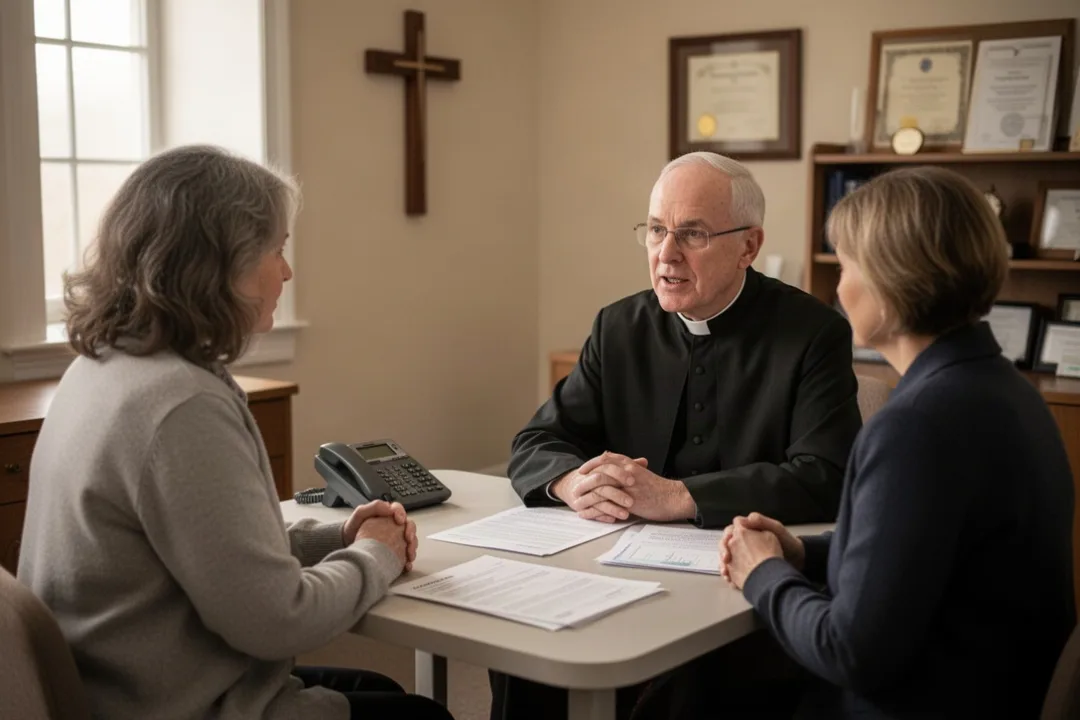
Initial contact: The person or family speaks with a parish priest, diocesan office, or another trusted Catholic minister. The first conversation should focus on safety, symptoms, history, and immediate needs rather than dramatic claims.
Pastoral listening: A priest gathers information about prayer life, family circumstances, trauma, substance use, sleep, medications, medical conditions, and changes in behavior. Consent and confidentiality should be handled with care.
Medical and psychological assessment: Qualified professionals may evaluate mental health, neurological conditions, medication effects, substance-related problems, sleep disorders, or other possible causes of distress.
Diocesan review: If concerns remain after ordinary explanations have been considered, the matter may be referred to the bishop or a designated diocesan exorcist. The bishop decides whether a major exorcism should be authorized.
Pastoral support: The person may receive ordinary Catholic care such as prayer, the sacraments, spiritual direction, counseling, and help from family or social services. These supports are not substitutes for emergency treatment.
The authorized rite: If the bishop approves it, the appointed priest follows the Church’s approved ritual and observes its limits. The priest may repeat the rite over time when the circumstances call for continued pastoral care.
Follow-up: The person should continue receiving appropriate medical, psychological, and spiritual support. A single prayer service does not remove the need for ongoing care or monitoring.
This process is designed to avoid two opposite mistakes: spiritualizing a medical crisis and dismissing a person’s religious concerns without listening. A careful priest can take faith seriously while remaining cautious about conclusions.
Who is allowed to perform a major exorcism
Under Catholic canon law, a priest needs the express permission of the local bishop to perform a major exorcism. A layperson, self-appointed minister, or priest acting without the required authorization does not have the Church’s permission to conduct the solemn rite.
The bishop may appoint a priest with suitable piety, knowledge, prudence, and integrity. Training and practical judgment matter because the work can involve mental illness, trauma, family conflict, abuse, suicidal risk, substance use, or physical danger. A priest should know when to involve professionals and when to call emergency services.
The appointed exorcist is not supposed to act as a celebrity, investigator, or entertainer. The Church’s rite is intended to be conducted with discretion. Recording, publicity, sensational claims, coercion, and unnecessary exposure of the person’s private life are inconsistent with responsible pastoral care.
A parish priest can still pray with someone and offer ordinary spiritual support without performing a major exorcism. Common prayers for peace, protection, repentance, and healing are not the same as the formal command prayers reserved for an authorized exorcist.
Before a major exorcism, the priest and diocesan authorities try to determine whether the reported experiences could be explained by physical illness, psychiatric conditions, trauma, or environmental factors. This evaluation does not mean that the Church regards faith as irrelevant. It reflects the Catholic view that human beings have bodies, minds, relationships, and spiritual lives that affect one another.
The information considered may include changes in speech or behavior, reports of hearing voices, intense fear, unusual religious reactions, apparent knowledge of private information, or claims of extraordinary strength. None of these signs proves possession by itself. Similar experiences can occur in psychosis, dissociation, severe mood disorders, seizure-related conditions, intoxication, withdrawal, sleep deprivation, or traumatic situations.
A responsible evaluation also considers the possibility of suggestion and social pressure. A distressed person may be influenced by family expectations, online content, a religious group, or a prior diagnosis. Repeated questioning can unintentionally reinforce a frightening belief, so professionals and clergy should avoid leading questions and sensational interpretations.
The priest may ask whether the person wants help and understands what is being proposed. Consent is a central ethical concern. A vulnerable person should not be threatened, shamed, restrained, deprived of medication, denied food or sleep, or pressured into religious practices as a condition of receiving care.
What the Catholic rite of exorcism includes
The formal rite uses the Church’s approved prayers rather than a private script created for the occasion. It can include psalms, Gospel readings, petitions, the Lord’s Prayer, signs of the cross, and prayers asking for protection and liberation. The exorcist may also use sacramentals such as blessed water, according to the ritual and pastoral judgment.
The rite centers on God’s authority, the person’s freedom, and the Church’s prayer. It is not meant to glorify the exorcist or provoke a spirit into making dramatic statements. The priest should maintain a calm setting, limit unnecessary participants, and avoid practices that increase fear or physical risk.
Some accounts describe commands directed at an alleged demon. Within Catholic practice, such commands belong only to the authorized ritual and the appointed priest. They are not a license for relatives, internet personalities, or untrained ministers to conduct confrontational sessions.
The Church does not guarantee an immediate or visible result. A person may feel relief, distress, confusion, or no obvious change. Continued symptoms require continued evaluation, and a prayer service should never be presented as a replacement for treatment prescribed by a qualified clinician.
Signs the Church considers during discernment
Popular culture often reduces possession to a short list of spectacular behaviors. Catholic discernment is more cautious. The priest considers the full pattern, the person’s history, independent observations, professional assessments, and whether ordinary explanations account for what is happening.
In some Catholic discussions, possible indicators include unusual reactions to sacred objects or prayers, apparent knowledge that cannot be readily explained, or physical behavior that witnesses regard as extraordinary. Even when such reports are sincere, they are not conclusive. Misunderstanding, expectation, memory errors, illness, deception, or group dynamics can produce similar reports.
The Church also considers whether the person has symptoms associated with mental or neurological disorders. That is why clinical assessment is a safeguard, not an insult to religious belief. A person can need spiritual care and professional treatment at the same time.
Do not treat one unusual event as proof. A frightening reaction, dream, voice, or coincidence has many possible explanations.
Look for consistent evidence. Reports should be examined over time and, when possible, by more than one reliable observer.
Check ordinary causes first. Medication, sleep loss, substances, illness, trauma, and stress can affect perception and behavior.
Protect the person’s dignity. Avoid public accusations, humiliating tests, forced prayer, or sharing personal details without permission.
Respond to danger immediately. Threats of self-harm, violence, abuse, or medical crisis require emergency assistance rather than a private ritual.
These principles do not settle every theological question, but they reduce avoidable harm. They also help a family distinguish a legitimate diocesan process from an improvised ceremony led by someone seeking control or money.
Why medical and psychological care remains necessary
Catholic teaching does not require a person to choose between prayer and healthcare. A person experiencing hallucinations, extreme agitation, confusion, seizures, severe depression, mania, or loss of contact with reality may need urgent medical attention. Calling emergency services in a crisis is a safety response, not a rejection of faith.
Some conditions can produce experiences that feel profoundly spiritual or threatening. Psychosis may involve voices or beliefs that others do not share. Dissociation can affect memory, identity, and perception. Epilepsy, infections, brain disorders, medication reactions, intoxication, and withdrawal can also change behavior or awareness.
A qualified mental health professional should not declare possession or dismiss religious concerns without assessment. Likewise, a priest should not diagnose a psychiatric condition or instruct someone to stop medication. The strongest pastoral response is often collaborative: clergy, clinicians, family members, and the person receiving care communicate appropriately and respect professional boundaries.
Seek immediate help: If someone may hurt themselves or another person, is severely confused, cannot care for basic needs, or has a medical emergency, contact emergency services or go to an emergency department. Do not attempt an exorcism at home.
Prayers of deliverance and a major exorcism are different
Catholics may encounter prayers for protection, healing, deliverance, or freedom from temptation in parish life. These prayers can ask God to help a person resist evil without claiming that the person is possessed. They may be offered by clergy or laypeople within appropriate pastoral limits.
A major exorcism is narrower and more formal. It involves a specific judgment about alleged possession and requires the bishop’s authorization. The difference matters because language can shape how a distressed person understands symptoms, relationships, and choices.
Lay Catholics should not imitate the exorcist’s commands or create private rituals designed to identify and control alleged spirits. A person who wants prayer can ask a parish priest for a blessing or pastoral conversation and can request referral to the diocese if more specialized help seems necessary.
How to find legitimate Catholic help
Start with a Catholic parish or the diocesan office where the person lives. Explain the situation plainly, including any medical symptoms, safety concerns, treatment history, and immediate risks. Avoid withholding clinical information because you fear that it will make the Church reject the request.
A legitimate process should be marked by authorization, confidentiality, informed consent, and cooperation with healthcare professionals. The person should not be asked for extravagant payments, isolated from supportive relatives, or told to abandon doctors, therapists, medication, or prescribed treatment.
Be cautious about anyone who promises certainty after a brief conversation, claims special powers outside the diocese, demands secrecy, stages dramatic sessions, or blames the person for remaining distressed. Financial exploitation and spiritual abuse can occur under religious language.
Contact the parish office or diocesan chancery rather than relying on an online self-proclaimed exorcist.
Ask whether the priest has the bishop’s authorization for a major exorcism.
Keep medical and mental health appointments unless a qualified treating clinician changes the plan.
Bring a trusted support person when appropriate, especially if the person feels afraid or pressured.
Document concerning symptoms and dates for clinicians and clergy, while protecting private information.
Common misconceptions about Catholic exorcism
Possession is not the explanation for every troubling experience
Fear, nightmares, intrusive thoughts, addiction, grief, trauma, depression, and family conflict can all be serious without being demonic possession. The Church’s discernment process exists partly because unusual experiences are not self-interpreting.
Exorcism is not a substitute for confession or ordinary prayer
Catholic spiritual life includes prayer, worship, confession, the Eucharist, charitable action, and pastoral support. These practices may help a person grow in faith, but they do not automatically indicate that a formal exorcism is needed.
An exorcist is not a person with magical power
The Catholic rite is understood as prayer offered by the Church, not as a private ability possessed by a priest. The priest does not claim independent control over spirits, and the ritual should direct attention toward God rather than toward the personality of the minister.
A dramatic reaction does not prove success
Shouting, shaking, crying, or changing one’s voice can result from fear, expectation, trauma, neurological conditions, or group pressure. Calm observation and follow-up are more reliable than theatrical behavior when assessing whether a person is receiving help.
What families can do while seeking help
Families should create a stable, low-conflict environment and listen without endorsing every interpretation. You can acknowledge that the person feels frightened or troubled while saying that several explanations need to be considered. Avoid arguing aggressively about religious beliefs during a crisis.
Remove immediate hazards, support regular sleep and meals when possible, and help the person attend medical and pastoral appointments. Keep prescribed medication available and follow clinical instructions. If there is violence, suicidal intent, severe confusion, or inability to care for basic needs, prioritize emergency safety over arranging a private religious ceremony.
Family members also need support. Caring for someone in crisis can lead to exhaustion, fear, and guilt. A parish priest, licensed counselor, crisis service, or trusted relative can help the family make decisions without turning the person’s distress into a public spiritual spectacle.
Frequently asked questions
Does the Catholic Church believe demonic possession is real?
Yes. Catholic teaching accepts the possibility of demonic activity, including possession, but it treats alleged cases with caution. The Church does not assume that mental illness, unusual behavior, suffering, or misfortune has a demonic cause. A bishop-authorized process and careful discernment are expected before a major exorcism is considered.
Can a Catholic priest perform an exorcism without the bishop’s permission?
A priest may offer ordinary prayers, blessings, and pastoral support, but a major exorcism requires the express permission of the local bishop under Catholic canon law. A priest who performs the solemn rite without authorization is not acting according to the Church’s required process.
What should I do if someone says they are possessed?
Listen calmly, take immediate safety concerns seriously, and encourage both medical or mental health evaluation and pastoral support. Contact a parish or diocesan office rather than an independent practitioner. If the person is suicidal, violent, severely confused, or medically unstable, call emergency services and do not attempt an exorcism at home.
Can an exorcism replace therapy or medication?
No. Catholic pastoral care and clinical treatment can exist together, but an exorcism is not a substitute for therapy, medication, emergency care, or evaluation of neurological and physical conditions. A responsible priest should not tell someone to stop prescribed treatment and should cooperate with appropriate healthcare professionals.
















Leave a Reply