Demon Bible Verses: A Comprehensive Guide to Biblical References About Demons
Demon Bible Verses: A Comprehensive Guide to Biblical References About Demons
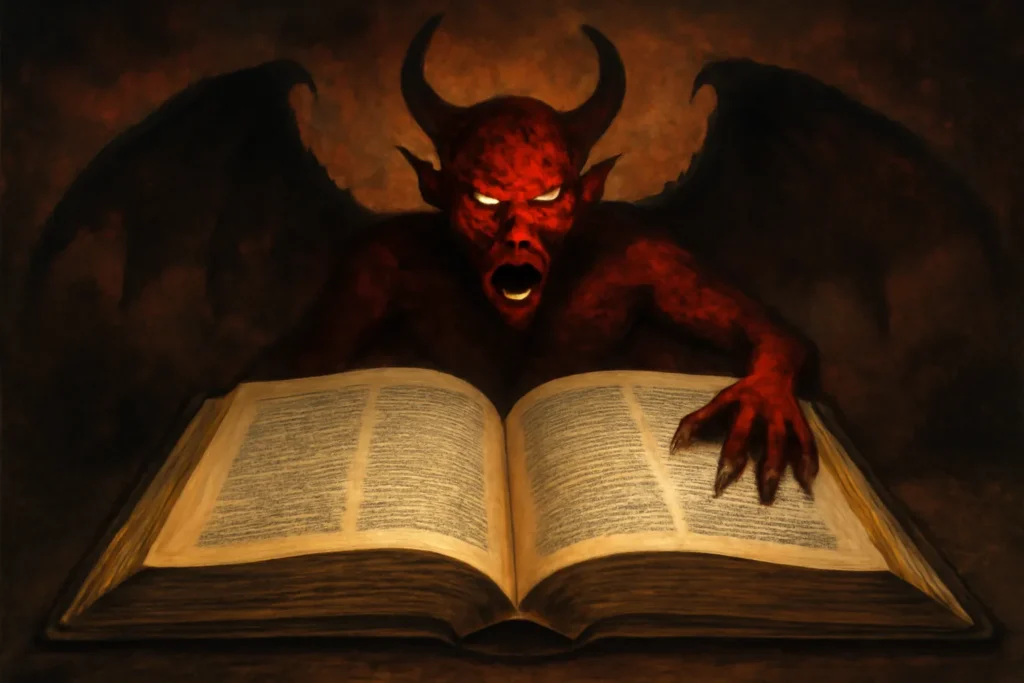
Demon Bible Verses are a window into how the Bible portrays spiritual beings that oppose God and affect human life. This article offers a comprehensive, study-oriented guide to biblical references about demons, tracing how they appear in both the Old and New Testaments, how scholars interpret them, and how readers can approach these passages responsibly and thoughtfully. Whether you are a student of theology, a pastor preparing a sermon, or a curious reader seeking clarity, this guide aims to illuminate the diverse semantic breadth and historical context of demon references in Scripture.
Introduction: Framing the Topic of Demons in Scripture
In biblical literature, demons are depicted as spiritual beings that interact with people, often in ways that reveal a cosmic battle between opposing powers. The portrayal differs between the sacred writings of the Hebrew Bible (Old Testament) and the writings of the early Christians (New Testament). Across these books, demons are described using a range of terms, such as demon, unclean spirit, evil spirit, and titles like Beelzebub (often rendered as the “Lord of the Flies” or “prince of demons”). This spectrum encourages a nuanced approach to interpretation, balancing literal readings with literary, historical, and theological considerations.
Throughout this guide, you will encounter a deliberate emphasis on how individual passages contribute to broader themes: the authority of Jesus over demonic forces, the reality of spiritual conflict, the difference between possession, oppression, and influence, and the way the biblical authors frame demons within the unfolding drama of salvation history. The goal is not merely to catalog verses but to equip readers with a coherent framework for understanding how demon references function within the full canon.
Key Biblical Terms for Demons
To navigate demon references with precision, it helps to know the linguistic landscape. The Bible uses several terms, each carrying its own texture and nuance.
Daimon/Daimonion (often translated as demon): a general term for a spiritual being inferior to God, frequently associated with malevolent activity in the New Testament and in the Greek Old Testament (Septuagint) tradition.
Unclean spirit or evil spirit: common NT phrasing for malevolent spiritual beings that afflict people, sometimes described as a force that affects a person’s mind or body.
Beelzebub (often rendered “the prince of demons”): a proper name used in the Gospels as a representative figure of demonic authority and opposition to Jesus.
Satan and the devil: distinct literary figures in the Bible who function as adversaries to God’s purposes, sometimes interacting with demonic powers but not identical to all demons.
Legion: a symbolic term used to describe many demons occupying a single person, illustrating the intensity and scope of spiritual disturbance.
Daemons/dæmons in the OT and intertestamental material (via the Septuagint): often tied to the worship of foreign powers or idols and framed as dangers to the people of Israel.
Understanding these terms helps in parsing the verses accurately, since translators’ choices can shape readers’ perceptions of whether a passage is descriptive, symbolic, or theological in intention.
Notable Demon Passages: A Verse-Breadth Overview
Old Testament glimpses of spirit activity
The Hebrew Bible does not always present demons in the same way as the later Christian writings, but it does contain passages that scholars read as references to demonic or spiritual antagonists. These verses typically describe hostile, invisible forces that influence human affairs or worship. Important notes include:
1 Samuel 16:14 — “Now the Spirit of the Lord departed from Saul, and a harmful spirit from the Lord tormented him.” This verse is often discussed in terms of the interplay between divine permitting and spiritual affliction. Some readers interpret it as a punitive measure, while others emphasize the sovereignty of God over spiritual realities. Regardless of the interpretive stance, the passage foregrounds the idea that spiritual disturbance can accompany human leadership and moral struggle.
Deuteronomy 32:17 and Psalm 106:37 — Both reference sacrifices offered to demons or idols rather than to the true God, highlighting a biblical critique of idolatry and the way spiritual beings are invoked in foreign religious systems. These verses illuminate the moral and spiritual danger associated with demon-like powers in the ancient world.
Despite the differences between the Old and New Testaments, these passages establish an early framework in which spiritual power exists beyond human control and demands discernment, fidelity, and reliance on God’s naming and authority.
New Testament: Jesus’ authority over demons
The heart of the demon-discussion in the New Testament centers on Jesus’ authority to confront, silence, and expel unclean spirits. In multiple gospel accounts, Jesus demonstrates that these beings are real, intelligent adversaries but subject to his command. Key pattern elements include a dramatic confrontation, a public exorcism, and often a witness to the power of God breaking into human life.
Mark 1:23-26 — In the synagogue, a man with an unclean spirit cries out, and Jesus rebukes the spirit, healing the man. This episode foregrounds the immediate recognition of Jesus’ authority and the demonic recognition of his identity.
Mark 5:1-20 (the Gerasene demoniac) — Jesus encounters a man possessed by many demons, who are ultimately compelled to flee into a herd of pigs. The dramatic transformation in the demoniac’s life testifies to the salvific reach of Jesus’ mission over hostile powers.
Luke 8:2 — The text notes women who have been healed of evil spirits and infirmities, highlighting that Jesus’ healing ministry includes spiritual deliverance as a core dimension.
Matthew 8:28-34 and Luke 8:27-39 — Parallel accounts of the Gadarenes, where Jesus’ exorcism leads to a powerful community reaction and a demonstration of divine sovereignty over the spiritual realm.
Mark 9:14-29 — The boy possessed by a spirit that often throws him into fire or water is brought to Jesus; through a dialogue with the boy’s father, Jesus demonstrates how faith and prayer intersect with demonic deliverance.
Matthew 12:22-32 and Luke 11:14-23 — Beelzebub passages that explore the problem of attributing Jesus’ miracles to demonic power, culminating in the assertion that Jesus casts out demons by the Spirit of God, thereby affirming the divine origin of his authority.
Beelzebub and demonology in the Gospels
Beelzebub, often framing the opposition to Jesus, is presented as a figure associated with demonic power. The Gospel writers use this character to teach about false accusations and the nature of spiritual warfare. Notable points include:
Matthew 12:24 — The Pharisees claim Jesus casts out demons by Beelzebul, prompting Jesus to respond with logical argument about the absurdity of a kingdom divided against itself.
Luke 11:15-19 — A parallel account to Matthew’s Beelzebub exchange, emphasizing that a kingdom divided against itself cannot stand and that Jesus’ exorcisms reveal the Spirit’s activity rather than demonic splintering among rival powers.
Early Church and Acts references
In the Acts of the Apostles, demonic activity persists as a factor in mission, opposition, and spiritual warfare. The early Christian movement encounters both personal deliverances and institutional conflicts over spiritual power.
Acts 16:16-18 — The slave girl with a spirit of divination follows Paul and others, declaring truths about God, until Paul commands the spirit to leave in the name of Jesus. This episode illustrates how a demon’s influence can empower harmful practices and how Christian authority can liberate and liberate others from manipulation.
Acts 19:13-16 — The incident with the seven sons of Sceva demonstrates that spiritual power invoked apart from Christ is ineffective, concluding with a vivid reminder that true power over demons flows from the name and authority of Jesus.
Common Themes Across Demon Verses
Reading demon-related passages across biblical books reveals several recurrent themes that help readers grasp the broader theological message:
Authority of Jesus over the spiritual realm — In every major exorcism narrative, Jesus acts with sovereign command, rebuking or expelling demons with simply spoken words or direct instruction.
Reality of spiritual beings — The Gospels and Acts operate on the assumption that demons are real, personal beings who can influence human lives, even if their existence is sometimes interpreted through metaphor, symbol, or theological rhetoric.
Deliverance as integral to salvation — Exorcism stories are often framed within the larger arc of liberation, healing, and the restoration of wholeness that marks Jesus’ mission.
Debate over attribution of miracles — The Beelzebub passages show tension around interpreting miraculous works and challenge readers to test claims against the character and fruit of the power at work.
Language of possession, oppression, and influence — Terms used in the NT (demon, unclean spirit, spirit of infirmity) highlight different ways spiritual beings can affect persons, whether by possession, compulsion, or personal affliction.
Interpretive Approaches to Demon Passages
Scholars and readers approach demon passages through several interpretive lenses. These approaches help prevent reductionism and encourage balanced understanding:
Historical-contextual interpretation — Examines the cultural, religious, and political contexts of first-century Mediterranean society to understand why the authors frame demons in particular ways and what fear, superstition, or polemic may be involved.
Theological-homiletic reading — Considers what demon narratives reveal about God’s sovereignty, the nature of evil, and the mission of Jesus as the bringer of light into darkness.
Canonical and Christocentric approach — Reads demon verses as part of the broader biblical narrative about discipleship, faith, authority, and the eventual restoration of creation under God’s reign.
Symbolic or literary reading — Recognizes that some passages use demonic imagery to communicate moral, spiritual, or spiritual-insight themes rather than to provide a literal catalog of entities.
Pastoral and clinical caution — Encourages careful differentiation between spiritual warfare language and contemporary understandings of mental health, while acknowledging real distress that people experience.
Common Misconceptions and Clarifications
As with any discussion of spiritual beings, several misunderstandings tend to surface. Clarifying these helps readers engage with the text more responsibly:
All misfortunes are demonic possession — Scripture distinguishes between personal affliction, oppression, and possession, and not every trial is explained by demonic activity.
Demons appear only in sensational moments — Demon references show up in a range of contexts, from dramatic exorcisms to brief mentions within cautionary or polemical arguments.
Exorcism is a modern practice identical to NT exorcisms — The practice and emphasis on exercising demons vary across Christian traditions. Reading demon passages with sensitivity to historical practice helps avoid confusing doctrinal claims with procedural details.
Beelzebub as a mere metaphor — In Gospel accounts, Beelzebub serves as a literal figure for demonic authority, and Jesus’ response highlights the incompatibility of demonic collaboration with God’s work in the world.
Practical Guidance for Studying Demon Passages
For readers who want to study demon verses with rigor and care, here are practical steps and best practices:
Use multiple translations to detect how terms like demon, unclean spirit, and evil spirit are rendered in different traditions. This helps you notice nuances in meaning and reception across communities.
Consult lexical resources (Strong’s Concordance, BDAG for Greek, HALOT for Hebrew) to track the semantic range of key terms like daimon, daimonion, and related words.
Cross-reference with contextual commentary — Look for explanations that address historical background, audience, and genre (miracle narrative, apocalypse language, or polemical writing).
Keep a glossary handy for terms such as possession, oppression, exorcism, and healing to avoid conflating distinct ideas that are treated differently in various passages.
Balance devotional and scholarly reading — While demon narratives can be spiritually meaningful for personal faith, scholarly reading emphasizes method, evidence, and careful interpretation for responsible discourse.
Historical and Theological Reflections
A robust study of demon verses invites both historical humility and theological depth. From a historical perspective, early Christian writers inherited Jewish concepts of spiritual beings and reinterpreted them through the lens of Jesus’ ministry. Theologically, these passages contribute to a larger biblical anthropology that includes God’s goodness, human frailty, and the ultimate defeat of evil in God’s redemptive plan. Readers may reflect on questions such as: How does the biblical portrayal of demons shape our understanding of spiritual warfare? What does the authority of Jesus over demons reveal about the character of the Kingdom of God? In what ways can believers differentiate between spiritual oppression and natural distress in contemporary life, while honoring the biblical witness to deliverance and healing?
Various Ways to Use Demon Verses in Teaching and Study
Educators, preachers, and study groups can integrate demon verses in several productive formats. Here are some practical ideas that respect scholarly rigor while remaining accessible to a broad audience:
Verse-by-verse study sheets that pair a demon-related passage with a brief commentary, cross-references, and discussion questions.
Theme-based seminars that explore how different texts speak to topics like authority, healing, and spiritual conflict, including both OT and NT perspectives.
Historical-grammatical workshops focusing on the original languages and how translators render key terms, helping learners see why translation choices matter.
Pastoral devotionals that emphasize compassion, discernment, and the practical implications of spiritual deliverance for communities today.
Further Resources for Deeper Study
To extend your study beyond this guide, consider a mix of scholarly and accessible resources that address demon references from different angles. While this list is not exhaustive, it offers reliable starting points for diverse readers:
Commentaries on the Gospels and Acts that include discussions of exorcism narratives, Beelzebub passages, and the reception of Jesus’ miracles within first-century Jewish and Greco-Roman contexts.
Linguistic and lexical dictionaries for daimon, daimonion, and related terms to understand word ranges and semantic shifts.
Historical-background studies on demonology in Second Temple Judaism and early Christian communities to appreciate how demon concepts evolved in early Christian thought.
Pastoral resources about spiritual warfare, discernment, and compassionate care for those experiencing distress that people sometimes describe in terms of demonic influence.
Interfaith and comparative religion works that explore how different traditions understand spiritual beings, offering broader cultural context without diminishing Christian claims about Jesus’ authority.
Closing Reflections: Embracing Clarity, Humility, and Wonder
Demons in the biblical narrative function as a lens through which readers can examine the nature of evil, the power of God, and the mission of Jesus in a fallen world. A careful study of demon verses invites both clarity and humility: clarity about what the text says and does not say, and humility about the limits of human understanding in the face of spiritual realities. By engaging with the Scriptures through historical awareness, linguistic precision, and pastoral sensitivity, readers can approach demon passages with integrity, avoiding sensationalism while still appreciating the profound themes at stake: the supremacy of God, the invitation to deliverance, and the hope of a redeemed creation. In the end, these verses contribute to a larger biblical testimony about light overcoming darkness, and about a humble faith that trusts in the powerful and gracious work of God in Christ.
If you are assembling a study on demon verses for a group, consider starting with a chronological journey: begin with key OT references about spiritual forces, move into the Gospels’ demonstrations of Jesus’ authority, and then explore Acts and Pauline or Johannine reflections that address the broader implications of spiritual power in the early church. Throughout, keep in view the central message: the supremacy of God’s kingdom over every rival power and the invitation to participate in that kingdom through faith, repentance, and obedience.













Leave a Reply