Church denominations: beliefs, traditions, and differences
Church denominations: beliefs, traditions, and differences
Church denominations are organized Christian traditions that share core faith in Jesus Christ while differing in doctrine, worship, leadership, and church practice.
A denomination is a recognized Christian body with its own beliefs, leadership structure, worship traditions, and network of congregations. A local church may belong to a denomination, operate independently, or identify with a broader tradition without formal denominational membership.
Denominations usually develop when Christians reach different conclusions about questions such as baptism, communion, church authority, spiritual gifts, ordained leadership, and how worship should be conducted. These differences can be serious, but they do not always mean that one group considers every other Christian group outside the faith.
The word “denomination” is used most often for Protestant groups, such as Baptists, Methodists, Lutherans, Presbyterians, and Pentecostals. Roman Catholic and Eastern Orthodox Christianity are generally described as major Christian traditions rather than denominations, although the boundaries of these terms can vary depending on the speaker.
Core idea: A denomination is best understood as a Christian family with a shared identity, not simply as a different style of worship or a different name on a church building.
How Christian denominations developed
Christianity began as a movement centered on the life, death, and resurrection of Jesus. As Christian communities spread across different regions, they developed distinct languages, customs, leadership practices, and theological emphases. Some differences arose from local circumstances, while others concerned fundamental questions of authority and doctrine.
The first major division commonly discussed in Christian history is the separation between Western and Eastern Christianity. The Great Schism of 1054 represents a long process of disagreement between the church centered in Rome and the churches associated with Constantinople and other eastern centers. The resulting traditions are commonly known today as Roman Catholic and Eastern Orthodox Christianity.
The Protestant Reformation of the 16th century produced another major family of churches. Reformers challenged aspects of late medieval Western Christianity, especially concerning church authority, salvation, worship, and the role of Scripture. Lutheran, Reformed, Anglican, and Anabaptist traditions emerged from this period, followed later by many additional Protestant movements.
New denominations continued to form because of theological disagreements, revival movements, missionary expansion, cultural changes, and disputes over church governance. In the United States, denominational history has also been shaped by immigration, regional identity, race, slavery, civil rights, and disagreements over social and ethical questions.
The main Christian traditions and what distinguishes them
Christian traditions overlap in many beliefs, including the central place of Jesus Christ, the use of the Bible, and the importance of Christian community. Their differences become clearer when you compare authority, sacraments or ordinances, leadership, worship, and salvation.
Roman Catholic Christianity: Organized around the pope and the bishops in communion with him, with a strong emphasis on Scripture, church tradition, and the teaching authority of the church.
Eastern Orthodox Christianity: Organized through a family of self-governing churches led by bishops and patriarchs, with worship and ancient Christian tradition playing a central role.
Oriental Orthodox Christianity: A group of ancient churches with distinctive theological and historical development, including the Coptic, Armenian, Syriac, Ethiopian, and Eritrean Orthodox churches.
Protestant Christianity: A broad family of traditions that generally places special emphasis on the authority of Scripture and includes many different approaches to worship, church government, and theology.
Anglican and Episcopal Christianity: A tradition with roots in the English Reformation that combines elements of catholic liturgy, episcopal leadership, and Protestant theology.
Independent and non-denominational Christianity: Churches that are not formally governed by a denomination, although many still resemble Baptist, evangelical, charismatic, or other Protestant traditions.
These categories are useful starting points, not rigid boxes. A church may describe itself with several labels, such as evangelical Presbyterian, charismatic Anglican, or Baptist with a Reformed theology. Its official name may tell you less than its statement of faith and actual practices.
How Protestant denominations differ from one another
Protestant churches share a historical connection to the Reformation, but Protestantism is not a single system of belief. Some churches emphasize formal liturgy and historic creeds, while others use contemporary music and informal preaching. Some are governed by bishops, some by elders, and some by congregational votes.
Baptist churches and believer’s baptism
Baptist churches typically teach that baptism should follow a person’s personal profession of faith. Many Baptist congregations practice baptism by immersion, though beliefs and customs differ among Baptist groups. They often emphasize the authority of the local congregation, the importance of evangelism, and the independence of individual churches.
Baptist churches are not all alike. Some are strongly conservative or confessional, while others are more moderate or progressive. Congregations may also differ on worship style, the role of women in leadership, spiritual gifts, and how closely they cooperate with a larger Baptist association.
Methodist traditions trace their roots to the revival movement associated with John Wesley. They commonly stress God’s grace, personal holiness, discipleship, and practical service to neighbors. Many Methodist churches are connectional, meaning that local congregations belong to a wider structure that coordinates clergy, mission work, and denominational decisions.
Worship may range from traditional liturgy to contemporary services. Methodist bodies have also experienced significant internal disagreements over theology, biblical interpretation, and human sexuality, so the label alone does not fully describe a particular congregation.
Lutheran churches and justification by faith
Lutheran churches are rooted in the teaching and reforms associated with Martin Luther. They commonly emphasize justification by faith, the authority of Scripture, and the centrality of preaching and the sacraments. Lutheran worship often retains a structured liturgy, though individual congregations may use traditional or modern forms.
Different Lutheran bodies vary in their confessions, views of communion, approach to church authority, and positions on social questions. Some maintain close ties to historic Lutheran confessions, while others interpret that heritage more broadly.
Presbyterian and Reformed churches
Presbyterian churches are part of the broader Reformed tradition associated with leaders such as John Calvin. The name refers to a system of church government in which elders provide leadership through local sessions and larger regional or national bodies.
Reformed churches often emphasize God’s sovereignty, covenant theology, careful preaching, and education in Christian doctrine. Presbyterian denominations can differ substantially in how they understand predestination, communion, biblical interpretation, ordination, and social ethics.
Pentecostal and charismatic churches
Pentecostal churches place particular emphasis on the work of the Holy Spirit, including spiritual gifts, healing, prophecy, and speaking in tongues. Services may feature extended singing, spontaneous prayer, personal testimony, and an expectation of direct spiritual experience.
Charismatic churches share some of these emphases but may exist within another denomination or outside a formal denominational structure. Not every Pentecostal or charismatic church practices the same gifts, and many distinguish between public worship practices and private spiritual devotion.
Evangelical churches and conversion-centered faith
“Evangelical” is often used as a movement label rather than the name of one denomination. Evangelical churches generally emphasize the authority of the Bible, the need for personal conversion, the death and resurrection of Jesus, and the responsibility to share the Christian message.
Evangelical congregations exist across several denominations and include a wide range of views on baptism, communion, worship, church leadership, and public issues. A church may be evangelical and also Baptist, Anglican, non-denominational, or part of another tradition.
The beliefs that most clearly distinguish denominations
When comparing church denominations, begin with the subjects that shape ordinary church life. A church’s name can suggest a tradition, but its written beliefs and practices give you a more accurate picture.
Authority: Ask how the church understands the Bible, historic creeds, church tradition, councils, pastors, and personal spiritual experience.
Baptism: Find out who is baptized, when baptism takes place, what it means, and whether the church practices sprinkling, pouring, or immersion.
Communion: Learn how the church understands the Lord’s Supper, who may receive it, and how often the congregation celebrates it.
Salvation: Compare what the church teaches about grace, faith, repentance, good works, perseverance, and assurance.
Church leadership: Identify whether authority rests with bishops, pastors, elders, denominational officials, or the local congregation.
Spiritual gifts: Ask whether healing, prophecy, tongues, and other gifts are expected, permitted, or not emphasized in public worship.
Christian life: Examine how the church teaches prayer, moral decision-making, service, family life, justice, and relationships with the wider community.
These topics often matter more than the style of music or the appearance of the building. A congregation may use modern songs while holding a historic confession, or it may use a traditional service while taking a less traditional approach to doctrine.
Why baptism creates major differences between churches
Baptism is one of the clearest examples of how denominations can share a Christian practice while understanding it differently. Churches disagree about the age of the person baptized, the meaning of the ceremony, and the appropriate method.
Many Catholic, Orthodox, Anglican, Lutheran, Presbyterian, and Methodist churches baptize infants as well as adults. They may understand baptism as a sacrament through which a person is welcomed into the church and connected to God’s covenant or grace. Parents and the congregation often promise to help raise the child in the Christian faith.
Many Baptist, Anabaptist, non-denominational, and other evangelical churches reserve baptism for people who can personally confess faith. They may call this believer’s baptism and commonly perform it by immersion. These churches often distinguish baptism from conversion while still treating it as an important act of obedience and public identification with Christ.
Some churches recognize baptisms performed in other Christian traditions, while others ask people to be baptized again if they believe the earlier ceremony did not match their understanding. If this question affects your church choice, ask the congregation to explain its policy clearly.
How communion is understood across traditions
Communion, also called the Lord’s Supper or the Eucharist, is another central practice with different interpretations. Churches may disagree about Christ’s presence, the relationship between communion and sacrifice, who may participate, and how frequently the service is held.
Roman Catholic and Eastern Orthodox churches treat the Eucharist as a sacramental center of worship. Anglican, Lutheran, Methodist, and many other churches also regard communion as more than a symbolic reminder, though their theological explanations differ.
Many Baptist and evangelical churches describe communion as an ordinance given by Jesus to the church. They may emphasize remembrance, proclamation, fellowship, and obedience rather than defining the elements in the same sacramental terms used by Catholic or Orthodox theology.
Participation policies vary. Some congregations welcome all baptized Christians, some invite everyone who trusts in Christ, and others limit communion to members or people who share the church’s doctrine. Visitors can ask a pastor or read the printed guidance before participating.
How church leadership and authority vary
Denominations organize authority in several main ways. The structure affects how pastors are selected, how disputes are handled, how congregations relate to one another, and who makes decisions about property, budgets, and doctrine.
Episcopal government: Bishops exercise significant oversight over clergy and congregations. Roman Catholic, Eastern Orthodox, Anglican, and some Methodist structures include forms of episcopal leadership.
Presbyterian government: Elders govern through local, regional, and broader assemblies. Presbyterian and many Reformed churches use this model.
Congregational government: The local congregation has substantial authority, often voting on pastors, budgets, property, and major decisions. Many Baptist churches follow this pattern.
Independent leadership: A local church may be led by a pastor, elders, or a leadership team without formal accountability to a denomination.
Independence can allow a church to respond quickly to local needs, but it also means that accountability depends heavily on the congregation’s own policies. Denominational structures can provide training, oversight, and shared resources, while sometimes making decisions more slowly or creating disagreements between local and national leaders.
Practical question: Before joining a church, ask who can remove a pastor, review finances, investigate misconduct, and make decisions when church members disagree.
Why worship services look so different
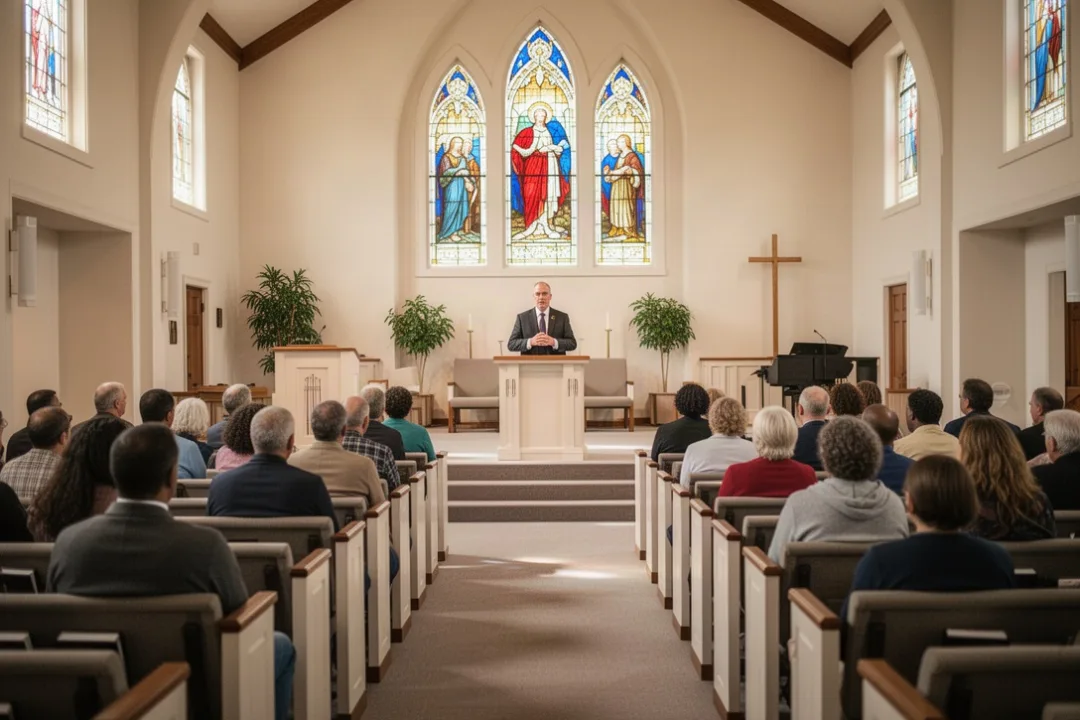
Worship style reflects theology, history, local culture, and the preferences of the congregation. A liturgical service usually follows a structured pattern that may include prayers, Scripture readings, a creed, communion, and a church calendar. Catholic, Orthodox, Anglican, Lutheran, and some Methodist and Presbyterian churches often use this approach.
Other congregations center the service on extended singing, a sermon, prayer, and an invitation to respond. Evangelical, Baptist, Pentecostal, and non-denominational churches frequently use this format, although there is considerable variety within each group.
Music is only one part of worship. Pay attention to the content of the sermon, the way Scripture is handled, the congregation’s prayer life, the treatment of communion, and whether worship points attention toward God or mainly toward performance and personal preference.
What “non-denominational” means in practice
A non-denominational church does not formally belong to a denomination, but it is not necessarily free from tradition. Many non-denominational churches have clear connections to evangelical, Baptist, charismatic, or Reformed ideas, even if they avoid those labels.
Some use networks or associations for pastor training, missions, church planting, or accountability. Others are fully independent. Their beliefs may be stated in detail on a website, or they may be communicated mainly through sermons and membership classes.
If you are considering a non-denominational church, ask about its statement of faith, governance, financial oversight, leadership qualifications, and process for handling complaints. The absence of a denominational name does not automatically mean that the church is more biblical, more welcoming, or less doctrinal.
How to compare churches when you are choosing a congregation
Choosing a local church requires more than identifying the denomination on the sign. Two congregations within the same denomination can differ in preaching, community life, leadership, hospitality, and emphasis.
Read the church’s beliefs: Look for statements about Scripture, God, Jesus, salvation, baptism, communion, the church, and future hope.
Attend more than one service: Notice whether the service reflects the beliefs the church claims to hold and whether visitors are treated respectfully.
Listen to several sermons: Consider whether the preaching explains Scripture carefully, addresses real life, and keeps the focus on the stated center of Christian faith.
Ask direct questions: Speak with a pastor or ministry leader about membership, baptism, communion, leadership, children, finances, and expectations for participation.
Observe relationships: Look for humility, honesty, care for people in need, and a willingness to welcome people from different backgrounds.
Check accountability: Find out how leaders are supervised and how the church responds to allegations of abuse, financial misconduct, or harmful behavior.
A healthy church does not need to hide its beliefs or pressure you to make an immediate commitment. You should have room to ask questions, compare teachings, and decide carefully.
How to handle disagreements among denominations
Denominational differences range from relatively minor customs to convictions that shape a person’s understanding of Christian identity. Christians should not pretend that every disagreement is insignificant, but neither should every difference become a reason for contempt.
A useful approach is to distinguish between central beliefs, important practices, and matters of local preference. Historic creeds can help identify beliefs that many Christian traditions regard as foundational. Baptismal practice, church government, worship music, and the timing of communion may be deeply meaningful without being equally central for every Christian.
When you compare traditions, describe each one fairly before evaluating it. Read the group’s own official materials, speak with members and leaders, and separate the teaching of a denomination from the behavior of an individual congregation. A church should be judged by its actual practices as well as its public statements.
Why denominations continue to matter
Denominations provide more than labels. They can offer pastor training, theological education, mission partnerships, disaster relief, youth programs, church planting, and accountability. They also preserve forms of worship, historic documents, and patterns of Christian life that connect present congregations with earlier generations.
At the same time, a denomination can inherit unresolved conflicts or institutional weaknesses. A large structure may not reflect every local congregation, and a local church may not consistently follow its denomination’s official teaching. The label is useful, but it should be tested against what people actually believe and do.
For many people, the most important question is not which denomination has the most familiar name. It is whether a particular congregation teaches faithfully according to its convictions, cares for its members and neighbors, practices responsible leadership, and gives you a clear place to grow in Christian community.
Frequently asked questions
How many church denominations are there?
There is no single universally accepted number because researchers classify Christian groups differently. Some counts treat every independent association as a denomination, while others group related churches into larger families. The total also changes as congregations merge, split, or form new networks. It is more useful to compare traditions by beliefs, history, and governance than to rely on one exact figure.
What is the difference between a denomination and a local church?
A denomination is a wider Christian organization or tradition that may include many congregations. A local church is one specific community that meets in a particular place. Some local churches belong to a denomination and follow its rules; others are independent. A congregation can also identify with a tradition informally without having formal denominational oversight.
Are all Christian denominations considered part of Christianity?
Christian groups generally identify themselves through faith in Jesus Christ, but different churches disagree about which beliefs are essential and how those beliefs should be defined. Roman Catholic, Orthodox, Protestant, and other traditions may recognize one another in some ways while disputing theology or church authority. The answer depends on the particular group and the criteria being used.
How can I tell which denomination is right for me?
Start by identifying the beliefs and practices that matter most to you, especially views of Scripture, baptism, communion, salvation, leadership, and worship. Visit several congregations, read their official beliefs, and ask leaders direct questions. Also examine the church’s accountability, treatment of people, community life, and consistency between its public teaching and everyday practice.











Leave a Reply