The Lord Is Shepherd Prayer for Peace and Guidance
The Lord Is Shepherd Prayer for Peace and Guidance
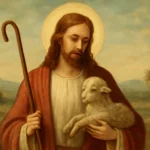
When you feel anxious about a decision, exhausted by responsibility, or unsure what to do next, you may find yourself asking for a simple prayer that brings you back to God’s care. The “The Lord is my shepherd” prayer draws on Psalm 23 and expresses trust in God as your guide, protector, provider, and constant companion.
You can pray it in the morning, before sleep, during a difficult conversation, or whenever fear begins to take over. The words do not need to be polished. What matters is bringing your real circumstances to God and allowing the image of a shepherd caring for sheep to shape the way you pray.
Psalm 23 presents God as a shepherd who knows, leads, feeds, and protects his people. The image is personal rather than distant: a shepherd pays attention to the condition of the flock, searches for safe paths, and remains present through danger. When you pray these words, you are acknowledging that you do not have to manage every burden alone.
The prayer also expresses dependence without helplessness. Trusting God does not mean ignoring responsibilities or refusing wise advice. It means recognizing that your strength, judgment, and daily provision are not self-created. You can act faithfully while asking God to direct your choices and steady your heart.
Each part of Psalm 23 offers a different way to speak with God:
Pasture and still water: ask for rest, nourishment, and a healthier pace.
Right paths: ask for wisdom, integrity, and direction.
Dark valleys: ask for courage and awareness of God’s presence.
A prepared table: ask for provision, dignity, and peace amid opposition.
Goodness and mercy: remember God’s faithful care over the whole course of life.
Praying through these images can make a familiar passage more personal. Instead of repeating words mechanically, you connect each picture with something happening in your own life: a tense workplace, a family concern, a health issue, a financial need, or a spiritual question.
A personal “The Lord is my shepherd” prayer
The following prayer is an original devotional prayer based on the themes of Psalm 23. You can pray it as written or replace general phrases with specific names, decisions, and circumstances.
The Lord is my shepherd, and I place myself in his care today. Lead me toward what gives life, and teach me to receive rest without guilt. Quiet the fears that keep me restless, and restore the parts of me that have been worn down.
Lord, guide my thoughts, words, and choices along paths that are good and true. When I am uncertain, give me patience rather than panic. When I am tempted to choose what is easy but wrong, give me courage to follow your wisdom. Help me listen carefully before I act.
When I walk through a season of grief, danger, conflict, or uncertainty, remind me that I am not abandoned. Give me the strength to take the next faithful step. Protect me from despair, and place trustworthy people around me when I need support.
Provide what I truly need, including daily bread, sound judgment, meaningful work, and the ability to recognize grace. When others misunderstand or oppose me, keep bitterness from controlling me. Give me a calm spirit and help me respond with honesty and self-respect.
Thank you for your mercy, which meets me in my weakness, and for your goodness, which continues even when I cannot see what comes next. Stay near to me today and teach me to live with trust. Amen.
Personalize the prayer: After the first sentence, name one area where you need God’s shepherding today. A specific request often helps your attention become more honest and focused.
How to pray Psalm 23 when you need guidance
A shepherd prayer can be brief, but giving yourself a clear pattern may help when your thoughts are scattered. You do not need to force an emotional experience. Simply move through the main themes slowly and speak to God in ordinary language.
Begin with recognition. Say that God is your shepherd and acknowledge your need for care, direction, or protection.
Name your condition. Tell God whether you feel tired, afraid, angry, confused, lonely, grateful, or hopeful.
Ask for the next step. Request wisdom for one decision or one faithful action rather than demanding a complete explanation of the future.
Receive rest. Sit quietly for a moment and release the pressure to solve everything immediately.
End with trust. Place the outcome in God’s hands while remaining willing to do what is right and practical.
This pattern can take two minutes or twenty. If you have only a short break, pray one sentence such as, “God, shepherd me through this conversation.” If you have more time, read Psalm 23 slowly and paraphrase each section in your own words.
Praying for a difficult decision
When you need direction, avoid treating prayer as a way to obtain a magical signal. Ask instead for wisdom, honesty, and discernment. Tell God what you know, what you fear, and what motives may be influencing you. Then consider sound counsel, relevant facts, and the likely effects of each choice on the people involved.
A shepherd does not usually drag every sheep to the destination in one motion. The image suggests attentive guidance over time. You may receive clarity through Scripture, mature advice, practical circumstances, conscience, and a growing sense that a choice is consistent with love and integrity.
Praying in fear or uncertainty
Fear often narrows your attention until every possibility looks threatening. A shepherd prayer gives you language for both the danger and God’s presence. You do not have to pretend that the valley is pleasant. You can say, “I am afraid of what may happen, but I ask you to remain with me and show me how to proceed.”
Then identify one immediate action: make the phone call, ask for help, gather accurate information, attend the appointment, or rest before responding. Trust and practical action can exist together. Prayer steadies you so that fear does not make every decision for you.
What the shepherd images teach about God’s care
The language of Psalm 23 is memorable because it connects spiritual trust with ordinary human needs. Sheep need food, water, protection, and direction. People also need physical rest, emotional safety, moral guidance, community, and hope. The prayer recognizes that these needs are related rather than separate.
Green pastures represent more than comfort
Pasture suggests nourishment and a place where life can be sustained. In prayer, this may mean asking God to help you notice what actually restores you instead of chasing constant activity. Rest is not always the same as entertainment. You may need sleep, quiet, nutritious food, a healthy boundary, or time with someone who makes you feel safe.
This image can also expose patterns that leave you depleted. If your schedule allows no space for recovery, ask what must change. A prayer for restoration may lead to a practical decision to decline an unnecessary commitment or seek professional help for ongoing distress.
Still water represents peace and stability
Water is essential, yet turbulent water can be dangerous. Still water creates an image of calm provision. When your mind is racing, you can ask God to give you enough peace to think clearly, not necessarily a life without every difficult circumstance.
Peace may arrive gradually. It can look like breathing before speaking, postponing an impulsive message, turning off a source of constant noise, or accepting that you cannot control another person’s response. These actions do not replace prayer; they can become ways of cooperating with the peace you seek.
Right paths represent moral and practical direction
A shepherd’s guidance is not merely about reaching a destination quickly. The path also matters. The prayer asks God to lead you in ways that reflect truth, justice, humility, and love. A profitable choice that requires deception may not be a good path. A difficult conversation handled with honesty may be more faithful than avoiding it.
When you pray for direction, include your character in the request. Ask not only, “What should I choose?” but also, “Who am I becoming through this choice?” That question can reveal motives such as pride, revenge, fear of rejection, or a desire to control.
The dark valley represents seasons of suffering
Psalm 23 does not promise that faithful people will avoid every valley. Its comfort comes from the assurance of divine presence within danger and sorrow. A shepherd prayer is therefore appropriate during bereavement, illness, unemployment, family conflict, spiritual dryness, or a period when the future is unclear.
Praying for God’s presence does not mean you should remain in an unsafe situation. If you face abuse, threats, exploitation, or immediate danger, seek help from trusted people and appropriate emergency or professional services. Spiritual trust and personal safety are not opposites.
The table represents provision and dignity
The image of a table suggests welcome, nourishment, and a place prepared even when enemies or pressures are nearby. It can speak to the fear that someone else’s hostility has the power to define your worth. In prayer, you can ask God to keep you grounded when criticism, rivalry, or rejection becomes consuming.
This does not require pretending that conflict is harmless. You may need a boundary, an apology, a formal report, or distance from a destructive relationship. The prayer helps you seek a response that protects your dignity without allowing resentment to become your identity.
Practical tips and common mistakes when praying
A familiar prayer can become more meaningful when you use it deliberately. It can also become unhelpful if you treat it as a formula that guarantees a particular result. These suggestions can keep the practice honest and grounded.
Use your own words. A traditional phrase can open the prayer, but add the details of your actual situation.
Do not demand instant certainty. Prayer may clarify your next step without revealing the whole future.
Keep a healthy rhythm. Pray at a regular time, such as waking, lunch, or bedtime, rather than waiting only for a crisis.
Pair prayer with wise action. Seek medical care, financial advice, counseling, or practical assistance when the situation calls for it.
Do not confuse guilt with guidance. A condemning inner voice is not automatically God’s direction.
Leave room for listening. Silence can help you notice thoughts, convictions, and concerns that constant talking conceals.
Pray with other people when appropriate. A trusted church member or friend can offer support without taking control of your decision.
Avoid using the prayer to control someone else. Ask for your own wisdom, patience, and faithfulness rather than treating prayer as a way to force another person to change.
Important distinction: Trusting God as your shepherd does not mean accepting harmful treatment, refusing professional care, or waiting passively for every problem to disappear. Healthy faith can include boundaries, treatment, honest conversations, and emergency help.
Short versions of the shepherd prayer for daily use
A short prayer can be useful when you are commuting, waiting for an appointment, or facing an unexpected problem. Repeating a concise request is not less spiritual than praying at length. It can help you return your attention to God throughout the day.
For morning: “Lord, shepherd me through this day. Lead my choices, protect my mind, and help me receive the rest and strength I need.”
For anxiety: “God, stay near me in this valley. Calm my fear enough for me to take the next wise step.”
For a decision: “Shepherd me toward what is true and good. Expose my hidden motives and give me courage to follow wisdom.”
For grief: “Lord, meet me in my sorrow. Carry what I cannot carry today, and place compassionate people beside me.”
For bedtime: “Thank you for caring for me today. Help me release what I cannot control and rest in your keeping.”
You can write one of these on a card, save it in a notes app, or memorize it. The purpose is not to create a perfect religious performance. It is to have simple language for returning to trust when your attention is pulled toward fear.
How to use the prayer with children or a group
Children may understand the shepherd image through care, safety, and guidance. Keep the prayer short and concrete. Ask what helps them feel safe, what decision they need help with, or whom they can ask for support. Avoid suggesting that every frightening event happened because they lacked faith.
In a group setting, one person can read a line or theme at a time, followed by a brief silence. Participants may pray silently for rest, direction, courage, or provision. Sharing should remain voluntary, especially when the subject involves grief, illness, family conflict, or private fears.
A group prayer is strongest when it does not pressure people to report a dramatic answer. Some people may experience comfort immediately; others may need ongoing support and time. Respectful silence and honest uncertainty have a place in prayer.
Sometimes you pray for guidance and remain confused. You ask for healing and continue to hurt. You seek provision and still face financial pressure. These experiences do not prove that you prayed incorrectly or that your suffering is a punishment.
You can bring disappointment directly to God. A faithful prayer may include questions, tears, anger, and silence. The shepherd image does not require you to call the valley good; it gives you a way to ask for companionship and strength while you are there.
Continue using practical support alongside prayer. Talk with a trusted spiritual leader, counselor, doctor, friend, or support group as appropriate. If anxiety, depression, trauma symptoms, or hopelessness are interfering with daily life, professional care can be an essential part of seeking help.
Over time, you may recognize guidance less as a dramatic answer and more as a pattern: greater honesty, a wise boundary, renewed courage, a supportive relationship, or the ability to take one good step at a time. The prayer keeps directing your attention toward a God who cares for the whole person, not just the immediate problem.
A simple daily practice built around Psalm 23
Choose a consistent time and give yourself five minutes. Begin by naming God as your shepherd. Take a slow breath, notice your emotional state, and mention one area where you need care. Then reflect on one image from the psalm rather than trying to cover everything at once.
On one day, you might pray for rest. On another, you might ask for direction or courage. Write down one practical response that seems faithful and possible. At the end of the day, consider where you received help, where you resisted wisdom, and what you want to place in God’s care overnight.
This practice can turn the shepherd prayer into more than a phrase repeated during emergencies. It becomes a steady way to remember that you are guided, sustained, and accompanied, even while you continue to face real responsibilities and unanswered questions.
Frequently asked questions
Is “The Lord is my shepherd” a complete prayer?
It can be. The phrase is a short confession of trust drawn from Psalm 23, and you can repeat it slowly as a prayer. Many people add a personal request for guidance, protection, rest, or courage. The value is not in the length of the wording but in honestly turning your attention toward God and your need for care.
Can I pray this prayer for someone else?
Yes. You can ask God to shepherd a family member, friend, coworker, or wider community through a specific difficulty. Pray for their safety, wisdom, comfort, and support, while respecting their privacy and choices. Prayer should not replace practical help, consent, medical care, or urgent action when those are needed.
What should I do if Psalm 23 does not make me feel peaceful?
You do not need to manufacture peace. Tell God honestly that you feel afraid, angry, numb, or confused. Focus on one image or sentence that feels possible to receive, and consider speaking with a trusted person. If distress is persistent or severe, a qualified mental health professional can provide appropriate support.
How often should I pray the shepherd prayer?
There is no required schedule. You might pray it once during a crisis or use it as a daily practice in the morning and evening. A consistent time can make it easier to remember, but spontaneous prayers during stressful moments are also meaningful. Let the rhythm support your relationship with God rather than become a rigid obligation.

















Leave a Reply