You may feel concerned about your country after reading the news, hearing a political argument, or seeing suffering in your own community. You may also wonder, What should I actually pray for? Prayers for the nation do not need impressive language. They can be honest, specific, and shaped by a desire for justice, wisdom, peace, and the well-being of every person.
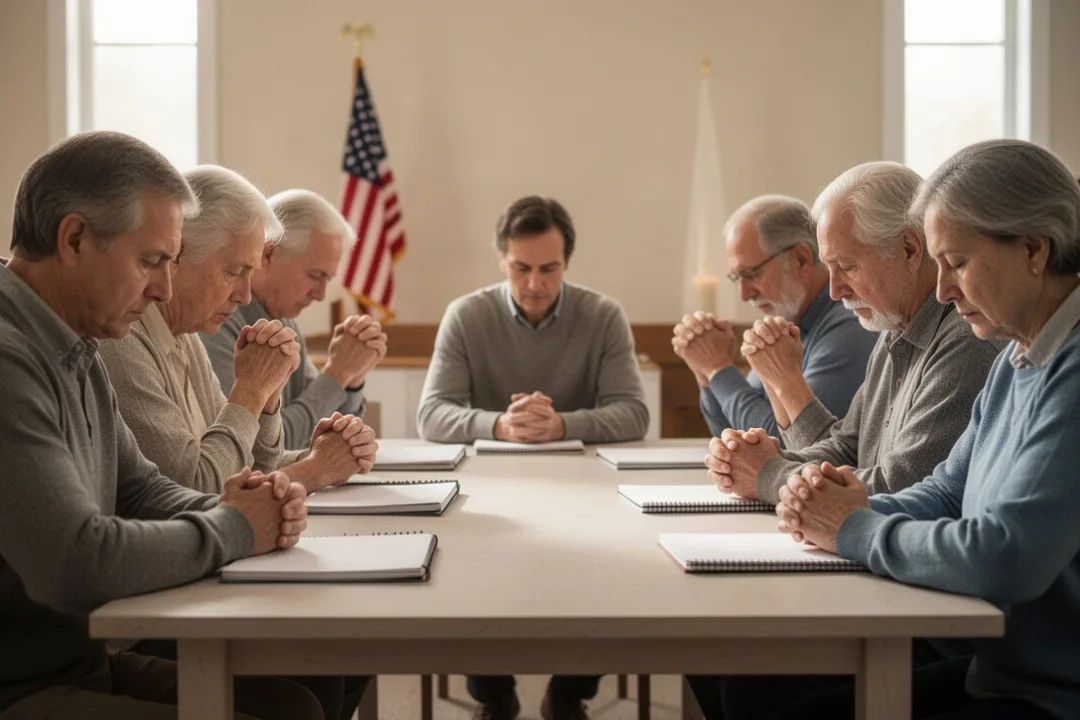
A useful national prayer brings both hope and responsibility before God. It asks for help for public leaders, protection for vulnerable people, integrity in institutions, healing across divisions, and courage for ordinary citizens to serve their neighbors. You can pray alone, with your family, in a church service, or with a small group.
Prayer for a nation is not the same as treating a country as perfect, specially favored, or beyond criticism. It is a way to place the country’s needs before God while recognizing both its strengths and its failures. A thoughtful prayer can express gratitude for what is good and repentance for harm that has been ignored or caused.
Several biblical passages connect prayer with public life. First Timothy 2:1–4 encourages prayer for all people and for those in authority, with the hope that communities may experience peace and live with godliness and dignity. Jeremiah 29:7 describes seeking the welfare of the city where God’s people live. These references point toward active concern for the common good, not political loyalty to one party or leader.
Praying for the nation can also correct the way fear affects your attention. News reports often highlight conflict, outrage, and crisis. Prayer does not deny those realities, but it helps you respond with discernment rather than panic. It gives you room to ask what faithfulness, compassion, and truth require from you.
A helpful starting point: Pray for the nation as a community of people made in God’s image, not merely as a political system or symbol. This keeps your prayers attentive to real families, workers, children, immigrants, communities, and people who disagree with you.
How to pray for the nation step by step
If you are unsure where to begin, use a simple pattern. You can spend several minutes on each point or choose only one area for a short daily prayer. The order is flexible, but moving from worship to honest concern and then to action can help your prayer remain balanced.
Begin with God’s character. Recognize God as holy, just, merciful, and wise. This places national concerns in a larger moral framework.
Give thanks for specific blessings. Mention people, freedoms, institutions, places, and acts of service that contribute to the nation’s good.
Confess national and personal failures. Name injustice, dishonesty, cruelty, corruption, prejudice, neglect, and indifference without pretending that someone else alone is responsible.
Pray for people in authority. Ask for wisdom, restraint, honesty, courage, humility, and a willingness to protect those with less power.
Pray for neighbors facing hardship. Remember people affected by poverty, violence, addiction, illness, discrimination, displacement, loneliness, or natural disasters.
Ask for peace and truthful communication. Pray that communities reject dehumanizing speech, manipulation, falsehood, and revenge.
Offer yourself for service. Ask how you can contribute through compassion, civic responsibility, generosity, listening, or practical help.
End with trust. Release the outcome to God while remaining willing to act with patience and courage.
This pattern prevents prayer from becoming only a list of political complaints. It also prevents vague optimism from replacing honest intercession. You can use the pattern with a newspaper, a local concern, a national crisis, or a church prayer gathering.
A prayer for the nation’s leaders
Public officials make decisions that affect education, health care, public safety, housing, employment, immigration, the environment, and many other areas of life. Pray for leaders at every level: national, state, county, tribal, territorial, and local. Include elected officials, judges, civil servants, military leaders, public administrators, and the people who advise them.
Ask God to give leaders clear judgment rather than impulsive reactions. Pray that they will seek accurate information, listen to people affected by their decisions, and recognize the limits of their own knowledge. Ask for courage to do what is right when a principled choice may be unpopular or costly.
Pray also for accountability. A leader may need correction, investigation, or consequences, and asking for accountability is not the same as wishing harm. You can ask that misconduct be exposed through lawful processes, that victims be heard, and that public power be used for service rather than personal gain.
A prayer for leaders might say:
God of wisdom and justice, guide the people who hold public responsibility. Give them clear minds, honest advisers, courage to protect the vulnerable, and humility to accept correction. Guard them from corruption, vanity, fear, and contempt for those they serve. Help them pursue decisions that strengthen peace, fairness, and the dignity of every person. Amen.
When praying for a leader you strongly oppose, avoid pretending that you approve of every policy or statement. You can pray for that person’s repentance, wisdom, protection from destructive influences, and willingness to serve the public good. The goal is not to erase moral judgment; it is to refuse hatred and entrust justice to God.
Praying for justice and the protection of vulnerable people
National well-being should be measured by more than economic strength or international influence. It also includes how a society treats people with limited power: children, older adults, people with disabilities, the poor, prisoners, refugees, minorities, victims of abuse, and people who are sick or isolated.
Ask God to expose systems and habits that cause avoidable harm. Pray for fair access to necessities, honest courts, safe workplaces, responsible policing, wise social services, and leaders who do not exploit fear. Pray for victims to find protection and for those who cause harm to face truth, accountability, and opportunities for genuine change where appropriate.
Justice-focused prayer should remain concrete. Instead of saying only, “Bless the nation,” you might pray:
For families unable to afford stable housing or nutritious food.
For children who lack safety, consistent care, or quality education.
For people affected by racism, trafficking, domestic violence, or exploitation.
For immigrants and refugees seeking safety, lawful work, and a place to belong.
For people leaving prison or recovering from addiction who need support and dignity.
For communities that have suffered from pollution, disasters, violence, or long-term neglect.
The prophets of the Hebrew Scriptures repeatedly connected worship with care for the oppressed. Isaiah 1:17 calls God’s people to learn to do good, pursue justice, correct oppression, and defend those in need. Micah 6:8 presents justice, mercy, and humble fellowship with God as central expressions of faithful living. These themes challenge prayers that ask for national prosperity while ignoring national suffering.
Keep prayer specific: If a news story brings one community to your attention, learn enough to pray accurately. Name the people affected, the needs involved, and the kinds of wisdom, protection, healing, or reform that would make a meaningful difference.
Praying for peace in a divided country
Peace is more than the absence of protest, disagreement, or visible conflict. A country may appear calm while resentment, discrimination, poverty, or fear continues beneath the surface. Pray for a peace that includes truth, safety, fairness, and the possibility of restored relationships.
Ask God to help people disagree without treating opponents as less than human. Pray for families and churches divided by political arguments, for communities where tensions are high, and for public conversations shaped by suspicion. Ask for patience among people who need to listen before responding.
Peace does not require you to call every position equally good. It does require honesty about your own blind spots and care in the way you speak. You can pray for the courage to challenge lies and injustice without using language that encourages humiliation, threats, or revenge.
Romans 12:18 teaches believers to pursue peaceful relationships as far as it depends on them. James 1:19–20 connects careful listening and restrained anger with a life that reflects God’s purposes. These passages do not promise that every conflict will be resolved quickly. They do show that the manner of disagreement matters.
Praying for truth, wisdom, and public conversation
A healthy nation needs trustworthy information and citizens who can distinguish evidence from rumor. Pray for journalists, editors, researchers, educators, public health workers, technology companies, and ordinary people who share information with friends and family. Ask God to strengthen their commitment to accuracy and accountability.
Pray for discernment when claims are designed to provoke fear or anger. Ask for patience to verify information before repeating it, humility to correct mistakes, and courage to acknowledge facts that challenge your preferred political or cultural position. Prayer can change not only what you believe about public events, but also how you contribute to the conversation.
You may pray for:
Reporters who investigate wrongdoing while protecting sources and vulnerable people.
Researchers and experts who communicate evidence clearly and honestly.
Teachers who help students evaluate information and think critically.
Public officials who communicate limitations, risks, and uncertainty responsibly.
Citizens who refuse to spread fabricated stories, edited images, or dehumanizing rumors.
Churches that speak with conviction without presenting partisan preference as divine command.
Proverbs 18:13 warns against answering before listening, and Proverbs 18:17 describes how an initial account can seem convincing until it is examined. These principles are useful when you are tempted to share a claim immediately. A prayer for truth should be accompanied by habits that honor truth.
Praying for the church’s role in the nation
Churches can serve the nation by caring for neighbors, welcoming strangers, teaching moral responsibility, supporting families, and speaking for people who are overlooked. They can also damage their witness when they confuse the kingdom of God with a nation, political party, candidate, or cultural movement.
Pray that pastors and ministry leaders will show spiritual courage and political humility. Ask them to address injustice without favoritism, protect people from abuse, handle money responsibly, and create congregations where people can worship with others who hold different political opinions.
Pray for churches to become places where difficult subjects can be discussed without coercion or contempt. Ask for wise pastoral care when members are anxious about elections, war, economic hardship, racial tension, or changes in public policy. Pray that Christian communities will serve the poor and vulnerable in practical ways instead of limiting their response to statements.
Christians may disagree about the best public policy while sharing commitments to truth, mercy, human dignity, and love of neighbor. Ephesians 4:15 describes speaking truth with love, while Philippians 2:3–4 directs believers to reject selfish ambition and consider the interests of others. These teachings offer a standard for church participation in public life.
Praying for local communities and ordinary citizens
National issues often feel too large to influence, but every country is made up of neighborhoods, workplaces, schools, families, and local institutions. Pray for the people who make daily life possible: teachers, nurses, caregivers, sanitation workers, farmers, small-business owners, first responders, social workers, transit employees, and volunteers.
Ask God to strengthen relationships across differences. Pray for neighbors who rarely meet one another, for people who feel invisible, and for communities where loneliness is widespread. Pray for local leaders to recognize needs early and for residents to participate constructively rather than waiting for someone else to solve every problem.
You might set aside one day each week to pray for a different local area or group. For example:
Pray for schools, students, educators, and families.
Pray for hospitals, clinics, caregivers, and people facing illness.
Pray for police, firefighters, emergency workers, and people affected by violence.
Pray for shelters, food programs, social workers, and people experiencing homelessness.
Pray for businesses, workers, job seekers, and those facing financial pressure.
Pray for civic groups, nonprofits, churches, and volunteers.
Local prayer can lead naturally to local service. You may discover a practical response such as donating supplies, mentoring a child, visiting someone who is isolated, attending a community meeting, or learning about a problem from people who live with it. Prayer is not a substitute for responsible action, but it can clarify the action love requires.
Praying during elections and political change
Election seasons can bring unusually strong emotions. Pray for candidates, campaign workers, voters, election officials, poll workers, and communities affected by political advertising or misinformation. Ask for a fair process, public safety, accurate reporting, and peaceful acceptance of lawful results.
Pray for candidates to discuss real issues honestly rather than relying on personal attacks or deliberate confusion. Ask that voters develop wisdom, examine policies, and resist treating political success as proof that God endorses a particular person or movement.
After an election, continue praying for the people who won, the people who lost, and the citizens who feel ignored or afraid. Pray for those in power to govern for the whole public, including people who did not support them. Pray for opponents to challenge decisions lawfully and for citizens to remain engaged without allowing politics to consume their identity.
A short election prayer could be:
God of truth, guide voters, candidates, election workers, and public servants. Protect the process from intimidation, deceit, and violence. Help citizens seek reliable information and vote with wisdom and conscience. Give elected leaders humility in victory and give everyone else patience, courage, and commitment to the common good.
Praying during war, disaster, or national crisis
During war or disaster, begin with the people facing immediate danger. Pray for civilians, children, displaced families, the injured, grieving relatives, aid workers, medical teams, emergency responders, and those separated from loved ones. Ask for protection, shelter, food, medical care, and safe routes to places of refuge.
Pray for leaders and negotiators to pursue protection of human life and a just peace. Ask that decisions be guided by moral clarity rather than revenge, pride, or the desire to preserve power. Pray for captives, prisoners, and people who cannot speak freely. You can also pray for truth to be established when propaganda and conflicting reports make events difficult to understand.
When a crisis is close to home, keep your prayer manageable. Name what you know, ask for the next needed mercy, and allow silence when words fail. Psalm 46 presents God as a refuge amid upheaval, while Romans 8:26 describes the Spirit helping believers when they do not know how to pray. These passages make room for both confident petitions and wordless grief.
Praying with gratitude and repentance
National prayer needs both gratitude and repentance. Gratitude helps you recognize gifts that can disappear from view: people who serve faithfully, opportunities to worship, family relationships, public institutions that protect many, natural beauty, and acts of generosity after hardship.
Repentance asks where you have benefited from unfairness, stayed silent about harm, believed convenient falsehoods, or treated fellow citizens with contempt. It also asks God to expose national sins such as racism, exploitation, violence, corruption, neglect of the poor, abuse of power, and disregard for creation.
Repentance is not self-condemnation or performative shame. It is a turning toward truth and a willingness to make changes. Daniel 9 models confession that recognizes communal failure, while 2 Chronicles 7:14 connects humility and turning from wrongdoing with seeking God. These passages should lead to changed conduct, not merely emotional words.
You might pray:
Merciful God, thank you for every person and practice that serves the good of this country. Forgive us for the ways we have accepted injustice, repeated falsehood, ignored suffering, or used power selfishly. Show us what we need to repair, whom we need to hear, and what faithful action should follow. Make us people who practice humility, truth, mercy, and courage.
How to keep prayers for the nation balanced
National prayer can become unbalanced when it focuses only on one political issue, one group of people, or one desired outcome. A broader practice remembers both those who agree with you and those who oppose you, both national leaders and ordinary neighbors, both immediate emergencies and long-term conditions.
These habits can help:
Pray beyond your preferred party. Ask God to guide every leader and protect people affected by every policy.
Use names and real needs. Specific prayer is usually more attentive than abstract slogans.
Leave room for correction. Ask whether your assumptions about a situation may be incomplete.
Protect prayer from contempt. Strong convictions do not require demeaning people.
Pair concern with service. Identify one responsible action that fits the need before you.
Return regularly. National conditions change, and steady prayer is more sustainable than reacting only to dramatic headlines.
You do not need to pray about every issue each day. A rotating schedule can prevent exhaustion and help you remember groups that receive little attention. You might pray for leaders on Monday, vulnerable communities on Tuesday, local institutions on Wednesday, churches on Thursday, truth and public conversation on Friday, and peace during the weekend.
A simple daily prayer for the nation
When you have only a few minutes, use a compact prayer that touches the main concerns. Adjust the words to fit your beliefs and the situation in front of you:
God of all people, watch over this nation and everyone who calls it home. Give leaders wisdom, honesty, restraint, and courage. Protect those who are vulnerable, heal communities harmed by violence or injustice, and provide for people facing poverty, illness, displacement, or fear. Help citizens seek truth, reject hatred, and serve their neighbors. Lead us toward justice, peace, humility, and practical love. Amen.
Let the prayer become more specific as you learn more. If a community is recovering from a tornado, pray for survivors, responders, shelter, medical care, and long-term rebuilding. If a public decision is being debated, pray for accurate information, wise judgment, and protection for the people most affected. If you are grieving your country’s failures, bring that grief honestly rather than forcing yourself to sound hopeful.
Prayers for the nation are most faithful when they shape the person praying. They can make you more attentive to suffering, less captive to outrage, and more willing to practice truth and mercy. Ask for the nation’s good, then remain open to the ordinary responsibility of helping make that good visible in the place where you live.
Frequently asked questions
Can I pray for the nation if I feel disappointed in its leaders?
Yes. Prayer does not require political approval or denial of wrongdoing. You can ask God to give leaders wisdom, expose corruption, protect the vulnerable, and bring accountability where it is needed. Praying for someone’s guidance and repentance is different from endorsing every decision. Honest prayer can hold grief, moral concern, hope, and a commitment to justice at the same time.
Should prayers for the nation mention specific political parties?
They can, but they do not have to. Naming a party may be appropriate when praying about a particular decision or conflict, yet broad prayer should include people across political viewpoints. Focus on qualities such as truthfulness, humility, courage, fairness, and concern for neighbors. This helps keep prayer centered on the common good rather than turning it into a campaign statement.
How can a church pray for the nation without becoming partisan?
Pray for leaders at every level, public servants, voters, vulnerable communities, peace, accurate information, and justice. Avoid presenting a party platform or candidate as the only Christian position. Give people room to disagree in good faith while maintaining standards of truth, human dignity, compassion, and lawful conduct. A church can address moral issues clearly without instructing members to adopt one political identity.
What should I do when I do not know enough about a national crisis to pray specifically?
Begin with the needs you know: safety for civilians, wisdom for decision-makers, care for the injured, comfort for grieving families, and truthful communication. Then seek reliable information from sources with accountability and relevant expertise. You do not need to understand every detail before praying. Keep your language humble, avoid repeating unverified claims, and update your prayer as the situation becomes clearer.















Leave a Reply