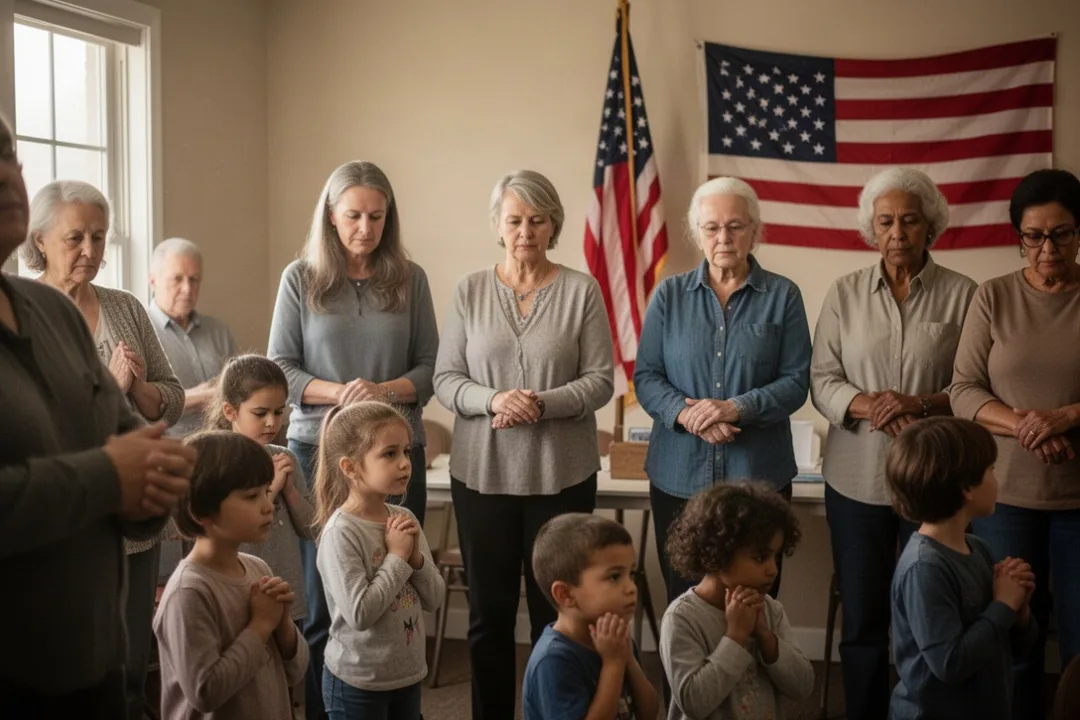
When the news leaves you worried about the direction of the country, you may find yourself asking, “How should I pray for America?” You do not need perfect words or a polished speech. A sincere prayer can bring your concerns about leaders, neighbors, families, justice, and peace before God while helping you respond with humility and care.
The prayer below is written for personal devotion, a church gathering, a family meal, or a community prayer meeting. It asks for wisdom in public life and compassion among ordinary people without tying prayer to one political party or viewpoint.
God of mercy and truth, we pray for the United States and everyone who calls it home. Give our leaders wisdom, integrity, courage, and a willingness to serve the common good. Help them listen carefully, act justly, and protect the dignity of every person.
Bring healing where our communities are divided, patience where people are angry, and honesty where fear or falsehood has taken hold. Strengthen families, comfort those who are suffering, and provide for people facing poverty, illness, loneliness, violence, or uncertainty.
Guide us to be responsible citizens and compassionate neighbors. Teach us to seek justice, practice mercy, speak truth with humility, and protect the vulnerable. Let peace begin in our homes, congregations, workplaces, schools, and communities. May our country grow in wisdom, freedom, responsibility, and love. Amen.
A meaningful prayer for America can hold several concerns together. You might pray for the nation’s government, but you can also remember people whose lives are affected by public decisions: children, older adults, service members, immigrants, people with disabilities, workers, caregivers, and those without stable housing or health care.
Prayer does not require you to pretend that serious problems are small. It gives you a way to name them honestly while resisting despair, contempt, and hatred. The most useful prayers are often both specific about suffering and hopeful about the possibility of change.
Wisdom for leaders: Ask public officials to make careful decisions, seek reliable information, accept accountability, and remember the people affected by their choices.
Justice and equal dignity: Pray for fair treatment, protection from abuse, and systems that do not ignore people who have little power or influence.
Peace in divided communities: Ask for restraint in speech, truthful conversations, and the courage to disagree without dehumanizing others.
Protection and care: Remember people affected by violence, disasters, addiction, illness, poverty, discrimination, and loneliness.
Personal responsibility: Ask how you can become more patient, honest, generous, informed, and willing to serve.
You can also pray for the country’s strengths: people who volunteer, care for relatives, respond to emergencies, teach children, serve in the military, protect communities, create useful work, and welcome those in need. Gratitude does not deny hardship. It helps you recognize the people and practices that already support the common good.
Keep the focus broad: Praying for America is not the same as asking God to guarantee that your preferred candidate, party, or policy will win. It can be a request for truth, wisdom, justice, humility, and the well-being of all people.
A prayer for American leaders and public servants
National and local leaders make decisions under pressure, often with incomplete information and competing demands. A prayer for America can ask God to give them sound judgment rather than simply asking for success. It can also ask leaders to recognize the limits of their knowledge and to listen to people whose experiences differ from their own.
Remember elected officials, judges, public administrators, military leaders, police officers, firefighters, emergency workers, teachers, health care professionals, and others who carry public responsibilities. They need integrity when choices are unpopular, courage when powerful interests apply pressure, and compassion when policies affect real families.
Ask for honesty in public communication and resistance to corruption.
Ask for the patience to study complicated problems instead of seeking quick applause.
Ask for respect toward political opponents and people who hold different beliefs.
Ask for protection from threats, exhaustion, vanity, and the misuse of authority.
Ask that decisions protect human dignity and consider people who are easily overlooked.
Ask for accountability when officials cause harm or fail in their responsibilities.
Prayer for leaders should not become a way to excuse wrongdoing. You can pray for someone’s wisdom and repentance while still supporting lawful accountability. You can ask for a government that serves people faithfully while remaining willing to challenge actions that are unjust.
Praying for a leader you did not vote for may feel particularly difficult. That practice can separate prayer from political approval. It does not require you to endorse every decision. It asks you to remember that public office carries serious responsibility and that every person, including an opponent, remains a human being who needs wisdom and moral direction.
A prayer for justice, unity, and honest disagreement
Many people want national unity, but unity does not mean pretending that every group has experienced the country in the same way. A prayer for America can seek unity with truth: the kind that makes room for grief, acknowledges harm, and works toward fairer relationships rather than demanding silence from people who have been hurt.
Pray for communities affected by racism, religious hostility, political violence, domestic abuse, exploitation, and unequal access to basic needs. Pray for people who feel ignored by institutions and for those whose work places them close to suffering. Ask for the humility to hear difficult testimony without immediately becoming defensive.
Justice also involves personal habits. You can pray for the ability to examine your assumptions, check information before repeating it, and speak about other people with care. A prayer for unity becomes more credible when it changes how you treat a neighbor, coworker, relative, or stranger.
The Bible repeatedly connects worship with concern for the vulnerable. References such as Micah 6:8 emphasize practicing justice, loving mercy, and walking humbly with God. James 1:19–20 highlights the value of listening carefully and restraining anger. Romans 12:18 encourages believers to pursue peace where peace is genuinely possible. These passages point toward a faith that is not merely verbal but visible in conduct.
How to pray when disagreement feels personal
Begin by naming the disagreement without turning the other person into a villain. Ask for the ability to distinguish between a person’s dignity and the beliefs or actions you oppose. Then pray for truth, patience, and the courage to set appropriate boundaries when a conversation becomes abusive or unsafe.
You can use a simple pattern:
Tell the truth: Describe what concerns, angers, or frightens you.
Ask for humility: Admit that your own knowledge and motives may be incomplete.
Pray for the other person: Ask for their well-being and moral clarity without demanding agreement.
Choose a faithful response: Consider whether to listen, speak, apologize, vote, volunteer, or step away.
Unity sometimes means working alongside people who do not share your theology or politics. It does not require surrendering convictions. It does require avoiding careless accusations, refusing to spread unverified claims, and remembering that a nation’s health depends partly on how citizens treat one another when they disagree.
A prayer for families, communities, and people in need
National concerns can feel enormous, but the effects of public life appear in ordinary places: a family deciding how to pay a bill, a student worried about safety, a caregiver running out of energy, or an older neighbor facing isolation. A prayer for America should include these everyday struggles, not only institutions and headlines.
Pray for parents and guardians who are trying to protect and guide children. Pray for children who experience hunger, instability, bullying, neglect, or fear. Remember teachers, counselors, social workers, and health care workers who often support people through difficult circumstances with limited resources.
Pray for people dealing with poverty, unemployment, homelessness, addiction, chronic illness, mental health challenges, grief, or incarceration. Ask for practical help, trustworthy friends, safe housing, treatment, employment, and the strength to take the next necessary step. Prayer should never be used to blame people for hardships they did not choose.
You can also remember communities after hurricanes, wildfires, floods, tornadoes, storms, or other emergencies. Pray for those who have lost homes or loved ones, for responders working long hours, and for organizations distributing food, shelter, medicine, and other necessities. Ask for wise preparation before disasters occur, not only comfort afterward.
Pair prayer with presence: After praying for a need, consider one safe and practical response—checking on a neighbor, donating responsibly, volunteering, contacting a representative, listening to someone who is lonely, or learning about a local service organization.
Care does not have to be dramatic to matter. A meal, a ride to an appointment, a calm conversation, or help with paperwork may be a direct answer to the prayer you have offered. Small acts cannot solve every national problem, but they protect human dignity and strengthen the relationships through which communities endure hardship.
How to pray for America with a steady and honest heart
Some people pray only when a crisis becomes impossible to ignore. Others set aside regular time because they understand prayer as a continuing practice of attention. Both can be sincere. A steady pattern can help you avoid letting fear, anger, or the latest headline determine the entire shape of your prayer.
Choose a time and setting that you can reasonably maintain. You might pray alone in the morning, with family before dinner, with a congregation, or with a small group of friends. The length matters less than honesty and consistency.
A simple weekly pattern could include:
Monday—leaders: Pray for national, state, county, city, tribal, and school officials.
Tuesday—families: Remember children, parents, caregivers, marriages, and households under strain.
Wednesday—justice: Pray for people facing discrimination, violence, poverty, or unfair treatment.
Thursday—peace: Ask for restraint, reconciliation, and protection from political or community violence.
Friday—service: Pray for public servants, volunteers, nonprofit workers, and people responding to emergencies.
Saturday—gratitude: Give thanks for people who strengthen communities through ordinary acts of responsibility and care.
Sunday—guidance: Ask how your faith should shape your conduct during the coming week.
If your attention is overwhelmed by news, begin with a few minutes of silence. Put down the phone, breathe slowly, and ask God to help you see people rather than only arguments. You may then read a short passage from Scripture, speak the prayer above, and sit quietly before deciding what action is yours to take.
It is also reasonable to pray with emotion. Fear, grief, anger, and confusion do not automatically make prayer faithless. The Psalms include cries for help, demands for justice, confession, gratitude, and trust. Their example allows you to bring your full concern to God while continuing to seek a wiser and more compassionate response.
Try not to measure prayer by whether circumstances change immediately or whether you feel peaceful every time. Prayer may change your priorities, soften your speech, expose an assumption, or give you courage to act responsibly. Sometimes it provides no quick answer but helps you remain present to people who need care.
Prayer and civic responsibility are not competing obligations. For many people, prayer clarifies the values that should guide participation: truthfulness, compassion, courage, responsibility, and respect for human dignity. The appropriate action will differ according to your circumstances, convictions, skills, and safety.
After praying, ask yourself a few grounded questions:
What concern is closest to me, rather than merely the loudest in the news?
Whose experience have I not taken time to hear?
What information do I need before forming or repeating an opinion?
What action is lawful, constructive, and realistic for me this week?
How can I help without treating another person as a project or political symbol?
Possible responses include voting, learning about local issues, attending a public meeting, writing respectfully to an elected official, serving on a community board, supporting a food pantry, mentoring a young person, helping with disaster relief, or joining a nonviolent community effort. You may also need to apologize, repair a strained relationship, or stop sharing material that encourages fear and contempt.
Healthy action includes limits. You are not responsible for solving every crisis, and constant exposure to conflict can damage your ability to serve. Rest, prayer, trusted friendships, and time away from political media can help you remain engaged without becoming consumed.
A prayer for America reaches its fullest meaning when it forms people who are willing to live their values in ordinary places. Ask for the grace to be truthful in conversation, fair in judgment, dependable in service, and attentive to people whose needs are easy to overlook. Those choices may seem modest, but they shape the character of homes, congregations, workplaces, and neighborhoods across the country.
When you do not know what else to say, you can return to a simple request: “God, guide our country toward truth, justice, mercy, and peace, and show me how to help.” That prayer leaves room for concern without surrendering hope, and it joins national intercession with personal responsibility.
Frequently asked questions
Can I use this prayer for America in a church service?
Yes. It can be read aloud by one person, adapted as a responsive prayer, or shortened for a worship service. If your congregation has a particular tradition, you may add language that reflects its theology. For a public gathering, broad wording about the country’s people, leaders, communities, and responsibilities can help include worshipers with different political perspectives.
Should a prayer for America mention specific political issues?
It can, especially when a specific issue involves clear human suffering or a community’s immediate needs. Name the concern carefully and pray for truth, wisdom, justice, and compassion rather than assuming that every disagreement has a simple answer. Avoid using prayer as a disguised campaign speech or as a way to shame people who disagree.
How can children participate in praying for the country?
Invite children to name people who need help, such as firefighters, teachers, families without homes, or leaders making difficult decisions. Keep the language concrete and reassuring. Children can draw a picture, offer one sentence of prayer, or help with a service project. Emphasize kindness, honesty, safety, and care for neighbors rather than partisan arguments.
Is it appropriate to pray for a country when I am frustrated with its government?
Yes. Prayer can include disappointment, grief, protest, and a request for change. You do not have to approve of government decisions to pray for leaders and the people affected by them. Ask for accountability where harm has occurred, wisdom for those with authority, protection for vulnerable people, and courage for yourself to respond constructively.















Leave a Reply