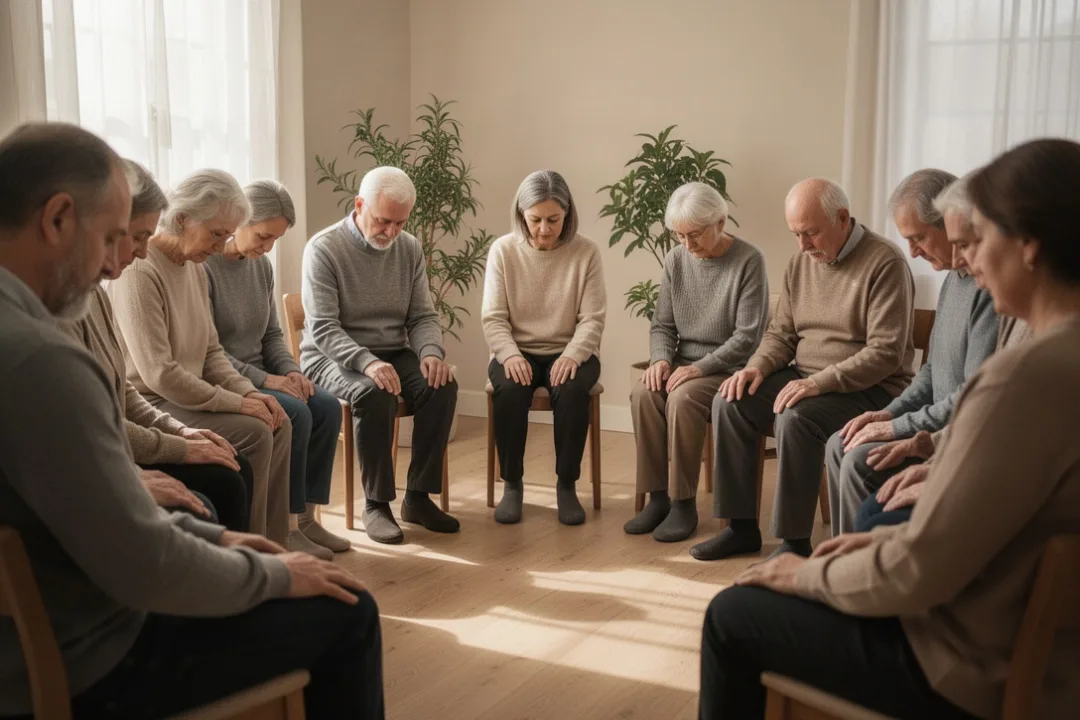
Prayers for the world can express grief, hope, gratitude, repentance, and a desire for justice. They may be spoken in a church, shared with a family, written in a journal, or offered quietly during an ordinary day.
Global events can feel too large to understand and too painful to change. Prayer does not require you to pretend that suffering is small or that every answer is immediate. It gives you a way to name what is happening, ask for help, and remain connected to the people affected by it.
People from different Christian traditions use different names for God and different forms of prayer. The prayers below use broadly Christian language, but you can adapt them to your own tradition. If you prefer silent prayer, replace spoken words with a period of stillness and bring one person or situation to mind.
Begin with honesty. A sincere prayer may include fear, anger, confusion, or silence. You do not need polished language to pray for the world.
How to pray for the world step by step
A simple pattern can help when you want to pray but do not know where to begin. The purpose is not to force a particular mood; it is to give your attention a compassionate direction.
Become still. Take a few slow breaths and set aside distractions for a moment.
Notice the world. Bring to mind one place, group, or need that concerns you.
Name the reality. Acknowledge suffering, conflict, injustice, illness, poverty, displacement, or environmental damage without minimizing it.
Ask for what is needed. Pray for protection, wisdom, courage, healing, reconciliation, justice, or practical help.
Include your own response. Ask how you can act with greater compassion, responsibility, or courage.
End with trust. Offer the situation to God, even if you still feel uncertain.
You can use this pattern in five minutes or expand it into a longer time of prayer. Specific prayers often make global concerns feel more personal, while a broad prayer can remind you that each crisis is connected to the dignity of every human being.
A general prayer for the world
Use this prayer when you want to hold the whole world before God without focusing on one particular crisis.
God of all people, hold our troubled world in your mercy. Bring comfort to those who suffer, protection to those in danger, and strength to those who serve their communities. Give leaders wisdom, give neighbors compassion, and give every person a deep respect for human dignity. Help us resist indifference and fear. Show us where our words, choices, and actions can bring healing. May peace grow in homes, communities, and nations. Amen.
This prayer moves from the needs of suffering people to the responsibilities of leaders and ordinary individuals. It recognizes that global peace is shaped not only by governments but also by the ways people speak, spend, welcome, forgive, and respond to those who are vulnerable.
Prayers for peace and an end to violence
Peace is more than the absence of open fighting. It includes safety, justice, the ability to live without fear, and the conditions that allow people to rebuild their lives. When praying for peace, you can remember civilians, children, families separated by conflict, injured people, aid workers, journalists, peacebuilders, and those who have lost loved ones.
God of peace, look with mercy on places marked by war and violence. Protect people who are caught in danger, especially children, the elderly, and those who cannot escape. Restrain those who plan harm. Give courage to people who seek peaceful solutions and wisdom to those responsible for decisions. Help enemies recognize one another’s humanity. Open paths toward truth, justice, forgiveness, and lasting peace. Amen.
Prayer for peace should not erase the need for accountability. You can ask for an end to violence while also praying that victims are heard, wrongdoing is addressed, and any settlement protects people who have been threatened or harmed.
Pray for protection and safe passage for civilians.
Pray for wise and honest leadership during negotiations.
Pray for medical teams, aid workers, and local peacebuilders.
Pray for the courage to reject hatred, dehumanizing language, and revenge.
Pray for survivors who face grief, displacement, injury, or trauma long after violence ends.
Prayers for people affected by disaster and suffering
Earthquakes, floods, fires, storms, droughts, disease outbreaks, and other disasters can overwhelm communities within a short time. Those affected may need shelter, food, medicine, clean water, family reunification, and long-term support. A helpful prayer remembers immediate needs as well as the difficult months of recovery.
Compassionate God, be near to people facing disaster, loss, and uncertainty. Bring comfort to those who are grieving and strength to those searching for loved ones. Guide rescuers, medical workers, volunteers, and local leaders. Provide safe shelter, food, water, medicine, and the support needed for recovery. Help communities rebuild in ways that protect the vulnerable. Move us to respond generously and wisely. Amen.
If you are praying for a particular disaster, name the place and the people involved when you can. Specific attention keeps prayer from becoming abstract. You might also pray for those whose suffering receives little public attention because it is remote, prolonged, or difficult to photograph.
Prayers for refugees, migrants, and displaced families
People leave home for many reasons, including war, persecution, disaster, hunger, political repression, and the loss of livelihood. Some travel safely; others face exploitation, detention, family separation, or dangerous routes. Prayer can honor both their vulnerability and their strength.
God who knows every home and every road, watch over people who have been forced to leave their communities. Protect those traveling from danger and exploitation. Give families safety, wise assistance, and the chance to remain together. Soften the hearts of those who receive them, and give governments the wisdom to act with justice and compassion. Help displaced people find welcome, meaningful work, education, and a secure place to live. Amen.
Consider praying for host communities as well. Local residents may be under pressure when housing, schools, health care, or employment are limited. A prayer for welcome can include the wisdom to respond fairly and the resources to help both newcomers and long-term residents.
Prayers for leaders and public decision-makers
Leaders make decisions that affect safety, health, education, economies, human rights, and the environment. Prayer for leaders is not the same as approval of every policy. It can ask for truthfulness, humility, restraint, and a willingness to protect people who have little power.
God of wisdom, guide leaders and public servants around the world. Give them clear judgment, humility, courage, and a willingness to listen. Protect them from corruption, pride, cruelty, and the pressure to serve only the powerful. Help them make decisions that preserve life, defend the vulnerable, and seek the common good. Give citizens wisdom as they speak, vote, organize, and hold leaders accountable. Amen.
You may pray for national leaders, local officials, judges, health administrators, educators, community organizers, and people working behind the scenes. Good governance depends on more than a single office; it also depends on honest institutions and communities willing to participate responsibly.
Prayers for people who are poor, hungry, or excluded
Poverty is not only a lack of money. It can involve inadequate food, unsafe housing, limited access to health care, poor working conditions, discrimination, debt, and exclusion from decisions that shape a person’s life. Prayer should honor people experiencing poverty without treating them as problems to be solved by outsiders.
Merciful God, draw near to people who are hungry, unhoused, unemployed, exploited, or denied opportunity. Provide daily necessities and surround them with trustworthy support. Give strength to people working for fair wages, safe housing, accessible care, and equal treatment. Change systems that preserve poverty and exclusion. Teach those of us with security to share responsibly, listen carefully, and serve without pride. Amen.
When you pray about poverty, avoid assuming that every person needs the same kind of help. One family may need groceries; another may need legal assistance, child care, transportation, medical treatment, or protection from abuse. Prayer can sharpen your attention to the particular needs behind a broad statistic.
Prayers for children and vulnerable people
Children and other vulnerable people often depend on adults and institutions for safety. They can be especially affected by war, hunger, abuse, trafficking, neglect, discrimination, and displacement. Prayer can ask for direct protection and for the integrity of those entrusted with care.
Loving God, protect children and all people who are vulnerable to violence, neglect, exploitation, or abandonment. Place trustworthy adults and safe communities around them. Give caregivers patience, resources, and wisdom. Expose abuse and bring it to an end. Help schools, churches, agencies, and families create environments where every person is treated with dignity. Bring healing to those carrying wounds from what they have endured. Amen.
Prayers for children should never replace practical safeguarding. If you know that someone is in immediate danger, contact appropriate emergency or protective services in your area. Responsible care includes listening, reporting serious concerns through proper channels, and refusing to keep abuse secret.
Prayers for health, healing, and caregivers
Health concerns reach far beyond hospitals. People may be living with chronic illness, mental health challenges, disability, infectious disease, addiction, or limited access to treatment. Caregivers can experience exhaustion, financial strain, grief, and isolation while trying to support someone they love.
God of healing, be present with people who are sick, injured, grieving, or living with long-term conditions. Give them comfort, appropriate care, and people who will listen. Strengthen doctors, nurses, caregivers, counselors, researchers, and all who serve the sick. Guide communities toward fair access to treatment and prevention. Give patience to families and hope that does not deny the reality of pain. Amen.
If you are praying for mental health, include people who feel alone, ashamed, or unable to ask for help. Pray also for wise professionals, affordable services, supportive families, and communities that treat mental illness with compassion rather than stigma.
Prayers for creation and the natural world
The condition of the natural world affects people, animals, food systems, water supplies, homes, and future generations. Prayer for creation can include gratitude for its beauty, sorrow over damage, and a commitment to more responsible habits and public decisions.
Creator God, thank you for the earth, its waters, creatures, forests, fields, and skies. Help us recognize that we are caretakers rather than owners without limits. Bring wisdom to people making decisions about land, energy, agriculture, and industry. Protect communities most exposed to pollution, heat, storms, and changing conditions. Give us courage to reduce harm, restore damaged places, and live with greater restraint and gratitude. Amen.
A prayer for creation becomes more meaningful when it leads to attentiveness. You might learn how local decisions affect water or air, reduce waste, support responsible organizations, plant native species, conserve energy, or encourage policies that protect people and ecosystems.
Prayers for those who serve others
Many people serve the wider community through difficult and sometimes dangerous work. This includes emergency responders, teachers, health professionals, social workers, aid workers, clergy, interpreters, journalists, volunteers, and neighbors caring for relatives.
Faithful God, strengthen those who serve people in need. Protect them from danger, exhaustion, cynicism, and despair. Give them sound judgment and compassionate boundaries. Help them receive the support, rest, training, and resources their work requires. Bless their families and communities, who also carry the cost of service. May their efforts bring practical help and preserve the dignity of those they serve. Amen.
Remember that service does not make anyone invulnerable. People who help others may need counseling, rest, financial support, or permission to step away. Prayer can ask for a culture that values both generous service and healthy limits.
Prayers for reconciliation across differences
Communities can be divided by religion, race, nationality, politics, language, class, or historical injury. Reconciliation does not mean ignoring injustice or demanding quick emotional closeness. It involves truth, listening, responsibility, repair, and a willingness to seek a future that does not repeat the harm.
God of truth and reconciliation, heal divisions among people and communities. Help us listen to experiences unlike our own without defensiveness. Give courage to those who tell the truth about harm and humility to those who need to change. Lead us toward justice, forgiveness, repair, and cooperation. Keep us from treating disagreement as permission for contempt. Teach us to protect human dignity even when trust must be rebuilt slowly. Amen.
When you pray for people with whom you disagree, do not confuse peace with silence. You can ask for a softened heart while still seeking protection for victims, honest discussion, and meaningful change.
How to make prayers for the world more specific
Broad prayers can be valuable, but specificity helps you remain attentive. Instead of praying only for “the world,” choose one concern and ask what the people involved may need today, next month, and over the long term.
Choose a place: Pray for a city, region, country, or neighborhood you know is facing hardship.
Choose a group: Remember children, displaced families, caregivers, farmers, prisoners, people with disabilities, or another community.
Choose a need: Ask for safety, food, healing, justice, wisdom, reconciliation, or endurance.
Choose people with responsibility: Pray for leaders, negotiators, medical teams, teachers, advocates, or local volunteers.
Choose your response: Ask whether you should learn, give, contact a representative, volunteer, or change a habit.
Keep a short list if you pray regularly. You might assign different concerns to different days, such as peace on Monday, health on Tuesday, people experiencing poverty on Wednesday, creation on Thursday, leaders on Friday, and your local community on the weekend.
Using Scripture without turning prayer into a formula
Many Christians draw language and direction from the Bible when praying for the world. You can read a passage, reflect on its central message, and respond in your own words rather than trying to repeat a verse exactly.
Psalm 72 points toward just leadership that protects the poor and vulnerable.
Isaiah 2:1-4 presents a vision of nations turning away from violence and learning peace.
Micah 6:8 connects faithful living with justice, mercy, and humility.
Matthew 5:1-12 honors people who are poor, grieving, merciful, peaceable, and committed to what is right.
Romans 12:9-21 describes sincere love, practical care, patience in hardship, and a refusal to repay evil with evil.
Revelation 21:1-5 offers hope for a renewed creation without death, mourning, or pain.
For example, after reading Psalm 72, you might pray: “God, shape leaders who defend people without power and refuse to use office for personal gain.” This approach allows Scripture to guide your concerns while keeping the prayer connected to present circumstances.
News about suffering can produce compassion fatigue, anxiety, anger, or numbness. You do not have to consume every update to prove that you care. Set reasonable boundaries around news and social media, especially before sleep, and choose reliable sources when you need information for responsible action.
A short prayer can be enough on a difficult day:
God, I cannot carry every suffering at once. Hold the people I cannot reach, and show me the good I can do today. Keep my heart open without allowing fear to control me. Give me rest, wisdom, and compassion for the people near me. Amen.
Rest is not indifference. A person who never pauses may become too exhausted to respond wisely. Sustainable compassion includes prayer, community, truthful information, practical action, and time to recover.
Turning prayer into compassionate action
Prayer and action belong together, but action does not need to be dramatic. The most useful response depends on the situation and on what you can do responsibly. Avoid assuming that your help is automatically helpful; listen to local organizations and people directly affected.
Learn from reliable sources. Look for information from established humanitarian, community, medical, or civic organizations.
Support local leadership. Give to groups with knowledge of the affected community and clear methods for using assistance.
Offer practical help. Volunteer, donate needed goods, provide transportation, mentor someone, or support a neighbor.
Use your civic voice. Contact elected officials, attend local meetings, and support policies that protect human dignity.
Protect privacy and dignity. Do not share images or personal stories of suffering without permission.
Continue beyond the crisis. Recovery, reconciliation, and structural change often require attention long after headlines fade.
You can end a prayer by asking, “What is one faithful and practical step available to me?” The answer may be small, but repeated small acts can strengthen relationships and support broader efforts for peace and justice.
A daily prayer for the world
If you want a consistent practice, set aside a few minutes at the same time each day. Begin with gratitude for one gift, name one suffering, pray for one person or group, and ask for wisdom about one response. You can close with silence rather than adding more words.
God of mercy, I place before you the people and places on my heart today. Bring peace where there is violence, healing where there is pain, justice where people are oppressed, and provision where there is need. Give leaders wisdom and give communities courage. Make me attentive, truthful, generous, and willing to act. Receive what I cannot solve, and guide what I can do. Amen.
Over time, this practice can become less about finding perfect words and more about developing a faithful way of seeing. Prayer for the world keeps suffering before your conscience, hope before your imagination, and compassion connected to action.
Frequently asked questions
Can I pray for the world if I do not belong to a church?
Yes. Prayer can be spoken in a church, at home, outdoors, or in private, and it does not require a particular setting. You can use the word “God,” another name meaningful to you, or simply practice a period of compassionate silence. What matters most is honesty, attention, and a sincere concern for people and the world.
How long should prayers for the world be?
There is no required length. A prayer of one or two sentences can be meaningful, especially when you are busy or overwhelmed. You might also set aside 10 to 15 minutes for a broader practice that includes silence, Scripture, reflection, and a specific intention. Regular attention is often more sustainable than trying to pray for a long time once.
Should I pray for people I disagree with?
You can, while remaining honest about harm or injustice. Praying for an opponent does not require approving of their actions, abandoning accountability, or ignoring victims. You might ask for wisdom, restraint, truth, protection for those at risk, and the courage to pursue justice without hatred. This keeps prayer connected to moral responsibility rather than passive acceptance.
What can I do if world events make me anxious?
Limit repeated exposure to distressing news, choose a few trustworthy sources, and set a specific time for prayer rather than checking updates constantly. Talk with someone you trust, care for your basic needs, and take one practical action within your reach. If anxiety interferes with daily life, consider speaking with a qualified mental health professional.














Leave a Reply