The prayer at three o'clock is a Christian devotion that remembers Jesus’ death and asks God to show mercy to the world.
For many Catholics, the hour is especially connected with the Divine Mercy devotion associated with Saint Faustina Kowalska. The traditional time is 3 p.m., often called the Hour of Great Mercy, because the Gospel accounts place Jesus’ death around the ninth hour, understood by many Christians as about three in the afternoon.
There is not one universally required prayer called “the prayer at three o’clock.” Some people pray the Divine Mercy Chaplet, while others spend a few minutes silently remembering Christ’s Passion, recite a brief prayer of trust, or pray for people who are suffering. The hour is an opportunity for attention and compassion, not a magical formula or an obligation imposed on every Christian.
What the three o’clock prayer means in Christian devotion
The central idea is simple: remember Christ’s sacrifice and respond to it with trust in God’s mercy. The three o’clock hour points to the time when Jesus died, according to the traditional reading of the Gospel accounts. In the New Testament, the Gospel of Mark refers to the “ninth hour” when Jesus was crucified, while Matthew, Luke, and John describe the crucifixion and death using their own details and time references.
Ancient Jewish timekeeping counted daylight hours from approximately sunrise, so the ninth hour corresponds roughly to mid-afternoon. That is why 3 p.m. became the customary time for this devotion. The exact clock time is less important than the meaning of Christ’s Passion: Jesus gives himself in love, and believers turn toward God with repentance, gratitude, and confidence.
The practice also draws on the spiritual tradition of the Divine Mercy Hour. In the writings associated with Saint Faustina, Jesus’ death is presented as a special moment for prayer and reflection on mercy. Catholics who follow this devotion commonly pray for themselves, loved ones, the Church, the dying, and the whole world.
Keep the focus clear: Three o’clock is a meaningful time for prayer, but God’s mercy is not limited to one hour. If you cannot pray at 3 p.m., you can pray later or earlier with the same sincere intention.
The devotion is therefore not based on the idea that saying certain words at an exact minute guarantees a particular result. Its purpose is to help you pause, remember Jesus, and practice trust. A short prayer offered attentively can be more faithful to that purpose than a longer prayer rushed through while distracted.
How the prayer at three o’clock connects with Divine Mercy
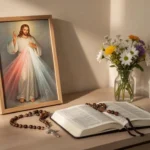
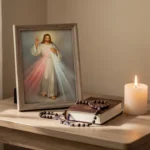
The best-known form of the prayer at three o’clock is the Divine Mercy Chaplet. This chaplet is prayed on ordinary rosary beads and centers on God’s mercy revealed through Jesus. It includes prayers of offering, petitions for mercy, and repeated appeals for compassion for the whole world.
The chaplet is often prayed at 3 p.m., but it can be prayed at any time. Many people pray it during the afternoon, especially when they cannot attend a church service or set aside a longer period for devotion. Others pray it at the traditional hour as part of a daily routine.
A three o’clock prayer may also refer to a much shorter prayer traditionally associated with the Divine Mercy devotion. In substance, this prayer remembers Jesus’ Passion, asks for mercy for the world, and entrusts the person praying to God’s will. The words used in prayer books may differ, so you do not need to treat one English wording as the only valid version.
The devotion is closely linked with several themes:
Christ’s Passion: remembering Jesus’ suffering and death rather than treating the hour as an abstract religious custom.
God’s mercy: asking for forgiveness, healing, patience, and help for people in need.
Trust: placing your fears and hopes in God instead of trying to control every outcome.
Intercession: praying for others, including people you know personally and those affected by violence, illness, poverty, or grief.
Conversion: allowing prayer to shape your choices, relationships, and willingness to forgive.
For Catholics, this devotion is commonly connected with the message of Divine Mercy promoted through Saint Faustina’s spiritual writings and the ministry of the Marian Fathers and other Catholic communities. The Church’s recognition of a devotion does not mean every believer must practice it in the same way. Catholics may use it alongside the Mass, the sacraments, the Rosary, Scripture, and other approved forms of prayer.
People from other Christian traditions may also find value in setting aside the hour to remember the crucifixion. They may choose to pray in language shaped by their own church tradition. The essential practice is Christ-centered remembrance, not adopting a particular label or devotional style.
What to say when you pray at three o’clock
You can use a formal prayer, the Divine Mercy Chaplet, a Scripture-based meditation, or your own words. A simple prayer can be especially helpful when you are at work, caring for a child, commuting, or dealing with an emergency and have only a minute or two.
Here is a short original prayer you can adapt:
Jesus, at this hour I remember your suffering and death. Have mercy on me and on the whole world. Help me trust God, receive forgiveness, and show compassion to the people who need it. May your mercy guide my thoughts and actions today.
This prayer does not replace the official text of a particular Catholic devotion. It gives you a brief way to observe the hour when you do not have a prayer book or enough time for the full chaplet. You can make it more personal by naming a particular need after the words “have mercy on me and on the whole world.”
For a more structured prayer, you can follow these steps:
Pause and become present. Put down your phone, slow your breathing, or sit quietly for a moment.
Remember the Passion. Think about Jesus’ death and what it expresses about love, sacrifice, and mercy.
Ask for mercy. Pray for your own sins and weaknesses without hiding them or becoming trapped in shame.
Intercede for others. Bring to mind people who are sick, grieving, afraid, lonely, or in conflict.
End with trust. Place the situation in God’s hands and consider one merciful action you can take.
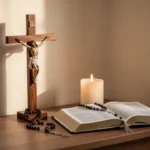
If you pray the Divine Mercy Chaplet, use a rosary or chaplet beads if they help you keep your place. You may also pray it without beads by following the sequence from memory or a trusted prayer book. The beads serve as a practical aid; they are not a requirement for God to hear you.
A longer prayer period can include a passage from one of the Passion narratives, such as Matthew 27, Mark 15, Luke 23, or John 19. Rather than repeating the biblical text here, read a translation you trust and notice what the passage reveals about Jesus’ suffering, forgiveness, and faithfulness. Remain with one detail for several minutes instead of trying to cover every verse quickly.
How to observe the hour when you have limited time
A meaningful prayer at three o’clock does not have to last a long time. The most realistic practice is one you can return to consistently without turning the hour into a source of anxiety. Even a short pause can interrupt a difficult afternoon and redirect your attention toward God and the needs of others.
Choose an approach that matches your circumstances:
One-minute prayer: Make the sign of the cross if that is part of your tradition, remember Christ’s death, and ask for mercy for yourself and the world.
Five-minute prayer: Read a short section about the Passion, sit quietly, and name two or three people who need prayer.
Fifteen-minute prayer: Pray a brief Divine Mercy prayer, meditate on the crucifixion, and finish with a specific act of compassion.
Full chaplet: Set aside enough uninterrupted time to pray the complete Divine Mercy Chaplet attentively.
Prayer with a group: Join a parish, hospital, school, workplace, or online prayer gathering if communal prayer helps you remain faithful to the practice.
If your schedule places you in a meeting, on the road, or responsible for another person at 3 p.m., do not create an unsafe situation or abandon a necessary duty. You can pray silently, set a reminder for later, or choose another time. Prayer should support love of neighbor, not make you neglect someone who needs your immediate care.
Parents may invite children to pause for a few seconds and say a simple sentence about mercy. A household might pray before dinner if the afternoon hour is inconvenient. The practice can also be linked to a daily event, such as finishing work or arriving home, so it remains connected to ordinary life rather than becoming a rigid performance.
People who work at night or live in a different time zone can still follow the devotion according to their local afternoon if that is practical. The traditional reference is to the hour associated with Jesus’ death, not to a requirement that every person around the globe pray simultaneously. A person who cannot keep 3 p.m. can choose a consistent time and preserve the same intention.
A useful habit: Set a gentle daily reminder labeled “mercy,” not merely “prayer.” When it appears, pray for one person you know, one group experiencing suffering, and one way you can act with greater patience.
The hour can be especially helpful during periods of grief, illness, conflict, or uncertainty. Still, prayer should not be used to avoid practical help. If you or someone else is facing danger, serious mental distress, abuse, or a medical emergency, contact appropriate professional or emergency support while continuing to pray as you are able.
How to pray with sincerity instead of treating the hour as a formula
Repeated words can deepen attention, but they can also become mechanical. If you find yourself reciting without thinking, slow down and connect one phrase with a real person or situation. For example, when asking for mercy, remember someone who has hurt you, someone you have hurt, or someone whose suffering you cannot solve.
Mercy includes both forgiveness and action. It may lead you to apologize, listen patiently, support a grieving friend, give to a trustworthy relief organization, or seek reconciliation when doing so is safe. Prayer is not measured only by how long you remain in one place; its effect can be seen in the way you treat people afterward.
It is also reasonable to bring difficult emotions to the hour. You do not have to pretend that you feel peaceful. Anger, fear, sadness, doubt, and exhaustion can all be spoken honestly to God. A prayer such as “I do not know how to handle this, but I place it before you” can be more truthful than words that do not reflect your actual state.
Some people worry that missing the exact time means they have failed. That concern misunderstands the purpose of the devotion. The clock is a reminder, not a test. If you remember at 3:20, pray then. If you miss the afternoon entirely, return to prayer in the evening without guilt.
Those who have scrupulosity, severe anxiety, or a history of compulsive religious practices may need to set gentle boundaries around devotional routines. A priest, pastor, spiritual director, or mental health professional can help distinguish healthy prayer from fear-driven repetition. No Christian prayer practice should require panic, self-punishment, or the belief that a small mistake will cause harm.
How the prayer at three o’clock can shape your day
The value of the three o’clock prayer grows when it becomes more than an isolated moment. Remembering mercy in the afternoon can help you review the day before it is over. You might ask where you received kindness, where you withheld it, and what repair is still possible.
A simple daily pattern can keep the practice grounded:
Before prayer: identify the emotion or concern you are carrying into the afternoon.
During prayer: remember Christ’s Passion and ask for mercy without trying to force a particular outcome.
After prayer: choose one concrete response, such as calling someone, forgiving a minor offense, or taking a needed rest.
You can also use the hour to pray for people beyond your immediate circle. Consider those affected by war, natural disasters, homelessness, addiction, persecution, loneliness, or injustice. Keep these intentions specific enough to engage your heart, but do not assume you must solve the world’s suffering by yourself.
For Christians who already attend Mass or observe the liturgical calendar, the three o’clock prayer can complement rather than replace communal worship. It may serve as a brief daily reminder of the cross between larger practices of faith. The same is true for Scripture reading, confession, charitable service, and conversations with a trusted spiritual guide.
The most dependable form of this devotion is often the simplest one: stop, remember Jesus, ask for mercy, and let that prayer influence your next choice. You can pray the Divine Mercy Chaplet when you have time, use a short prayer when you do not, or sit in silence when words are difficult. At 3 p.m. or another hour, the heart of the practice remains trust in God and mercy toward others.
Frequently asked questions
Is the prayer at three o’clock required for Catholics?
No. Catholics are not generally required to pray at 3 p.m. The hour is a voluntary devotion associated with remembering Jesus’ death and asking for mercy. A person may pray the Divine Mercy Chaplet, use another prayer, or simply reflect in silence. Missing the hour is not a sin, and praying at another time is perfectly acceptable.
What is the difference between the three o’clock prayer and the Divine Mercy Chaplet?
“Prayer at three o’clock” can describe any prayer offered during the traditional hour of Christ’s death. The Divine Mercy Chaplet is a specific structured devotion prayed on rosary-style beads. It is commonly prayed at 3 p.m., but its structure does not depend on that time and it can be prayed at any hour.
Can I pray the three o’clock prayer if I am not Catholic?
Yes. Christians from different traditions may observe the hour by remembering Jesus’ crucifixion and asking God for mercy. You can use language consistent with your own faith community or pray from the heart. If you want to use the formal Divine Mercy Chaplet, consult a reliable Catholic prayer resource for its complete traditional form.
What should I do if I forget to pray at 3 p.m.?
Pray when you remember, without treating the missed time as a failure. The clock is intended to create a daily reminder, not impose a spiritual penalty. You might pray later that afternoon, in the evening, or at another consistent time. A sincere, attentive prayer matters more than observing an exact minute.













Leave a Reply