Maria Goretti: her life, martyrdom, and lasting message
Maria Goretti: her life, martyrdom, and lasting message
If you have heard the name Maria Goretti but only know that she was a young Catholic saint, you may wonder what actually happened to her and why her story remains significant. Maria was an Italian farm girl who died in 1902 after resisting a sexual assault. She was canonized by the Catholic Church in 1950, not because violence itself has religious value, but because her life and death were interpreted as an extraordinary witness to faith, moral courage, and forgiveness.
Her story also needs to be told carefully. Maria was a victim of attempted sexual violence, not a willing participant in a romantic tragedy. The responsibility for the attack belonged entirely to her attacker, Alessandro Serenelli. Remembering Maria can honor her faith while also acknowledging the seriousness of abuse, the dignity of victims, and the need for justice.
Maria Teresa Goretti was born on October 16, 1890, in Corinaldo, a small town in the Italian region of Marche. She was the third of seven children in a poor farming family. Her parents, Luigi and Assunta Goretti, raised their children in the Catholic faith and depended on agricultural work for their livelihood.
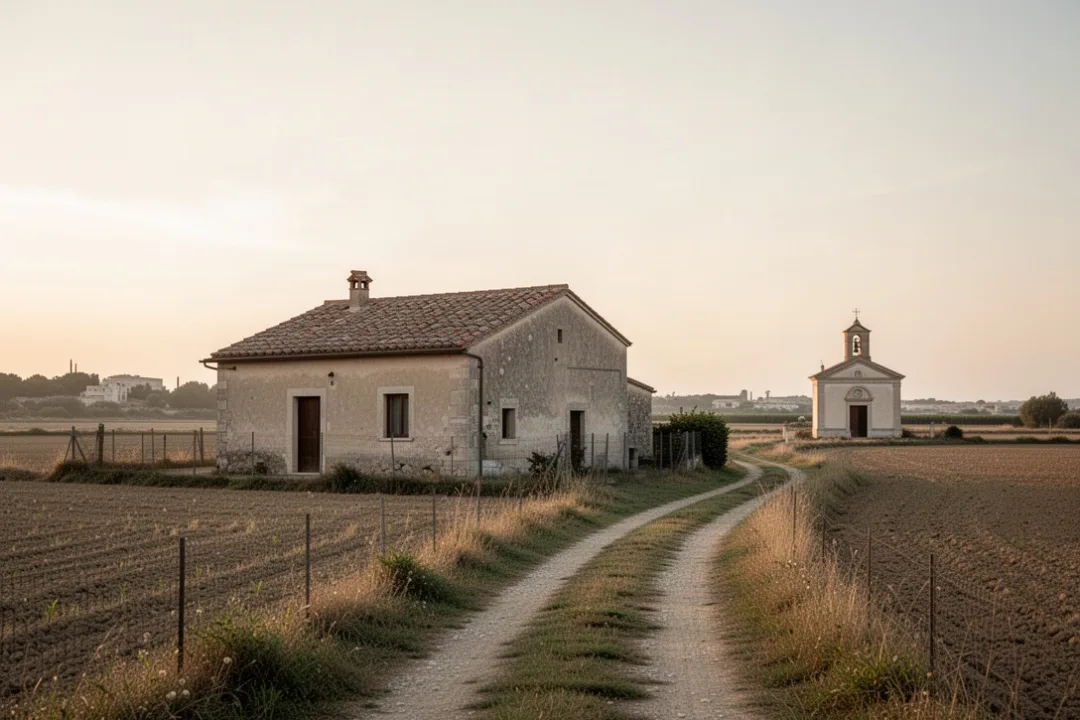
When Maria was still young, the family moved in search of work. They eventually settled at Le Ferriere, a rural estate near Nettuno, south of Rome. The family shared work and housing with the Serenelli family. Maria’s father died of malaria when she was only nine, leaving her mother to support the children and manage the household under difficult conditions.
Because of her father’s death and the family’s poverty, Maria took on responsibilities beyond those normally expected of a child. She helped care for her younger siblings, prepared food, cleaned the home, and assisted with farm duties. Accounts from her life describe her as dependable, prayerful, and attentive to her family rather than as someone separated from ordinary daily concerns.
Maria had limited access to formal education. Her religious instruction came mainly through her local parish and family life. She received her first Communion in 1900, an event that had a strong effect on her. She continued to pray and to prepare for the sacrament despite the practical demands placed on her at home.
A necessary distinction: Maria’s holiness, in Catholic understanding, does not mean that abuse is good or that victims should remain silent. Her story should never be used to blame victims, excuse offenders, or suggest that enduring danger is a religious duty.
What happened to Maria Goretti in July 1902
On July 5, 1902, Maria was at home while her mother and other family members worked nearby. Alessandro Serenelli, who was about 20 years old, entered the house and tried to sexually assault her. Maria resisted him. Historical accounts say that she appealed to his conscience and warned him that the act would be sinful, but he attacked her with a knife.
Maria suffered multiple stab wounds and was found seriously injured. Her family and neighbors brought her for medical treatment in Nettuno. The physical injuries were severe, and doctors recognized that she was in critical condition. Alessandro was arrested and taken into custody.
Maria survived for roughly a day after the attack. During that time, a priest came to speak with her and give her the sacraments. Accounts of her final hours emphasize that she remained concerned for her mother and expressed forgiveness toward Alessandro. These reports became central to the way the Catholic Church later presented her life.
Maria died on July 6, 1902, at the age of 11. She was buried first in Nettuno. Her remains were later moved to the Basilica of Our Lady of Grace and Saint Maria Goretti in Nettuno, where many pilgrims visit to pray and learn about her life.
The crime was not a test that Maria needed to pass. It was a violent act committed against her. The religious meaning later drawn from her response concerns her faith and forgiveness, not the attack itself and not any supposed benefit that suffering brought her.
Who Alessandro Serenelli was and what happened after the crime
Alessandro Serenelli was convicted for Maria’s killing and received a long prison sentence. Because he was a young adult at the time, the sentence was later reduced under the legal rules applicable to his case. He spent many years in prison and, according to Catholic accounts, experienced a religious conversion there.
A well-known part of the story concerns a dream or vision Alessandro reported in prison. In it, he said Maria appeared to him with flowers. The account is part of devotional tradition, but it should not be confused with independently verifiable historical evidence. What is documented more broadly is that Alessandro later expressed remorse, became involved in Catholic religious practice, and sought forgiveness.
After his release, Alessandro lived for a time with Capuchin friars at a monastery. He publicly acknowledged his guilt and spoke about Maria’s forgiveness. He died in 1970. His repentance does not erase the crime or the suffering inflicted on Maria and her family, but it became an important part of the Church’s interpretation of the story.
Forgiveness also does not remove the need for accountability. In Christian teaching, mercy and justice are not identical. A victim may forgive without reconciling with an offender, dropping legal consequences, or placing herself in danger. That distinction helps prevent Maria’s example from being misunderstood or used against survivors of abuse.
Why the Catholic Church calls Maria Goretti a martyr
The Catholic Church recognizes Maria Goretti as a martyr of purity. In this context, “purity” refers to her refusal to participate in a sexual act forced upon her and to her commitment to her faith. The title is part of older Catholic vocabulary, but modern readers may find it clearer to speak of her resistance to sexual violence and her fidelity to her conscience.
Maria did not die because she sought danger or because the Church teaches that every victim must resist an attacker in the same way. People respond to violence in different ways, and survival is never a moral failure. A person may freeze, comply under threat, flee, call for help, or resist physically. None of these reactions transfers blame from the offender to the victim.
Her martyrdom is therefore best understood as a claim about the value of conscience under coercion, not as a standard by which other victims should be judged. Maria’s story is distinctive because of her young age, her reported faith, the brutality of the crime, and her expressed forgiveness. It is not a template that every person must reproduce.
Maria’s forgiveness can be remembered as an act of spiritual freedom, while the crime against her must still be named as violence.
How Maria Goretti became a Catholic saint
Devotion to Maria spread after her death, especially in Italy. People remembered her as a young girl who had lived an ordinary life of family responsibility and parish faith before dying in extraordinary circumstances. Reports of her final words and her forgiveness of Alessandro became especially influential in local devotion.
The Catholic Church investigated her life, death, reputation for holiness, and the reported miracles attributed to her intercession. Pope Pius XII beatified Maria in 1947. Three years later, on June 24, 1950, he canonized her in Saint Peter’s Square in Rome.
Maria’s mother, Assunta Goretti, attended the canonization. Her presence carried particular emotional and religious significance because she had lost her husband and then her daughter in circumstances of extreme hardship. Alessandro Serenelli was also reported to have expressed repentance, but he did not attend the canonization ceremony in the same role as Maria’s family.
The Church’s recognition of a saint does not mean that every detail in popular retellings is equally certain. It means that the Church presents the person as an example of Christian holiness and a possible intercessor. Devotional biographies may emphasize emotional moments, while historical research may distinguish between official records, testimony, later recollections, and pious tradition.
What Maria Goretti represents to Catholics today
For many Catholics, Maria represents courage under pressure, devotion in ordinary family life, and the possibility of forgiveness after terrible harm. She is especially associated with children, teenagers, young women, people seeking strength in matters of conscience, and those praying for freedom from sexual sin or violence.
Her importance is not limited to a single category of people. A person may turn to Maria while praying for a child, grieving an act of violence, seeking healing after abuse, or trying to release hatred without denying what happened. Her story can also lead communities to ask whether they are protecting vulnerable people and responding responsibly when abuse is reported.
Maria is often called a patron of purity and forgiveness. Some Catholic communities also invoke her in connection with youth, sexual assault survivors, and people working to overcome violence. Patronage can vary by devotional source, so it is wise to treat informal lists of patronages as customary rather than as a complete official classification.
Her feast day is observed on July 6, the anniversary of her death. Churches and Catholic organizations may mark the day with Masses, prayer services, educational programs, or reflections on forgiveness and the protection of children.
Common mistakes when telling Maria Goretti’s story
Popular accounts sometimes reduce Maria’s life to one violent event. That approach can unintentionally erase her personality, family responsibilities, faith, and the reality that she was a child with a full human life before she became known around the world.
Do not describe the attack as a romantic encounter. Alessandro’s actions were an attempted sexual assault and murder, not a forbidden love story.
Do not blame Maria for being alone. The location, household arrangements, or her decision to stay home did not cause the crime.
Do not treat resistance as a requirement for victimhood. People cannot be morally judged by how their bodies respond to terror.
Do not use “purity” to shame survivors. A person’s dignity is not destroyed by an assault or by circumstances beyond that person’s control.
Do not portray forgiveness as instant emotional recovery. Christian forgiveness can coexist with grief, anger, boundaries, legal consequences, and a long healing process.
Do not present every devotional detail as proven history. Separate documented events from later stories, interpretations, and private revelations.
Do not forget Maria’s ordinary life. Her work, family relationships, prayer, and limited opportunities all help explain who she was.
For survivors: You are not required to forgive an offender before you are ready, and forgiveness does not require contact, reconciliation, or silence. If you are in immediate danger, contact emergency services; in the United States, you can also call or text 988 for crisis support or contact a sexual assault service such as RAINN.
How to talk about Maria Goretti with children and teenagers
Maria’s story is sometimes introduced in schools, churches, or youth groups. Because it involves sexual assault and murder, adults should consider a child’s age, emotional development, and personal history before discussing it. The goal should be education and spiritual reflection, not shock.
With younger children, a brief explanation may be enough: Maria was a child who was attacked by an older person, tried to protect herself, received medical care, and died. Adults can focus on the facts that violence is never the victim’s fault and that children should tell a trusted adult when someone threatens, pressures, or touches them inappropriately.
Older teenagers may be ready to discuss consent, coercion, boundaries, accountability, and forgiveness. They should hear clearly that consent must be freely given, that pressure is not consent, and that no religious idea excuses sexual violence. They also need practical information about seeking help and supporting friends who disclose abuse.
Useful teaching practices include:
Give a content warning before discussing the attack.
Use plain, non-graphic language and avoid sensational details.
Invite questions without requiring personal disclosure.
Explain that different people respond differently to danger.
Provide a trusted adult or professional resource for support.
Keep the focus on Maria’s dignity, not on graphic descriptions of her wounds.
If a young person reveals that they have been abused, listen calmly, believe them, and avoid promising absolute secrecy. Follow applicable safeguarding procedures and connect them with qualified professionals. A religious discussion should never replace medical care, trauma counseling, child protection, or law enforcement when those services are needed.
What Maria Goretti’s forgiveness does and does not mean
The most remembered part of Maria’s story is her reported decision to forgive Alessandro and hope for his salvation. For Catholics, this reflects the Christian command to forgive enemies and entrust judgment to God. It also suggests that hatred did not have to control Maria’s final thoughts.
That spiritual interpretation should not be turned into pressure on other victims. Forgiveness is not the same as saying an offense was minor, pretending the offender is safe, or abandoning a demand for justice. Some people define forgiveness as surrendering a desire for revenge; others do not use the word at all. Healing can take many forms.
Maria’s example may be meaningful because it separates the offender’s guilt from the victim’s inner freedom. Alessandro remained responsible for his choices. Maria’s reported forgiveness did not make him innocent, reverse the harm, or cancel the consequences. It expressed how she wanted to respond, according to the accounts preserved by the Church.
For someone who has experienced violence, a healthier question may be, “What would help me become safe and whole?” rather than, “Have I forgiven enough?” Prayer, therapy, supportive relationships, medical care, advocacy, and legal action can all be part of a person’s path. No one should use Maria Goretti’s story to demand a particular timetable.
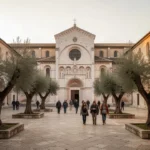
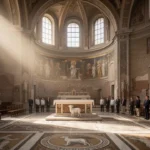
The principal shrine associated with Maria is in Nettuno, where her remains are venerated. The town has become an important pilgrimage destination for Catholics who come to pray at her tomb and reflect on her life. Her name also appears in parishes, schools, youth groups, religious communities, and charitable organizations in several countries.
Images of Maria often portray her as a young girl holding lilies or other symbols associated with innocence and martyrdom. These devotional images are not photographs and should not be treated as exact portraits. They communicate a religious interpretation of her character rather than provide a precise record of her appearance.
Churches that honor Maria may celebrate her feast day with prayers for families, young people, victims of violence, and those seeking reconciliation. Some communities also use her story to promote child protection and respect for human dignity. That is a constructive application when it includes concrete safeguarding practices rather than only devotional language.
Visitors and readers can approach her story from more than one perspective. A Catholic may see her as a saint and intercessor. A historian may examine the social conditions of rural Italy and the records of the case. A survivor may encounter a difficult story that requires care. These perspectives can coexist when the facts are handled honestly and the victim is never blamed.
Why Maria Goretti’s story still matters
Maria Goretti’s life was short, but it was not empty or defined solely by her death. She worked, cared for family members, practiced her faith, and faced responsibilities created by poverty and bereavement. Remembering those details restores her humanity beyond the image of a young martyr.
Her story also raises enduring questions about how religious communities speak about sexual violence. Do they protect children? Do they believe victims? Do they distinguish forgiveness from reconciliation? Do they support justice while offering spiritual care? These questions give Maria’s memory practical relevance.
For believers, Maria can symbolize faithful courage without hatred. For everyone, her story can reinforce a basic moral truth: violence is the responsibility of the person who commits it, not the person who suffers it. Any telling of her life that loses that truth has misunderstood both Maria and the crime.
Maria Goretti is remembered as a Catholic saint because the Church sees in her a profound witness to faith, conscience, and forgiveness. She should also be remembered as a child whose life was violently taken. Holding both realities together allows her memory to remain compassionate, accurate, and respectful to people who live with the effects of abuse.
Frequently asked questions
When is Maria Goretti’s feast day?
Maria Goretti’s feast day is July 6, the date of her death in 1902. Catholic parishes and organizations may mark the day with Mass, prayer, or educational events focused on her faith, forgiveness, protection of children, and care for people affected by violence.
How old was Maria Goretti when she died?
Maria was 11 years old when she died. She was born on October 16, 1890, and died on July 6, 1902, after being attacked near Nettuno, Italy. Her young age is one reason her story is often especially meaningful in Catholic ministry with children and teenagers.
Did Maria Goretti forgive her attacker?
Catholic accounts say that Maria forgave Alessandro Serenelli and expressed hope for his salvation during her final hours. That belief is central to her devotion, but it should not be used to pressure abuse survivors. Forgiveness is personal and does not remove accountability, legal consequences, or the need for safety.
Where can people visit Maria Goretti’s tomb?
Maria Goretti’s remains are venerated at the Basilica of Our Lady of Grace and Saint Maria Goretti in Nettuno, Italy. The church is associated with her shrine and attracts pilgrims. Visitors should check current travel and worship information before planning a visit, since schedules and access arrangements can change.










Leave a Reply