Luke 12:13-21 teaches that a person’s life is not measured by the amount of property, money, or savings he possesses. When someone asks Jesus to settle an inheritance dispute, Jesus responds with a warning about greed and then tells the parable of a wealthy farmer who stores up more than he needs but never prepares his soul to meet God.
The passage does not say that having resources is automatically sinful. Its central concern is what you believe your possessions can do for you. The rich man treats abundance as security, identity, and control, while Jesus points toward becoming “rich toward God”—a life shaped by gratitude, generosity, trust, and obedience.
The passage begins with a person in the crowd asking Jesus to tell his brother to divide the family inheritance. The request sounds practical, but Jesus does not step into the role of a civil judge or personal advocate. Instead, he addresses the deeper issue beneath the dispute: the desire to possess what one believes is owed.
Jesus warns the crowd to guard themselves against every form of greed. The warning is broader than obvious materialism. Greed can appear as resentment, entitlement, anxiety about having enough, or the conviction that another person’s possessions would finally make you secure.
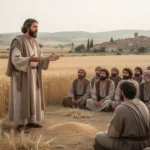
Jesus then tells a story about a rich man whose land produces an unusually large harvest. The man faces a storage problem, not a shortage. He decides to tear down his existing barns and build larger ones so he can keep all his grain and goods for himself.
His private reasoning centers on his own comfort. He imagines telling himself that he has enough stored away to relax, eat, drink, and enjoy life for many years. The man sees his future as something he can guarantee through accumulated resources.
God calls him a fool—not because planning is foolish, and not because farming or wealth is inherently wrong. He is foolish because he assumes that his possessions can secure his future while ignoring the fact that his life may end that very night. The story closes with the question of who will receive everything he has stored.
Jesus applies the parable to anyone who stores up treasure for himself but is not rich toward God. The final contrast is between self-centered accumulation and God-centered faithfulness. The issue is not merely how much a person owns; it is what owns the person.
Central message: Luke 12:13-21 warns against treating possessions as a substitute for God. Wise stewardship uses resources responsibly while refusing to place ultimate confidence in them.
Why Jesus connects an inheritance dispute with greed
An inheritance dispute can involve genuine injustice. Families may need legal help, honest conversations, or outside mediation when property and money are divided unfairly. Jesus’ response should not be used to dismiss every financial complaint or to protect people who exploit others.
His point is that a legitimate claim and a greedy heart can exist close together. Someone may be owed money and still become consumed by resentment. Someone may receive a fair inheritance and still believe that acquiring more will finally make life safe. Jesus moves from the visible argument to the inner appetite that can distort judgment.
The request also shows how easily Jesus can be treated as a means to a personal advantage. The person wants him to enforce a desired outcome, but Jesus directs attention to a more searching question: What is money doing inside your heart? Is it serving a responsibility, or is it becoming a rival source of trust?
That question applies beyond inheritances. Arguments over property, business ownership, wages, investments, debts, and family support often include both practical details and powerful emotions. The passage encourages you to address the facts honestly while examining the fears, pride, and desires that may be controlling your response.
The farmer has a successful harvest, but he treats the harvest as a permanent guarantee. His larger barns promise relief from uncertainty, yet they cannot control time, health, relationships, or death. He assumes that having resources means he has mastered the future.
Money can solve many real problems. It can provide food, housing, medical care, education, transportation, and help for people in need. But financial usefulness is not the same as ultimate security. Wealth has limits, and it cannot give you an unbreakable life.
He makes his possessions the center of his inner life
The farmer’s thinking revolves around what he has, what he can store, and how long he can enjoy it. The story does not show him considering workers, neighbors, hungry people, family members, or God. His world becomes a private conversation between himself and his goods.
This self-contained outlook is one mark of greed. Greed does not always look like aggressive theft. It can look like a life narrowed by constant calculation: How much do I have? How much more can I keep? What would make me feel completely safe? The heart becomes occupied with possessions even when the hands already hold enough.
He assumes he controls the length of his life
The man speaks as if many years are already guaranteed. He makes long-term plans, but he does not hold the future in his hands. Jesus exposes the fragile assumption beneath his confidence: material preparation cannot determine how long a person will live.
The passage is not a command to avoid planning. Scripture elsewhere recognizes the value of diligence, foresight, and responsible provision. The warning concerns presumption—planning as though God, mortality, and accountability do not exist.
He overlooks the moral purpose of abundance
The farmer has more than he can immediately use, but the story gives no sign that he asks how his surplus might benefit anyone else. His solution is to build larger storage for himself. The problem is not simply that he has a large harvest; it is that he sees surplus only as something to retain.
Abundance creates responsibilities. Resources may support a household, sustain employees, strengthen a community, relieve suffering, or advance work that reflects God’s priorities. Stewardship asks not only, “What can I keep?” but also, “What good can this resource do?”
What “rich toward God” means
Jesus’ phrase about being rich toward God gives the passage its positive direction. He does not merely tell people to stop being greedy. He presents a different form of wealth—one measured by relationship with God and expressed through faithful use of life’s resources.
To be rich toward God begins with recognizing that everything you have is received rather than self-created. Your abilities, opportunities, health, relationships, income, and possessions may involve your work, but they also depend on circumstances you did not fully control. Gratitude weakens the illusion that you are entirely self-made.
Being rich toward God also includes trust. You still save, work, insure what needs protection, and plan for legitimate responsibilities. Yet you do not ask those practices to provide the peace that belongs to God. Prudence can organize your life; it cannot carry the full weight of your hope.
Generosity is another expression of this richness. Giving is not a technique for earning God’s approval, and it should not be used to pressure people into unsafe or unwise decisions. It is a response to grace—a willingness to release resources for the good of others rather than treating every surplus as untouchable.
Faithfulness also involves using possessions with purpose. A person may be rich toward God through patient care for family, honest work, support for a church or charity, hospitality, fair treatment of employees, and practical help for neighbors. These actions show that material goods are tools under God’s authority, not masters demanding constant service.
Finally, being rich toward God means remembering accountability. The rich fool plans what to do with his goods but never asks what God desires. A Godward life places financial choices, career decisions, spending habits, and long-term plans inside a larger commitment to love God and love people.
This passage is sometimes reduced to the claim that all wealth is evil. That reading misses the focus of Jesus’ warning. The farmer is condemned for self-sufficient accumulation, not merely for possessing land or enjoying a productive harvest.
The Bible contains examples of faithful people who owned property and managed significant resources. Wealth can be used for hospitality, protection, generosity, employment, and service. The decisive issue is whether wealth is held with humility and responsibility or trusted as the foundation of life.
The passage also does not mean that poverty automatically makes a person spiritually faithful. A person with few possessions can still be controlled by envy, status, or the desire for more. Greed is a heart posture that can appear at many income levels.
Nor does Jesus teach that you should refuse every future-oriented decision. Saving for expected needs, paying debts, preparing for retirement, and providing for dependents can be acts of love. The danger appears when planning becomes an attempt to eliminate dependence on God or an excuse to ignore the needs of other people.
Jesus is not condemning enjoyment either. Food, rest, celebration, beauty, and comfort can be good gifts. The rich man’s problem is not that he wants to enjoy life; it is that he expects stored goods to make his life secure and complete without reference to God.
How greed can appear in ordinary life
Greed is often easier to identify in dramatic cases than in personal habits. Most people will not build enormous barns, but many can still organize their lives around acquisition and protection. The following signs can help you examine the passage honestly:
Constant dissatisfaction: You reach a financial goal and immediately need a larger one to feel content.
Fear of sharing: You have enough to help but treat every request as a threat to your lifestyle.
Status-driven spending: Purchases are chosen mainly to display success or gain approval.
Resentment over another person’s gain: Someone else’s blessing feels like a personal loss.
Neglected relationships: Work and accumulation regularly take priority over family, community, worship, or rest.
Self-justifying plans: You describe an increasingly comfortable future while ignoring present responsibilities to others.
Anxiety despite abundance: More possessions produce more fear rather than greater freedom to serve.
These signs are not a mathematical test, and financial anxiety can have causes that require compassion rather than accusation. A person facing unstable housing, medical costs, unemployment, or debt may need practical support. The passage invites careful self-examination, not quick judgment of someone else.
Practical ways to respond to Luke 12:13-21
A faithful response begins by bringing money out of the vague parts of life and into honest reflection. You do not need to make dramatic promises to prove that you are not greedy. Small, deliberate practices can reveal where your confidence rests and create room for generosity.
Name what you believe will make you secure. Ask whether your deepest hope is attached to a bank balance, property, career, reputation, relationship, or God. The answer may be mixed, but honesty gives you a place to begin.
Separate needs from accumulation. Review recurring expenses and future goals. Distinguish necessary provision from purchases mainly driven by comparison, impulse, or fear.
Make generosity intentional. Set aside a portion of your resources for people and causes you genuinely want to support. Planned giving can help generosity become a practice rather than a response to occasional emotion.
Use surplus for a clear purpose. If income or assets exceed your immediate needs, consider how they could strengthen family responsibilities, relieve hardship, support meaningful work, or create opportunities for service.
Practice gratitude without denying difficulty. Give thanks for specific gifts while acknowledging real financial pressures. Gratitude is not pretending that every need has been met.
Discuss money honestly. Talk with a spouse or trusted adviser about goals, fears, giving, debt, and spending. Secrecy often allows anxiety or greed to grow unchecked.
Remember mortality with wisdom. Your life is limited, so ask what you want your resources to accomplish while you are alive. This is not morbid; it helps place possessions in their proper scale.
Review your plans prayerfully. Before making a major financial decision, ask whether it reflects love, wisdom, responsibility, and trust—or mainly the desire to feel untouchable.
A practical test: If your financial plans increase what you can keep but leave no room for gratitude, generosity, relationships, or worship, they may be serving accumulation more than faithful stewardship.
Common mistakes when applying this passage
Readers can misunderstand Luke 12:13-21 by applying it too narrowly or too harshly. These mistakes keep the warning from reaching the deeper attitudes Jesus addresses.
Making the passage only about rich people: Greed is not limited to a particular income bracket. The question is whether possessions control your heart.
Using it to condemn responsible planning: Saving and preparing can protect people who depend on you. The issue is not planning itself but trusting plans as ultimate protection.
Ignoring injustice: Jesus’ warning about greed does not excuse fraud, withheld wages, abuse, or unlawful seizure of property. Truth and justice still matter.
Assuming generosity means having no boundaries: Giving should be wise and freely offered. It does not require enabling destructive behavior or ignoring legitimate household obligations.
Turning the warning against other people: The crowd heard a command to guard their own hearts. It is easy to analyze a wealthy person while avoiding personal questions about envy or entitlement.
Reducing “rich toward God” to charitable giving alone: Giving matters, but Godward richness also includes worship, integrity, compassion, contentment, and obedience.
Expecting generosity to guarantee prosperity: Jesus does not promise that giving will produce wealth or eliminate hardship. Generosity is faithfulness, not a transaction for material return.
How the passage speaks to anxiety about the future
Many people accumulate because they are afraid. They may fear illness, job loss, family instability, economic change, or dependence on others. That fear should not be mocked. Wise preparation can be loving, especially when others rely on your care.
Luke 12:13-21 asks whether preparation has become a form of worship. When saving turns into an endless demand for more, the goal keeps moving. The person says, in effect, “Once I reach the next level, I will finally be safe,” but the next level never arrives.
Jesus does not offer a promise that faithful people will avoid financial trouble. Instead, he exposes the false promise made by possessions. No amount of storage can remove every vulnerability. Trust in God allows you to prepare responsibly without pretending that preparation gives you control over every outcome.
This perspective can also free you from comparison. Someone else’s larger house, retirement account, business, or inheritance does not define your worth. You can make faithful decisions based on your responsibilities and calling rather than constantly measuring your life against another person’s visible prosperity.
How the passage shapes Christian stewardship
Christian stewardship begins with ownership: God is the ultimate owner, and people are managers or caretakers of what they have received. That belief changes the purpose of money. Instead of asking only how to maximize personal comfort, you ask how to handle resources with wisdom, justice, mercy, and gratitude.
Stewardship includes ordinary financial disciplines. Paying bills, keeping honest records, resisting manipulative sales, avoiding unnecessary debt, maintaining property, and planning for dependents can all reflect responsibility. These practices do not compete with spiritual devotion when they are carried out with integrity.
Stewardship also includes limits. More income does not require a matching increase in lifestyle. A household may choose simplicity so that it can give more, spend more time with people, or remain flexible when needs arise. Simplicity is not a performance; it is one possible way to loosen the grip of possessions.
Work belongs in this picture as well. The passage does not tell you to despise productive labor. Work can create goods, serve customers, employ others, support a family, and contribute to the common good. The danger is allowing work to become a machine for acquiring more while every other responsibility is pushed aside.
Stewardship finally looks beyond personal finances. Your time, skills, influence, home, and attention are also resources. A person may give money generously while remaining unwilling to offer time, compassion, honesty, or practical help. Being rich toward God concerns the whole shape of life.
Questions for personal reflection
Luke 12:13-21 becomes most searching when it moves from a general warning to specific questions. Set aside enough time to answer without trying to give the spiritually impressive response.
What possession, financial goal, or lifestyle change do I secretly believe would make me completely secure?
Where do I experience envy when another person receives more than I do?
Have my financial plans made me more available to serve, or more protective of what I own?
What responsibilities should I meet before increasing my comfort?
Is there a person or cause I could support with money, time, skill, or hospitality?
Do my spending habits reflect my stated values?
What would it mean for me to be rich toward God this week?
The purpose of these questions is not guilt for its own sake. Conviction can expose a misplaced trust so that you can change direction. A healthier relationship with possessions grows through repeated choices: receiving with gratitude, planning with humility, giving with wisdom, and trusting God beyond what money can provide.
Frequently asked questions
Is Luke 12:13-21 saying that Christians should not be wealthy?
No. The passage does not condemn every form of wealth, productive work, saving, or enjoyment. It warns against greed and the belief that possessions can secure your identity and future. Wealth becomes spiritually dangerous when it replaces dependence on God, turns attention inward, or leaves no room for generosity and responsibility toward others.
Why does Jesus refuse to settle the inheritance dispute?
Jesus does not present himself as a civil judge in this exchange. He uses the request to expose the deeper danger of greed, which can exist even when a person has a legitimate financial complaint. His response does not excuse injustice; it calls people to address disputes honestly without allowing money, resentment, or entitlement to control their hearts.
What does “rich toward God” mean in everyday life?
It means directing your resources and priorities toward faithful relationship with God rather than treating possessions as your ultimate security. Everyday examples include practicing gratitude, giving wisely, caring for dependents, working honestly, helping people in need, resisting status-driven spending, and making financial decisions that reflect love, humility, and trust.
How can someone apply this passage while struggling financially?
Financial hardship is not proof of greed, and this passage should not be used to shame people who lack resources. Apply it through honest reflection, wise help-seeking, and trust rather than by giving away money you need for basic care. If possible, focus on gratitude, integrity, mutual support, and resisting the belief that wealth determines your worth.
















Leave a Reply