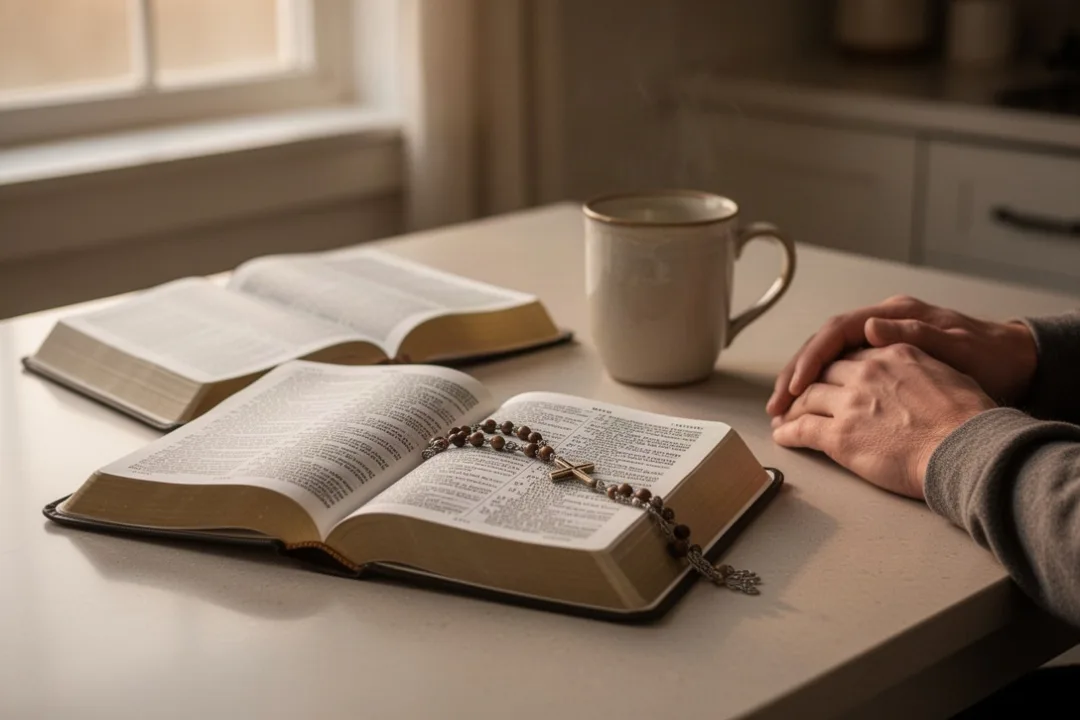
You may want to pray each day but find that a busy schedule, unfamiliar Bible passages, or simple uncertainty about what to say gets in the way. Living Faith Catholic devotions offer a short, structured way to pause with Scripture, reflect on God’s presence, and respond in prayer without needing a long study session.
Living Faith is commonly known as a daily Catholic devotional resource built around Scripture and the Church’s liturgical rhythm. Each entry normally includes a Bible reading reference, a reflection connected to that reading, and a prayer or invitation to respond. The format is brief enough for a morning routine, lunch break, evening prayer, or preparation for Sunday worship.
Use it as a doorway, not a substitute. A devotional can help you listen and pray, but it does not replace participation in Mass, the sacraments, personal Bible reading, or guidance from a priest when you need pastoral help.
What Living Faith Catholic devotions are designed to provide
The central purpose of Living Faith is to help Catholics bring the daily readings of the Church into direct contact with ordinary experience. A reflection may connect a Gospel scene with family responsibilities, work, grief, forgiveness, service, or a decision that needs wisdom. The aim is not usually to explain every detail of a passage, but to draw attention to a particular spiritual invitation.
Most entries are intentionally concise. That brevity makes the resource useful for people who want a dependable habit but cannot spend thirty minutes with a commentary each morning. A short reading can still be serious prayer when you read it slowly, consider one idea carefully, and allow time for a personal response.
The word living points to faith practiced in real circumstances. Catholic devotion is not meant to remain separate from the way you speak to others, handle conflict, spend money, use authority, or care for someone who depends on you. A reflection has value when it helps you recognize where the Gospel is asking for trust, repentance, patience, courage, or love today.
Living Faith may be available in print and digital formats, depending on the edition and current distribution arrangements. Publication details, subscription options, and reading formats can change, so check the current information from the official publisher or the store providing your copy.
How the daily reflections connect with the Catholic liturgical year
Catholic prayer develops within a calendar shaped by the life of Christ and the worship of the Church. Living Faith reflections generally follow the liturgical seasons, including Advent, Christmas, Lent, Easter, and Ordinary Time. They may also take account of Sundays, solemnities, memorials, and other celebrations recognized in the Roman Catholic calendar.
This connection gives your prayer a wider setting. During Advent, a reflection may turn your attention toward waiting, hope, and readiness for Christ. Lent often brings themes of conversion, mercy, sacrifice, and renewed discipleship. Easter points toward the Resurrection and the transformation of daily life through the risen Christ.
Ordinary Time should not be mistaken for unimportant time. Its readings often help you consider the steady work of following Jesus: making wise choices, serving quietly, listening well, and growing in charity. The calendar keeps your personal prayer connected with the common prayer of the Church, rather than leaving every day’s subject to personal preference.
Feasts of Mary and the saints can also provide a particular example of Christian faithfulness. A saint’s witness is not presented as a replacement for Christ. Instead, it can show how the Gospel has been lived through a recognizable human life, with struggles, limitations, courage, and perseverance.
What a typical Living Faith devotional entry contains
The exact layout can vary by edition, but a daily entry commonly has several parts. Knowing their purpose helps you avoid treating the page as something to skim and forget.
A Scripture reference: This identifies the biblical passage associated with the day, often in harmony with the Church’s lectionary.
A brief reflection: The writer draws out one theme, image, question, or spiritual challenge from the reading.
A connection to life: The reflection may relate the passage to relationships, work, suffering, gratitude, justice, or service.
A prayerful response: You may be invited to ask for grace, give thanks, examine your choices, or place a concern before God.
A seasonal or feast-day connection: The entry may help you notice how the day fits within the Church’s worship.
These parts work together. The Scripture reference grounds the reflection, the reflection helps you attend to meaning, and the response turns thought toward prayer. If you only read the reflection, you may miss the biblical context. If you read the reference without pausing, you may miss the personal invitation.
How to pray with Living Faith in five simple steps
You do not need a special room or a lengthy routine. A quiet corner can help, but many people pray with a devotional at a kitchen table, on a commute when they are not driving, or during a break at work. The goal is to create enough space for attentive prayer, not to make the setting impressive.
Choose a consistent time. Morning prayer can shape the day before other demands take over, while evening prayer can help you review the day. Pick a time you can realistically repeat.
Become still for a moment. Set down your phone or silence notifications if possible. Take a slow breath and acknowledge that you are coming into God’s presence.
Read the Scripture reference. If you have a Bible available, read the passage rather than relying only on the short citation. Notice a word, action, or person that draws your attention.
Read the reflection slowly. Ask what it reveals about God, what it shows about discipleship, and where it touches your actual circumstances.
Respond in your own words. Thank God, ask for help, confess a failing, pray for another person, or sit quietly. End by choosing one small way to live the reflection.
The final step matters because prayer is more than collecting religious ideas. If the reflection concerns patience, you might decide to listen fully before answering a family member. If it concerns mercy, you might contact someone you have avoided. If it concerns gratitude, you might name three gifts without pretending that a difficult situation is easy.
Some days will feel meaningful, and others will feel dry or distracted. Consistency does not require constant emotional intensity. Returning to prayer when you feel little can itself become an act of faith, especially when you continue without demanding an immediate sense of comfort.
How to use Scripture responsibly with a short devotional
A brief reflection is not the same as a complete explanation of a biblical passage. It may focus on one detail while leaving historical background, literary context, and other theological questions aside. That is normal for a devotional, but it means you should not treat every sentence as the final interpretation of Scripture.
When a passage is difficult, read a little more of the surrounding chapter. Notice who is speaking, what happens before and after the selected verse, and whether the text is poetry, narrative, wisdom writing, prophecy, or a letter. A Catholic Bible with notes, a trusted commentary, or a parish Bible study can provide additional context.
It also helps to distinguish between the meaning of a passage and the personal application you draw from it. The biblical text is not simply a mirror for whatever you already want to believe. A sound application should remain connected to the passage, the teaching of the Church, and the central call to love God and neighbor.
For difficult doctrinal, moral, or pastoral questions, do not rely on an isolated devotional paragraph. Speak with a priest, deacon, or qualified Catholic educator when the matter involves serious discernment. Personal prayer and reliable formation belong together.
How Living Faith differs from other Catholic prayer practices
Living Faith is one type of devotional aid, not a complete prayer life by itself. Understanding the difference between devotional reading and other practices can help you choose the right resource for a particular need.
Daily devotional reading: A short reflection helps you meditate on Scripture and apply it to daily life.
Lectio divina: This traditional practice gives more time to reading, meditation, prayer, and contemplation, often with repeated attention to a passage.
The Rosary: This Marian devotion uses vocal prayers and meditation on mysteries connected with the life of Jesus and Mary.
The Liturgy of the Hours: These structured prayers unite the Church in regular praise, psalms, Scripture, intercessions, and hymns.
Adoration: Prayer before the Blessed Sacrament emphasizes quiet presence, worship, and attentive love.
Examination of conscience: This prayer reviews the day or prepares for confession by recognizing sin, grace, responsibility, and the need for mercy.
A devotional can complement these practices. For example, you might read Living Faith before praying the Rosary, use its Scripture theme during a period of adoration, or let a reflection guide your evening examination. You do not have to use every form every day. A sustainable pattern is better than an overloaded schedule that you abandon after a week.
Practical ways to make the habit last
The best devotional routine is one that fits your actual life. If you regularly leave home before sunrise, an evening reading may be more realistic. If mornings are quiet only on weekends, use the weekday entries during a lunch break and reserve longer prayer for Saturday or Sunday.
Keep the resource visible: Place the booklet, phone app, or digital page where you already pause for coffee or breakfast.
Pair prayer with an existing habit: Read after brushing your teeth, before opening email, or after dinner.
Write one sentence: Record the insight, question, or action you want to remember.
Use a timer when needed: Ten focused minutes may be more fruitful than an undefined period that never begins.
Pray with another person: A spouse, friend, or small group can discuss one reflection without turning every meeting into a long study.
Return after missing a day: Do not try to punish yourself by reading several entries at once. Simply begin again with the current day.
A useful journal entry does not need to be elaborate. You might write, “I need to forgive before I can have this conversation,” or “I noticed that fear is controlling my decision.” Over time, these brief notes can reveal recurring patterns and answered prayers that are difficult to see in the moment.
When you miss a day, resume rather than restart. The purpose of a daily devotional is regular attention to God, not perfect record-keeping. Guilt that keeps you away from prayer defeats the habit the resource is meant to support.
Common mistakes when using Catholic devotional reflections
Even a helpful resource can be used in unhelpful ways. These common mistakes are easy to correct once you recognize them.
Reading too quickly: Finishing the paragraph is not the same as praying with it. Slow down over one phrase or idea.
Ignoring the Scripture: The reflection should lead you toward the biblical reading, not replace it entirely.
Expecting every entry to feel personal: Some readings will address your situation directly; others may form you gradually.
Using prayer to avoid action: Asking for peace does not remove the need to apologize, seek help, set a boundary, or make a responsible decision.
Treating one reflection as Church teaching: A devotional meditation is not automatically an official doctrinal statement.
Comparing your routine with someone else’s: A parent, student, caregiver, retiree, or shift worker may need a different prayer pattern.
Turning reflection into self-criticism: Christian examination should lead toward truth, repentance, and mercy rather than hopelessness.
The most serious mistake is to separate prayer from charity. If a reflection makes you more judgmental, impatient, or self-absorbed, pause and reconsider how you are applying it. Authentic Catholic devotion should open your life toward Christ and other people, not merely increase the amount of religious material you consume.
How families and small groups can pray with Living Faith
A family can read the day’s entry together, especially at breakfast or before bed. Keep the discussion simple: What stood out? Where do we need God’s help? What is one kind action we can take today? Children may respond more naturally to a concrete question than to a long theological explanation.
In a small group, one person can read the Scripture reference and reflection aloud while everyone listens quietly. Each participant can then share one sentence, offer a prayer intention, or remain silent. Respect for different levels of sharing helps the gathering remain prayerful rather than turning into a debate.
Groups should avoid pressuring members to disclose private matters. A reflection can be fruitful without everyone explaining a personal wound or disagreement. If the discussion raises a serious pastoral issue, the group can pray for the person and encourage appropriate support from a priest or counselor.
How to choose a Catholic devotional that serves your needs
Living Faith may suit you if you want short daily reflections connected with Scripture and the liturgical calendar. Before choosing any devotional, consider its length, theological approach, format, reading schedule, and intended audience. A resource for adults may not work well for children, while a highly detailed Bible study may be unsuitable when you have only a few minutes.
Look for a resource that encourages prayer, conversion, and participation in the Church rather than promising instant answers or constant emotional comfort. Healthy Catholic material should respect Scripture, remain compatible with the Church’s faith, and avoid sensational claims about private revelations or guaranteed spiritual results.
You may also use more than one resource for different purposes. Living Faith can provide a daily starting point, while a parish study, saint biography, prayer book, or Sunday missal can offer greater depth. The choice is less about finding the perfect publication than about finding a faithful aid you will actually use.
What a living Catholic faith looks like beyond the page
Daily devotional prayer becomes more fruitful when it changes how you notice and respond. A reflection on the Good Samaritan may lead you to see a neglected person nearby. A passage about Jesus withdrawing to pray may show you that constant availability is not the same as love. A reading about forgiveness may reveal both the need to release resentment and the need to seek safety or wise counsel in a harmful relationship.
Living faith includes the ordinary practices that sustain discipleship: Sunday Mass, confession when needed, works of mercy, honest relationships, service, and prayer. It also includes learning, because faith grows when you seek a clearer understanding of Scripture and Catholic teaching rather than relying only on impressions.
Do not measure the value of a devotional only by how many pages you complete. Measure it by whether it helps you recognize God’s grace, respond to sin with honesty, act with greater charity, and remain faithful when life is unsettled. A few quiet minutes can become significant when they help you carry the Gospel into the next conversation, decision, and act of service.
Frequently asked questions
Is Living Faith a Catholic Bible or a prayer book?
Living Faith is generally a devotional resource rather than a complete Bible or a full prayer book. Its daily entries usually point to Scripture and provide a short reflection with a prayerful response. You may use it alongside a Catholic Bible, a missal, the Rosary, or another approved prayer resource. The devotional offers guidance for meditation; it does not contain everything needed for Catholic worship or Bible study.
Can I use Living Faith if I am new to Catholic prayer?
Yes. The short format can provide a manageable starting point because you do not need to know every Catholic devotion before beginning. Read the Scripture reference, consider the reflection, and respond in your own words. If unfamiliar terms or teachings raise questions, ask someone at your parish for help. Beginning simply is appropriate, and your practice can become deeper over time.
How long should I spend with a Living Faith reflection?
There is no required length. Five to fifteen attentive minutes may be enough for a daily reading, while you can spend longer with the biblical passage, journaling, or silent prayer when your schedule allows. Reading slowly is more useful than rushing through the entry. Choose a realistic time that you can maintain, and allow occasional longer periods for deeper prayer.
Does using a daily devotional replace going to Mass?
No. A devotional supports personal prayer, but it does not replace the Sunday obligation, participation in the Eucharist, or the sacramental life of the Church. It can help you prepare for Mass by directing your attention to Scripture and the liturgical season. It can also help you continue reflecting afterward, but it serves a different purpose from communal worship.