The Story of Daniel and the Lions: A Narrative of Courage, Faith, and Providence
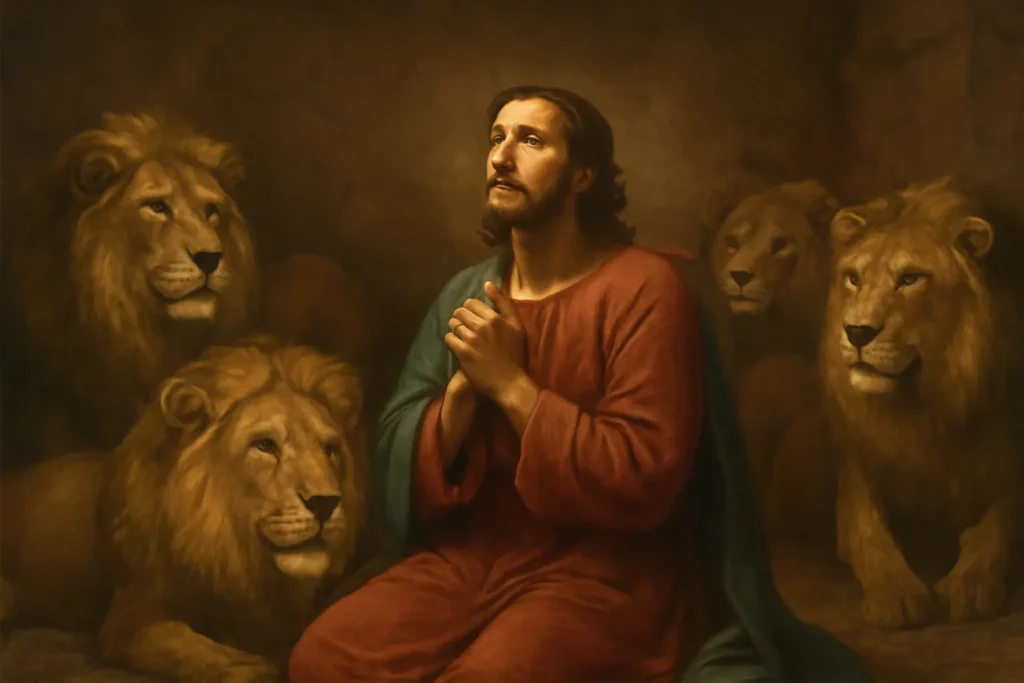
Among the most enduring tales from the ancient scriptures is the account commonly titled Daniel and the Lions, a dramatic episode that blends political intrigue, personal integrity, and a vivid portrait of divine intervention. This story unfolds in a setting where a young man named Daniel rises from a royal courtie to become a trusted advisor, only to face a perilous trap engineered by rivals who fear his influence and his unwavering devotion to the God of Israel. The key moments center on the night in which the king’s edict condemns the prophet to the lion’s den, and on the miraculous deliverance that follows, transforming fear into astonishment and faith into a public testimony.
In this telling, the exiled youth known for his wisdom and integrity encounters a sequence of challenges that test his loyalty, his discipline, and his resolve. The tale is not only a dramatic rescue narrative; it is also a window into a world of royal politics, dream interpretation, and the enduring question of whether the true sovereign of history is the God Daniel serves. Whether read as history, as literature, or as liturgy, the account invites readers to consider how courage under pressure, disciplined prayer, and steadfast trust in the divine will shape human destiny, even in environments that seem hostile or indifferent to righteousness.
Historical and Literary Context: Where the Story Comes From
The episode of the imprisonment and rescue occurs within the larger arc of the Book of Daniel, a text that interweaves narratives about the exilic community in Babylon with oracular visions that look toward future kingdoms and cosmic judgment. The historical setting places Daniel among exiled elites during the 6th century BCE, a time of upheaval when the Jewish people faced displacement under imperial powers. In literary terms, the lions’ den scene sits within a chain of narratives that highlight the tension between faithfulness to the God of Israel and the demands of imperial governance. The genre blends storytelling and moral exhortation, with a clear message: fidelity to the divine standard often occurs in a political environment that rewards cunning, yet punishes steadfast believers who refuse to compromise their conscience.
From a literary perspective, the tale employs dramatic irony, memorable characterization, and a climactic reversal: those who condemned the faithful man are forced to reconsider their judgments in the light of a supernatural intervention. The narrative also functions as a model of interpretive faith for readers who identify with the covenant people and seek guidance on how to navigate power, fear, and public accountability. The lions’ den is not merely a peril; it is a stage upon which the drama of truth-telling and divine faithfulness is enacted for a broad audience, from the court to the province and beyond.
Within this drama, several figures shape the course of events. The most prominent is Daniel, a figure of wisdom, steadfast prayer, and moral courage. His rivals—often described as members of the satraps and governors—represent jealousy and fear of political marginalization. The king, who wants to trust Daniel but is constrained by a decree he cannot revoke, embodies the tension between political expediency and pastoral ethics. The lions, in turn, function as more than instruments of punishment; they become the arena in which providence acts and signs are given for a watching world.
Daniel—a young Hebrew captive who rises to prominence through faithful service and interpretive wisdom. He embodies the ideal of a person who uses talent in service of a higher allegiance.
The rivals—officials who seek to thwart him by exploiting a royal weakness, showing how political machination can threaten even a trusted advisor.
The king—a sovereign who seeks to maintain order and justice while wrestling with the letter of a law that he has proclaimed.
The lions—not merely enemies to be feared; they symbolize the unpredictable consequences of human edicts and the power of divine protection.
The Narrative Arc: From Privilege to Peril and Back Again
The chain of events in this narrative arc is tightly structured to emphasize cause and effect anchored in moral choices. Daniel’s daily routine of prayer and devotion, practiced even under threat, becomes the linchpin of the story. When his adversaries craft a trap—one that leverages the king’s own authority as a seal on a decreed punishment—they secure a ruling that Daniel cannot escape. The decree, public and binding, requires Daniel to be thrown into the lions’ pit, a place of confinement that is both a literal prison and a symbolic stage for judgment and revelation.
Yet the turning point comes not from royal mercy but from supernatural intercession. In the morning, the king hurries to the den and calls out Daniel’s name, expecting failure. Instead, he receives a response of assurance: Daniel’s God has sent an angel and shut the mouths of the lions. This deliverance is not merely personal relief; it becomes a public demonstration of the God who is able to protect the faithful under pressure. The king’s subsequent decree, praising the God of Daniel, extends the impact of the event beyond the immediate circle of the court and into the empire at large. In this way, the episode closes with a reversal that confirms the central message: divine faithfulness transcends earthly power and vindicates those who endure with integrity.
Thematic Lenses: What the Story Explores About Faith and Power
Several intertwined themes emerge when we read the Lions’ Den narrative with attention to its motifs and motifs’ implications. These themes offer portable lessons for readers today, regardless of their own religious or cultural background.
Daniel’s example demonstrates how a person can remain true to one’s convictions in the face of ruin. The text suggests that unwavering devotion does not require a loud protest; it may instead be expressed through consistent prayer, disciplined routine, and a refusal to compromise one’s ethical commitments. Daniel’s posture—quiet, persistent, and confident in God—models a form of resilience that transcends immediate circumstances and offers a kind of moral clarity to onlookers.
Providence and Deliverance
The miracle of deliverance under the lion’s watch is more than a sensational escape. It is a theological statement about divine intervention in history and the belief that the divine eye notices the plight of the righteous. The narrative uses the den of beasts as a hard test that, when overcome, confirms that power belongs to the God who protects the faithful. The story thereby invites readers to trust in a sovereignty that can override natural law when justice and mercy require it.
The king’s response at the end—honor for Daniel’s God—highlights how personal fidelity often becomes a public testimony. The story shows that a private spiritual discipline can have cascading effects: it can alter a ruler’s worldview, affect policy, and influence entire communities. This dimension invites contemporary readers to consider how their own spiritual practices might serve as a form of public witness in political, professional, or family life.
Wisdom Tied to Faith
Daniel is often portrayed as a model of wise interpretation and prudent governance. His wisdom does not come solely from mental acuity but is grounded in reverence for the divine. The denouement reinforces the idea that true wisdom includes ethical conduct, humility, and a readiness to submit human plans to a higher purpose when confronted with moral risk.
Though the tale is ancient, the lessons it offers can be translated into contemporary contexts—workplaces, communities, families, and personal life. Here are some distilled insights that readers may apply in daily practice.
Principled integrity in the face of pressure ensures long-term credibility and trust. When Daniel refuses to abandon his principles, he preserves his integrity even if the immediate outcome seems perilous.
Persistent prayer as a source of resilience. Daniel’s disciplined habit of turning to God at set times each day becomes a sustaining practice that undergirds his courage and clarity.
Respect for authority balanced with a steadfast conscience. The king’s predicament demonstrates that institutions and rulers can be persuaded to acknowledge truth when it is demonstrated under pressure and observed by witnesses.
Public witness through personal conduct. The outcome shows how quiet fidelity can influence others and turn a crisis into a moment of transformation for a larger community.
Fearlessness tempered by prudence. Daniel’s courage is not reckless; it is measured by his adherence to moral boundaries and his trust in divine protection rather than in personal power.
Beyond the biblical frame, the lion has long stood as a potent symbol in many ancient Near Eastern literatures and iconographies. Lions often signified royal authority, courage, and danger alike. In some traditions, the beast is a guardian, a tester of virtue, or a dramatic metaphor for the hazards a leader faces. In this story, the lion’s den becomes a dramatic symbol of testing—where the strength of the ruler’s decree meets the stronger strength of divine protection. This cross-cultural symbolism makes the tale resonant to readers who are familiar with kings and beasts in other ancient stories as well as to modern readers who recognize how power and peril interact in any era.
Scholars and readers often note that stories about steadfast faith under hostile conditions recur across traditions. While the Daniel narrative is distinct, its themes resonate with other ancient tales that celebrate moral courage under pressure. Some readers compare this episode with other royal-court stories where a faithful individual stands apart, or with wisdom literature that praises discernment alongside piety. The broader pattern—characters who persevere in the face of political danger, and whose trust in a higher power leads to vindication—appears in slightly different forms in other cultures as well. This cross-textual resonance helps readers appreciate the uniqueness of Daniel’s example while recognizing a universal human impulse: to seek justice and protection beyond the limits of ordinary power when conscience requires it.
For educators and readers, the lion’s den offers a clear teaching device: a narrative moment where action, consequence, and moral interpretation align. In classroom or discussion settings, the den scene can be used to explore questions such as How do we navigate conflicting loyalties?What counts as trustworthy evidence in high-stakes decisions? and How does faith inform leadership style? The practical questions invite participants to map the ancient text onto modern dilemmas—whether in governance, business ethics, or personal faith commitments.
Across Jewish and Christian traditions, the Daniel and the Lions story has played a role in developing understandings of divine sovereignty, human responsibility, and the relationship between prayer and miracle. The narrative is frequently cited in sermons and studies that emphasize how prayerful fidelity can invite divine intervention, even when external circumstances appear overpowering. It also raises questions about the nature of miracles: Is the deliverance primarily a demonstration of God’s power, or a call to humans to align their lives more fully with divine purposes? In many readings, both elements are acknowledged, with the lion-tale serving as a catalyst for deeper contemplation about the nature of God’s governance over history.
What can a modern reader take from the Daniel narrative beyond the abstract moral? Several practical considerations emerge that can inform personal practice and communal life, including faith communities, families, and organizations.
Develop a daily rhythm of contemplative practice—prayer, reflection, or meditative reading—that anchors decisions during times of pressure.
Foster a culture of integrity in leadership. When leaders model steadfast ethical conduct, teams and communities are more likely to act with trust and courage in difficult moments.
Encourage transparent decision-making and fair processes. The tale warns against the dangers of schemes that exploit legalistic formalities to harm innocent people.
Promote open dialogue about fear, risk, and protection. A shared space for discussing threat assessment and protective measures can support resilience without compromising core values.
Recognize the value of witness and testimony. Personal behavior that aligns with stated beliefs can become a powerful instrument of influence and reconciliation within a broader audience.
In sum, the story of Daniel and the lions presents a robust narrative about faithfulness, courage, and divine intervention within a political landscape that presents formidable pressures. The events in the den of predators are not merely a sensational episode; they are a compact theological drama about the sovereignty of God, the dignity of human conscience, and the possibility of deliverance in the most unlikely circumstances. The way the king responds—recognizing the power and mercy of the God Daniel serves—suggests that the tale’s impact extends beyond a single night of danger. It offers a model for living with integrity, for praying with perseverance, and for engaging a world that may not always understand or celebrate one’s commitments to a higher standard.
As readers explore this ancient text, they encounter a vivid portrait of a person who refuses to bow to fear, a court that learns a painful lesson about the limits of edict and power, and a divine presence that acts decisively on behalf of the faithful. The legacy of the lion’s den endures in religious literature, ethical discourse, and the broader cultural imagination as a powerful reminder that steadfast trust, when linked with hopeful action, can transform even the most daunting circumstances into a testament to hope. Whether one approaches the narrative as history, as literature, or as spiritual instruction, the core message remains: courage under pressure paired with faithful practice can invite providence into the most unlikely places, and even the strongest jaws of fear can be opened by another power at work in the world.

















Leave a Reply