Church Mission Statement: A Step-by-Step Guide to a Clear, Inspiring Vision
In every thriving faith community, a mission statement anchors worship, service, and outreach. It is more than a sentence on a wall; it is a living map that guides decisions, shapes programs, and invites people to participate in a shared story. This article offers a practical, step-by-step approach to crafting a church mission statement—or, more broadly, a ministry statement—that is clear, actionable, and deeply formative. Whether you are a pastor, a council member, a lay leader, or a vestry team, you can develop a vision statement for your church that resonates with your congregation and with the surrounding community.
What is a Church Mission Statement?
A mission statement for a local church, sometimes called a faith community mission statement, a parish mission statement, or a ministry statement, is a concise declaration of purpose. It answers fundamental questions: Who are we?Why do we exist?Whom do we serve?What kind of impact do we want to have? By answering these questions, the church creates a guiding star for faith formation, worship, and service. A well-crafted church guiding statement does not try to please everyone; it clarifies a path that aligns with convictions, callings, and context.
What differentiates a powerful mission statement from a generic slogan is threefold: clarity, specificity, and accountability. A good mission statement uses accessible language, names a concrete audience or setting, and signals how the church measures success. When congregations speak in a clear voice about purpose, volunteers know where to plug in, staff know what to prioritize, and newcomers hear a story they can join.
Clarity: The statement should be brief, memorable, and free of jargon.
Purpose: It answers the core question of why the church exists beyond maintaining traditions.
Impact: It points to tangible outcomes—spiritual growth, neighbor love, community transformation.
The Value of a Clear, Inspiring Vision
A clear, inspiring mission creates alignment across ministries, programs, and events. It helps define priorities when resources are scarce and clarifies what counts as success at year-end. Consider these benefits of a well-crafted church mission, also described as a church vision statement or a purpose statement:
Unified leadership: Staff and volunteers rally around a shared aim, reducing fragmentation.
Strategic planning: Allocation of budgets, time, and talent becomes evidence-driven and mission-first.
Volunteer engagement: Members find meaningful ways to contribute in line with the church’s calling.
Welcoming proclamation: Visitors and new members understand what the church stands for and hopes to accomplish.
Impact-focused discipleship: Programs are designed to nurture growth that aligns with the mission.
In the broader landscape of church leadership, the phrase mission statement is often complemented by a vision statement and a set of core values. Together, these elements form a cohesive framework—sometimes called a strategic mission or ministry vision—that guides decisions and daily life in the congregation.
Step-by-Step Guide to Crafting a Mission Statement for a Faith Community
This section provides a practical, repeatable process you can adapt to your setting. Each step includes a brief rationale, practical actions, and tips for engaging diverse stakeholders. The goal is a step-by-step guide that yields a living, revisable church mission or ministry mission that your entire church can pronounce with confidence.
Step 1: Clarify Identity
Begin by naming the church’s identity—who you are in the story of God, in your locality, and within your tradition. This is not merely about denomination or style of worship; it is about the church’s unique calling in this season. Distill this into a sentence or two that captures a sense of who you are and who you are becoming.
Why identity matters
When you articulate identity, you create a filter for all decisions. It helps people understand what makes your church distinct and how that distinctiveness translates into concrete action.
Step 2: Discern Purpose
Ask: Why does this church exist beyond maintaining programs? Clarify the purpose of the faith community. A useful approach is to translate faith into action statements like, “to equip people to know Christ, grow in communities, and serve the world.”
Framing the purpose
Turn purpose into actionable outcomes that a visitor could observe in a single week—worship that meets people where they are, learning environments that foster growth, and service that demonstrates love in tangible ways.
Identify the primary audience or audiences. Some churches emphasize a local community, others reach out to marginalized groups, families, youth, or seekers. A church mission statement often names these groups to ensure relevance and accountability.
Who is the mission for?
Be specific enough to guide programming but broad enough to include guests and newcomers. For example, “neighbors near our street” or “families seeking spiritual formation in a modern world.”
Step 4: Articulate Core Values
Values illuminate the non-negotiables—the beliefs and practices that shape decisions. Common core values include love for neighbor, biblical fidelity, radical hospitality, compassion in action, and generosity with time and resources.
Link values to behavior
Connect each value to observable behavior so leaders can assess alignment. For example, a value around hospitality might translate into welcome teams, accessible facilities, and multilingual outreach.
Step 5: Envision Impact
Think about the change you want to see in your community and world as a result of the church’s work. What transformations will be evident in people’s lives, in the neighborhood, or in the environment if you fulfill your calling?
Describe concrete outcomes
Draft impact statements such as “disciples who reflect Christ in daily work,” or “families reconciled through restorative programs,” or “civic engagement that reduces isolation.”
Step 6: Draft the Statement
Create a concise, memorable sentence or two that weaves identity, purpose, audience, values, and impact into a coherent whole. A vision statement for the church should feel both grounding and aspirational, offering a north star rather than a bureaucratic mandate.
Crafting tips
A practical length is one sentence (about 10-25 words) or two short sentences. Avoid theological jargon that might alienate. Use action-oriented language and present tense to convey ongoing life.
Share drafts with diverse stakeholders: staff, volunteers, frequent attendees, occasional visitors, and community partners. Gather feedback about clarity, resonance, and feasibility. Consider a listening phase with questions such as: “What does this statement invite us to do next?”
Practical testing methods
Hold town-hall style gatherings, circulate surveys, or host small-group conversations. Record themes and revise accordingly. The best statements emerge after iteration—not after the first draft.
Step 8: Align with Strategy
Map the mission to concrete programs, worship formats, ministries, and outreach plans. A ministry statement should align with annual goals, budget priorities, and personnel assignments so that the mission is not a slogan but a lived reality.
Translation into action
Create a simple one-page plan that connects the mission with specific initiatives, such as small groups, community partnerships, youth programming, and service days. This creates accountability across teams.
Step 9: Live It and Review Regularly
Once the church mission statement is adopted, embed it into daily life. Integrate it into worship, baptisms, confirmations, and catechesis. Schedule periodic reviews—annually or every few years—to assess relevance and progress, and revise as needed in light of new contexts, leadership changes, or shifting community needs.
Practices that sustain the mission
Include the mission in onboarding materials, staff evaluations, and annual reports. Celebrate milestones that reflect progress toward the stated impact, reinforcing accountability and motivation.
A living document acknowledges that a church is a dynamic organism, not a static institution. The environment around a faith community changes: demographics shift, social issues evolve, and new generations bring fresh questions. A living mission statement grows with you, rather than becoming a relic of a single season. Here are practical strategies to keep it vital:
Schedule regular reviews: set a cadence—annually or biennially—to examine the mission against outcomes and context.
Involve diverse voices: ensure representation from different ages, cultures, ministries, and neighbors in the revision process.
Keep it succinct: even as you revise, preserve brevity so it remains memorable and usable in everyday decisions.
Embed in practice: align worship planning, education, and outreach with the mission, so it informs routine activities.
Communicate openly: explain the rationale for updates and celebrate the fruits of the mission in action.
In practice, you may find that some terminology needs refinement. For example, substituting faith community mission with parish purpose or church ministry statement can help different audiences hear the same essential call in a new way. The goal is not linguistic perfection but clear, credible, and compelling leadership that invites participation.
Aligning the Mission Statement with Worship, Outreach, and Community Life
A church mission should permeate every facet of life within the congregation. It is not merely a tagline for brochures; it should shape worship, education, pastoral care, and social action. Here are some ways to ensure alignment across life in the church:
Worship and Formation
Design liturgy and songs that reflect the mission’s themes, inviting participants to see themselves as part of a larger story.
Integrate mission-oriented teaching into Sunday schools, catechetical classes, and small groups.
In sermons, connect biblical narratives to contemporary ministry opportunities and personal callings.
Outreach and Service
Co-create outreach initiatives with community partners whose needs align with the mission’s impact goals.
Offer service pathways that allow members to contribute to the mission through volunteering, generosity, and advocacy.
Measure outcomes that demonstrate tangible community transformation and personal growth.
Facilities, Governance, and Stewardship
Make facility usage decisions that reflect hospitality, accessibility, and inclusion as expressed in the mission.
Ensure governance practices model transparency and accountability to the congregation and neighbors.
Align stewardship campaigns with the mission’s long-term impact and sustainability concerns.
Case Studies: Examples from Diverse Contexts
To illustrate how a church mission statement can play out in different settings, here are a few fictional, yet plausible, scenarios. Each example emphasizes clarity, impact, and practical alignment.
Urban church: A city-centered congregation crafts a mission to “glorify God, welcome neighbors, and heal the city through service and advocacy.” Programs emphasize multilingual worship, immigrant support, and partnerships with local schools.
Rural church: A countryside parish articulates a mission focused on “cultivating faithful families and stewarding creation,” with a focus on youth ministry, agricultural education, and environmental stewardship projects.
Youth-focused congregation: A faith community that centers on “forming resilient disciples who lead with courage” places priority on mentoring, service opportunities, and channels for youth voices in governance.
Multi-site church: A network of campuses adopts a shared mission of “one church, many voices, for a common mission”—emphasizing coherence while honoring cultural differences at each location.
These are not recipes to be copied verbatim, but templates to adapt. The core idea is that a well-crafted vision for the church explains not only what you do, but why it matters, to whom, and how the whole body participates.
Common Pitfalls and How to Avoid Them
Even with good intentions, churches can trip over common challenges when developing a mission statement. Here are frequent pitfalls and practical ways to steer clear of them:
Over-ambition: Wishful language without a clear path leads to fatigue. Solution: Pair broad aspirations with specific, measurable actions.
Jargon and emptiness: Words that only insiders understand alienate outsiders. Solution: Use everyday language, test with visitors, and avoid churchy terms without definition.
Static wording: A statement that never changes feels irrelevant. Solution: Build in revision cadences and feedback loops.
Program-centric language: Focusing only on programs loses sight of people. Solution: Center the statement on people, relationships, and transformation.
Incoherence: The mission does not connect to actual practices. Solution: Map the mission to worship, education, and service with concrete examples.
Tools, Templates, and Resources for Crafting Your Mission
While every church context is different, several practical resources help teams work toward a strong ministry statement or church mission that sticks. Consider these tools and approaches:
One-page mission template: A concise sheet that includes identity, purpose, audience, values, and intended impact.
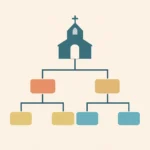
Stakeholder map: A diagram that identifies key audiences (congregation, visitors, community partners) and how the mission serves each group.
Feedback protocol: A simple process for collecting input from diverse voices—staff, lay leaders, and laypeople alike.
Alignment checklist: A checklist to assess whether programs, worship, and service activities reflect the mission and values.
Glossary of terms: A short list defining essential terms (e.g., mission, vision, values, impact) to ensure shared understanding across generations.
In practice, many churches find it helpful to publish the mission statement in accessible formats: a wall placard in the lobby, a card in welcome bags, a page on the church website, and references in baptism vows or confirmation materials. The more visible and the more used, the more the mission becomes a lived rhythm rather than a ceremonial artifact.
Frequently Asked Questions
What is the difference between a mission statement and a vision statement?
A mission statement answers why the church exists—its purpose and scope—while a vision statement describes the desired future state or impact if the mission is fulfilled. In many churches, both are used together: the mission explains current calling, the vision outlines aspirational outcomes.
How long should a church mission statement be?
Most effective statements are concise—one to two sentences, or a single, memorable line. The key is clarity and memorability, not length.
Who should participate in creating the mission statement?
Involve a broad cross-section of the congregation: staff, lay leaders, volunteers, youth, seniors, and community partners. A diversity of voices strengthens legitimacy and relevance.
How often should a church review its mission?
Many churches review on a yearly or biannual cadence, with more formal revisions every 3-5 years. Major contextual changes may warrant earlier revision.
What if our church has multiple campuses or ministries?
Adopt a unifying core statement and consider campus- or ministry-specific addenda that reflect local context while remaining aligned to the central mission.
Final Thoughts: The Living Practice of a Mission-Focused Church
Crafting a church mission statement is more than an administrative exercise; it is a spiritual discipline that invites a congregation into shared discernment about its calling and its action. A well-formed ministry statement communicates the church’s core intention in a way that is accessible to newcomers and deeply meaningful to long-time members. It serves not only as a guiding light for governance and budgeting but, more importantly, as a compass for daily ministry—worship that opens hearts, formation that transforms lives, and outreach that reveals a tangible love for neighbors near and far.
As you begin or continue this journey, remember these guiding principles:
Clarity matters more than cleverness. A clear statement invites participation.
Compelling purpose attracts volunteers, donors, and partners who want to join the mission.
Feasibility is critical. A mission statement should point to actions that can be implemented with available resources.
Faithful honesty allows space for growth and change as context evolves, while staying rooted in core convictions.
Continual invitation invites the wider community into the story, turning “us” into “we.”
Ultimately, the goal is a church mission statement that is not only read but lived. If the congregation can recite it, align programs with it, celebrate outcomes through it, and revisit it with a spirit of humility and hope, then the mission has become a true, living vision—a beacon guiding the church toward a future shaped by purpose, grace, and courageous love.















Leave a Reply