Church Mission and Vision: How to Define Your Church’s Purpose
Definition matters when it comes to guiding a local church. A clear, compelling mission communicates what the church is called to do in the present, while a well-crafted vision describes what the church hopes to become in the future. Together, mission and vision anchor decisions, shape ministries, and invite involvement from families, individuals, and leaders within the congregation. This article walks through why these statements matter, how to define them, and how to translate them into everyday life, worship, and service.
Throughout this discussion, we will use variations such as church mission, ministry purpose, church calling, mission statement, vision statement, and strategic direction to describe related ideas. Though the words may differ, the goal remains the same: to clarify why the church exists and what it will pursue together.
Understanding the Difference: Mission vs. Vision
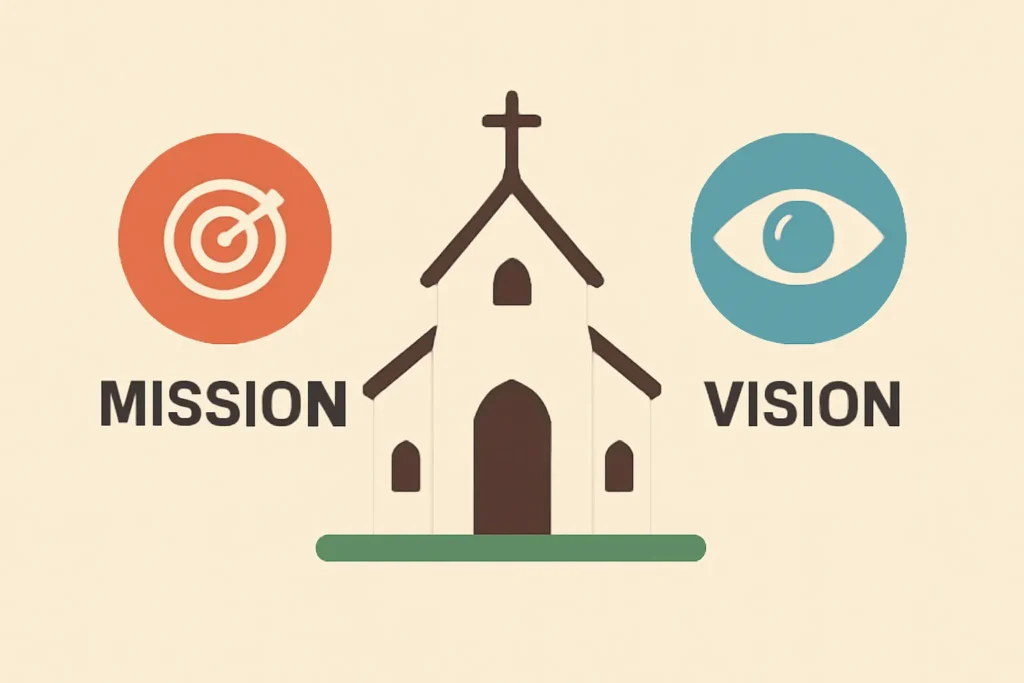
Before drafting any statements, it helps to distinguish the two core concepts. Think of the mission as the church’s present-tense purpose—the ongoing work that fulfills the church’s calling today. The vision is the future-facing image of what God intends to accomplish through the church in a given season or over a defined period.
What is the church mission?
The mission describes the core activity of the church. It explains what the church does, for whom, and why it matters. A strong mission is concise, memorable, and biblically rooted. It points toward transformation—of people, communities, and systems—through God’s work in and through the church.
Audience: Who is being reached or formed? (For example, “the local community,” “families,” “students,” or “neighbors.”)
Activity: What is the primary ministry or activity? (For example, “proclaim the gospel,” “make disciples,” “practice holistic care.”)
Impact: What change do you want to see? (For example, “lives restored by grace,” “communities transformed by service.”)
Scope: Is the mission inward (discipleship within the church) or outward (outreach to the world) or a balanced combination?
What is the church vision?
The vision paints a picture of the church’s preferred future. It answers the question, “Where is God leading us in the next season?” A healthy vision is aspirational yet realistic, specific enough to guide planning, and broad enough to invite diverse participation. It often links to outcomes—how ministry will look, feel, and function when the church is thriving under God’s direction.
Future state: What will be different? What will success look like a year or five years from now?
Impact: How will lives, neighborhoods, and society be changed by the church’s presence?
Time horizon: Is the vision focused on the near term, the medium term, or a long arc?
The Rationale: Why Every Congregation Needs a Mission and Vision
A church without a defined mission and vision risks drift. When priorities keep shifting or ministries multiply without alignment, resources are stretched, volunteers become overwhelmed, and impact thins out. Conversely, a clearly stated mission and vision provide:
Clarity: A shared understanding of purpose reduces confusion and conflicting priorities.
Alignment: Ministries, programs, and decisions align with the church’s unique calling.
Motivation: A compelling future inspires people to commit, serve, and give generously.
Accountability: Clear expectations enable measurement and accountability for outcomes.
Faithfulness: A biblically grounded framework helps the church respond to God’s leading with humility and courage.
Where mission and vision intersect with daily life
Mission and vision are not abstract statements separated from worship and service. They should flow into every layer of church life:
Worship: Sermons, songs, and liturgy should reflect the church’s purpose and future hopes.
Discipleship: Classes, small groups, and mentoring should cultivate the kind of people described by the mission and moving towards the vision.
Outreach: Community service, evangelism, and mission partnerships should be guided by the mission’s priorities.
Stewardship: Financial planning and resource allocation should demonstrate faithful use of gifts in line with the mission.
Governance: Leadership selection and decision processes should reflect the church’s core purpose.
Foundations: Biblical and Theological Anchors
Defining mission and vision begins with a sturdy base of Scripture and theological reflection. While every tradition may phrase things differently, most churches anchor their mission in the Great Commission and their vision in the broader story of God’s redemptive work in the world.
Great Commission: “Go and make disciples of all nations” (Matthew 28:19-20) provides a mandate to witness, teach, and multiply followers of Christ. This often grounds a church’s outward-facing scope and discipleship emphasis.
Great Commandment: Love God and neighbor (Matthew 22:37-40) shapes the church’s posture toward neighbors, service, and ethical living.
Liturgy and practice: The rhythm of worship, sacraments, and prayer informs both mission and vision as the church encounters God’s presence and guidance.
As you translate these biblical anchors into concrete statements, remember that humility and discernment are essential. A church’s mission and vision should invite God’s leadership, not merely reflect human aspiration. In practice, a healthy process includes prayerful listening, open dialogue, and a willingness to adjust as God leads.
Language matters: clarity over cleverness
Clear language helps people remember and own the mission. Avoid jargon that only insiders understand. A mission that people can quote at the door, in a class, or in a small group is more powerful than a grand sentence that few can repeat with confidence.
Preparing to Define Your Church’s Purpose
The process of defining mission and vision is as important as the statements themselves. It builds trust, fosters buy-in, and creates a shared language for decision making. Consider a structured approach that includes prayer, research, and collaboration with key stakeholders.
Engage key stakeholders
Involve a broad but focused group during the drafting phase. This typically includes pastors or elders, church staff, ministry leaders, and representative laypeople. You want voices from different ministries to ensure the statements will guide the whole church.
Pastors and elders can articulate theological anchors and governance implications.
Staff and ministry leaders offer practical insights about programs, capacity, and constraints.
Laity across generations and communities provide real-world relevance and breadth of application.
Study the context
Examine the local context, including demographics, needs, opportunities, and existing partnerships. The mission should speak to the neighborhood or city; the vision should anticipate how the church can participate in God’s larger story in that context.
Review biblical anchors
Gather relevant scriptures and themes that will ground both mission and vision in biblical truth. Build a short confession of faith or statement of beliefs that anchors your purpose while avoiding doctrinal drift.
Draft and iterate
Begin with rough drafts, then refine through multiple reviews. Provide space for feedback, revision, and, eventually, a final edition that is both concise and compelling. Do not rush this step; a thoughtful process yields stronger leadership buy-in and clearer direction.
The mission statement should capture today’s calling in a concise form. It often answers the questions: Who are we serving?What are we doing?Why does it matter? A memorable mission statement typically fits on a poster, a website banner, or a church bulletin.
Elements of a strong church mission
Purpose: The core reason the church exists at this time.
People: The target group or broad audience being shepherded.
Activity: The primary ministry or practice by which the church serves.
Impact: The intended transformation or outcome.
Examples of purpose-driven mission statements
“To lead people into a growing relationship with Christ through worship, teaching, and service.”
“To love our neighbors as ourselves by sharing the gospel, serving the poor, and building lasting relationships.”
“To disciple families in our community toward faith in Jesus, maturity in character, and hope for the world.”
When writing the mission, prefer brevity and clarity. Aim for a sentence or two that can be memorized and recited. Include wording that emphasizes transformation, not merely activity or programs. The mission should remind the church of its identity as a body of believers who follow Christ and serve others.
Forming the Vision: The Future You’re Pursuing
The vision statement offers a vivid picture of what the church aspires to become under God’s leadership. It may describe changes in the congregation, the community, or even the church’s identity in the region. A vision should be specific enough to guide planning, yet adaptable enough to accommodate circumstances and new insights.
Guiding questions for a compelling vision
Future impact: What difference will the church make in people’s lives and in the neighborhood?
Community narrative: What stories will you be able to tell about your church in five or ten years?
Worship and life together: How will corporate worship, small groups, and service reflect the vision?
Sustainability: What organizational habits, leadership structures, and resources will support the vision?
Examples of future-oriented vision statements
“In five years, our church will be known as a beacon of grace and service, actively mentoring families, partnering with local schools, and multiplying gospel-centered leaders.”
“Our congregation will grow as a diverse community of worshipers who follow Jesus, make disciples, and renovate spaces for healing and hospitality.”
“We envision a church that trains and sends dozens of mission-focused teams into the surrounding neighborhoods, bringing hope through acts of service and proclamation of the good news.”
When articulating the vision, consider the timeline (e.g., a three- to five-year horizon) and the measurable outcomes you expect to see. While the language should be evocative and fresh, it must remain faithful to Scripture, the church’s heritage, and the community’s needs.
Defining Core Values and Strategic Priorities
Beyond mission and vision, most healthy churches identify core values—the non-negotiable beliefs that shape behavior—and strategic priorities—the areas where the church will focus its limited resources. Values and priorities help translate abstract goals into concrete action.
Identifying core values
Scriptural fidelity: Adherence to the truth of the Bible in teaching, preaching, and life.
Christ-like character: A culture of humility, integrity, and love in all relationships.
Relational discipleship: Investing in people through mentorship, family ministry, and small groups.
Compassion in action: Service to the poor, the marginalized, and the sick.
Outreach and partnership: Collaborative mission with other churches and community organizations.
Setting strategic priorities
Strategic priorities should be actionable and time-bound. They often relate to areas such as evangelism, discipleship, stewardship, community engagement, and leadership development. For each priority, consider defining:
Goals: The specific outcomes you want to achieve.
Strategies: The main approaches you will use to reach those goals.
Measures: How you will track progress and know when you succeed.
Implementation: From Paper to Practice
Writing mission and vision statements is only the beginning. The real work is implementation—how you integrate them into worship, programs, leadership development, and day-to-day decisions.
Share the statements broadly and repeatedly. Use multiple channels: sermon series, church newsletters, social media, welcome packets, and ministry kickoff events. A phased rollout can help people absorb and apply the new direction.
Worship and liturgy
Let the mission and vision infuse worship planning. Sermon series, liturgical seasons, and prayers can reinforce the desired identity and future focus. This alignment ensures that worship itself becomes a catechetical tool for the church’s purpose.
Ministry alignment
Audit current ministries to determine whether they support the mission and move toward the vision. This may involve expanding certain programs, pruning others, or launching new initiatives that align with the core purpose.
Leadership development
Develop leaders who embody the values and carry the vision forward. This includes training for elders, staff, volunteers, and lay leaders, with an emphasis on discernment, collaboration, and accountability.
Measuring and Sustaining Momentum
Objectives without measurement drift. Create simple, meaningful metrics to gauge progress without turning mission and vision into a compliance exercise. Regular reflection helps sustain momentum and allows for timely adjustments.
Practical metrics to consider
Discipleship progress: Number of people engaging in small groups, mentorship, or spiritual formation tracks.
Engagement indicators: Attendance trends, volunteer participation, and faithful giving aligned with the vision.
Community impact: Partnerships formed, service events completed, and measurable outcomes in local needs (e.g., tutoring programs, food security, neighborhoods affected).
Sustainability markers: Leadership development outcomes, volunteer retention, and governance health.
Use a recurring review cadence—perhaps quarterly for ministries and annually for the overall mission-vision framework. Allow room for honest feedback, celebrate wins, and adjust less critical aspects when necessary.
Common Pitfalls to Avoid
Even with good intentions, churches can stumble in the process of defining and applying their mission and vision. Here are some common traps and practical tips to avoid them.
A mission or vision that is too long or too poetic can become forgettable. Aim for conciseness and clarity. It should fit on a wall, a bulletin, or a slide deck without losing meaning.
Be careful not to equate ministry programs with the church’s core calling. Mission should reflect the enduring purpose, not merely the current lineup of programs. If a program dies, the mission should still stand.
Neglecting community voice
Excluding key voices—especially those from diverse backgrounds or marginalized groups—can distort the direction. Engage a wide range of perspectives to ensure the mission and vision address real needs and reflect a healthy, inclusive community.
Shifting goals too quickly
While adaptability is essential, constantly changing the mission and vision can erode trust. Stability paired with periodic, thoughtful review tends to yield better long-term traction.
Case Studies: Illustrative Scenarios
To bring these ideas to life, consider two hypothetical scenarios that illustrate how different churches might define their mission and vision.
Case A: A growing urban church
Mission: “To make disciples who love God and neighbor, by teaching the Bible, serving the city, and inviting people into Jesus’ story.”
Vision: “In five years, we will be a thriving multigeneration community that multiplies small groups across neighborhoods, partners with ten local nonprofits, and sees lives transformed by the gospel.”
Case B: A rural church plant
Mission: “To proclaim the gospel, cultivate faithful families, and care for our neighbors with tangible holiness and service.”
Vision: “In three years, our church plant will be a hub of stewardship and hospitality, training new leaders, and bringing hope to our surrounding towns through collaborative missions.”
Templates and Tools to Help You Draft
Several practical resources can help your church draft robust and usable mission and vision statements. The goal is to equip leaders with tools that are easy to share, teach, and apply.
Mission Template:
We exist to verbaudience by verb in order to impact the world for Christ.
Vision Template:
In the next time horizon, our church will be a place where outcome happens, through strategies that mobilize people for ministry.
A brief questionnaire to gather input from different segments of the church family about priorities, concerns, and hopes for the future.
Editorial Guide:
A style guide for consistent language around mission and vision to be used in preaching, teaching materials, and communications.
These templates are starting points. Adapt language to reflect your church’s unique identity, history, and callings.
Multi-Site and Plant Contexts: Tailoring the Message
Churches with multiple campuses, online ministries, or new plant teams may need to adapt their mission and vision to coordinate across contexts while preserving a unified identity.
Consistency across sites
Maintain a shared core mission and vision, with site-specific clarifications as needed. Ensure that each location can articulate how it contributes to the larger picture while addressing its unique community.
In digital environments, mission statements can guide content strategy and engagement paths. The vision can articulate how online communities participate in local and global mission, including virtual small groups, online evangelism, and digital disciple-making.
Final Thoughts: Staying Faithful to Your Calling
Defining a church’s mission and vision is an act of faithful leadership. It requires prayer, humility, and sustained collaboration. The resulting statements should guide decisions, shape culture, and invite participation, while continually anchoring the church in God’s Word and His calling.
Consistency between beliefs and practice matters. The church’s actions—how it worships, teaches, serves, and engages the world—should reflect the declared mission and work toward the vision. When lived out with integrity, the mission and vision become more than words on a page; they become a living roadmap for transformation.
As you close this process, consider documenting a brief commitment statement from church leadership affirming:
Recommitment to biblical foundations.
Acknowledge of the church’s unique context and calling.
Willingness to review and revise with the Spirit’s leading, while keeping the core purpose intact.
Plans for ongoing communication and accountability to the congregation.
With a clear mission guiding day-to-day choices and a compelling vision casting a hopeful path forward, a church can pursue God’s purposes with confidence, unity, and generosity. The journey from drafting to living out the mission and vision is ongoing, prayerful, and deeply rewarding as the church witnesses God’s work in and through it—now and for generations to come.















Leave a Reply