Psalm 117 is the Bible’s shortest chapter and shortest psalm, but its message reaches every nation.
In only two verses, the psalm calls all peoples to praise the Lord and gives the reason: God’s steadfast love and faithfulness endure forever. Its brevity makes it easy to memorize, but its meaning is broad enough to connect with worship, mission, prayer, suffering, and the unity of God’s people.
The psalm does not describe a specific crisis, name a particular enemy, or tell a story from Israel’s history. Instead, it offers a direct invitation to worship. The command begins with Israel’s God but extends beyond Israel, embracing all nations and every people group.
The central idea: Psalm 117 invites every people to praise God because his covenant love and dependable faithfulness do not run out.
Psalm 117 has a simple movement. First, it issues a call: the nations and all peoples should praise the Lord. Second, it explains why: God’s loving commitment toward his people is strong, and his faithfulness continues without end.
The psalm’s two verses are short, but they contain several important ideas:
Worship is for every nation. Praise is not presented as the private possession of one ethnic group.
God’s character is the reason for praise. The focus is not on human achievement but on divine love and reliability.
God’s faithfulness is enduring. His trustworthiness is not temporary, conditional on changing circumstances, or limited to one generation.
Praise is a response to truth. The psalm does not ask people to praise blindly; it points to what God has shown himself to be.
The opening command is often translated as “Praise the Lord,” but the Hebrew expression is Hallelu Yah, the source of the familiar word “hallelujah.” It combines a command to praise with a shortened form of the divine name. The phrase is both a summons and a direction: worship should be aimed at the Lord, not merely at an emotional experience or an abstract idea of goodness.
The audience is especially striking. Psalm 117 addresses the nations and all peoples. In the Old Testament, these terms can refer to the nations outside Israel. The psalm therefore gives a universal scope to worship while remaining rooted in Israel’s understanding of the Lord.
The second verse explains the grounds for this praise through two closely related qualities. God’s steadfast love describes his loyal, committed care. It is more durable than passing affection. The word points toward a relationship in which God keeps faith with his promises and remains committed to his people.
God’s faithfulness describes his dependability and truthfulness. He can be trusted to remain who he is and to act consistently with his character. Together, these qualities show why the psalm can call people to praise even when circumstances are not described as easy or pleasant.
The final statement gives the psalm its lasting force: God’s love and faithfulness endure forever. This does not mean that every moment feels secure or that believers never face loss. It means that the foundation of God’s character does not expire. Human moods change, political powers rise and fall, and personal circumstances shift, but the psalm directs attention to a more stable reality.
How Psalm 117 fits into the Book of Psalms
Psalm 117 belongs to the collection known as the Hallel Psalms, a group associated with praise. Psalms 113 through 118 are commonly called the Egyptian Hallel. These psalms were connected with major Jewish festivals, including Passover, and were used in communal worship.
The name “Egyptian Hallel” reflects the central theme of God’s deliverance of Israel from Egypt, especially in Psalm 114 and the surrounding collection. Psalm 117 does not retell the exodus, but it fits the larger movement of remembering God’s saving work and answering it with praise.
Its position is also meaningful. Psalm 116 is a personal song of thanksgiving in which an individual describes calling on the Lord in distress and receiving help. Psalm 117 then widens the perspective from one worshiper to all peoples. Psalm 118 continues with a strong communal call to give thanks because God’s steadfast love endures.
Personal experience: one person gives thanks for God’s help.
Universal invitation: every nation is called to praise.
Communal celebration: the worshiping community proclaims God’s enduring love.
Psalm 117 can therefore be read on its own, but it also gains depth from its neighbors. It links private faith with public worship. A person who has experienced God’s help does not remain isolated; the praise expands toward the whole community and, ultimately, toward all nations.
The psalm also stands near the end of the Psalter, where praise becomes increasingly prominent. The Book of Psalms contains lament, confession, wisdom, royal songs, thanksgiving, and celebration. Psalm 117 shows that praise does not require a long explanation. Sometimes the worshiping response is concentrated into a few carefully chosen claims about who God is.
Its brevity may have helped it serve as a memorable part of worship. A congregation could repeat its call and answer without needing extensive instruction. Yet short does not mean shallow. A compact prayer can carry a large theological vision when each phrase is carefully shaped.
Reading tip: Read Psalm 117 alongside Psalms 116 and 118. The surrounding psalms help you hear how personal thanksgiving grows into communal and worldwide praise.
What the key words in Psalm 117 mean
“Praise the Lord” points to deliberate worship
The psalm begins with a command rather than a description of a feeling. That distinction matters. Praise may include joy and strong emotion, but it is not dependent on feeling cheerful. The command calls people to recognize God’s worth and respond to it deliberately.
This makes Psalm 117 useful in both joyful and difficult seasons. You may approach it with gratitude after receiving good news, or you may use it when your emotions are unsettled. The psalm does not deny pain; it places pain within a larger confession about God’s character.
To praise God is also more than praising the benefits you have received. The psalm does not list material success, health, safety, or comfort as its central reasons for worship. It directs attention to God’s steadfast love and faithfulness, qualities that remain true even when particular outcomes are uncertain.
“All nations” gives the psalm a worldwide horizon
The invitation to the nations is one of Psalm 117’s most distinctive features. Israel’s worship is not portrayed as a closed tradition with no concern for outsiders. The Lord is presented as worthy of praise among every people.
This universal language does not erase the psalm’s Israelite setting. The song comes from Israel’s Scriptures and speaks from Israel’s experience of God. Instead, it shows that the God known by Israel is not a tribal deity limited to one land or people. His character has significance for the entire human family.
The wording also challenges narrow ideas about who may approach God in worship. The psalm does not call only religious experts, political leaders, or people with a particular social status. It addresses all peoples. Its vision is inclusive in scope, even though the response it asks for is specific: praise the Lord.
“Steadfast love” describes committed mercy
The Hebrew word often translated “steadfast love” is hesed. English translations use several terms, including “mercy,” “lovingkindness,” and “faithful love,” because no single English word captures every aspect of it.
In Psalm 117, the term suggests more than a warm feeling. It points to loyal love expressed through a relationship. God’s love is committed, merciful, and dependable. It is the kind of love that keeps faith rather than disappearing when circumstances become difficult.
That emphasis gives the psalm a firm center. Worship is not based on an idealized picture of life. It is based on the conviction that God’s character remains gracious and committed. The psalm directs the nations to praise not because they have mastered life, but because God’s love is strong.
“Faithfulness” describes a trustworthy God
The second major quality is often translated as faithfulness or “truth.” The idea includes reliability, dependability, and firmness. God is not unpredictable in the sense of being morally unstable. His word and character can be trusted.
When the psalm says that this faithfulness endures forever, it presents a foundation for confidence. People change their minds, institutions fail, and promises are sometimes broken. God’s faithfulness stands in contrast to that instability.
Love and faithfulness belong together. Love without reliability could become only sentiment. Reliability without love could seem cold or mechanical. Psalm 117 praises God for both: he is committed to his people, and he can be trusted to remain faithful.
How Psalm 117 connects with the New Testament
Psalm 117 is quoted in Romans 15:11, where the apostle Paul uses it as part of a larger argument about Jews and Gentiles praising God together. Paul places the psalm among several Old Testament passages that point toward the inclusion of the nations in God’s saving purposes.
Paul’s use of the psalm highlights something already present in its wording: the worship of the Lord is meant to extend beyond Israel. The nations are not an afterthought in the psalm’s call to praise. They are named directly as participants.
In Romans 15, the quotation appears as Paul urges believers from different backgrounds to live in unity. His concern is not simply that people from different ethnic groups attend the same gatherings. He wants them to share a common life shaped by the character of Christ and directed toward the glory of God.
This connection gives Psalm 117 a strong place in Christian reflection on the church’s worldwide identity. Christians from different cultures and languages are not united because they have identical customs. They are united in worship of the same Lord and in their dependence on the same steadfast love and faithfulness.
The psalm also supports a balanced understanding of mission. Its worldwide vision does not make every culture identical. Instead, it imagines distinct peoples turning toward the Lord in praise. The goal is not cultural erasure but shared worship grounded in God’s character.
Psalm 117 can therefore be used to pray for:
Unity among Christians from different nations, languages, and traditions.
Faithful witness that points people toward God rather than toward human prestige.
Mutual welcome in congregations that include people from varied backgrounds.
Perseverance when the visible results of ministry seem slow.
Gratitude for the worldwide fellowship of believers.
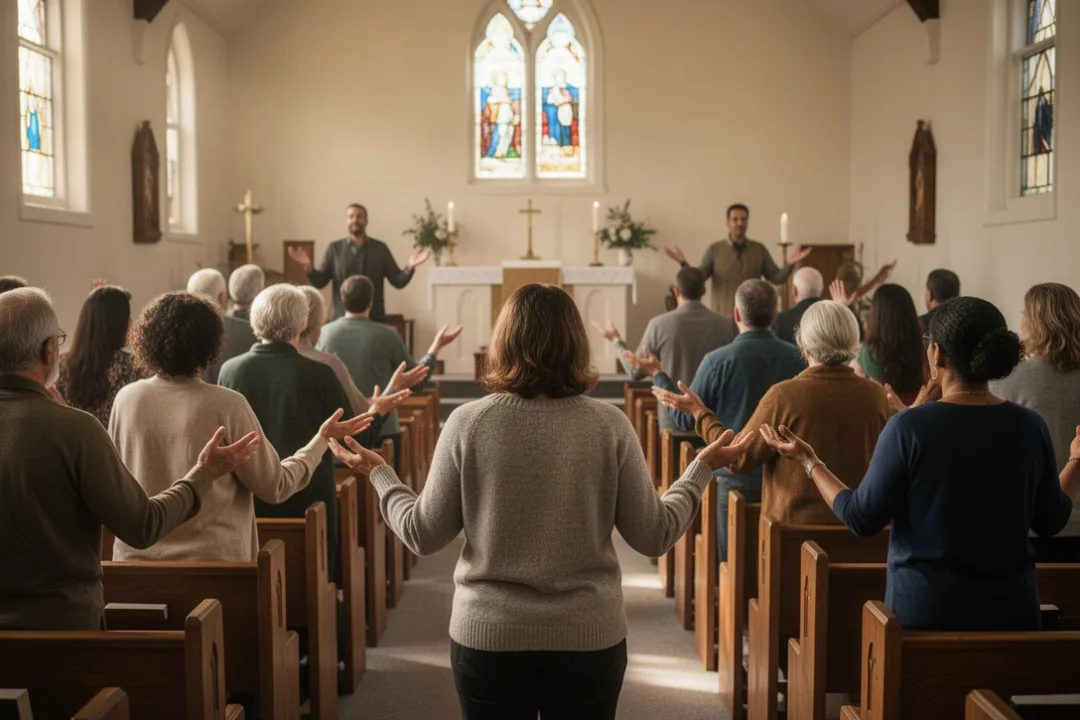
The psalm’s brief message also guards against making worship too narrow. A congregation may have its own musical styles, customs, and local concerns, but Psalm 117 asks it to remember the wider people of God. Worship has a local expression and a global horizon.
Ways to use Psalm 117 in prayer and worship
Because Psalm 117 is short, you can return to it regularly without needing a long period of preparation. Its structure lends itself to several forms of prayer. You might read it slowly, repeat its central ideas in your own words, or use its two movements as a pattern for intercession.
Use it as a short morning prayer
Begin the day by acknowledging that praise does not depend entirely on the day’s expected events. Thank God for his steadfast love and faithfulness before you know what the day will bring. Then pray for your household, community, and people in other parts of the world to recognize God’s goodness.
A simple pattern could be:
Adoration: praise God for who he is.
Remembrance: identify one way his love or faithfulness has sustained you.
Intercession: pray for people and nations beyond your immediate circle.
Trust: place the day in God’s care.
Use it when your circumstances feel unstable
Psalm 117 does not provide a detailed answer to every kind of suffering, but it gives you language for anchoring prayer. When you cannot see how a situation will develop, you can still affirm that God’s faithfulness is not limited by your ability to predict the future.
That is not the same as pretending everything is fine. You can lament, ask for help, and name your fear while also confessing that God remains worthy of trust. Short prayers can be especially helpful when grief or exhaustion makes extended speech difficult.
Use it to widen your concern for other people
The repeated attention to all nations can reshape the scope of personal prayer. Instead of praying only for familiar people and local needs, choose a different country, language group, or region each week. Pray for justice, peace, wisdom for leaders, protection for vulnerable people, and faithful communities of worship.
You do not need detailed knowledge to begin. Pray with humility, avoid assuming that every place has the same challenges, and seek reliable information when your prayers are connected to current events. Psalm 117 encourages broad concern, but broad concern should be expressed responsibly.
Use it in congregational worship
Psalm 117 works well as a responsive reading, a call to worship, or a bridge between songs and prayers. Its short form allows the congregation to hear it more than once, with attention to different phrases each time.
A worship leader might emphasize the movement from “all peoples” to God’s “steadfast love” and “faithfulness.” The congregation can then consider both the size of the invitation and the character of the God being praised.
It may also be appropriate during services that highlight global mission, cultural diversity, reconciliation, baptism, communion, or thanksgiving. The psalm keeps the focus on God rather than turning international ministry into a celebration of human accomplishment.
Questions Psalm 117 raises for everyday faith
Psalm 117 is easy to read quickly, but it rewards slower reflection. Its short length can expose how often you expect a long explanation before you are willing to trust or praise. The psalm asks you to consider whether God’s character is enough to ground worship when circumstances remain unresolved.
One question is what shapes your praise. If praise depends only on success, comfort, or answered requests, it will rise and fall with your circumstances. Psalm 117 teaches a more durable pattern: praise responds to who God is, especially his steadfast love and faithfulness.
A second question is how wide your spiritual concern is. The psalm does not allow worship to remain entirely private. It sends your attention outward toward nations and peoples who may be unfamiliar to you. Faith includes a willingness to care about what God is doing beyond your own household or congregation.
A third question is how you understand unity. Psalm 117 does not require every person to have the same background or personality. It points to a shared object of worship and a shared recognition of God’s character. Unity grows when people turn together toward the Lord instead of demanding that everyone first become culturally identical.
A fourth question concerns perseverance. The phrase “forever” gives praise a long horizon. God’s faithfulness is not measured only by one day, one season, or one visible outcome. You may not be able to resolve every question immediately, but you can continue to return to the conviction that God’s love and dependability endure.
These questions make Psalm 117 more than a short text to memorize. It becomes a pattern for a life of worship: look to God’s character, receive his love, trust his faithfulness, and invite the whole world to praise him.
Frequently asked questions
Is Psalm 117 really the shortest chapter in the Bible?
Yes. Psalm 117 is generally recognized as the shortest chapter in the Bible and contains only two verses in standard English Bible numbering. It is also the shortest psalm. Its brief length does not reduce its significance: the chapter presents a universal call to worship and grounds that call in God’s enduring love and faithfulness.
What is the main message of Psalm 117?
The main message is that all nations and peoples should praise the Lord because his steadfast love is strong and his faithfulness lasts forever. The psalm emphasizes God’s character rather than a particular event or personal request. It presents worship as a worldwide response to a God who is loving, dependable, and permanently trustworthy.
Why does Paul quote Psalm 117 in Romans 15:11?
Paul uses Psalm 117 to support the idea that Gentiles, or people from the nations, belong within the worshiping people of God. In Romans 15, the quotation appears alongside other Old Testament references as Paul calls Jewish and Gentile believers toward unity. The psalm’s direct address to all peoples makes it especially fitting for that argument.
How can I pray Psalm 117 when I am facing hardship?
You can use its two-part structure: first acknowledge God as worthy of praise, then focus on his steadfast love and faithfulness. This does not require denying grief or pretending that the problem is small. You can name your pain honestly while asking God to help you trust that his character remains dependable when your circumstances are uncertain.
















Leave a Reply