A prayer for safe travels can place your journey, your loved ones, and the people sharing the road in God’s care.
Travel often brings a mixture of hope, responsibility, and uncertainty. You may be leaving home for a vacation, beginning a long drive to see family, flying for work, or accompanying someone through a difficult trip. Prayer does not replace careful planning or sound decisions, but it can help you travel with a calmer heart and a greater awareness of the people around you.
A meaningful travel prayer does not need elaborate language. It can ask for protection, wisdom, patience, and a safe arrival. You can pray before leaving, during a quiet moment at an airport or rest stop, or after reaching your destination to express gratitude.
A travel prayer may focus on more than avoiding accidents. It can bring the whole experience before God, including the practical details, emotional concerns, and relationships connected with the journey. Specific requests often make prayer feel more sincere and relevant.
Protection: Ask for safety from crashes, illness, severe weather, mechanical problems, violence, and other dangers.
Wisdom: Pray for good judgment about routes, speed, rest, delays, unfamiliar places, and changing conditions.
Patience: Ask for a calm response to traffic, cancellations, crowded terminals, difficult passengers, or unexpected changes.
Care for others: Include fellow travelers, pilots, drivers, flight crews, emergency workers, and people waiting at home.
A peaceful arrival: Pray for a safe destination and the ability to reconnect with family, friends, work, or a community.
Gratitude: Give thanks for transportation, helpful people, the opportunity to travel, and protection already received.
These concerns can be adapted to any kind of trip. A person traveling alone may emphasize awareness and companionship. Parents may pray for children who are flying without them. Someone driving through winter weather may ask for wise decisions and the humility to stop when conditions become unsafe.
Remember: Prayer and preparation belong together. A careful driver who rests, checks conditions, follows traffic laws, and avoids distractions is acting consistently with a prayer for protection.
A short prayer for safe travels
When you need a prayer that can be spoken in a few moments, use simple words that reflect the journey ahead. You do not need to pray aloud if you are in a public place; a silent prayer can be just as personal and focused.
God, please watch over me as I travel. Guide my decisions, protect everyone on the road and in the air, and help me remain calm and attentive. Bring me safely to my destination, and give peace to those who are waiting for me. Amen.
This prayer includes several central requests: guidance, protection, attentiveness, and peace. You can replace “me” with the name of a family member, friend, or group traveling together. You can also name the particular concern, such as a long drive, severe weather, a first flight, or an unfamiliar destination.
A very brief version may be helpful when you are about to start the engine or board a vehicle:
Lord, guide our way, protect every traveler, and bring us safely to where we are going. Help us travel with wisdom and peace. Amen.
A Christian prayer before driving
Driving requires sustained attention, patience, and good judgment. A prayer before driving can help you pause before entering traffic and recognize that your choices affect passengers, pedestrians, cyclists, and other drivers.
Heavenly Father, thank you for this vehicle and the ability to travel. Please keep me alert, patient, and responsible behind the wheel. Help me obey the law, make wise decisions, and respond calmly to delays or danger. Protect everyone sharing the road, and guide me safely to my destination. Amen.
The prayer’s focus on responsibility matters. Asking for safety while driving should not become a substitute for wearing a seat belt, putting away your phone, avoiding impairment, and stopping when tired. A quiet pause before driving can reinforce those commitments rather than replace them.
If you are carrying passengers, you might add a request for their comfort and health. If you are driving a child to an appointment, taking an older relative to a new city, or making a difficult trip for work, mention that particular need in your own words.
A prayer for safe air travel
Flying can bring special anxiety because you are placing your trust in trained professionals, unfamiliar procedures, and circumstances you cannot control. Prayer can acknowledge that fear honestly while asking for steadiness and protection.
God of mercy, be with us as we travel by air. Watch over the pilots, crew members, airport workers, and passengers. Give wisdom to those responsible for the flight, calm to those who are afraid, and strength to those facing uncertainty. Protect us throughout the journey and bring us safely to our destination. Amen.
This prayer includes the many people who make air travel possible. It asks for skill and sound judgment from the crew, as well as comfort for passengers who feel nervous. You may pray it at the gate, during takeoff, in turbulence, or whenever anxiety becomes distracting.
If you are praying for someone else’s flight, include the traveler’s name and destination. You might also pray for the people receiving them, especially if the journey is connected with a medical appointment, military service, a funeral, a move, or a long separation.
A prayer for a loved one who is traveling
Waiting at home can be harder than traveling yourself because you have fewer opportunities to check conditions or offer help. A prayer for a loved one can place that concern before God while asking for practical protection and a peaceful reunion.
Loving God, please watch over [name] during this journey. Keep them safe, attentive, and surrounded by trustworthy help. Give wisdom to everyone responsible for their transportation, and give our family patience while we wait. Protect their health and bring them safely back to us or safely to their destination. Amen.
You can make the prayer more personal by naming what the traveler needs: confidence for a first trip, strength for a long journey, comfort during a delay, or protection in unfamiliar surroundings. If the person is traveling for a serious reason, it is also appropriate to pray for the people they will meet and the work they need to do.
For a child, keep the wording gentle and reassuring. For an adult who is anxious, avoid suggesting that fear reflects weak faith. A prayer can recognize genuine worry and ask for courage, support, and wise help rather than pretending every concern is insignificant.
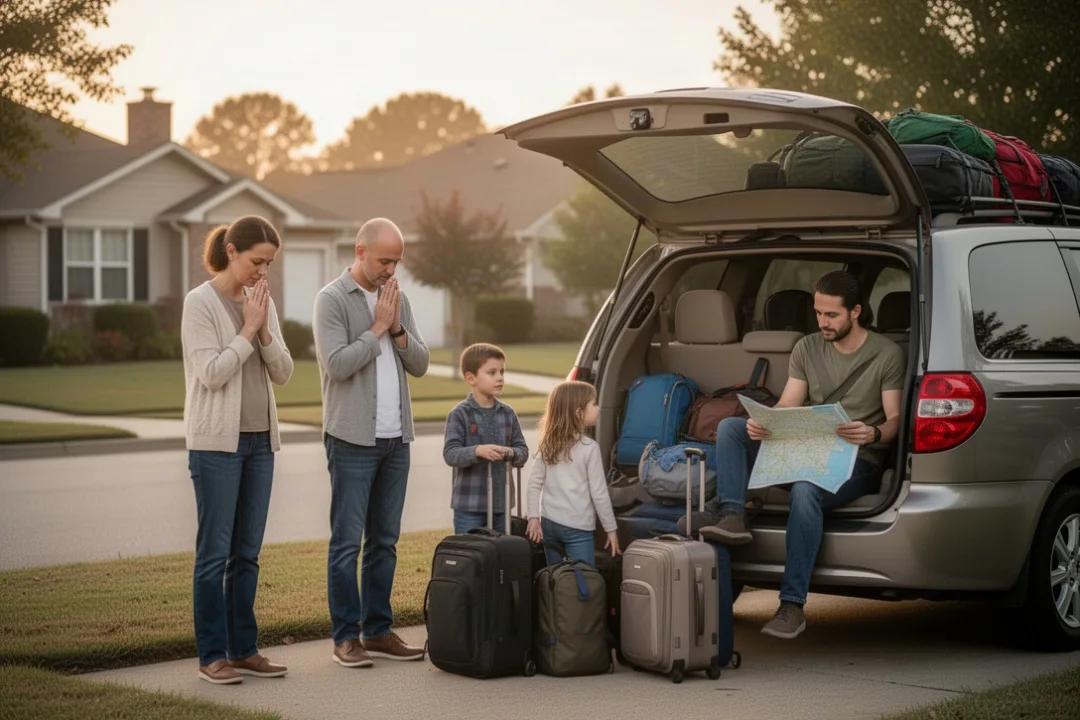
A prayer for a family road trip
Family travel can be joyful, but long hours together may also bring fatigue, disagreements, and stress. A shared prayer can set a peaceful tone before departure and remind everyone that safe travel depends on cooperation.
God, thank you for the chance to travel together. Keep our family safe, patient, and considerate throughout the trip. Help the driver stay focused and rested, help everyone follow sensible safety practices, and guide us through traffic, weather, and unexpected changes. May we arrive safely and treat one another with kindness along the way. Amen.
Children can participate by naming one thing they are thankful for or one person they want to keep safe. This makes prayer a shared practice rather than a formal speech delivered to them. Keep the moment short enough that it feels natural before the journey begins.
For an especially long trip, pray again at a rest stop. A second prayer can mark a change in the journey, such as entering a new state, approaching bad weather, or beginning the final stretch. The pause also provides a useful reminder to stretch, hydrate, check fuel, and assess fatigue.
Prayers for difficult or uncertain journeys
Some travel is connected with grief, illness, conflict, relocation, or an urgent family need. In these circumstances, a prayer for safe travels may include requests for emotional strength and wise support, not only physical protection.
God, this journey is difficult, and I need your help. Give me courage for each part of the way, wisdom when plans change, and people who will offer assistance when I need it. Protect me from harm, sustain my body and spirit, and help me reach the people and place I need to reach. Amen.
When a journey involves medical care, you may pray for safe transportation, capable medical professionals, clear communication, and comfort for everyone involved. When it involves a funeral or family crisis, you might ask for strength to travel while grieving and compassion among those who gather.
For relocation, include the uncertainty of leaving familiar people and places. Pray for a safe move, responsible handling of belongings, a welcoming community, and the ability to make sound decisions during a demanding transition.
Prayer does not require you to deny how serious a situation is. Honest prayer can say that you are afraid, tired, angry, or unsure. It can ask for help one step at a time rather than demanding a perfect feeling before the journey begins.
How to write your own prayer for safe travels
Personal prayers often feel most natural because they name the details that matter to you. You can use a simple four-part pattern: address God, describe the journey, request specific help, and end with gratitude or trust.
Begin with a name for God: You might say “God,” “Lord,” “Heavenly Father,” or another form used in your faith tradition.
Name the journey: Mention where you are going, who is traveling, and why the trip matters.
Ask for particular help: Pray for protection, wisdom, alertness, patience, health, or comfort.
Include other people: Remember drivers, passengers, transportation workers, hosts, and those waiting at home.
End with trust or thanks: Express confidence in God’s care or gratitude for the opportunity to travel.
For example, you might say: “God, I am traveling to see my family this weekend. Please protect me on the road, help me stay alert and patient, and keep the people around me safe. Give peace to everyone waiting for my arrival, and thank you for the chance to be together.”
There is no required length or perfect formula. Specific and sincere is more useful than elaborate wording. If you lose your place or repeat yourself, that does not make the prayer less meaningful.
Practical travel habits that support a prayer for protection
A prayer for safe travels should be paired with choices that reduce preventable risks. Before leaving, take a few minutes to prepare rather than rushing out the door with avoidable problems.
Check the route and conditions: Look at traffic, weather, road closures, airport alerts, and any transportation updates that may affect timing.
Plan for rest: Start with enough sleep, schedule breaks, and do not continue driving when you are struggling to stay awake.
Remove distractions: Set navigation before moving, silence unnecessary notifications, and ask a passenger to manage calls or directions.
Inspect essential equipment: For a road trip, check fuel, tire condition, lights, fluid levels, and emergency supplies.
Secure important items: Keep identification, medication, payment methods, contact information, and required documents accessible.
Share your plans wisely: Let a trusted person know your general route and expected arrival when traveling alone or through remote areas.
Build in extra time: A realistic schedule reduces pressure to speed, skip breaks, or make unsafe choices after a delay.
Respect changing conditions: Slow down, reroute, wait, or stop when weather, fatigue, illness, or road conditions make continuing unsafe.
These habits are not signs of fear or a lack of faith. They are practical ways to exercise stewardship, responsibility, and care for others. A prayer may ask for a safe arrival, while preparation helps create the conditions for one.
Do not pray while operating a vehicle in a distracting way. If you need to close your eyes, read a prayer, adjust navigation, or make a call, pull over somewhere safe first.
Common mistakes when praying for safe travels
People sometimes make travel prayer harder than it needs to be. Avoiding a few common mistakes can help you pray with greater honesty and usefulness.
Treating prayer as a guarantee: Prayer expresses trust and asks for help, but it does not promise that every journey will be free from delay, discomfort, or danger.
Using prayer instead of preparation: Asking for protection does not make speeding, driving while tired, or ignoring severe weather responsible.
Assuming fear means failure: Anxiety is a human response, especially during turbulence, unfamiliar travel, or a serious family situation. Bring it honestly to prayer.
Forgetting other people: Travel safety involves more than the person who is praying. Include passengers, workers, pedestrians, and people waiting at home.
Praying only in a crisis: A short prayer before departure can establish calm and attention before stress begins to build.
Comparing your prayer with someone else’s: A child’s few words, a silent request, and a carefully written prayer can all be sincere.
Another mistake is feeling that you must find the exact words before you can begin. If you are overwhelmed, a sentence such as “God, please help us travel safely and wisely” is enough to start. You can continue as more thoughts come to mind.
Bible passages that relate to travel and protection
Many Christians turn to Scripture when they want language for a travel prayer. You can read the passages privately, mention the reference, or paraphrase the main idea in your own prayer rather than trying to memorize every word.
Psalm 121: This psalm centers on God’s watchful care and presents God as one who guards a person’s going out and coming in.
Psalm 23: Its imagery of God as a shepherd can offer comfort when a traveler feels vulnerable, tired, or uncertain.
Proverbs 3:5-6: These verses encourage trust in God and ask for direction rather than relying only on personal understanding.
Psalm 91: This passage is often read as a prayer for refuge and protection in the presence of danger.
Matthew 6:25-34: Jesus addresses anxiety and points people toward trust in God’s care instead of being consumed by worry.
These passages should not be treated as magical guarantees that no accident or hardship can occur. They can provide language for trust, courage, and perspective while you continue to make careful decisions.
When to pray for safe travels
You can pray at any point connected with the journey. Some people prefer a formal prayer before leaving home, while others pray quietly whenever they need reassurance. A flexible practice makes it easier to include prayer without turning it into a source of pressure.
The night before: Pray while reviewing the itinerary, packing medications, or setting out important documents.
At departure: Ask for protection and good judgment before entering the car, boarding a plane, or beginning a walk.
During a delay: Pray for patience, accurate information, and wise decisions about the next step.
During anxiety: Use slow breathing and a short repeated prayer to regain focus, especially if you are waiting or experiencing turbulence.
At a rest stop: Give thanks for the journey so far and ask for renewed attention during the next section.
After arrival: Express gratitude for protection, assistance, and the people or place that welcomed you.
Ending with gratitude can help you recognize the ordinary forms of care that often make travel possible: a mechanic who repaired a vehicle, a stranger who offered directions, a crew that handled a delay, or a loved one who kept in touch.
Praying with people from different faith backgrounds
Travel often brings together family members, friends, coworkers, and passengers with different beliefs. If you are leading a group prayer, use respectful language and avoid making anyone feel required to participate in a particular way.
You might say, “We are grateful for this journey and ask for safety, wisdom, and peace for everyone traveling with us.” Then allow people to pray silently, offer their own words, or simply observe. Respectful inclusion makes the moment more comfortable without weakening its sincerity.
If someone does not pray, you can still share the practical purpose behind the pause: everyone can check that seat belts are fastened, phones are put away, the driver is rested, and the route is understood. Care for one another can be expressed through both spiritual practice and responsible action.
Frequently asked questions
Can I pray for safe travels for someone who is not religious?
Yes. You can pray privately for that person without expecting them to share your beliefs or participate. Ask for their protection, health, wise decisions, and a safe arrival. If you want to tell them, use considerate language such as “I’m keeping you in my prayers,” unless you know they would prefer a different kind of support.
Is there a specific prayer for safe travel in the Bible?
The Bible does not provide one single required travel prayer. Christians often draw on themes from Psalm 121, Psalm 23, Proverbs 3:5-6, and Psalm 91. You can read those passages, paraphrase their themes, or speak a personal prayer asking for guidance, protection, patience, and safe arrival.
Should I pray before every trip?
There is no rule requiring a prayer before every journey. Some people pray before leaving home, while others pray during stressful travel or after arriving safely. A brief, regular prayer can help you pause and focus, but it should remain a source of comfort rather than an obligation that creates additional anxiety.
What should I do if I become anxious while traveling?
First, take practical safety steps: tell a trusted person, follow crew instructions, pull over if driving, or seek help when appropriate. Then use a short prayer, slow breathing, and a specific focus such as “Help me stay calm and attentive.” Anxiety does not mean your faith is inadequate; honest prayer can accompany sensible support.














Leave a Reply