A helpful First Corinthians Bible study should connect Paul’s teaching to the church’s real problems: division, sexual immorality, lawsuits, marriage questions, worship, spiritual gifts, and confusion about the resurrection. Read the letter as both a pastoral correction and a call to build a church shaped by the gospel, holiness, love, and hope.
For a productive study, read one section at a time, identify the problem Paul addresses, observe his central response, and then ask how the passage should shape your faith and relationships. First Corinthians is not merely a list of rules; it shows how the message about Christ changes a divided community from the inside out.
First Corinthians is traditionally understood as a letter from the apostle Paul to Christians in Corinth. Corinth was a significant city in the Roman world, positioned near a major land bridge and connected to busy trade routes. Its population, wealth, religious variety, and social status created a setting where ambition, public reputation, sexual temptation, and cultural pressure were especially visible.
Paul had established the Corinthian church during an earlier missionary visit, as described in Acts 18. Afterward, he received reports about serious conflicts among the believers. The Corinthians also sent questions about marriage, food associated with idol worship, spiritual gifts, public worship, and the resurrection. First Corinthians responds to both reported problems and questions from the congregation.
The church was not struggling because it lacked spiritual activity. It had teaching, knowledge, gifts, gatherings, and strong personalities. Its deeper problem was that many believers were evaluating one another by worldly standards such as eloquence, influence, freedom, and status. Paul repeatedly redirects them toward the crucified Christ and the self-giving love that should characterize his people.
Study perspective: Read every correction in First Corinthians alongside Paul’s purpose: to help the church become faithful, unified, holy, loving, and centered on Christ rather than on personalities or personal rights.
How to study First Corinthians step by step
A chapter-by-chapter reading is useful, but you will understand the letter better if you trace its arguments. The following process helps you move from observation to application without taking isolated statements out of context.
Read the whole chapter first. Notice repeated words, contrasts, questions, commands, and changes in tone before focusing on individual verses.
Identify the situation. Ask what problem, belief, behavior, or question Paul is addressing. Some passages describe a report about the church, while others answer a question the Corinthians had asked.
Find the main claim. Summarize Paul’s response in one sentence. For example, a section may teach that Christian freedom must be guided by love or that resurrection hope is essential to Christian faith.
Follow the surrounding argument. Read the paragraphs before and after a difficult statement. Context often shows whether Paul is correcting a practice, quoting a Corinthian slogan, or making a broader principle.
Connect the passage to Christ. Look for how Jesus’ death, resurrection, lordship, or return shapes Paul’s instruction.
Apply the teaching specifically. Replace general questions such as “How can I do better?” with concrete ones about speech, relationships, worship, money, sexuality, power, or service.
Pray through the response. Ask God to expose pride, heal division, strengthen self-control, and form the kind of love Paul describes.
First Corinthians chapter-by-chapter study guide
Chapters 1–4: Christian unity and the wisdom of the cross
Paul begins by addressing divisions in the church. Different groups were identifying themselves with prominent Christian leaders, apparently treating those leaders as competing sources of authority. Paul asks whether Christ can be divided and reminds the church that no human teacher was crucified for them or became their true Lord.
The central issue is not simply personality conflict. The Corinthians were measuring Christian leadership by standards such as impressive speech, social influence, and intellectual reputation. Paul answers by emphasizing the apparent weakness of the message of the cross. God’s wisdom does not depend on human status, and God’s power is displayed through what the world may consider foolish or weak.
Paul’s own ministry illustrates this point. He did not try to build the church around polished performance. He proclaimed Christ and depended on God’s power rather than presenting himself as the center. This does not mean clear communication or careful reasoning is wrong. It means that Christian faith cannot rest on the charisma, education, or prestige of its messenger.
In chapters 3 and 4, Paul describes the church as God’s field and building. Leaders serve, but God gives growth. The image challenges both celebrity-style leadership and passive church membership. Teachers have real responsibility, yet every believer must remember that the church belongs to God.
Ask whether your loyalty to a teacher, denomination, or ministry has displaced loyalty to Christ.
Examine whether you evaluate leaders mainly by popularity, speaking ability, wealth, or online influence.
Consider how humility changes the way you receive correction and share responsibility.
Chapters 5–7: Holiness, judgment, singleness, and marriage
Chapter 5 addresses a serious case of sexual immorality within the church. Paul does not treat the matter as private if it is publicly known and damaging to the community’s witness. He calls for disciplined action intended to confront sin and ultimately seek restoration, while warning the church not to celebrate its tolerance.
Paul uses the image of leaven spreading through dough to show how unaddressed corruption affects the whole congregation. His point is not that Christians must isolate themselves from everyone who does wrong. Instead, believers are called to practice discernment within the church while continuing to live among people who do not share their faith.
Chapter 6 discusses lawsuits between believers and then turns to sexual ethics. Paul challenges Christians to accept personal loss rather than damage the church’s witness through public disputes. He also teaches that the body matters to God. Christian freedom is not permission to treat the body as morally insignificant; the believer’s body belongs to the Lord and should be used in a way that honors him.
Chapter 7 responds to questions about marriage and singleness. Paul treats both conditions as meaningful ways to serve God. Marriage involves mutual responsibility, fidelity, and care, while singleness can offer distinctive freedom for undivided service. He gives pastoral guidance rather than presenting one life situation as spiritually superior to every other.
The chapter also recognizes that life circumstances can change. Paul addresses married people, unmarried people, widows, and believers married to nonbelievers. His advice includes a strong concern for peace, faithfulness, and wise obedience within the circumstances a person is actually facing.
Practical boundary: First Corinthians joins sexual holiness to the dignity of the body. Apply its teaching with moral clarity and pastoral care, never using it to excuse abuse, coercion, or humiliation.
Chapters 8–10: Christian freedom guided by love
Chapters 8 through 10 explore whether Christians may eat food connected with idol worship. The question involved more than diet. It concerned conscience, participation in idolatry, social relationships, and the effect of one believer’s behavior on another believer’s faith.
Paul acknowledges that knowledge can lead someone to understand that an idol has no real divine power. Yet knowledge alone can produce arrogance. Love limits liberty when exercising a right could seriously damage another Christian’s conscience or draw that person back into idolatrous practice.
The principle is not that every personal choice must satisfy the most restrictive person in a congregation. Paul is concerned about real spiritual harm, especially when confident believers use their freedom in settings where weaker Christians may be pressured to imitate them. Christian maturity includes the ability to surrender a legitimate right for another person’s good.
In chapter 9, Paul uses his own ministry as an example. He has rights as an apostle, including the right to receive material support, but he voluntarily gives up those rights in some circumstances so that obstacles do not hinder the gospel. His freedom is real, yet it is governed by the mission of love.
Chapter 10 warns against overconfidence. Israel’s history shows that people can experience spiritual privileges and still fall into idolatry, immorality, testing God, or grumbling. The warning is balanced by God’s faithfulness and by the call to flee idolatry. Paul concludes with a broad principle: ordinary activities should be directed toward God’s glory and the good of others.
Is this choice merely permitted, or is it genuinely beneficial?
Could your example pressure someone with a fragile conscience?
Are you using freedom to serve others or to protect personal preference?
Does the way you act make the gospel more credible or create an unnecessary obstacle?
Chapters 11–14: Worship, spiritual gifts, and orderly gatherings
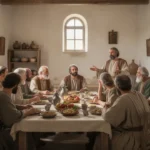
Chapter 11 addresses conduct in worship, the Lord’s Supper, and the way social divisions were appearing during the church’s shared meal. The Corinthians were gathering in the same place but failing to act like one body. Wealthier members were eating while poorer members were left without enough food, turning communion into a public display of inequality.
Paul’s response shows that the Lord’s Supper is not a private spiritual experience detached from community life. To remember Jesus’ death while humiliating fellow believers is to contradict the meaning of the meal. The church must examine not only its personal sincerity but also its treatment of the vulnerable.
Chapter 12 teaches that the Holy Spirit gives a variety of gifts, ministries, and forms of service. No gift makes one believer more valuable than another. Paul compares the church to a body with many parts: diversity is necessary, and mutual dependence is normal. The less visible members are not disposable; they deserve honor and care.
Chapter 13 places love at the center of spiritual maturity. Paul does not present love as a sentimental feeling or a vague attitude. He describes patient, generous, humble, truthful, persevering conduct. Gifts, knowledge, and impressive sacrifice have no lasting value if they are detached from love.
“Let all things be done for building up.” — 1 Corinthians 14:26, paraphrased
Chapter 14 applies these principles to congregational worship. Paul values spiritual gifts, including prophecy and tongues, but insists that public participation should help people understand and grow. Worship should be intelligible, orderly, and edifying. Freedom in worship is not the same as unrestrained self-expression.
Some passages in chapters 11 and 14 are interpreted differently across Christian traditions, especially regarding head coverings, prophecy, tongues, and women’s participation. A careful study should consider the local situation, the whole letter’s emphasis on mutual edification, and the wider New Testament evidence. Avoid using one disputed passage to dismiss the broader call to holiness, order, and love.
Chapter 15: The resurrection as the center of Christian hope
Chapter 15 gives the letter’s fullest teaching about the resurrection of Jesus and believers. Some Corinthians apparently accepted that Christ was raised but struggled to believe in the future resurrection of Christians. Paul shows that these beliefs stand or fall together.
Paul summarizes the gospel as the message that Christ died for sins, was buried, was raised, and appeared to witnesses. He then explains the consequences if Christ has not been raised: preaching would be empty, faith would be futile, sin would remain unresolved, and Christian suffering would have no lasting foundation.
The resurrection is not presented as an abstract doctrine with no effect on daily life. Because Christ is raised, death is not the final authority, faithful labor is not wasted, and Christian endurance has meaning. Paul’s closing encouragement calls believers to remain steady and fully engaged in the Lord’s work because their labor is not pointless.
The chapter also uses the image of a seed to explain continuity and transformation. The future resurrection body will be connected to the present body but will possess a new quality suited to God’s renewed creation. Paul does not provide a detailed map of every event after death; he gives a strong basis for hope grounded in Christ’s victory.
Chapter 16: Generosity, leadership, and faithful relationships
The final chapter turns to practical matters: a collection for believers in Jerusalem, travel plans, ministry partnerships, and greetings. These details show that theology becomes visible through generosity, reliability, hospitality, and cooperation.
Paul encourages planned and consistent giving rather than last-minute pressure. He also urges the Corinthians to respect faithful workers and to strengthen one another. The closing instructions are relational because a healthy church is built through more than public teaching. It requires people who show up, serve quietly, welcome others, and remain dependable under strain.
Major themes to trace throughout First Corinthians
The cross overturns status and pride
The cross challenges the human desire to appear powerful, sophisticated, or superior. In Corinth, believers were dividing themselves around teachers and social identities. Paul does not respond by giving them a more impressive Christian brand. He brings them back to Christ crucified, where boasting in human achievement is exposed.
This theme reaches beyond church leadership. It affects the way you discuss education, income, race, influence, theological knowledge, and ministry success. A church may affirm the cross verbally while organizing its life around celebrity, wealth, or social access. First Corinthians asks whether the community’s actual habits match its confession.
Christian freedom is accountable to love
Paul does not define maturity as maximizing personal options. Mature freedom asks how an action affects other people, the church’s witness, and a person’s relationship with God. This is why the same letter can affirm liberty in one context and urge restraint in another.
The principle applies to entertainment, alcohol, food, clothing, political expression, social media, and disputed cultural practices. The question is not simply, “Am I allowed to do this?” It is also, “Will this strengthen love, promote holiness, and protect someone who may be vulnerable?”
The church is a body, not an audience
First Corinthians rejects both individualism and uniformity. Each believer matters, but no believer is self-sufficient. The church needs different gifts, perspectives, and forms of service, all directed toward the good of the whole.
This corrects two common errors. One is treating only visible roles as valuable. The other is assuming that personal gifts remove the need for accountability or cooperation. Paul’s body metaphor makes room for difference while insisting on interdependence.
Love is the test of spiritual maturity
Knowledge can identify what is true, gifts can equip ministry, and courage can endure opposition. Yet without love, these strengths can become tools of pride. First Corinthians 13 belongs within the letter’s discussion of conflict and worship, not merely in wedding ceremonies.
Paul’s description of love gives you concrete questions. Are you patient when others learn slowly? Do you insist on being recognized? Do you keep a record of offenses? Do you protect truth while refusing to rejoice in another person’s failure? Love is measured through repeated behavior, especially when your rights or reputation are challenged.
Resurrection hope gives ordinary faithfulness meaning
First Corinthians does not separate future hope from present responsibility. The resurrection encourages believers to work, serve, resist sin, endure suffering, and remain faithful when results are not immediately visible. Christian labor matters because Christ has defeated death, not because every effort produces quick success.
Use these questions after reading a chapter or section. A group may choose three or four rather than trying to answer every question at once.
What conflict or temptation is Paul addressing in this passage?
What does the passage reveal about Jesus, the gospel, or the character of God?
Where do pride, fear, self-protection, or the desire for status appear?
How does this teaching balance personal freedom with responsibility toward others?
What would obedience look like in one specific relationship this week?
Does the passage call for repentance, reconciliation, restraint, courage, generosity, or perseverance?
What part of the teaching is difficult, and what assumptions might make it difficult?
How does the resurrection or the future hope of believers affect the way you respond?
Common mistakes when reading First Corinthians
Reading corrections without the original situation
Some statements in First Corinthians answer questions or confront circumstances we only partly understand. Instead of turning every sentence into an isolated rule, study the argument and the pastoral concern behind it. This approach does not weaken the text; it helps you apply its principles faithfully.
Using spiritual gifts as proof of superiority
Paul never presents gifts as badges of spiritual rank. Gifts are given for service, and their value is measured by whether they build up the church. Any gift that produces contempt, disorder, or competition is being used contrary to its purpose.
Treating love as permission to ignore truth
Paul’s love is not passive approval. He confronts immorality, pride, exploitation, and false hope because love seeks another person’s genuine good. Christian love combines patience with honesty, compassion with boundaries, and forgiveness with a concern for holiness.
Separating doctrine from conduct
The Corinthians had theological knowledge, but their relationships exposed deep spiritual problems. First Corinthians joins belief and behavior closely. What you believe about the cross, the body, the church, communion, and resurrection should affect how you speak, spend, worship, forgive, and serve.
A practical four-week First Corinthians study plan
A month-long plan can give you enough time to read carefully without losing the letter’s overall movement. Read the assigned chapters more than once, then write a short response to the questions below.
Week one: Chapters 1–4. Focus on division, pride, leadership, and the wisdom of the cross. Identify one area where status or personality has shaped your judgment.
Week two: Chapters 5–10. Study holiness, the body, marriage, conscience, and freedom. Choose one personal right or preference that should be evaluated through love.
Week three: Chapters 11–14. Examine communion, spiritual gifts, love, and worship. Ask how your church can honor less visible people and build others up.
Week four: Chapters 15–16. Reflect on resurrection hope, perseverance, giving, service, and partnership. Write one way future hope can strengthen present faithfulness.
Keep a simple journal with four headings: problem, principle, Christ connection, and response. This format helps you avoid vague impressions and turns reading into an ongoing practice of repentance, faith, and obedience.
How First Corinthians speaks to church life today
First Corinthians remains especially relevant wherever churches struggle with factions, celebrity leadership, economic inequality, sexual ethics, competing freedoms, or disorderly worship. Paul does not offer a technique for making every disagreement disappear. He gives a deeper framework: belong to Christ, serve the body, protect the vulnerable, pursue holiness, and let love govern strength.
Church leaders can use the letter to examine how authority is exercised and how members are treated. Small groups can use it to discuss conflict, conscience, and spiritual gifts. Individuals can use it to test whether their faith is centered on Christ or on identity, preference, reputation, and control.
The letter’s final emphasis is both demanding and hopeful. The church is called to become a community where truth is practiced, gifts are shared, sin is confronted, the weak are protected, worship builds people up, and resurrection hope sustains steady service. That vision gives First Corinthians continuing value for anyone seeking a serious, practical study of Christian community.
Frequently asked questions
Who wrote First Corinthians?
First Corinthians is traditionally attributed to the apostle Paul. The letter identifies Paul as its sender and addresses a congregation he had helped establish in Corinth. Sosthenes is also named in the opening greeting, but the letter’s teaching, arguments, and pastoral direction are presented through Paul’s apostolic ministry.
What is the main message of First Corinthians?
The letter calls a divided and spiritually gifted church back to Christ-centered unity. Its major concerns include holiness, humility, love, responsible freedom, healthy worship, spiritual gifts, and resurrection hope. Paul shows that Christian maturity is measured not by status or impressive abilities, but by faithfulness that builds up others.
How long does a First Corinthians Bible study take?
A focused reading can be completed in a few sessions, while a detailed study may take four to eight weeks. A useful pace is one or two chapters per meeting, with time to examine the historical setting, discuss difficult passages, pray, and identify a specific application. Groups should allow extra time for chapters 11–15.
What is the best way to handle difficult passages in First Corinthians?
Read the passage in its literary and historical context, then compare its wording with the letter’s wider themes. Pay attention to who is speaking, what problem is being addressed, and whether Paul is quoting a Corinthian claim. For disputed topics, consult trusted study resources and avoid building a major doctrine on one unclear statement.















Leave a Reply